Understanding times tables Advanced Times Tables up to 12 Worksheets for Ages 6-8
3 filtered results
-
From - To
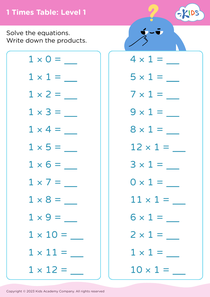
Unlock your child’s potential in math with our "Understanding Times Tables: Advanced Times Tables up to 12" worksheets, specially designed for ages 6-8. These engaging worksheets provide comprehensive practice, ensuring your child masters the essential multiplication skills needed for advanced math topics. With colorful, interactive exercises, kids develop a strong multiplication foundation while having fun. Tailored to young learners, these resources also enhance critical thinking and problem-solving abilities. Watch your child's confidence soar as they tackle times tables up to 12 effortlessly! Give your child the tools they need to succeed with Kids Academy’s expert-designed math worksheets.
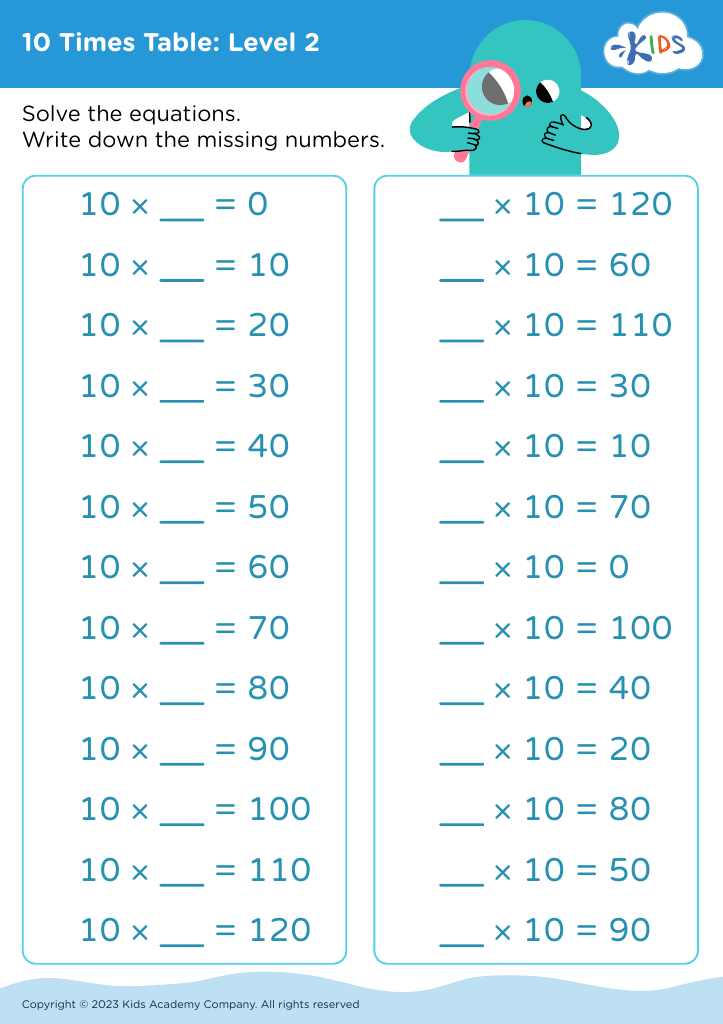
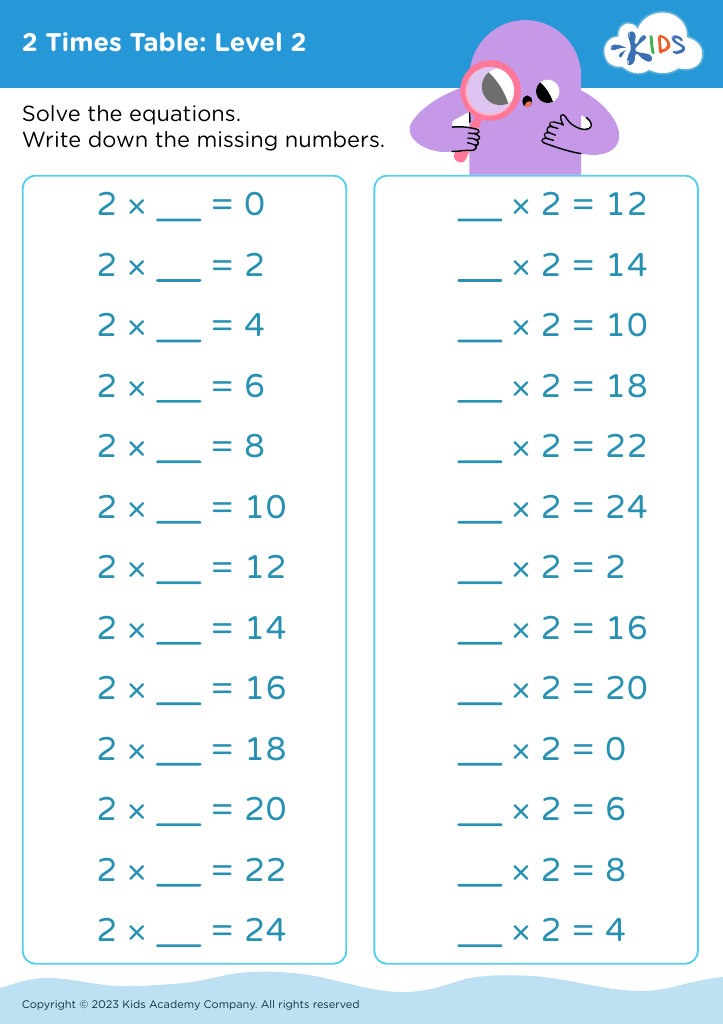
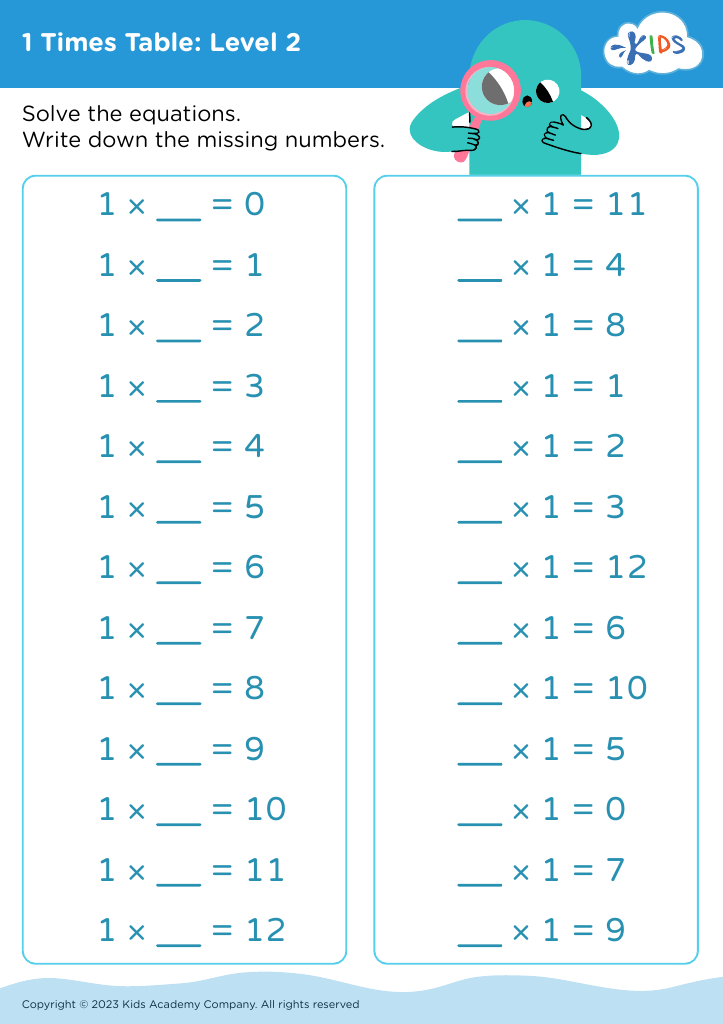



Understanding times tables up to 12 is a fundamental building block in a child's mathematical education, especially for ages 6-8. This period marks a crucial phase where young minds are highly receptive to learning patterns, relationships, and basic number comprehension. Grasping these concepts early can significantly boost their confidence and interest in more complex mathematical operations.
For parents and teachers, ensuring children master these tables can lay a solid foundation for future academic success. Times tables enhance cognitive skills like memory, concentration, and problem-solving, which are transferable across various subjects. Knowing times tables by heart also makes advanced topics like division, fractions, and algebra far more approachable and less intimidating.
Moreover, understanding times tables promotes mental arithmetic, fostering quicker calculations and reducing dependence on calculators or paper, thus encouraging logical thinking and numerical agility. This competence is not just academic; it’s practical in everyday scenarios, such as when shopping, cooking, or managing time.
In essence, supporting children in mastering times tables up to 12 accelerates their overall mathematical literacy, instills confidence, and ensures long-term benefits. As guardians of their education, parents and teachers have the critical role of incorporating engaging and effective methods to make this learning process enjoyable and successful, thereby nurturing a lifelong skill.