Understanding graphs Graphs Worksheets for Ages 6-8
5 filtered results
-
From - To
Our "Understanding Graphs Worksheets for Ages 6-8" provide engaging and educational activities, helping young learners master the basics of graphical representation. Designed specifically for kids, these worksheets introduce bar graphs, picture graphs, and line plots in an easy-to-understand manner. They foster critical thinking and analytical skills, inviting children to gather, interpret, and present data effectively. With age-appropriate exercises, colorful visuals, and fun questions, students will enjoy learning how to read and create various kinds of graphs. Prepare your child for future math success with our comprehensive, skill-building graph worksheets.
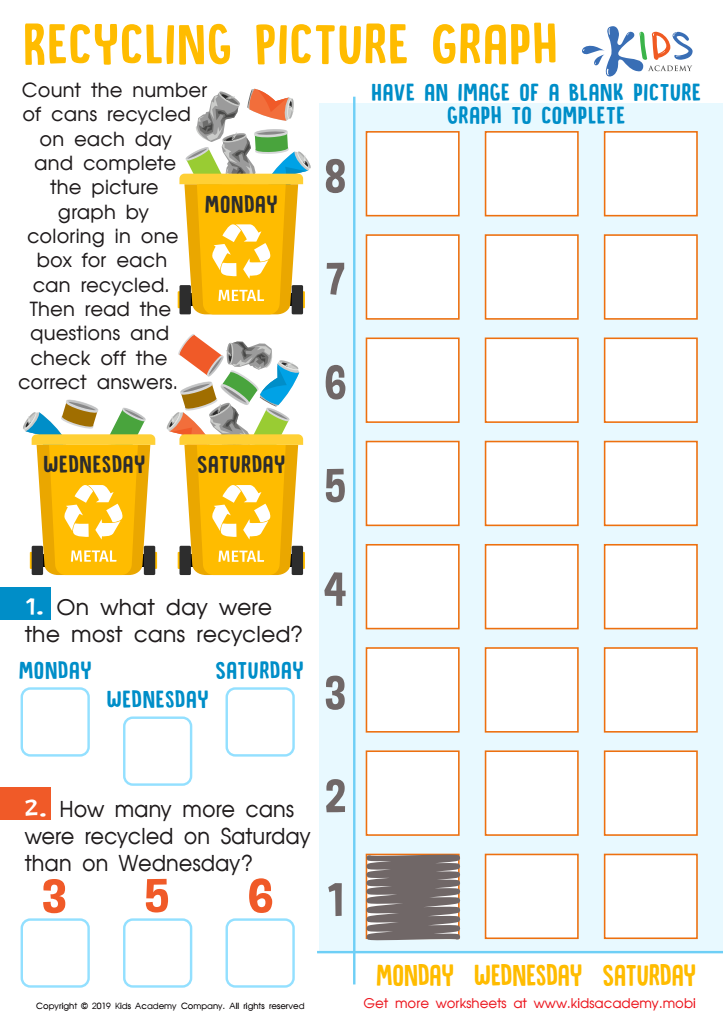
Recycling Picture Graph Worksheet
 Assign to My Students
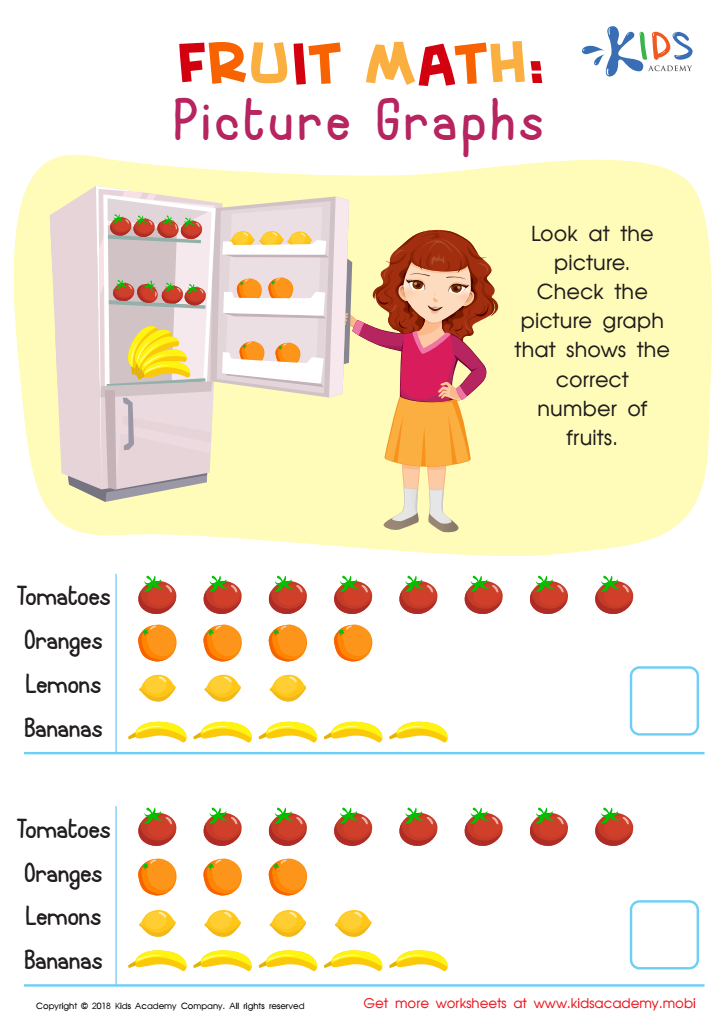
Fruit Math: Picture Graphs Worksheet
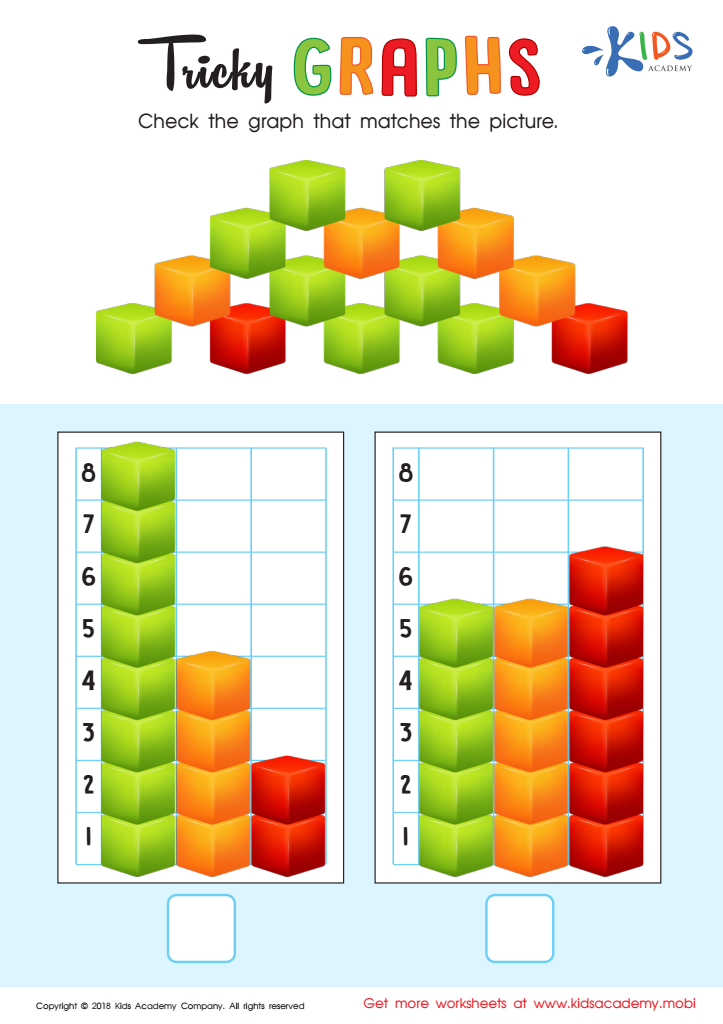
Tricky Graphs Worksheet
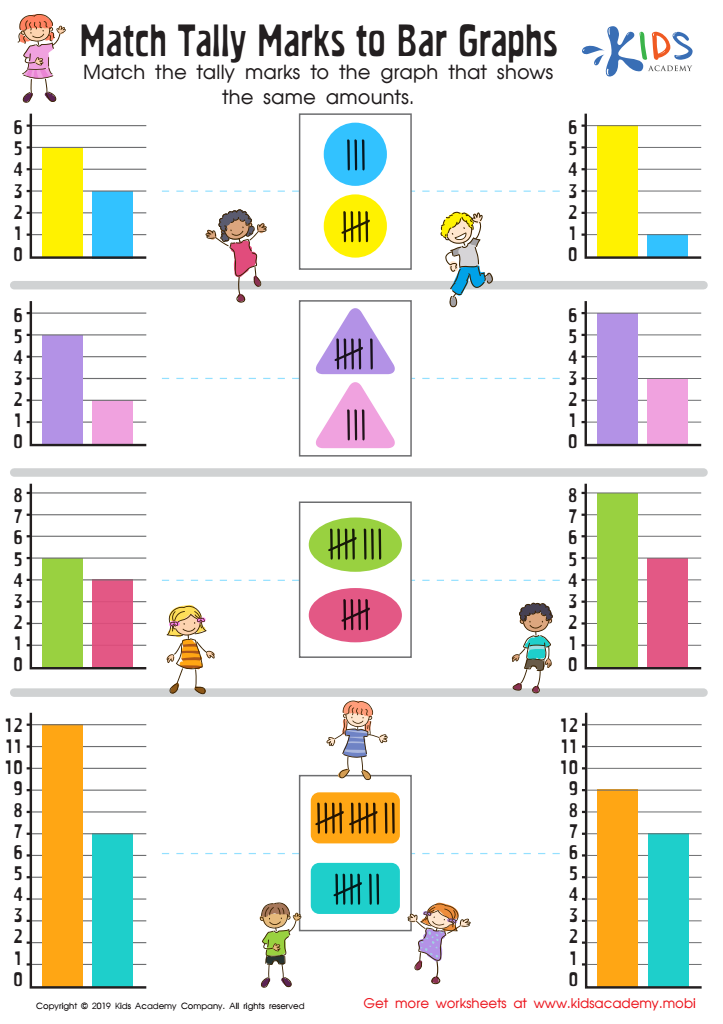
Match Tally Marks to Bar Graphs Worksheet
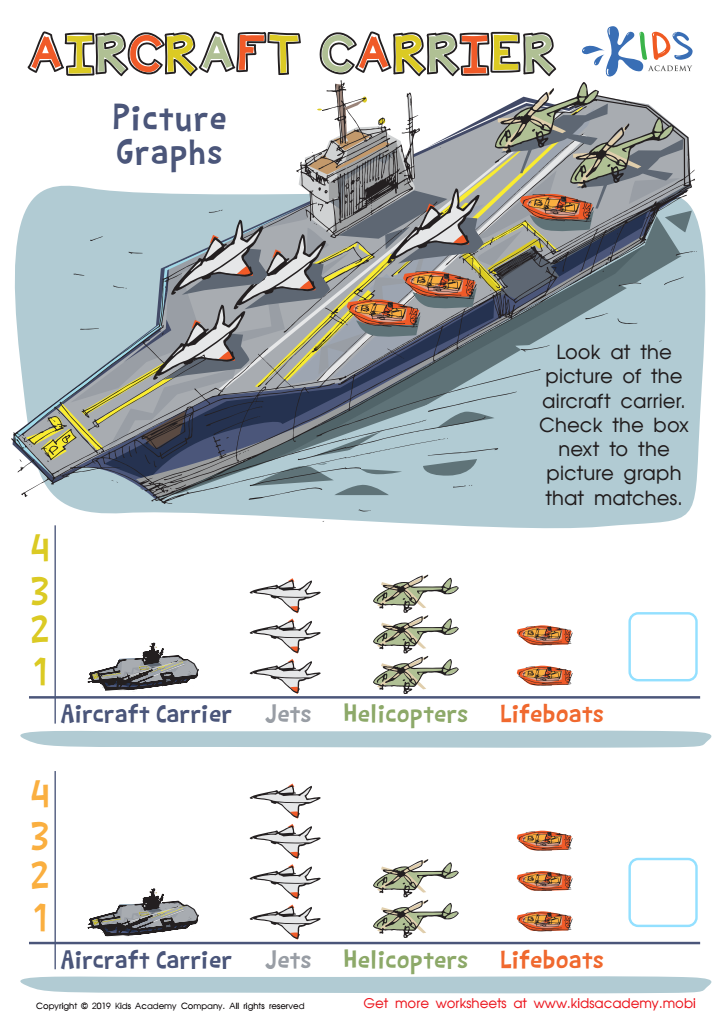
Aircraft Carrier Picture Graphs Worksheet








Understanding graphs is crucial for children aged 6-8 as it builds foundational skills for interpreting and organizing information visually. At this stage, kids are naturally curious and beginning to grasp more abstract concepts; graphs help crystallize these ideas into comprehendible visuals. For parents and teachers, teaching this skill nurtures their numerical literacy and problem-solving abilities.
Graphs serve as an instructional tool, allowing children to see patterns, relationships, and trends, making data less intimidating and more engaging. For instance, a simple bar graph representing favorite fruits can excite them about comparing quantities and making informed choices, which are critical thinking steps. Developing these skills early aids in academic subjects like math and science, as well as in real-world applications.
Moreover, learning to create and interpret graphs enhances communication skills. Kids learn how to succinctly present information, a valuable ability they will need throughout their education and future careers. Translating complex data into understandable formats bridges the gap between collecting information and using it effectively.
Ultimately, competency in graph usage fosters confidence and independence, empowering children to take control of their learning. Hence, parents and teachers play a pivotal role in embedding these essentials into early education, setting the stage for lifelong analytical acumen.








