
Compare fractions Math Worksheets for Ages 6-8
6 filtered results
Difficulty Level
Grade
Age
-
From - To
Subject
Activity
Standards
Explore our engaging collection of Compare Fractions Math Worksheets designed specifically for children ages 6-8. Each worksheet introduces young learners to the fundamentals of comparing fractions through fun and interactive activities. These carefully curated exercises enhance understanding by guiding kids through visual fraction models, number line comparisons, and real-life scenarios. Our worksheets aim to build a solid foundation in fraction comparison, essential for mastering more advanced math concepts. With colorful illustrations and step-by-step instructions, these printables are perfect for making learning fractions an enjoyable experience. Visit our website to download, print, and watch your child’s math skills flourish.
Favorites
With answer key
Interactive
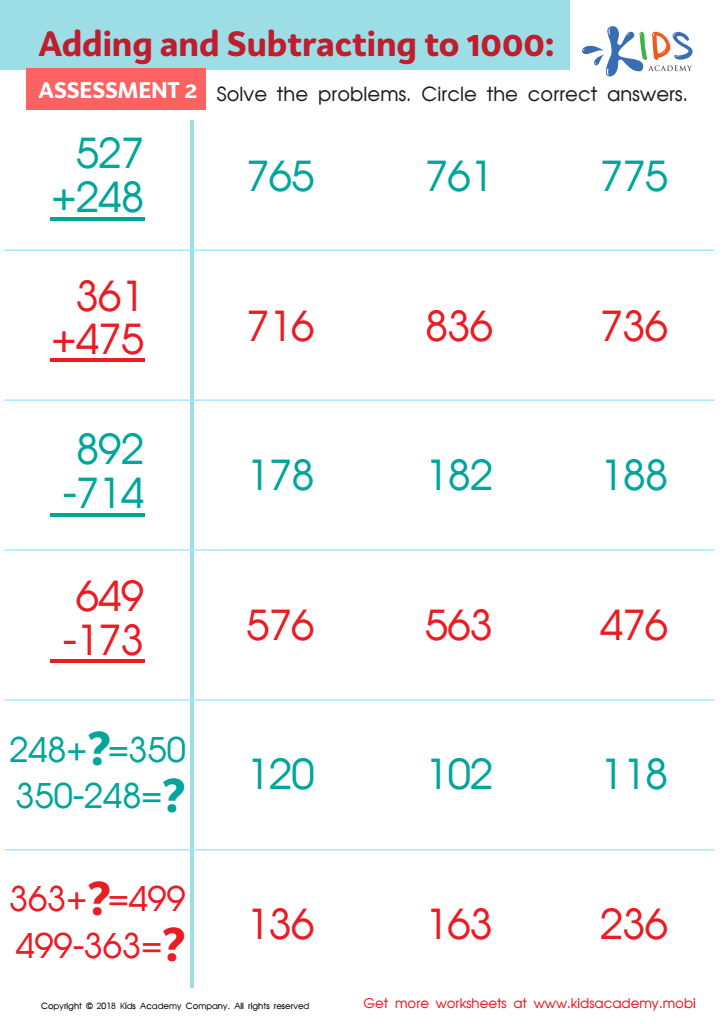
Adding and Subtracting to 1 Worksheet: Assessment 2
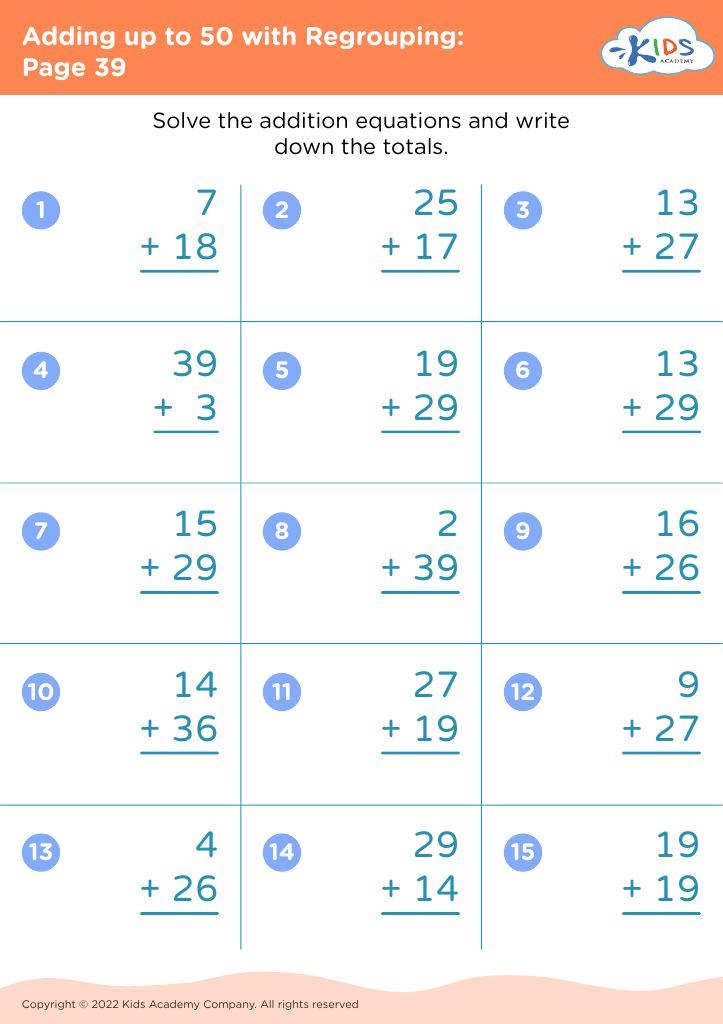
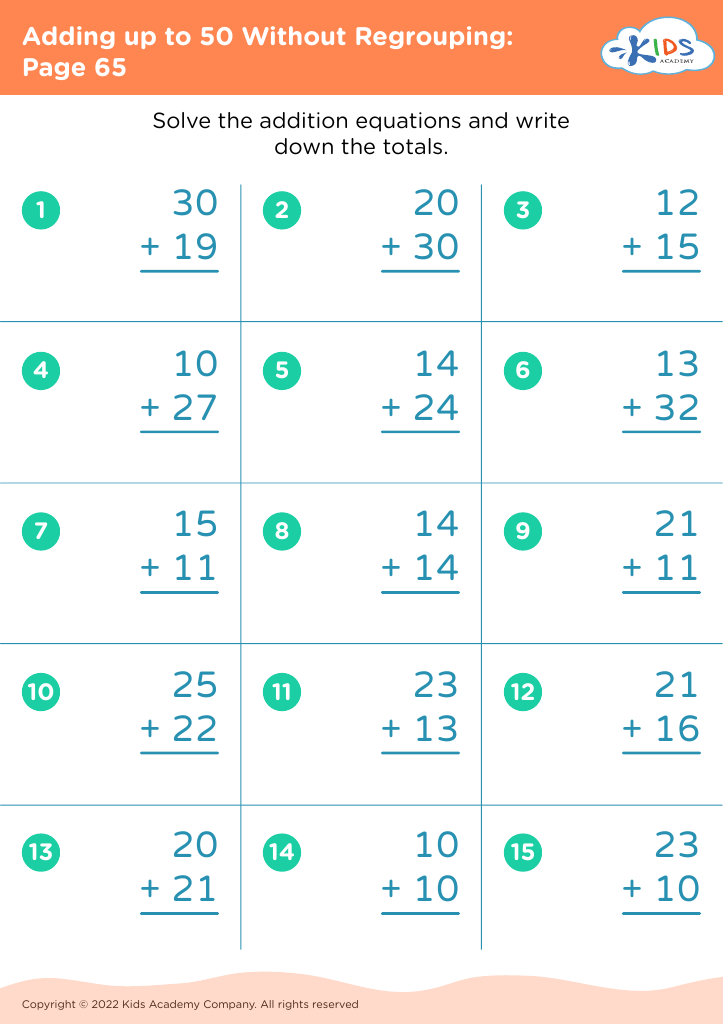
Test your child's addition and subtraction of 3-digit numbers with this assessment worksheet! They'll practice regrouping and pre-algebra skills to show their expertise. Have them work through the page and circle their answers, then see how many they got right to check their understanding and progress.
 Assign to My Students
Adding and Subtracting to 1 Worksheet: Assessment 2
Worksheet
Join Kids Academy for Free
Who is primarily going to use this learning content?






Parents and teachers should care about teaching children aged 6-8 to compare fractions because this foundational mathematical concept is crucial for their overall cognitive and academic development. At this stage, children's minds are particularly receptive to learning new things, and grasping the basics of fractions helps promote a strong number sense. Understanding fractions allows children to see how numbers can be broken down and combined, forming a basis for more complex mathematical operations they will encounter in the future, such as algebra and geometry.
Comparing fractions enhances critical thinking and problem-solving skills, as children learn to assess and analyze numerical relationships. It instills a sense of proportion and scale, which applies not just in math but in everyday activities like cooking, dividing tasks, or even understanding portions and distances.
Moreover, early exposure to fraction comparison helps alleviate future math anxiety by building confidence. Children who master such concepts early on are more likely to approach advanced mathematical challenges with a positive outlook. Additionally, integrating fun activities involving fraction comparison, such as games or practical applications, can foster a love for math that extends beyond the classroom. Therefore, prioritizing this aspect of math education can lead to well-rounded, mathematically literate individuals equipped for lifelong learning.








