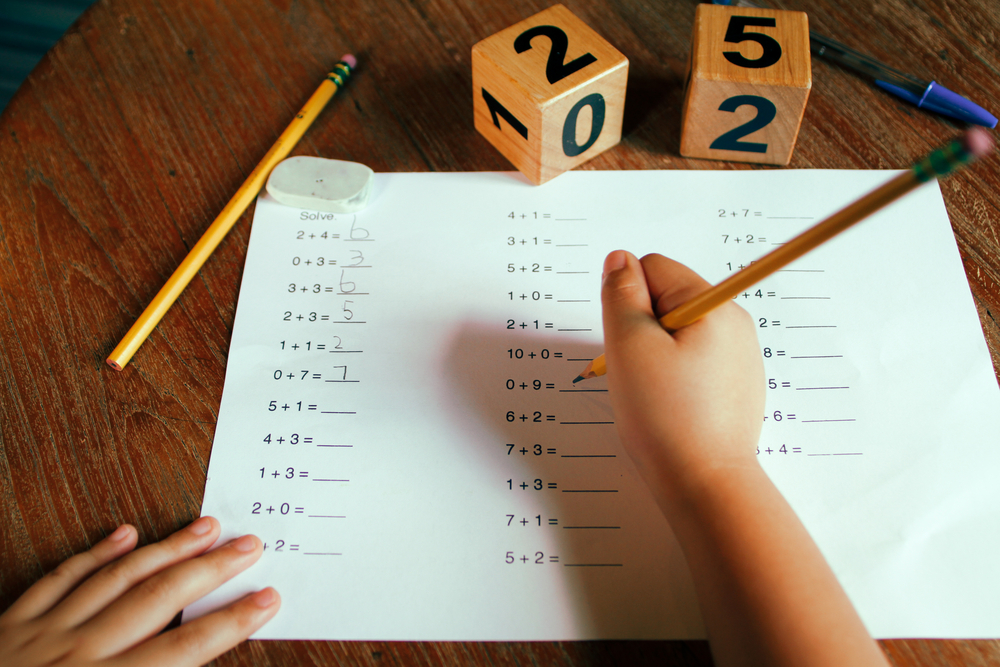
Enhance your child's fine motor skills and mathematical abilities with our specially designed Math Worksheets for Ages 6-8. These engaging activities blend writing practice with key math concepts, offering the perfect mix of fun and education. Our worksheets cover basic arithmetic, shape recognition, and patterns, while simultaneously strengthening hand-eye coordination and dexterity. Tailored for young learners, each page encourages neat writing, pencil control, and confidence in math. Ideal for both home and school use, these resources are an excellent way to support your child's learning journey. Start making math and writing fun with our expert-crafted worksheets today!

Check out this FREE Trial Lesson on Math for age 6-8!

Addition with Arrays - Part 2

Favorites
With answer key
Interactive
  • 6-8
  • Fine motor skills (writing)
  • Math
Interactive Addition Worksheet for Kindergarten

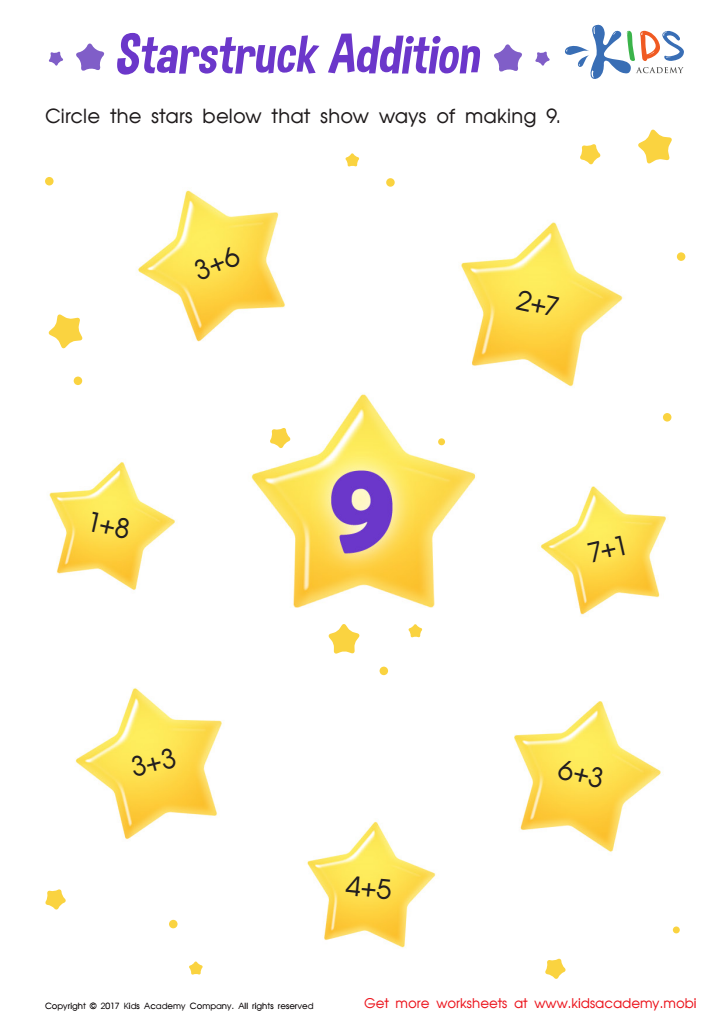
Starstruck Addition Printable

This interactive addition worksheet motivates your preschooler to practice addition and analyze number combinations. Their cognitive and analysis skills will be sharpened as they find the magic number in each problem.
Starstruck Addition Printable
Worksheet
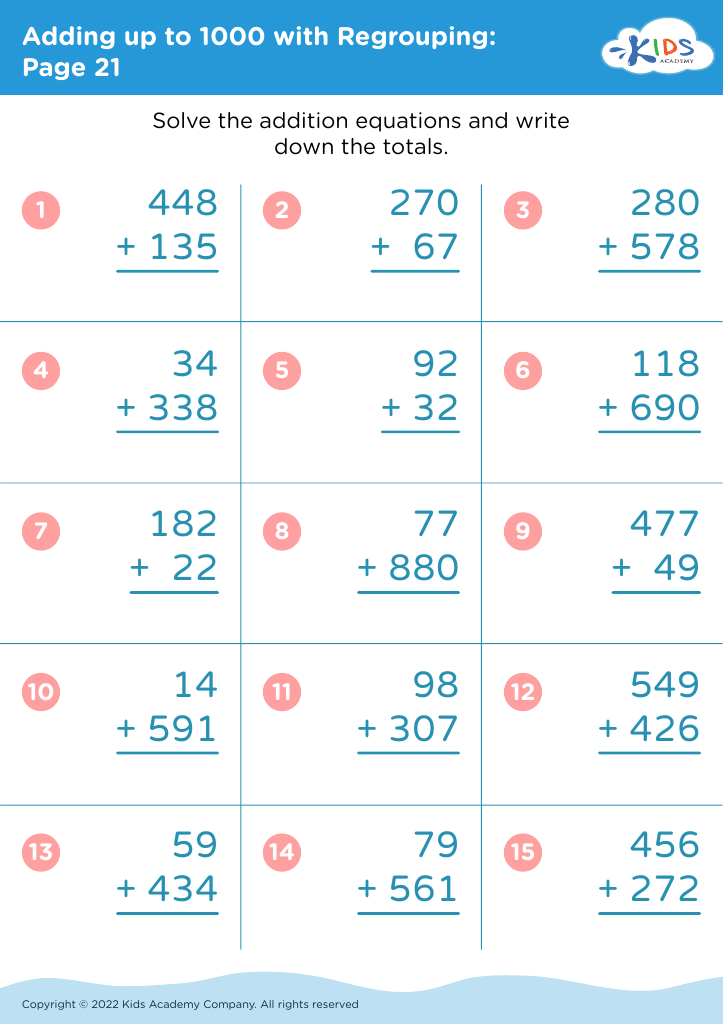
Adding up to 1000 with Regrouping: Page 21
Worksheet
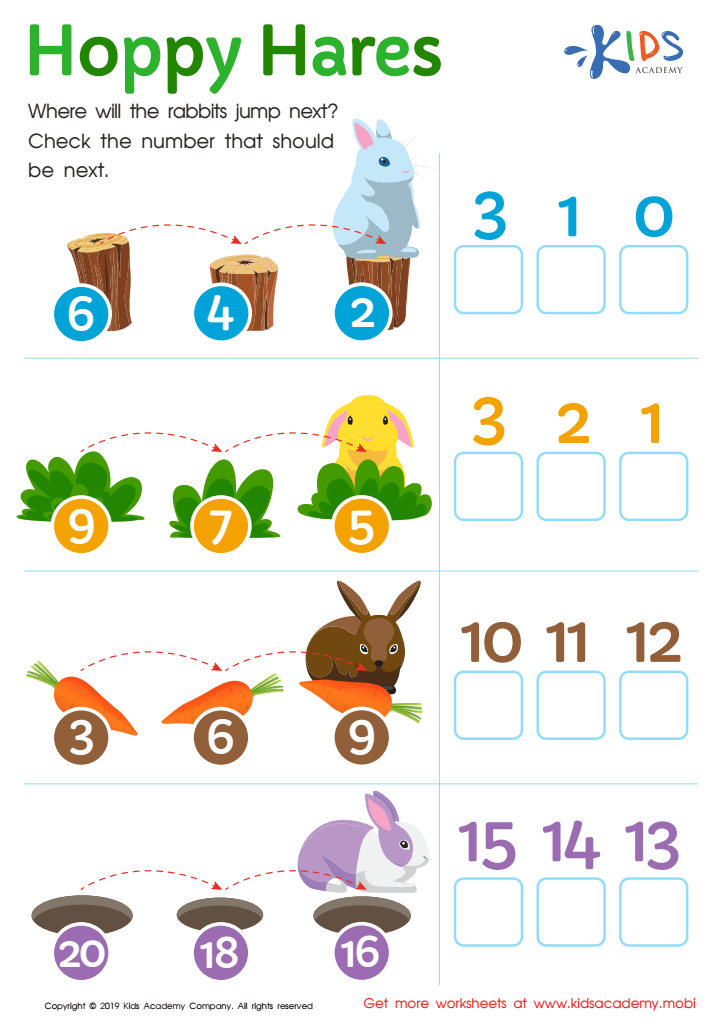
Hoppy Hares Worksheet

Hoppy Hares Worksheet

Ask your kids if they can identify the rabbits in the picture, then help them solve the math problems. The rabbits need to hop from place to place, so look at the numbers and help your kids figure out the next one. These cute and friendly little animals make great pets. Have fun solving this worksheet together!
Hoppy Hares Worksheet
Worksheet
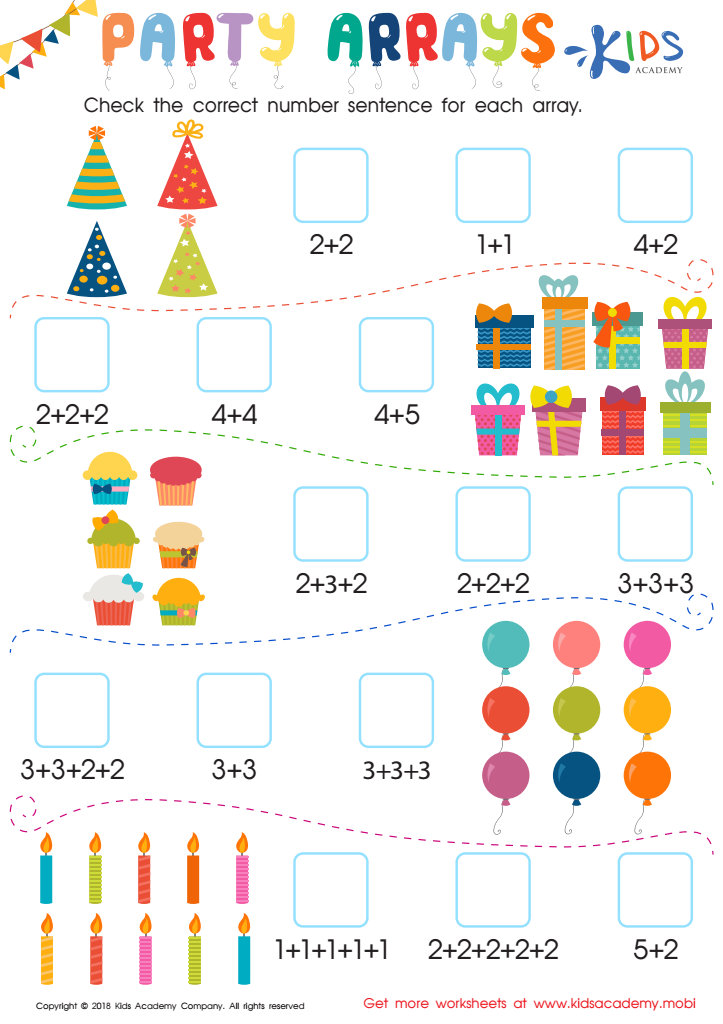
Party Arrays Worksheet

Party Arrays Worksheet

Help your child count the objects in each of the five arrays, then check the correct number sentence for each. This exercise will test their math skills and understanding of number sentences. Guide them to select the appropriate boxes.
Party Arrays Worksheet
Worksheet
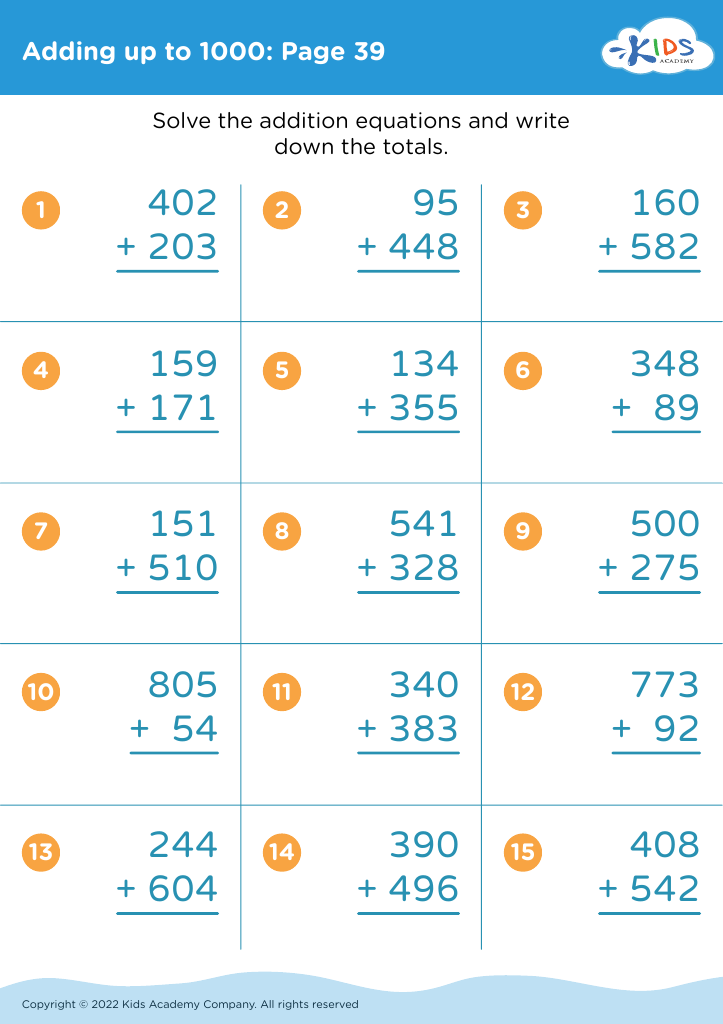
Adding up to 1000: Page 39

Adding up to 1000: Page 39

Adding up to 1000: Page 39
Worksheet
Counting Flowers Worksheet
Counting Flowers Worksheet
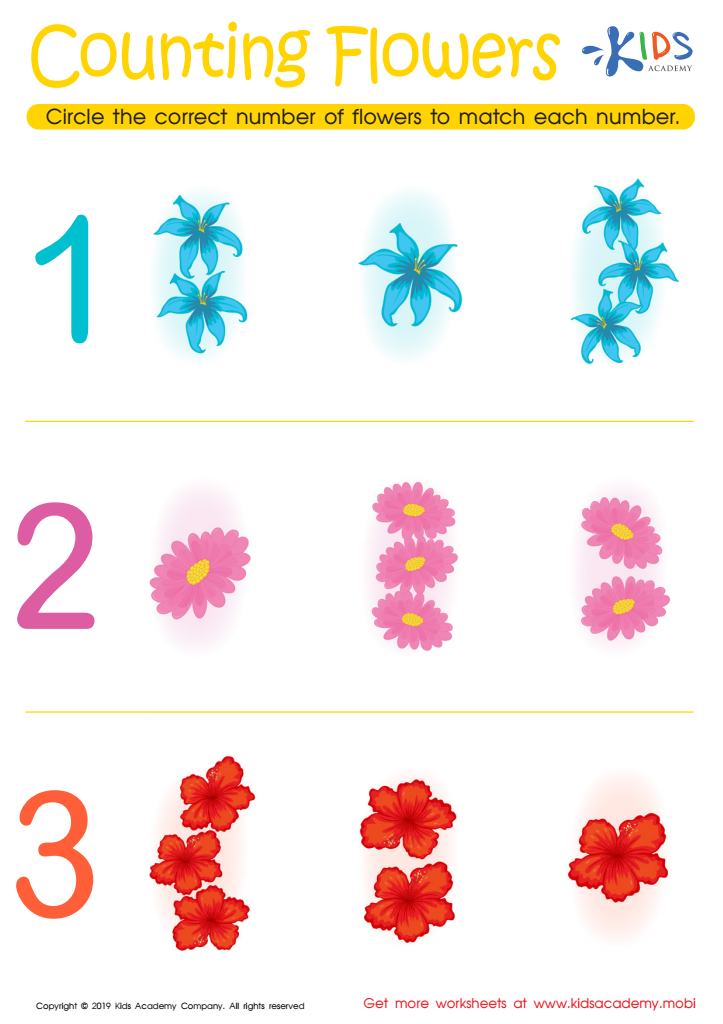
Kids love Flower Power! This free PDF helps kids practice basic number sense and counting. They match the correct number of colorful flowers to the corresponding numeral. An enjoyable game that improves basic number sense - perfect!
Counting Flowers Worksheet
Worksheet
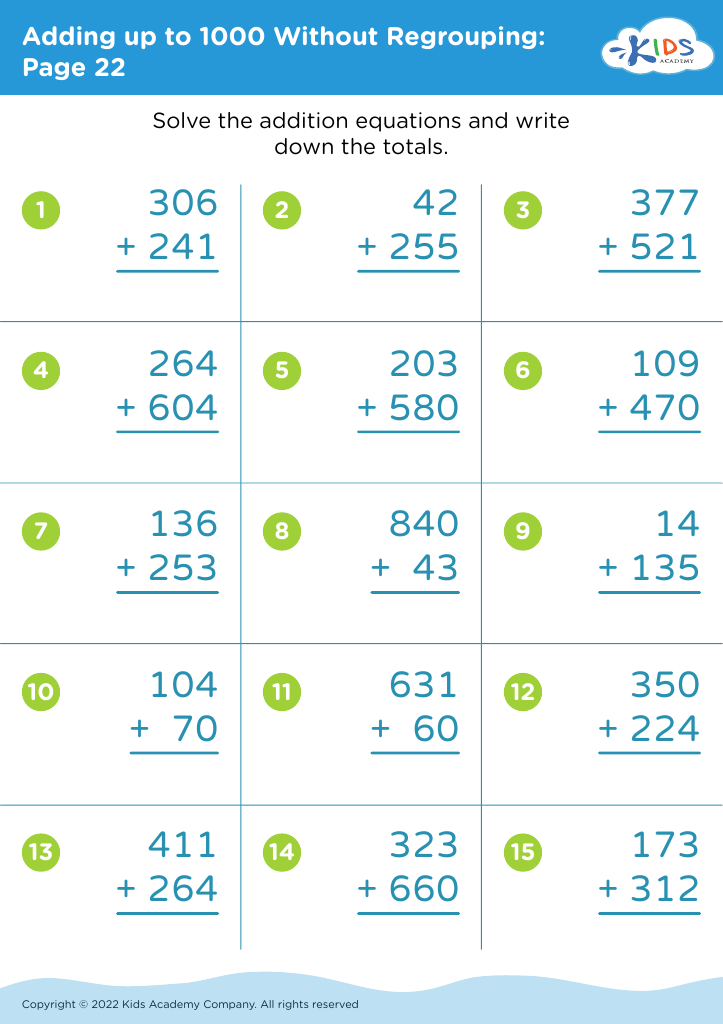
Adding up to 1000 Without Regrouping: Page 22
Worksheet
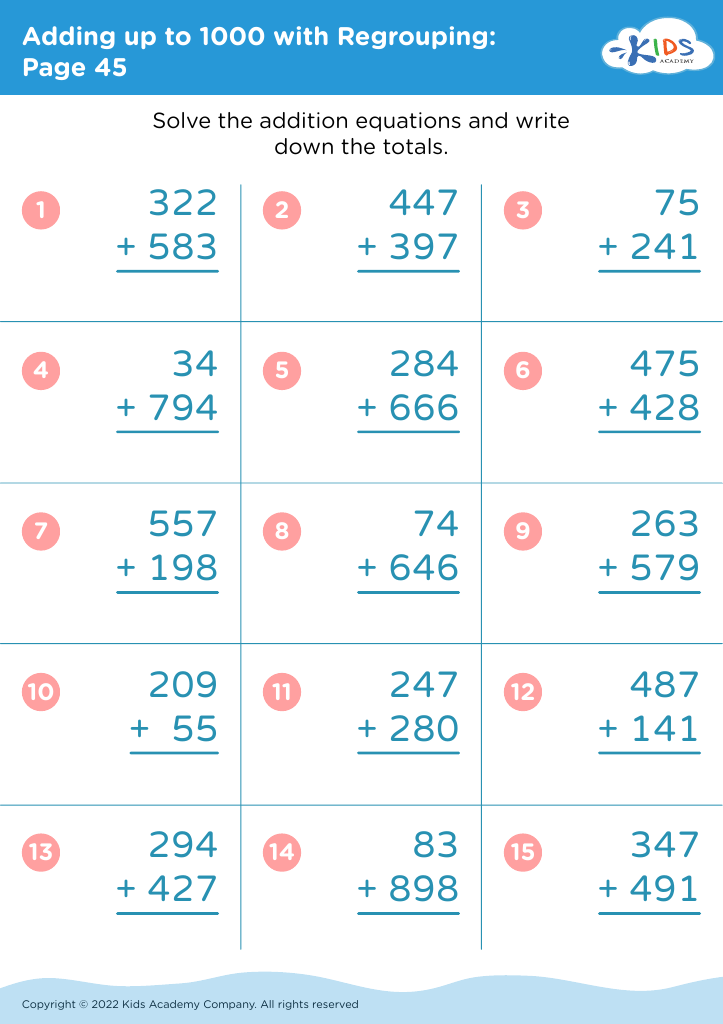
Adding up to 1000 with Regrouping: Page 45
Worksheet
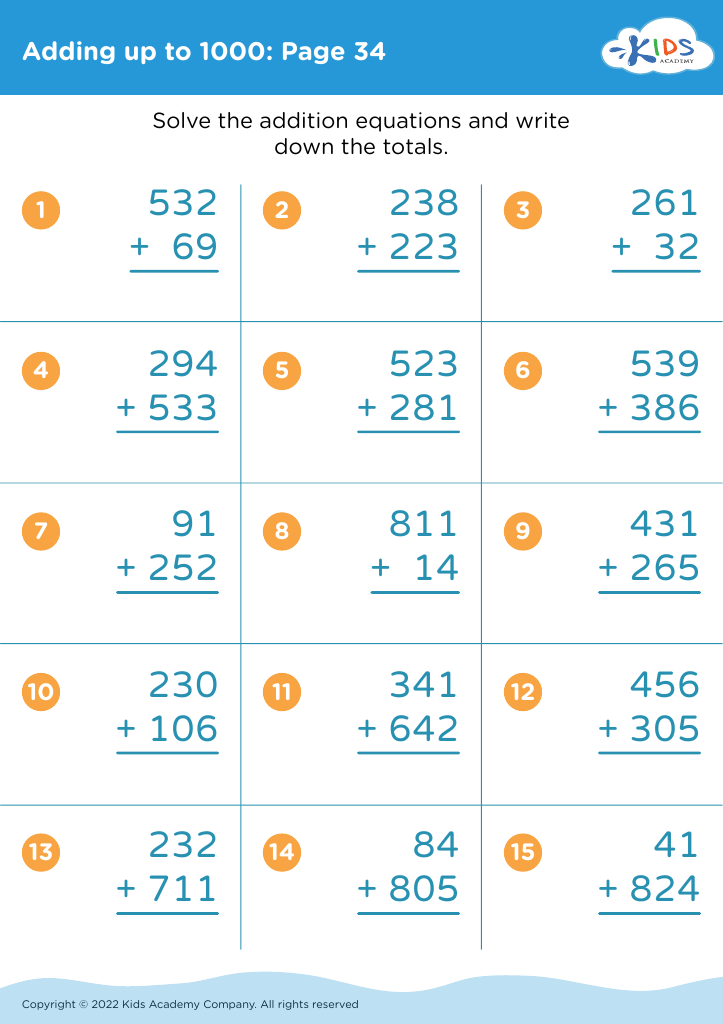
Adding up to 1000: Page 34

Adding up to 1000: Page 34

Adding up to 1000: Page 34
Worksheet
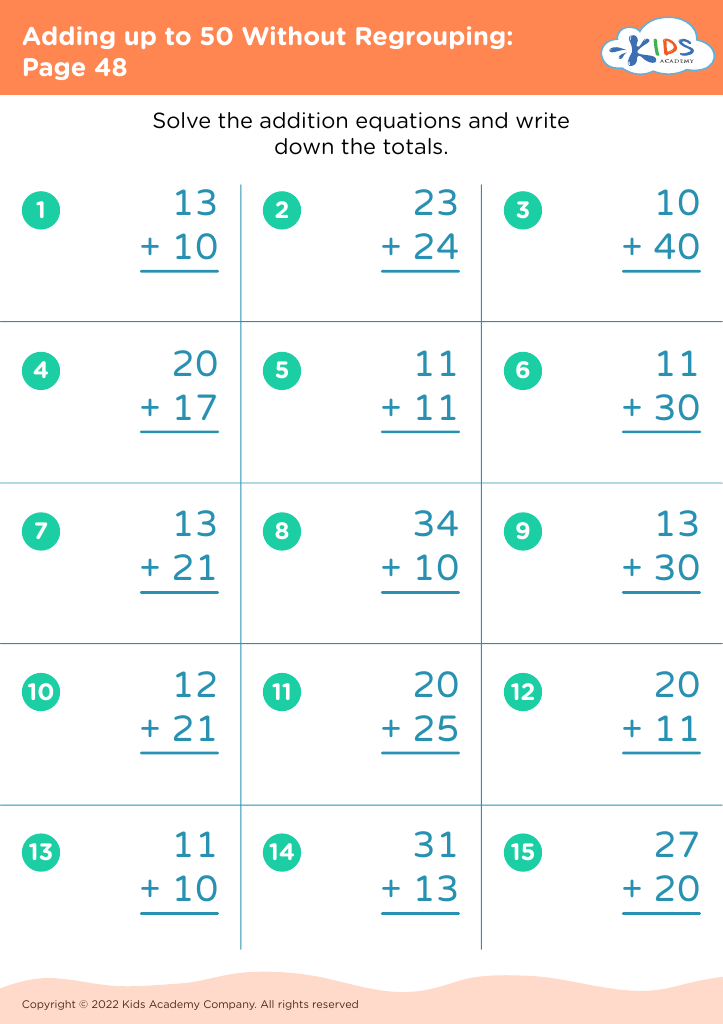
Adding up to 50 Without Regrouping: Page 48
Worksheet
Counting to 4 and 5: Assessment 2 Worksheet


Counting to 4 and 5: Assessment 2 Worksheet

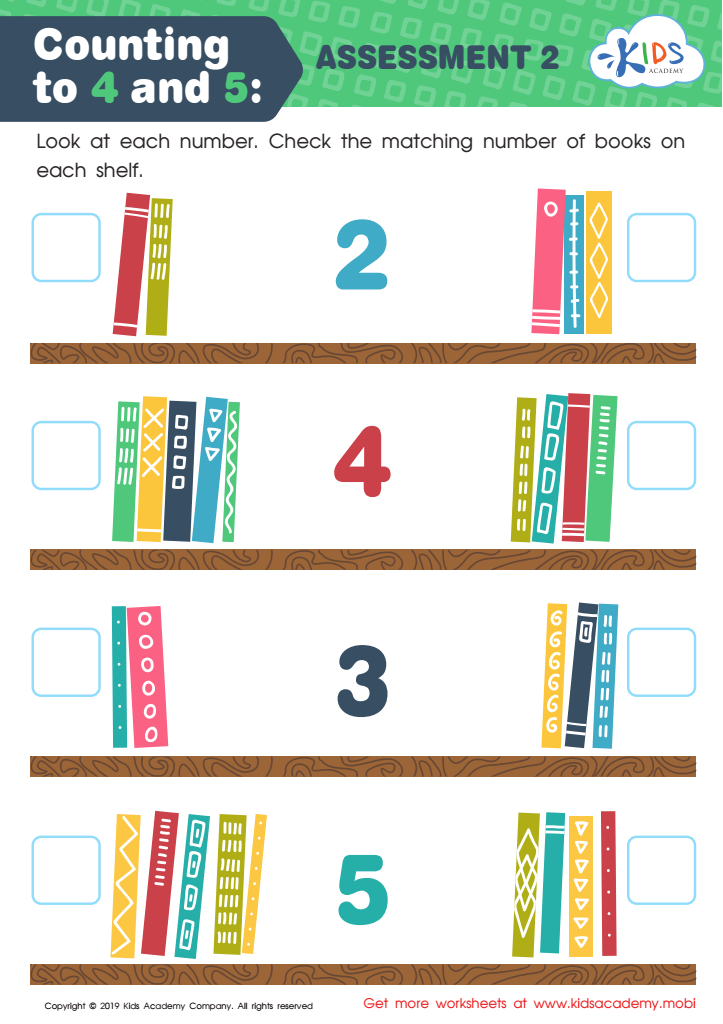
Counting is a key skill for math success. Help your kids get off to a good start by counting the books on each shelf in the pictured printout. Point to each set of books, counting aloud, and then look for the matching number in the centre. With this simple worksheet, your kids can get the practice they need before taking on more advanced math skills.
Counting to 4 and 5: Assessment 2 Worksheet
Worksheet


Fine motor skills and math proficiency are pivotal for children aged 6-8. Developing fine motor skills at this age, particularly through writing, lays the foundation for important academic and everyday activities. Proper pencil grip and hand-eye coordination contribute to clearer handwriting and the ability and endurance to complete written tasks. These skills are closely linked to cognitive development, aiding children’s focus, memory, and problem-solving abilities.

Simultaneously, mathematical skills at this age—such as understanding number sense, basic arithmetic, and spatial awareness—form the basis for higher-level math and critical thinking. Early math proficiency is strongly correlated with future academic success, not just in mathematics but across curricula.

When parents and teachers focus on improving these areas, children become more confident and adept learners. For instance, balance in both fine motor development and math learning creates a well-rounded foundation. Written practice and math problems solve not only reinforce learning but also integrate motor learning and cognitive processing.

Investing time and effort in these skills ensures children are not only ready for more complex academic challenges but also prepared for daily activities. Even tasks like using utensils, personal grooming, and drawing are linked to their fine motor and basic quantitative skills. Essentially, fostering motor and math skills equips children for holistic success, both academically and practically.