Identifying Animals Math Worksheets for Ages 6-8
4 filtered results
-
From - To
Introducing our engaging "Identifying Animals Math Worksheets for Ages 6-8"! These printable worksheets seamlessly blend fun and learning, helping children master essential math skills while exploring the fascinating world of animals. Designed by educators, they feature activities such as counting, addition, subtraction, and simple graphing, all within captivating animal-themed contexts. Perfect for at-home practice or classroom reinforcement, these worksheets not only strengthen math foundations but also enhance critical thinking and observation skills. Let your child's imagination and knowledge grow with our expertly crafted, age-appropriate resources that make learning math an adventure in discovery!
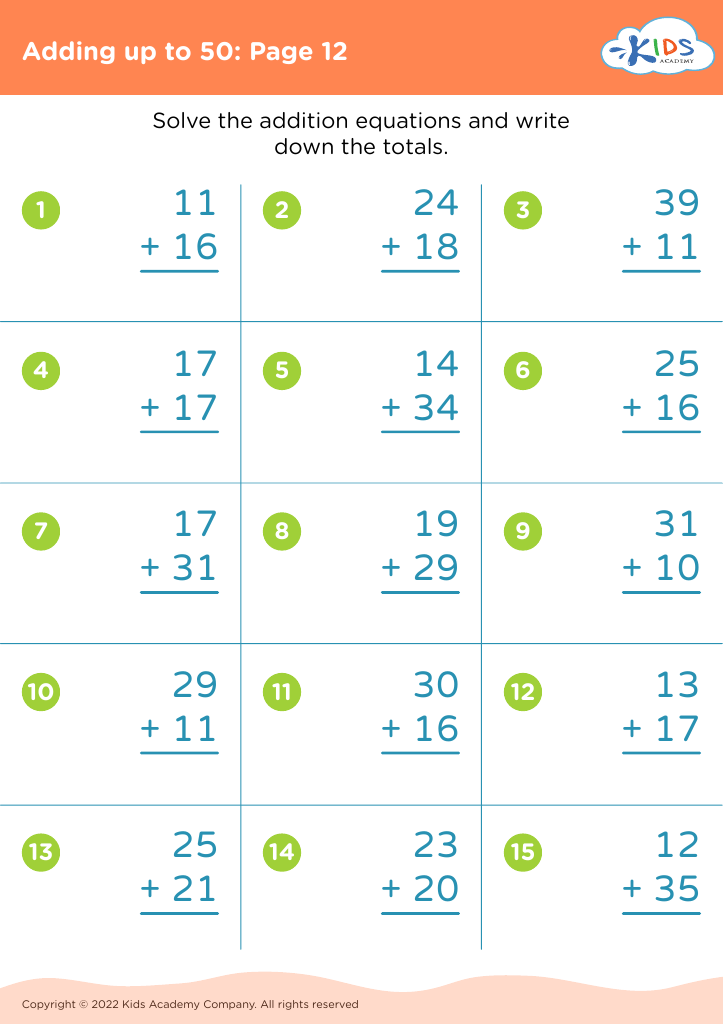
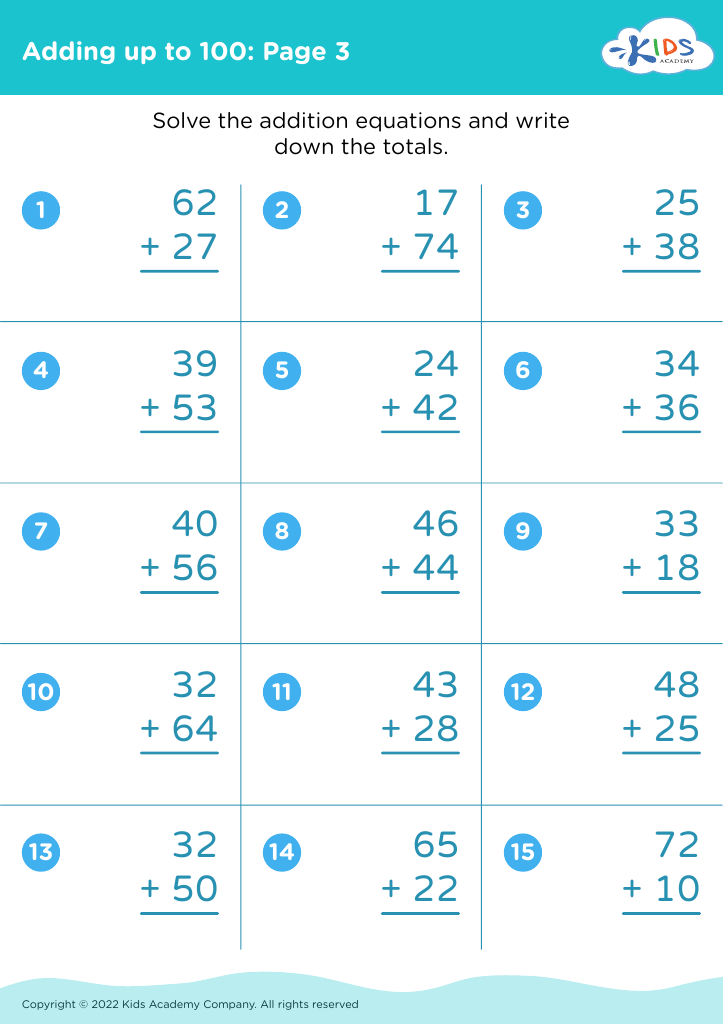
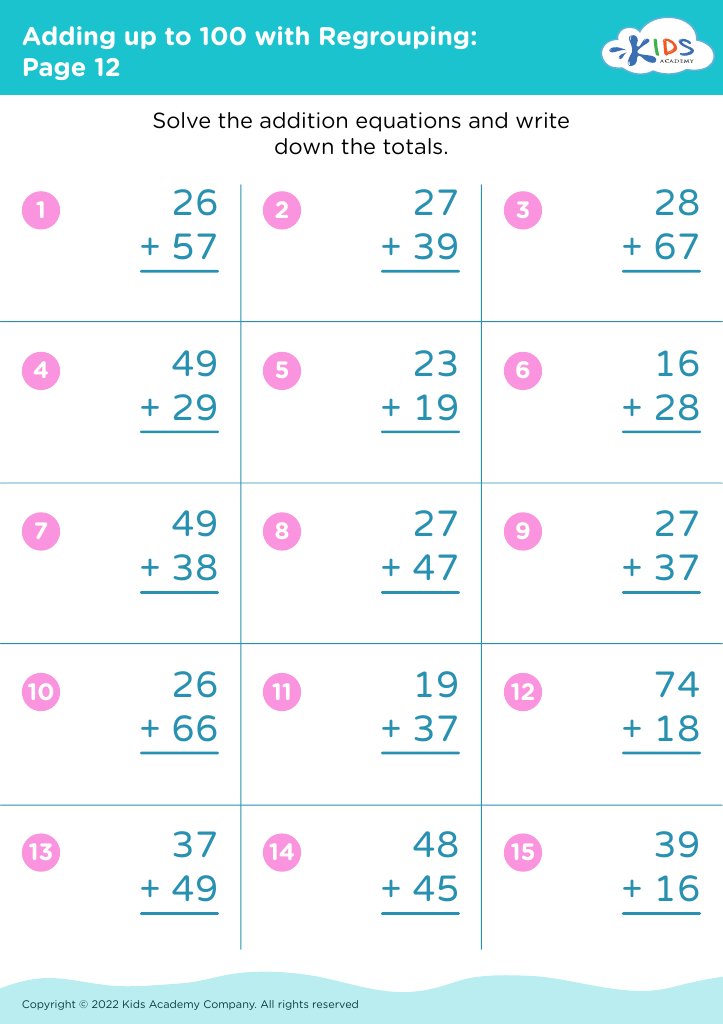
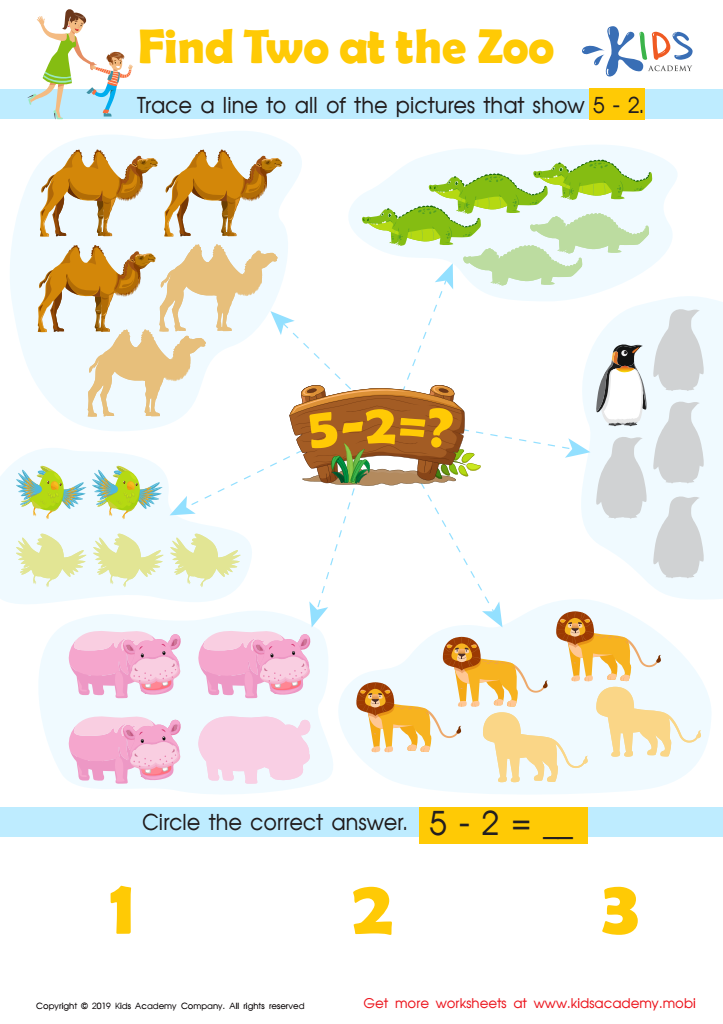
Find Two at the Zoo Worksheet
 Assign to My Students








Identifying Animals Math for ages 6-8 integrates fundamental math skills with basic zoology, thus encouraging a multifaceted approach to learning that is crucial at early ages. For parents and teachers, this can be exceptionally beneficial as it capitalizes on natural curiosity to foster both numerical literacy and environmental awareness.
Early math skills form the foundation for future academic success in various disciplines. By linking math exercises with animal identification, children not only practice counting, sorting, and basic arithmetic but also gain knowledge about wildlife and ecosystems. This helps in making abstract concepts more tangible, enabling better understanding and retention of both subjects.
Moreover, engaging with such integrated content promotes critical thinking and problem-solving skills. Children learn to categorize animals, compare characteristics, and create simple graphs or charts, developing cognitive abilities that have broad applications.
Additionally, learning through the theme of animals can be inherently more enjoyable and relatable for young children, increasing their motivation and attendance in academic activities. This positive reinforcement helps establish a lifelong love for learning and curiosity about the world.
Ultimately, Identifying Animals Math provides a well-rounded educational experience that prepares 6-8-year-olds academically while nourishing their natural sense of wonder and responsibility towards the environment.








