Problem-solving ability Math Worksheets for Ages 6-8
4 filtered results
-
From - To
Unlock your child's potential with our Problem-Solving Ability Math Worksheets designed for ages 6-8. These engaging and educational worksheets from Kids Academy focus on enhancing critical thinking and mathematical reasoning. Our comprehensive resources cover a range of topics, including addition, subtraction, patterns, and logic puzzles, helping children build a solid foundation in math. Perfect for at-home learning or classroom use, our printable worksheets support curriculum standards and make learning fun and interactive. Foster a love for problem-solving and boost your child's confidence with these expertly crafted math worksheets. Visit us today to empower your young learner!
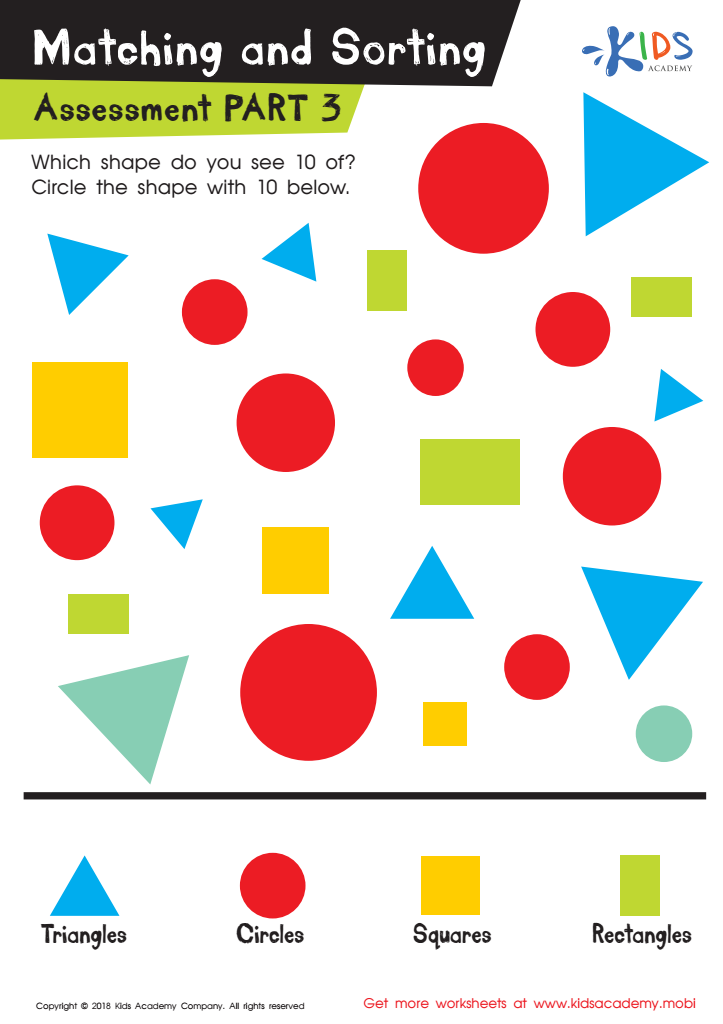
Matching and Sorting for Kindergarten: Assessment 3 Worksheet
 Assign to My Students
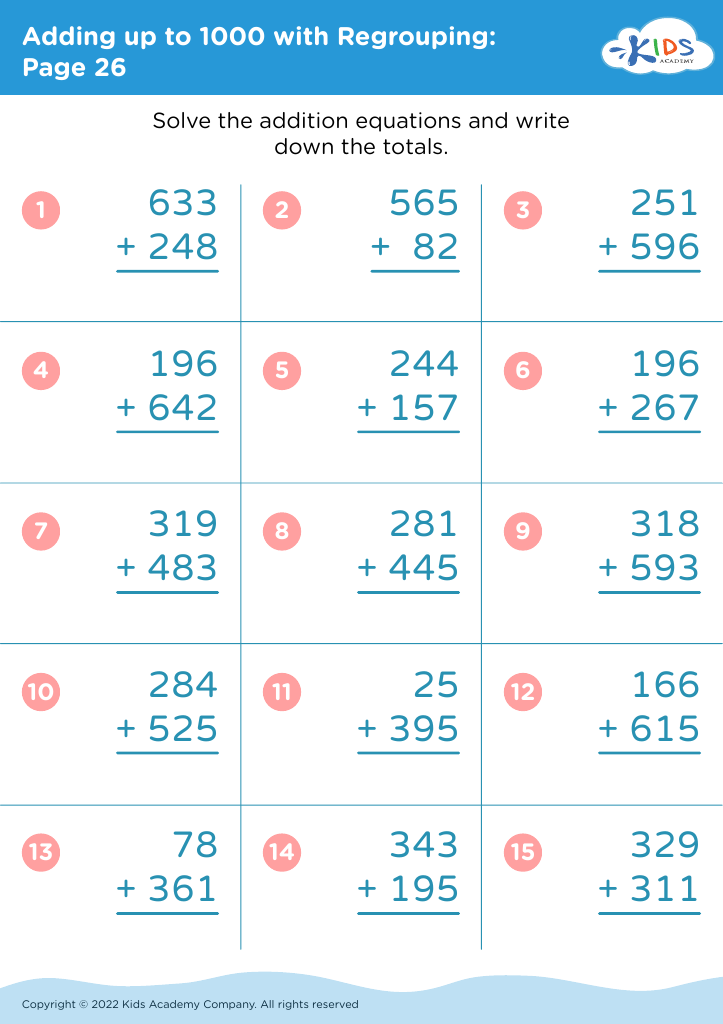
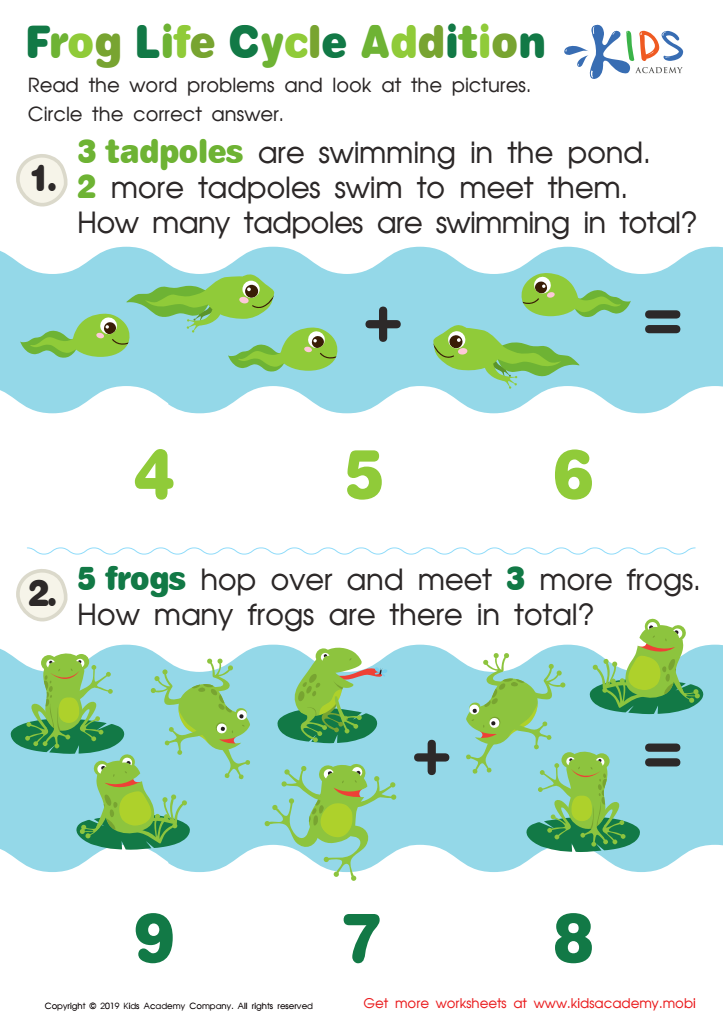
Frog Life Cycle Addition Worksheet
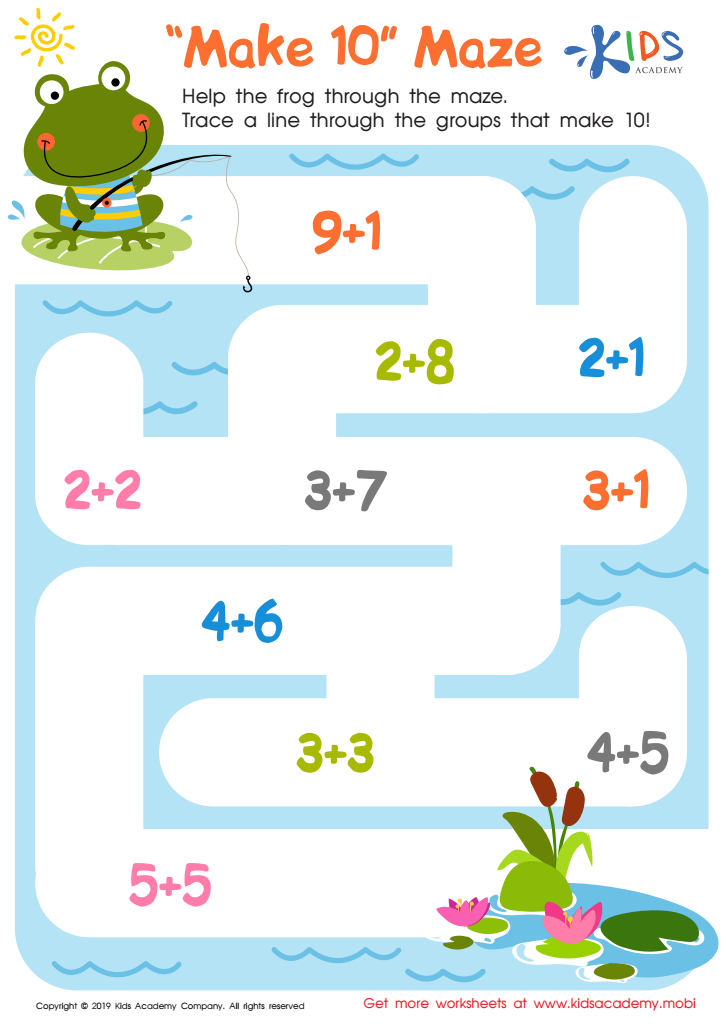
Make 10 Maze Worksheet







Problem-solving ability in math from ages 6-8 is critically important for children’s overall cognitive and academic development. At this stage, children are not only learning basic math concepts like addition, subtraction, and the fundamentals of geometry, but they are also beginning to develop the ability to think critically and logically. When parents and teachers prioritize problem-solving skills, they equip children to tackle a wide range of challenges, both in and out of the classroom.
For one, problem-solving encourages perseverance and resilience. When kids are presented with a math problem, they learn to assess the problem, think of different ways to solve it, and try again if their first efforts don’t work. This builds a growth mindset, teaching them that effort and persistence are keys to success.
Additionally, problem-solving in math enhances other essential skills such as reasoning, decision-making, and scientific thinking. These skills are fundamental not only in academic settings but also in everyday life. Understanding how to break a complex problem into manageable steps helps children become proficient at managing tasks and challenges across various subjects and real-world situations.
Furthermore, early achievements in problem-solving create a positive attitude towards math, reducing the likelihood of math anxiety in later years. A strong foundation in problem-solving at a young age can spark a lifelong interest in STEM (Science, Technology, Engineering, Mathematics) fields, opening doors to numerous future opportunities. Therefore, both parents and teachers should actively foster these abilities to set children up for long-term academic and personal success.








