Understanding habitats Math Worksheets for Ages 6-8
3 filtered results
-
From - To
Explore the fascinating world of habitats with our engaging "Understanding Habitats Math Worksheets" designed specifically for children aged 6-8. These worksheets combine essential math skills with the exciting topic of natural environments, helping young learners develop critical thinking while they explore different ecosystems. From counting and sorting animals to solving fun word problems related to habitats, these activities promote hands-on learning. Each worksheet is crafted to align with early math standards, ensuring a solid foundation for your child's mathematical journey. Discover the beauty of nature while enhancing math understanding in an enjoyable and immersive way! Fun and learning go hand in hand!
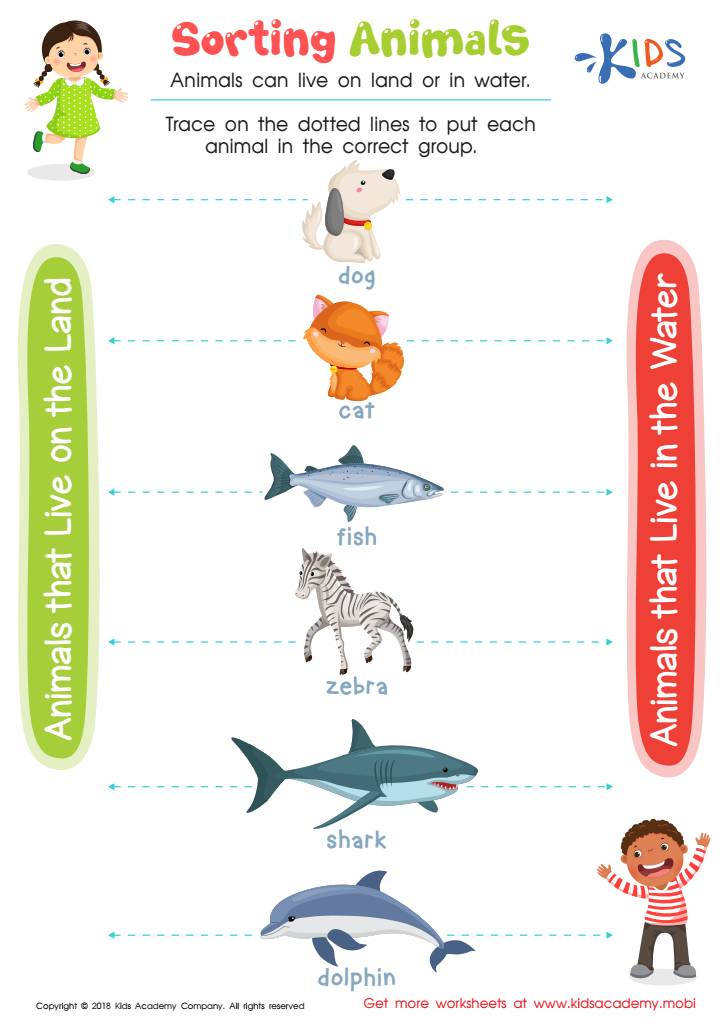
Sorting Animals Worksheet
 Assign to My Students
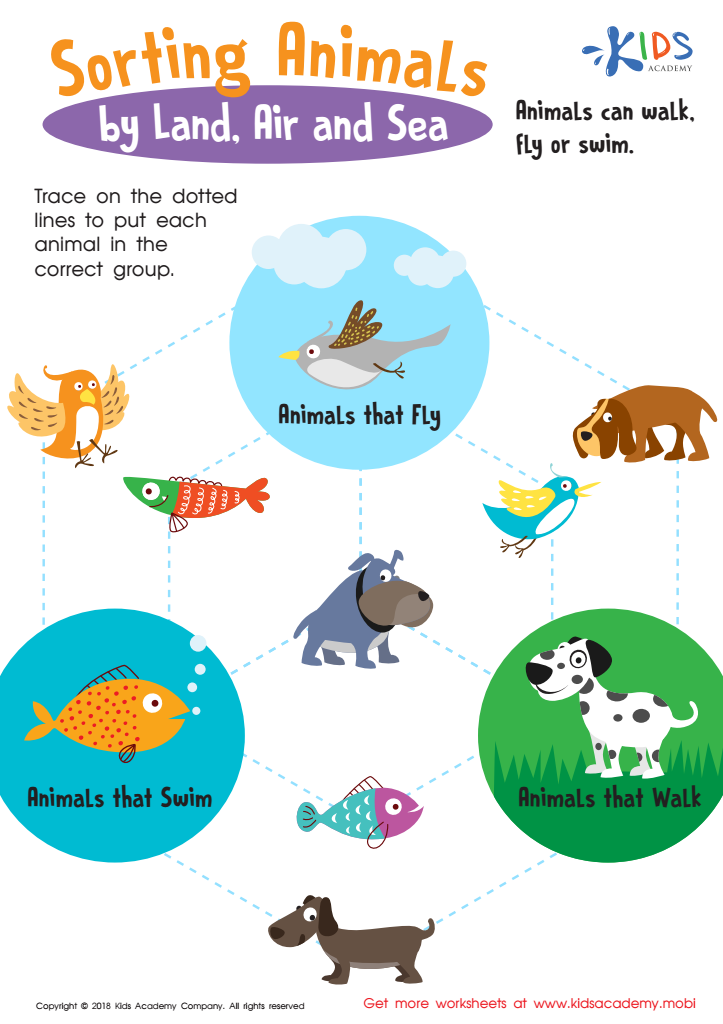
Sorting Animals by Land, Air and Sea Worksheet







Understanding habitats in math for ages 6-8 enriches children’s learning by intertwining mathematical concepts with science and environmental awareness. At this age, children are developing foundational skills in both math and critical thinking. Learning about habitats introduces them to the diversity of plant and animal life, which enhances their understanding of data collection and analysis.
When parents or teachers incorporate habitat-related math activities, such as measuring areas of different ecological environments or graphing the populations of various species, they create a contextual learning experience that fosters engagement. This interdisciplinary approach helps children see the practical application of math in real-world scenarios, encouraging a deeper appreciation for both subjects.
Additionally, engaging with habitats promotes emotional and social development, as it encourages teamwork and discussions among peers. Understanding habitats also instills a sense of responsibility towards the environment, broadening children’s perspectives on biodiversity and conservation. Essentially, bridging math with ecological education nurtures a well-rounded, informed citizen who values their role in the world. By supporting this understanding, parents and teachers lay the groundwork for critical thinking, problem-solving skills, and a sense of stewardship for both math and nature.








