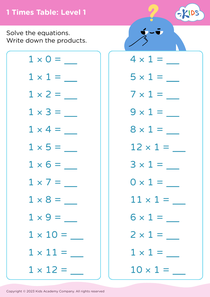
Mental math skills Mixed Times Tables Worksheets for Ages 6-8
3 filtered results
-
From - To
Discover our engaging Mixed Times Tables Worksheets designed specifically for children aged 6-8 to enhance their mental math skills! These worksheets provide a fun, hands-on approach for young learners to practice multiplication facts through varied exercises. Tailored to boost confidence and accuracy in fundamental math, they feature colorful designs and diverse problem types to keep kids motivated. Our resources not only cultivate essential times table knowledge but also promote critical thinking and problem-solving abilities. Ideal for classroom use or at-home practice, these worksheets offer an effective way to make math enjoyable while laying a solid foundation for future learning.
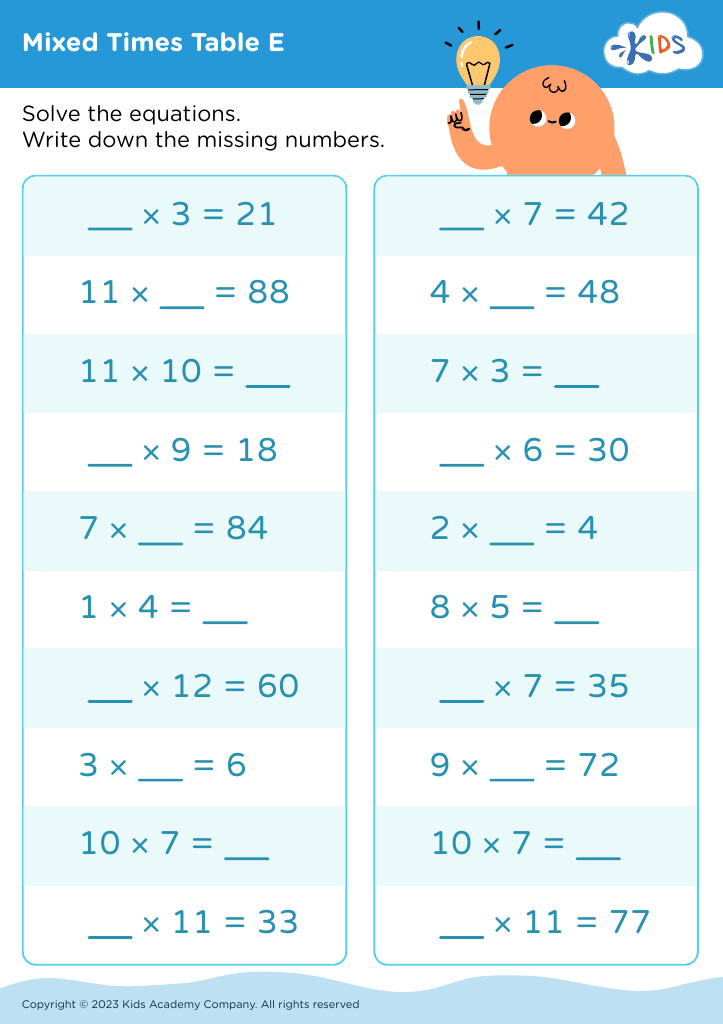
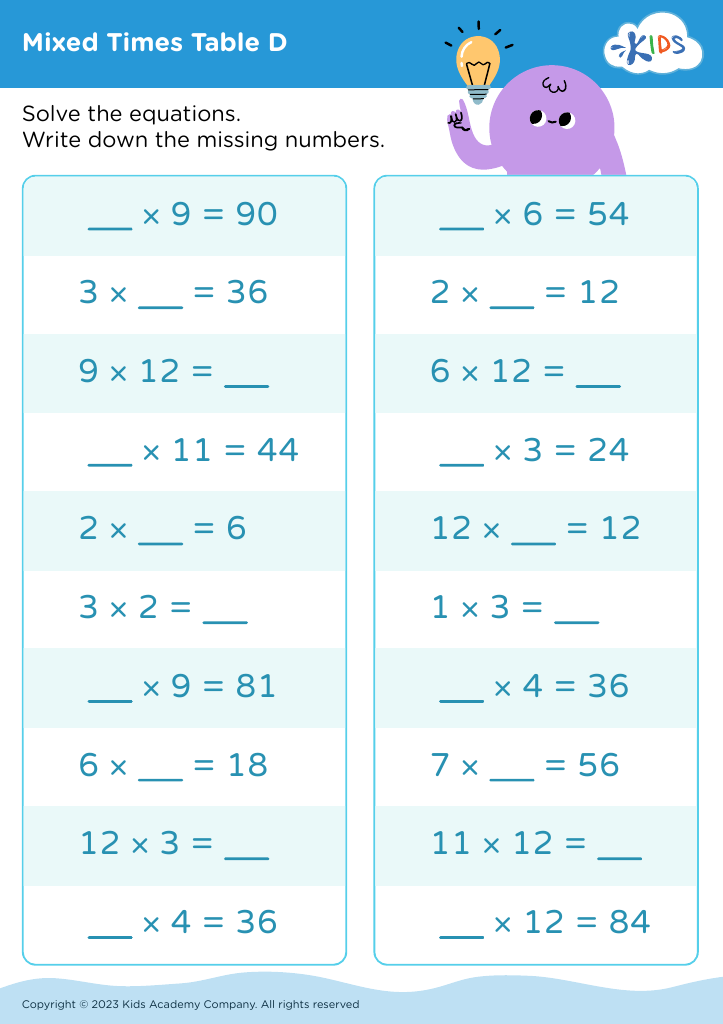
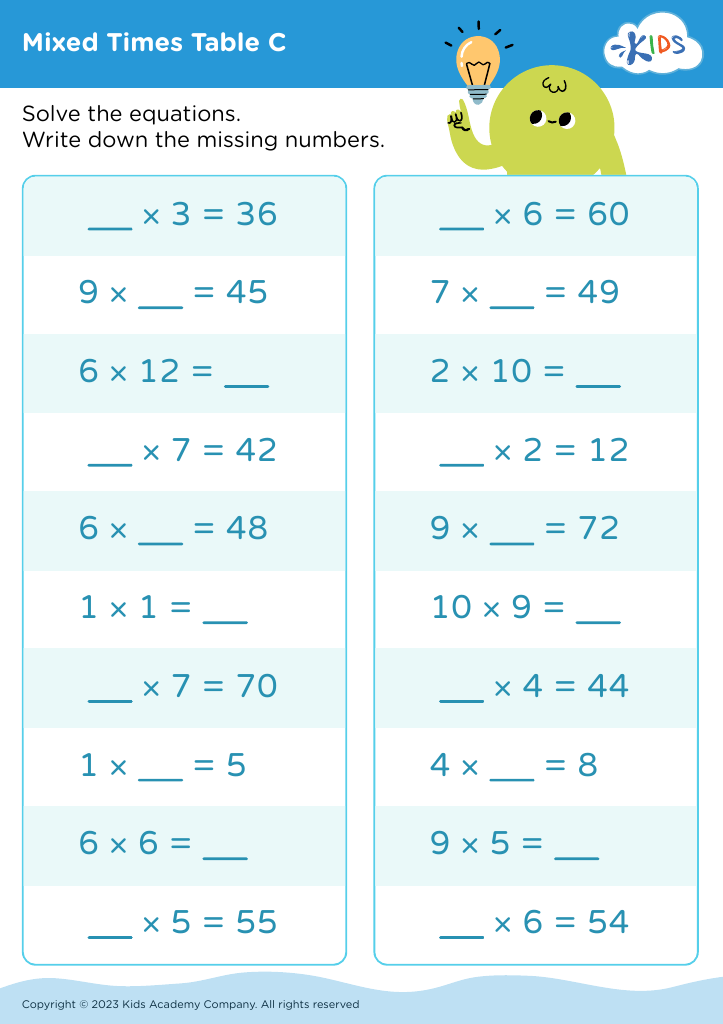


Mental math skills, particularly in mixed times tables, are vital for children aged 6 to 8, as they lay a strong foundation for future mathematical understanding. These skills enhance cognitive development, fostering quick thinking and problem-solving abilities that are essential across all subjects. By mastering mixed times tables, children improve their number sense and enhance their ability to manipulate numbers in various contexts, which boosts confidence in mathematics and academic performance.
Additionally, mental math promotes flexibility in thinking. It encourages students to recognize relationships between numbers and understand how multiplication interacts with other operations, paving the way for complex concepts in higher grades. When children can perform calculations mentally, they become more agile in mathematical reasoning, enabling them to tackle real-life problems more effectively.
For parents and teachers, focusing on mental math in this age group exhibits a commitment to holistic education. Engaging children in fun and interactive ways, such as games and challenges, ignites their interest in math. The joy of mastering mental arithmetic not only enhances their academic journey but is a critical life skill that helps them navigate daily experiences and builds resilience in problem-solving. Thus, prioritizing mental math helps shape brighter futures for children.