Times table familiarity Times Tables Worksheets for Ages 6-8
3 filtered results
-
From - To
Welcome to our Times Tables Worksheets designed for children ages 6-8! These engaging resources help young learners build a strong foundation in multiplication through interactive and fun activities. Our worksheets focus on times table familiarity, making complex concepts easier to grasp. With colorful visuals and varied exercises, kids can practice essential multiplication skills while enhancing their confidence and number sense. Perfect for both home and classroom use, these worksheets invite children to explore mathematics in a playful way. Join us in making math exciting and accessible, and watch as your child becomes a times table superstar! Perfect for educators and parents alike!
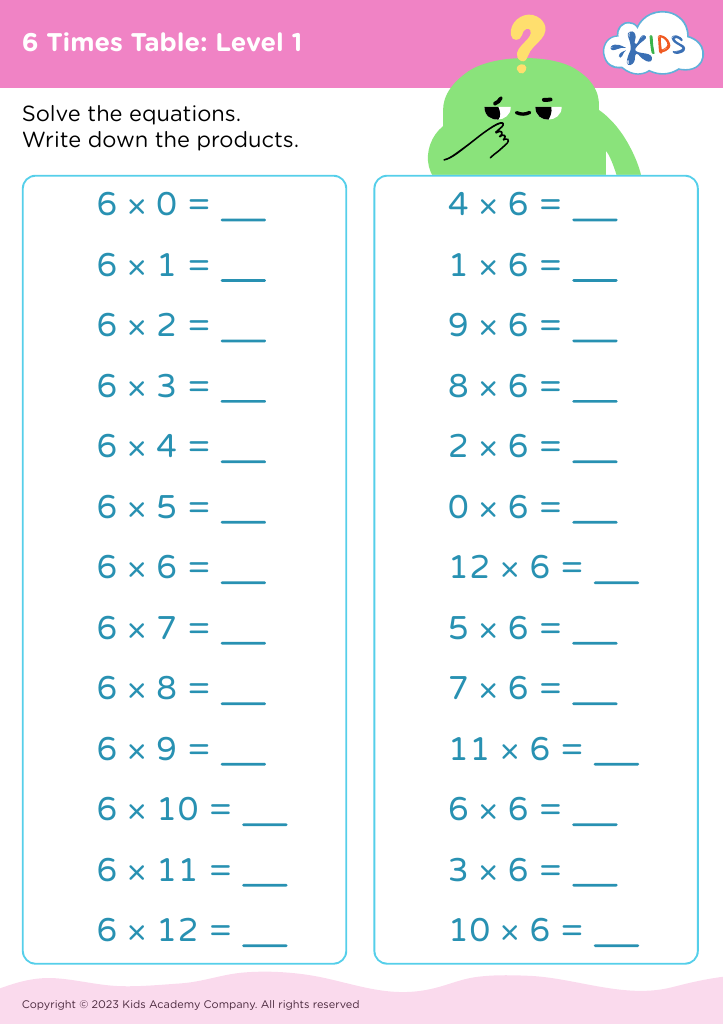
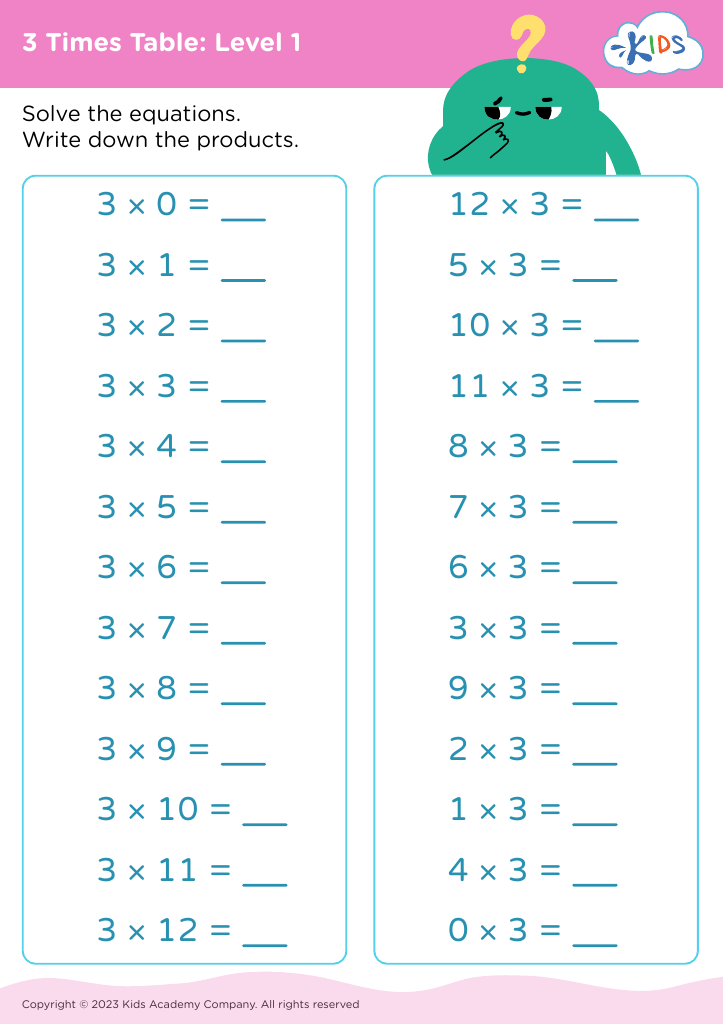
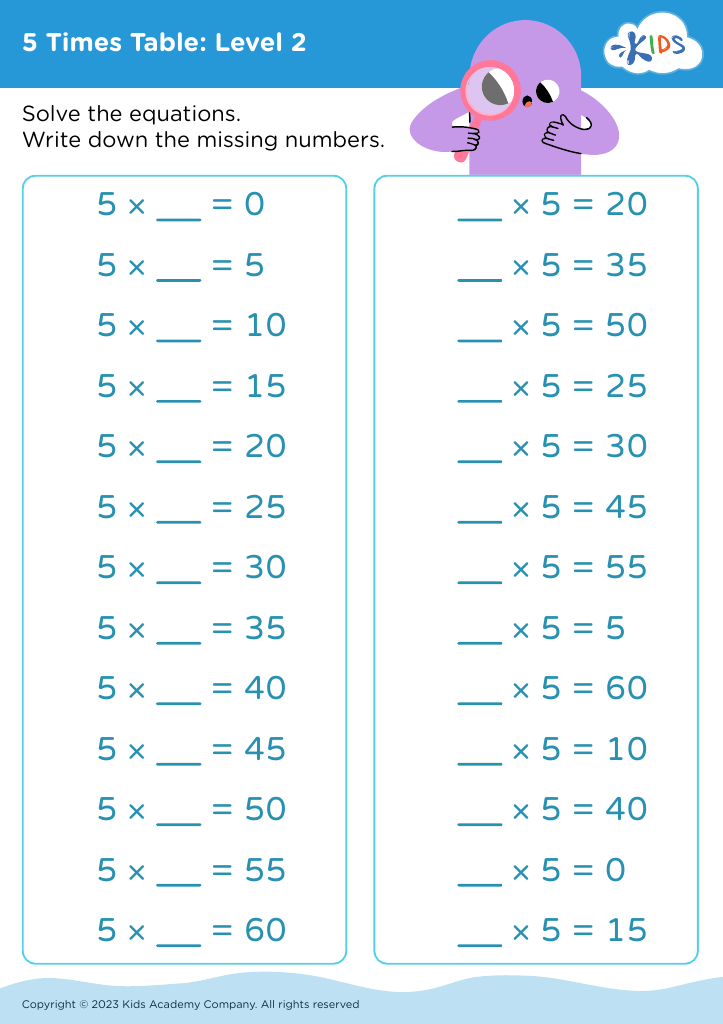





Familiarity with times tables is crucial for children ages 6-8 as it lays the foundational skills for mathematics that they will use throughout their education and daily life. At this age, students are developing their comprehension of multiplication, which is a key component of their math curriculum. When children master their times tables, they enhance their ability to solve more complex problems involving addition, subtraction, fractions, and eventually algebra. This competence fosters confidence, reduces anxiety around math, and contributes to a positive learning experience.
Furthermore, knowing times tables supports cognitive development and critical thinking skills. It encourages mental calculations, enabling children to quickly analyze and process mathematical information, which is essential in both academic settings and real-world situations like budgeting or estimating distances.
Parents and teachers play a vital role in encouraging this skill. Engaging children through games, songs, and intervention programs can make learning times tables enjoyable. Ultimately, instilling a strong understanding of multiplication not only positions students for success in math but also reinforces a lifelong appreciation for learning and problem-solving. Investing time and energy into mastering these skills now sets the stage for future academic achievements.








