
Understanding times tables Times Tables Worksheets for Ages 6-8
6 filtered results
Difficulty Level
Grade
Age
-
From - To
Subject
Activity
Standards
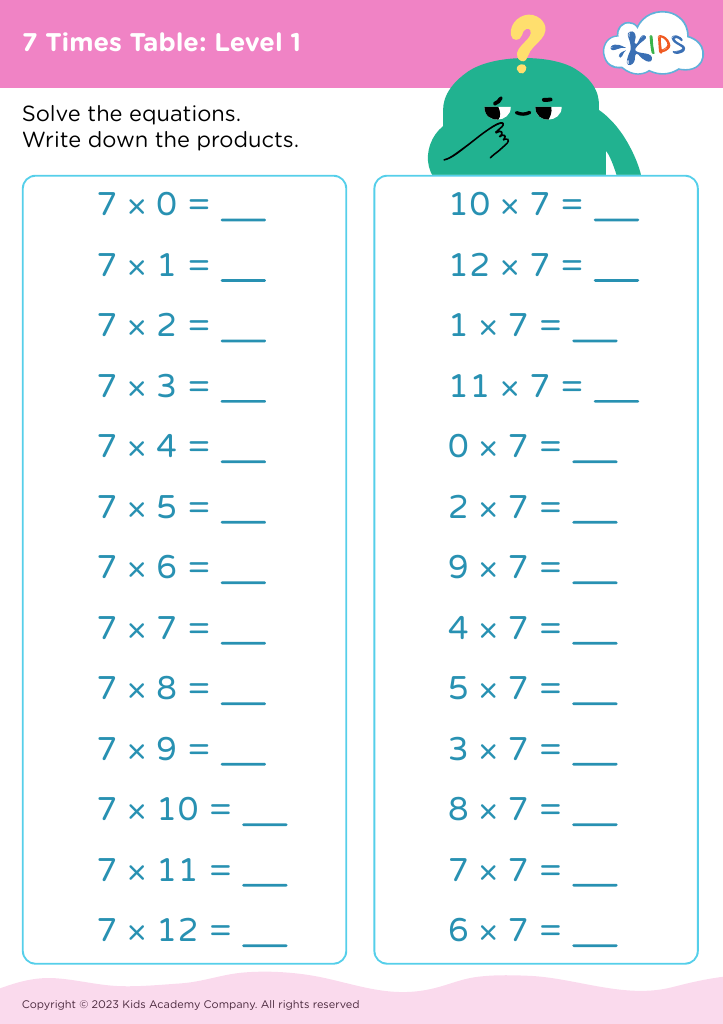
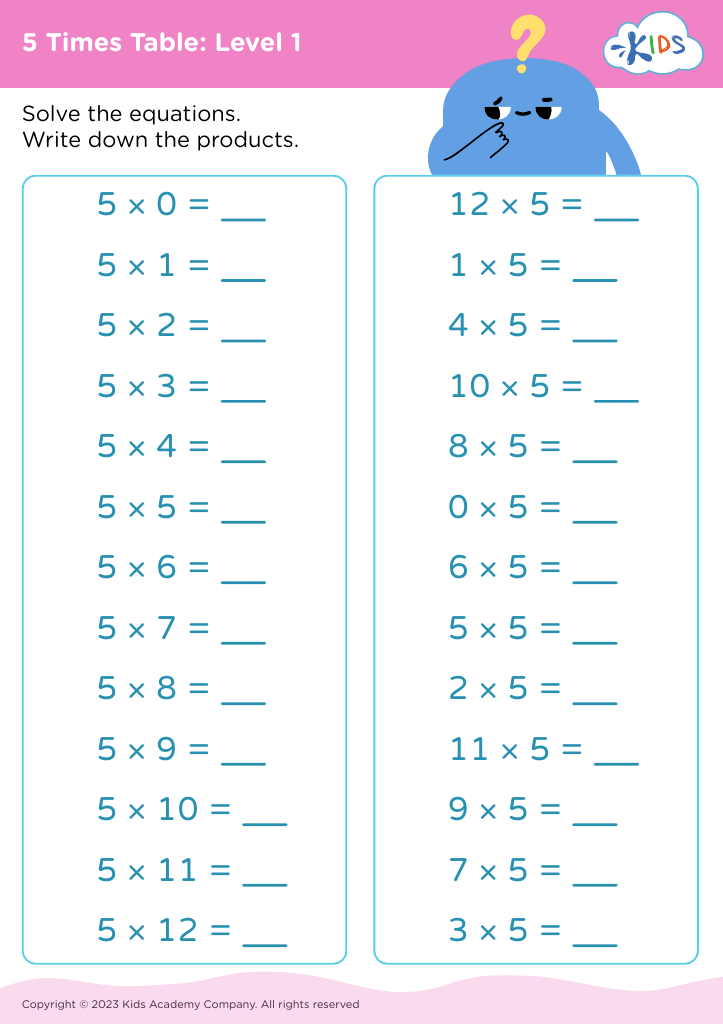
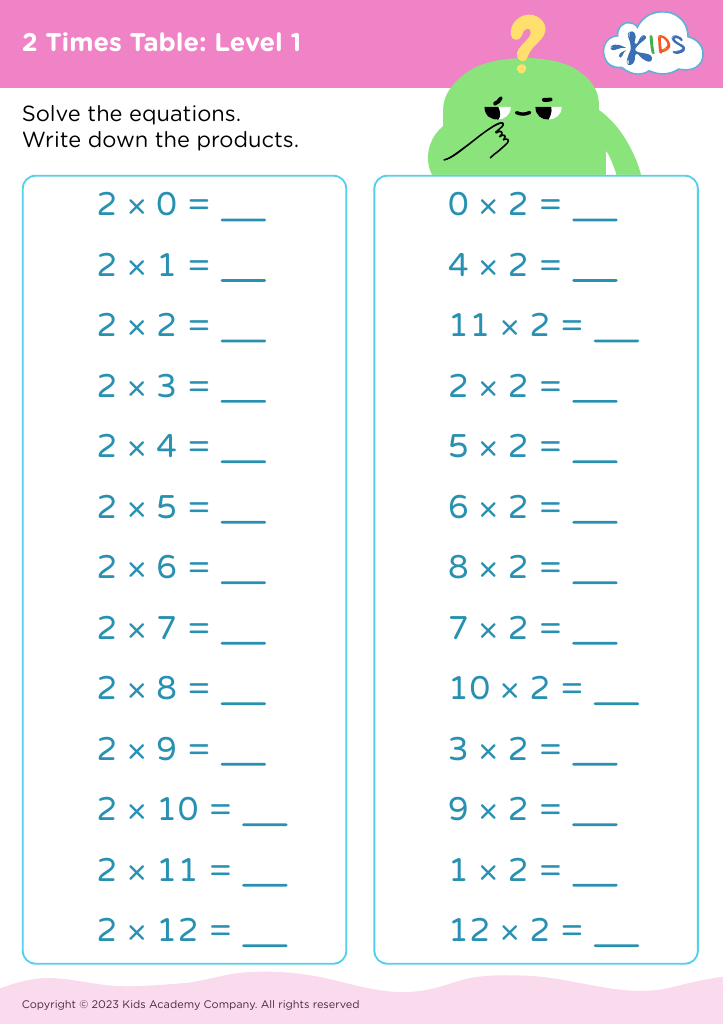
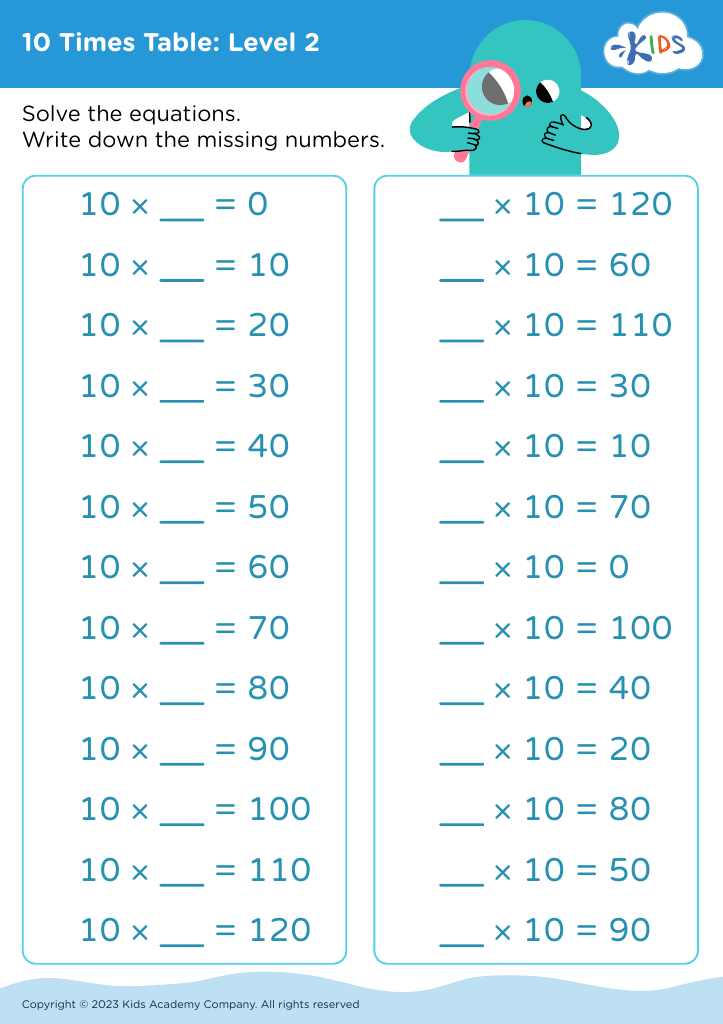
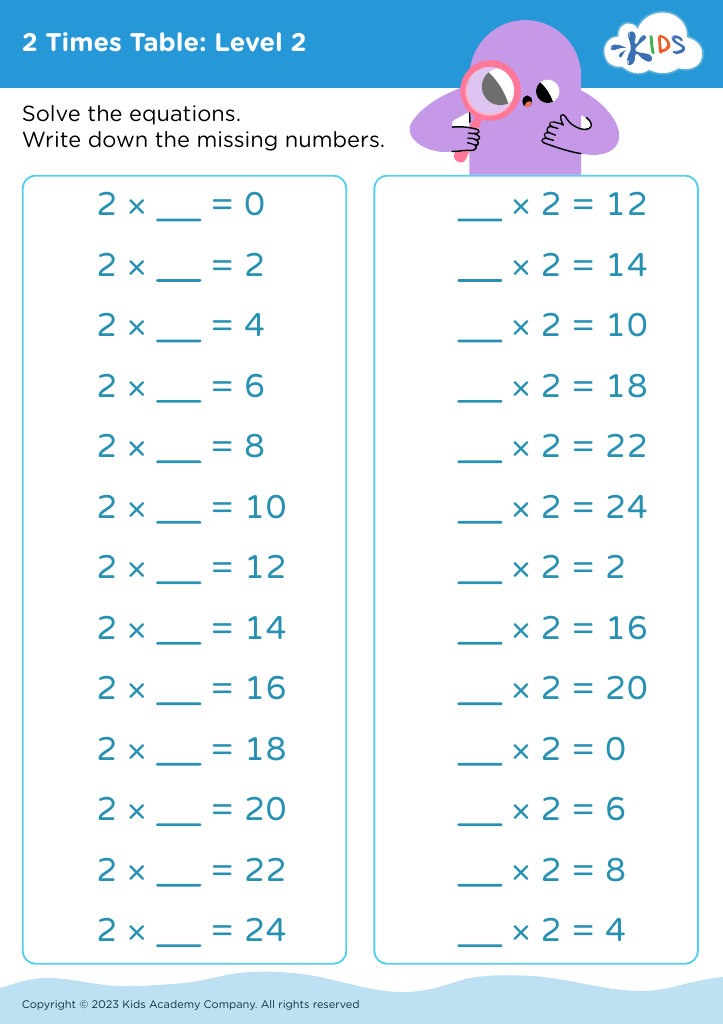
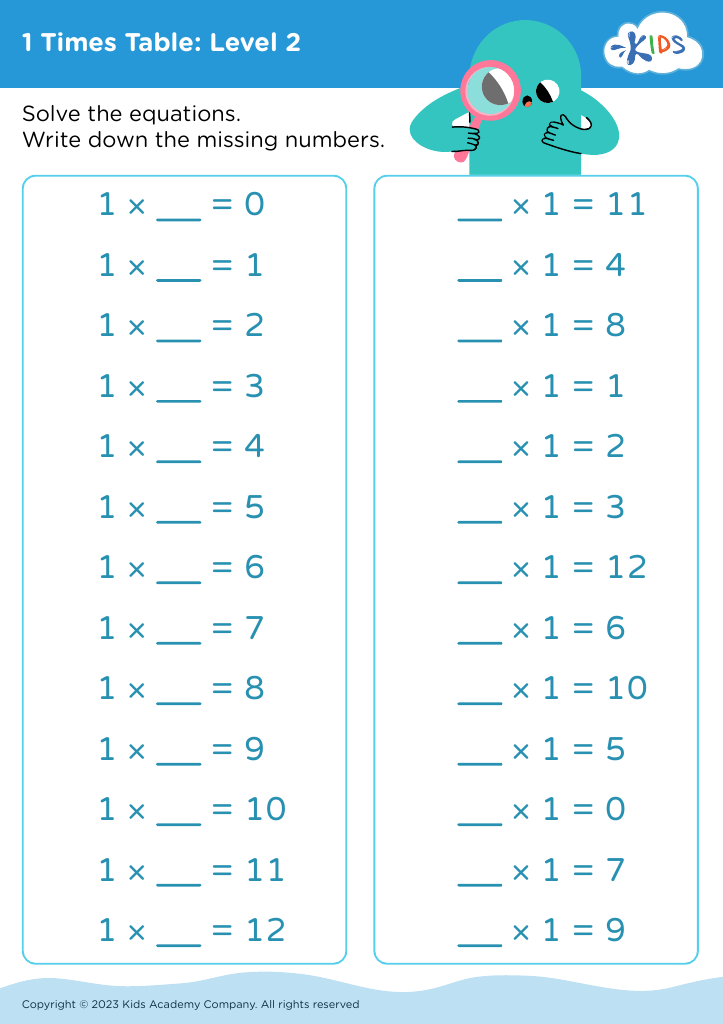
Unlock the power of multiplication for children ages 6-8 with our "Understanding Times Tables Worksheets." Designed to make learning engaging and fun, our worksheets help young learners grasp the concept of times tables through visual aids, interactive exercises, and repetition practice. Each worksheet targets essential skills, reinforcing numeracy and building confidence in math. With a variety of formats, kids will explore multiplication in exciting ways, paving the path for future math success. Whether at home or in the classroom, these resources empower educators and parents to support their child's mathematical journey effectively. Start building strong math foundations today with our engaging times tables worksheets!
Favorites
With answer key
Interactive
Join Kids Academy for Free
Who is primarily going to use this learning content?





Understanding times tables is crucial for children aged 6-8, as it serves as the foundation for their mathematical development. Mastery of times tables not only enhances arithmetic skills but also boosts confidence in problem-solving. When children can quickly recall multiplication facts, they can tackle more complex math concepts such as division, fractions, and participation in word problems, which are essential for later grades.
Parents and teachers should care about this because early mastery fosters a positive attitude towards math, reducing math anxiety and building a growth mindset. Encouraging playful engagement with multiplication—through games, songs, or visual aids—makes learning enjoyable and accessible. Additionally, proficiency in times tables encourages independent learning, empowering students to handle homework and assessments with ease.
Moreover, understanding multiplication helps children grasp broader concepts in subjects like science, technology, and even everyday situations, such as budgeting and cooking. This skill will aid them throughout their educational journey and beyond into real life, where mathematical reasoning is vital. Investing the effort now in mastering times tables creates not only capable learners but also enthusiastic problem solvers ready to tackle any future challenges that come their way.








