Animal knowledge Reading Non-Fiction Worksheets for Ages 6-8
3 filtered results
-
From - To
Explore the fascinating world of animals with our "Animal Knowledge Reading Non-Fiction Worksheets" designed for children ages 6-8. These engaging worksheets are perfect for young learners, introducing them to various animal species, habitats, and behaviors through fun facts and informative texts. Each worksheet is crafted to enhance reading comprehension and critical thinking skills while sparking curiosity about the animal kingdom. With colorful illustrations and interactive activities, students will enjoy discovering new information. Perfect for classroom use or home learning, these worksheets make learning about animals exciting and educational. Dive into the wonders of wildlife today!
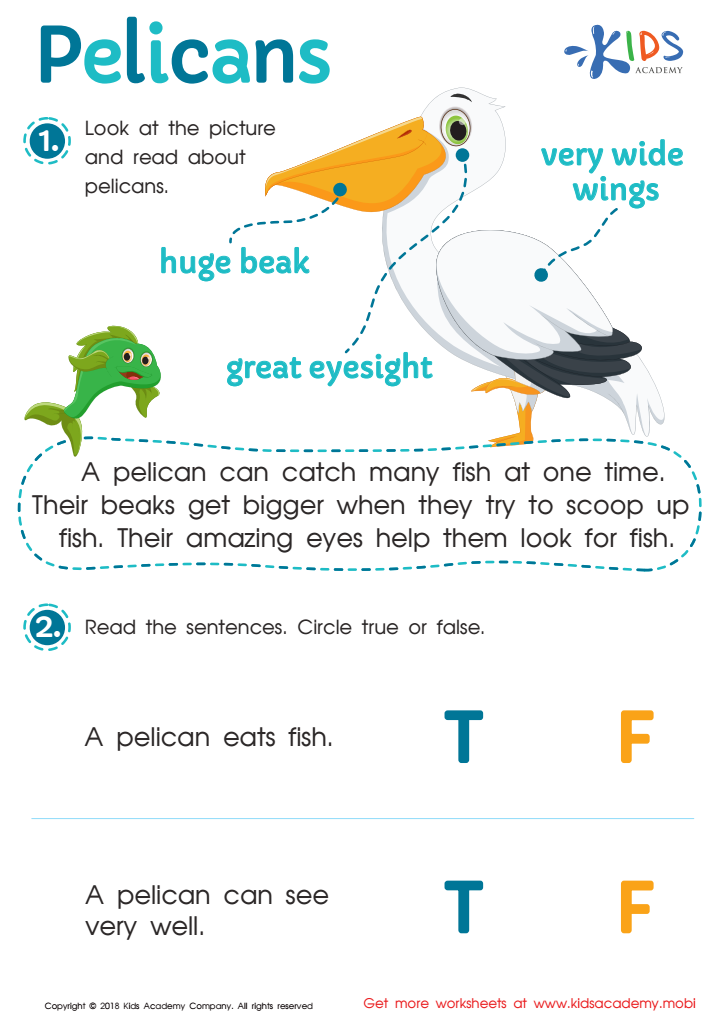
Pelicans Worksheet
 Assign to My Students
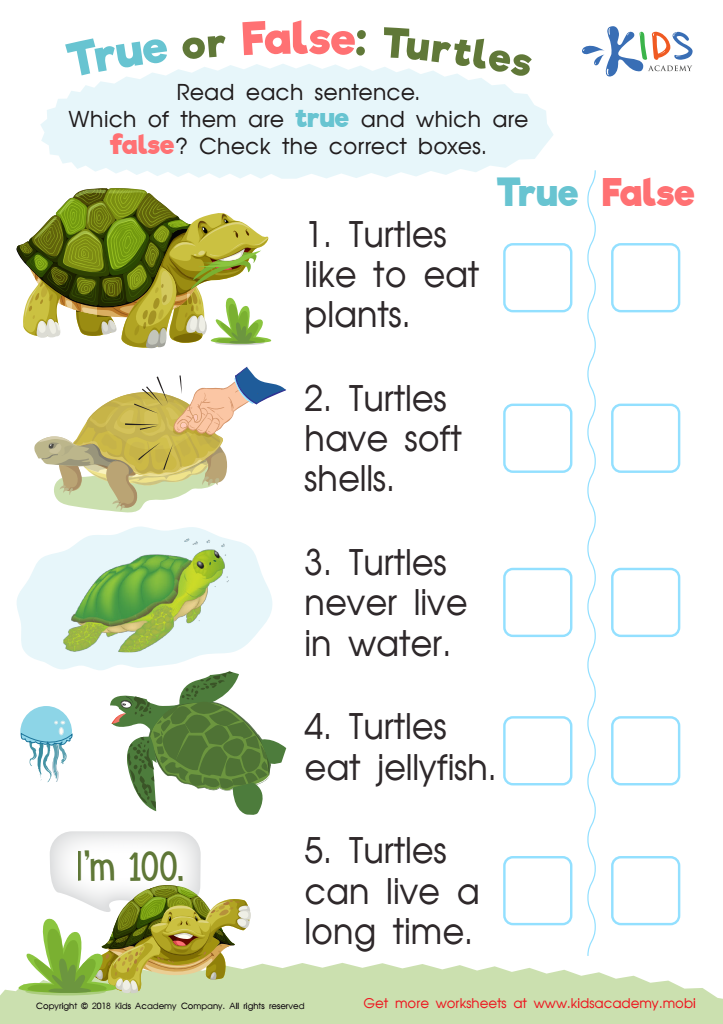
True or False: Turtles Worksheet
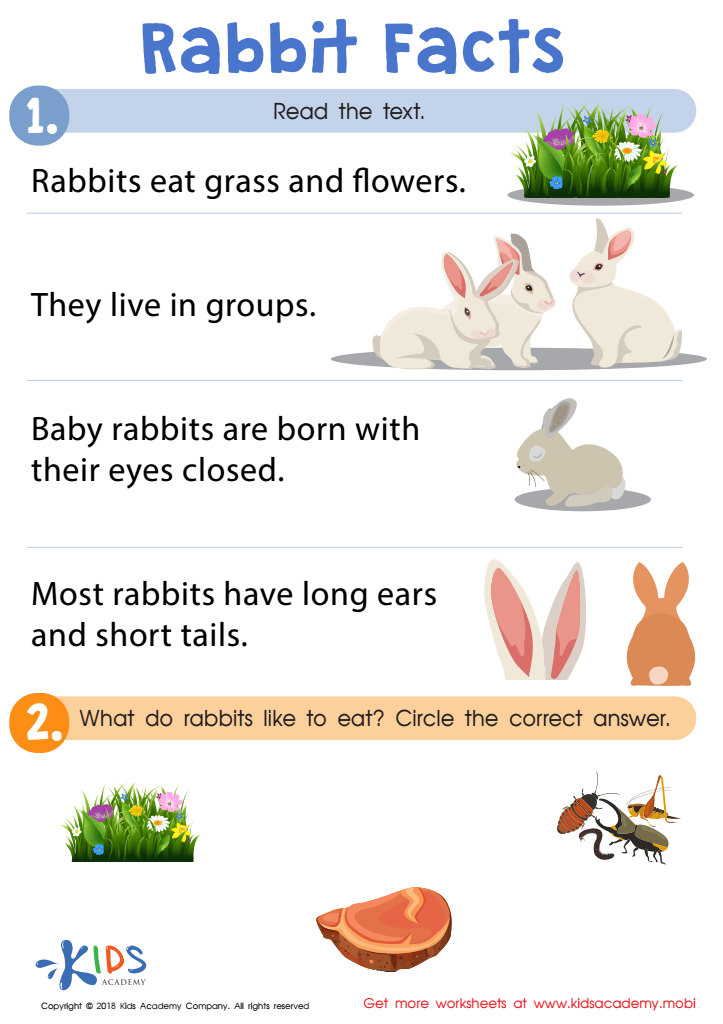
Rabbit Facts Worksheet








Parents and teachers should prioritize animal knowledge reading non-fiction for ages 6-8 because it nurtures curiosity and fosters a love for learning. At this developmental stage, children are naturally inquisitive, and engaging with accurate, well-illustrated texts about animals allows them to explore the diversity of life on Earth. This form of reading not only enhances vocabulary and comprehension skills but also provides informative content that encourages critical thinking about ecosystems, conservation, and the interconnectedness of species within their habitats.
Furthermore, understanding animals can cultivate empathy and respect for all living creatures. When children learn about different animal behaviors, habitats, and challenges they face, they develop a sense of responsibility toward the environment. Animal non-fiction can also serve as a springboard for discussions about larger themes such as biodiversity, sustainability, and climate change, fostering informed future citizens.
Incorporating animal knowledge in reading supports various learning styles, making it an enriching choice for educators and parents alike. These books can spark meaningful conversations at home and in the classroom, ultimately empowering children to appreciate the beautiful complexity of the world around them while developing essential literacy and social skills.








