Enhancing observation skills Reading Non-Fiction Worksheets for Ages 6-8
4 filtered results
-
From - To
Discover the perfect resource to boost your child's critical thinking with our "Enhancing Observation Skills Reading Non-Fiction Worksheets" designed for ages 6-8. These engaging worksheets help young learners develop their observation abilities by analyzing informative texts. Each activity encourages attention to detail, comprehension, and discussion, making reading interactive and fun. Ideal for classroom use or home practice, these worksheets feature captivating topics and colorful illustrations that will keep children entertained while fostering their intellectual growth. Unlock their potential today and pave the way for a lifetime of successful learning experiences with our expertly crafted educational tools.
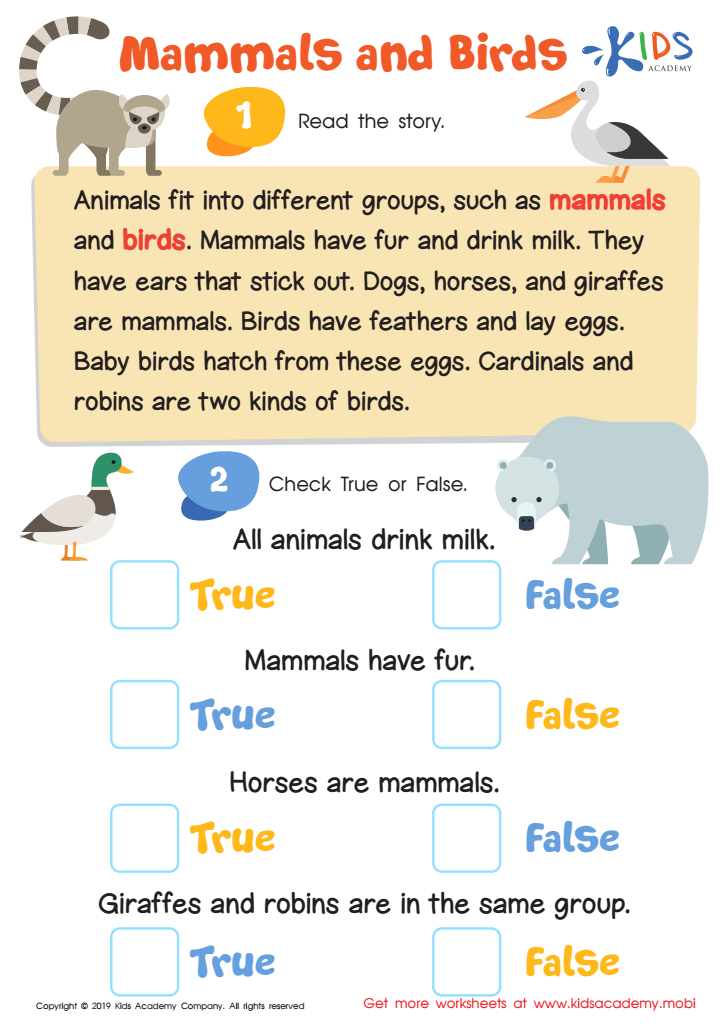
Mammals and Birds Worksheet
 Assign to My Students
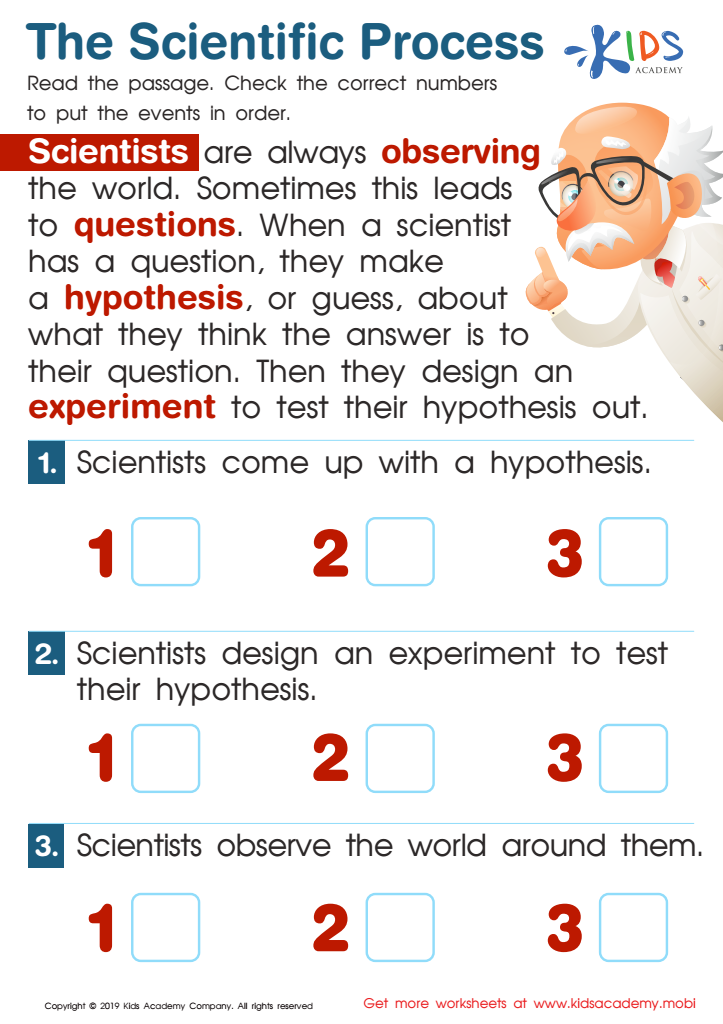
The Scientific Process Worksheet
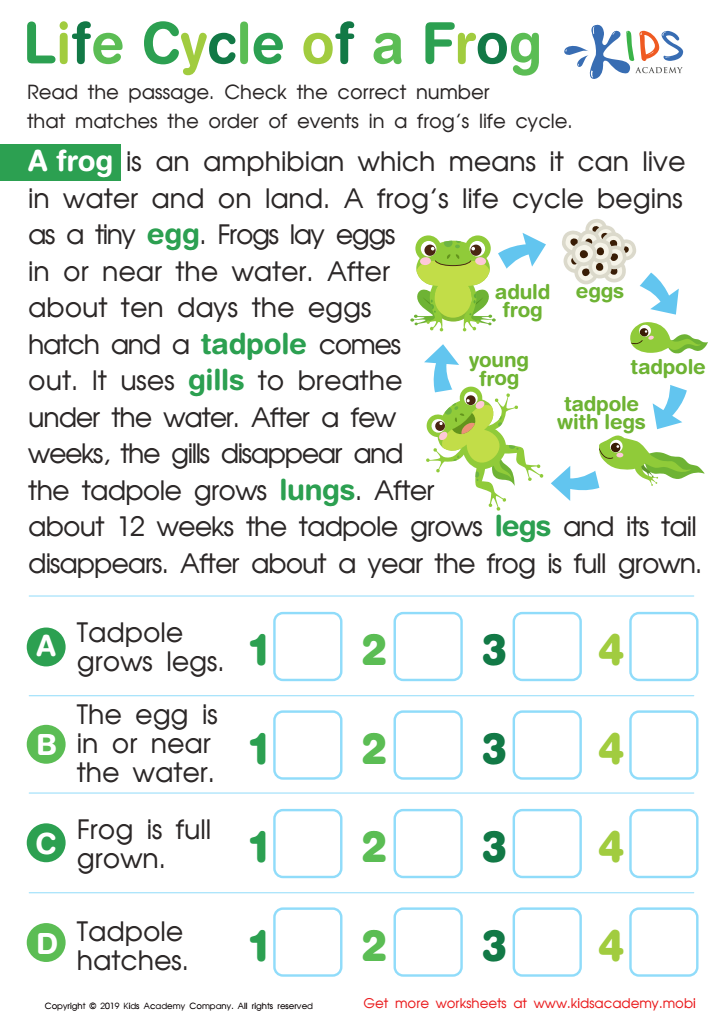
Life Cycle of a Frog Worksheet
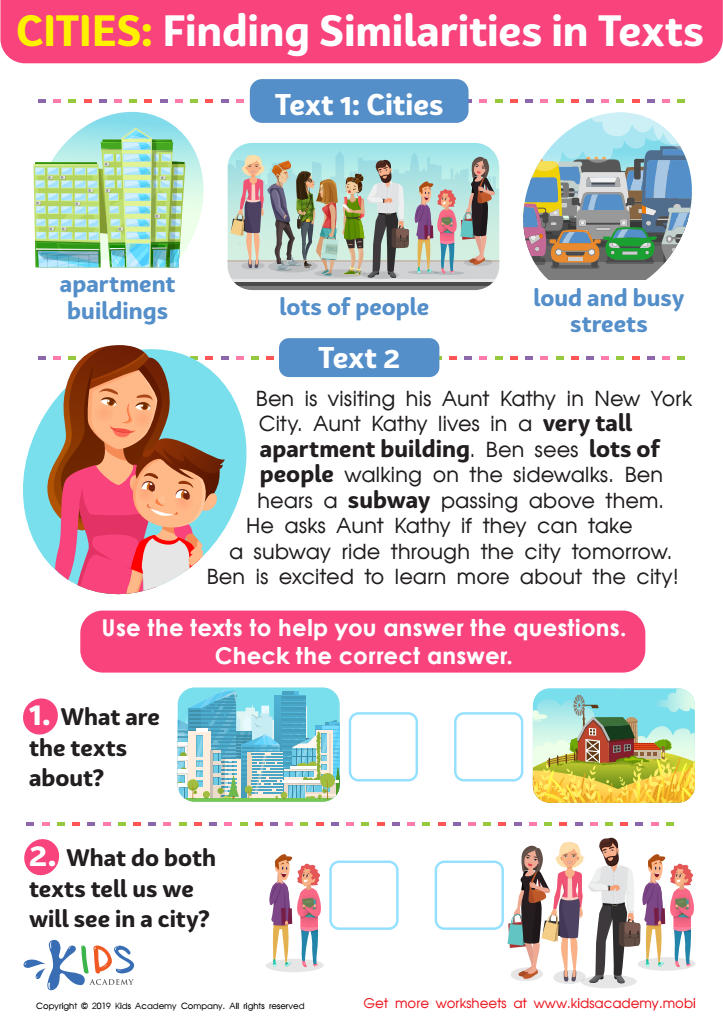
Cities: Finding Similarities Worksheet








Enhancing observation skills while reading non-fiction for children aged 6-8 is crucial for several reasons. At this developmental stage, children are curious and eager to learn about the world around them. Non-fiction texts introduce them to real-world facts, fostering a habit of seeking knowledge and understanding beyond their immediate experiences.
Firstly, sharpening observation skills helps children grasp detailed information better, promoting critical thinking. It encourages them to notice nuances, leading to deeper comprehension and retention of information. For instance, paying attention to visuals and details in non-fiction books supports greater understanding of complex concepts like the life cycle of a butterfly or the basics of weather patterns.
Secondly, good observation skills are foundational for scientific thinking. They lay the groundwork for young learners to develop inquiry-based approaches, enhancing their ability to conduct experiments, make predictions, and draw conclusions.
Furthermore, promoting these skills early reinforces good study habits. Observant children are more likely to become thorough, detail-oriented learners, which is beneficial across all subjects. They learn to ask questions, seek explanations, and appreciate different perspectives.
Thus, parents and teachers nurtures a child's growth into informed, thoughtful individuals by emphasizing and enhancing observation skills while reading non-fiction, ultimately preparing them for lifelong learning and critical analysis.








