Historical Knowledge Reading Non-Fiction Worksheets for Ages 6-8
5 filtered results
-
From - To
Explore the captivating world of history with our "Historical Knowledge Reading Non-Fiction Worksheets" designed specifically for children ages 6-8. These engaging worksheets help young learners develop essential reading skills while diving into fascinating historical topics. Each activity encourages critical thinking, comprehension, and vocabulary building through exciting narratives and informative passages. Ideal for classroom settings or at-home learning, our worksheets foster a love for history by igniting curiosity about the past. Enhance your child's educational journey and cultivate their understanding of historical events, figures, and themes with these valuable resources today! Suitable for both parents and educators seeking to enrich young minds.
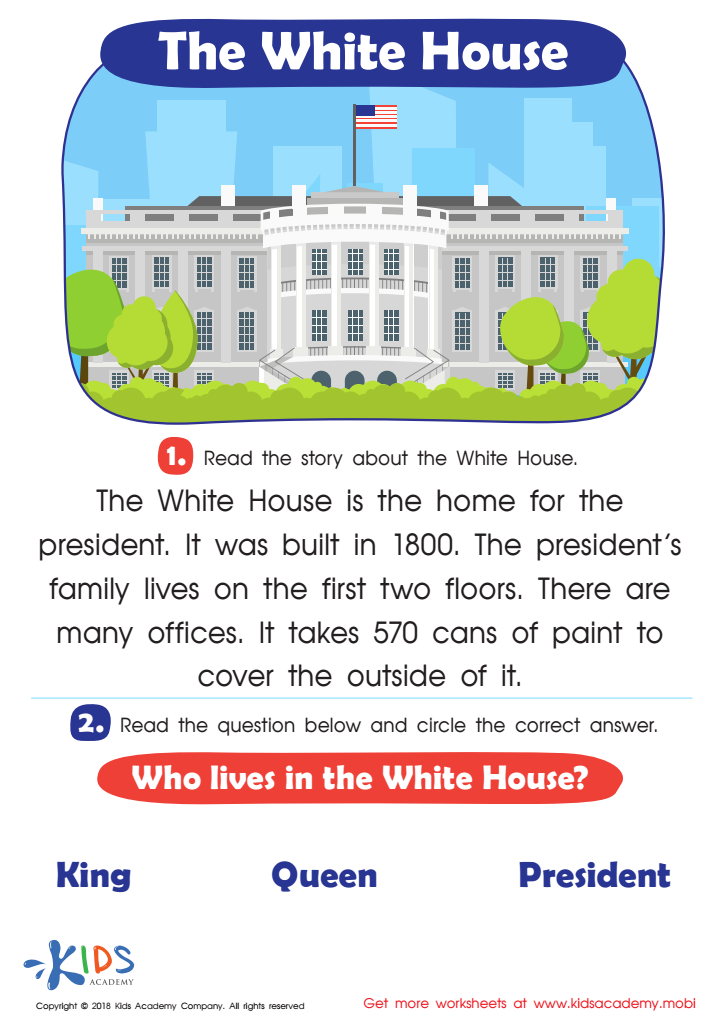
White House Worksheet
 Assign to My Students
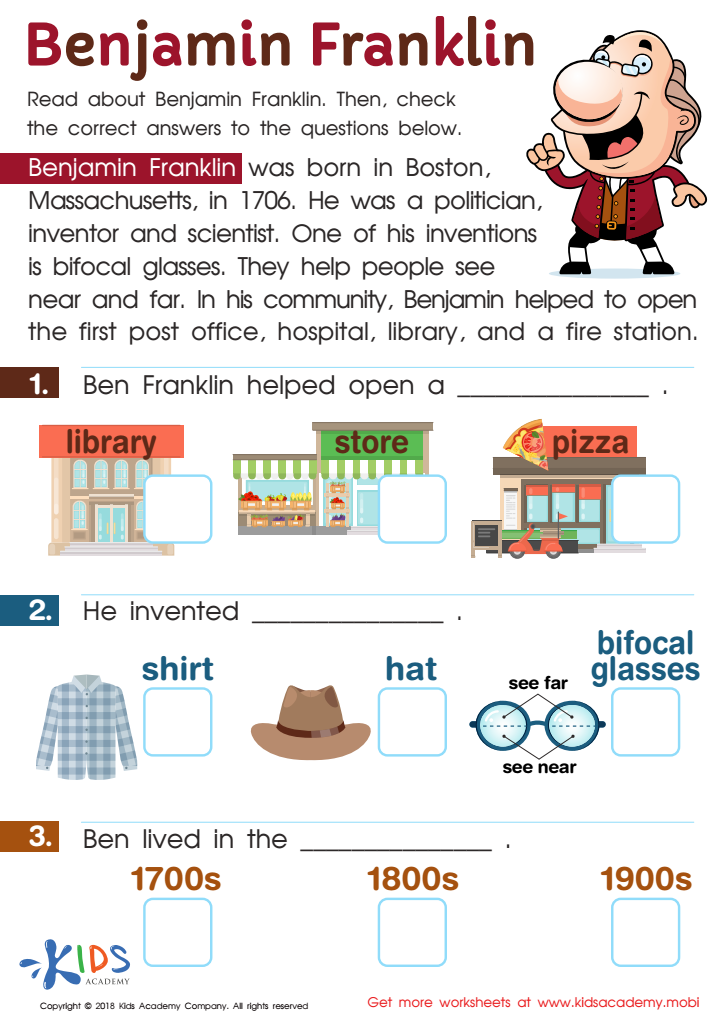
Benjamin Franklin Worksheet
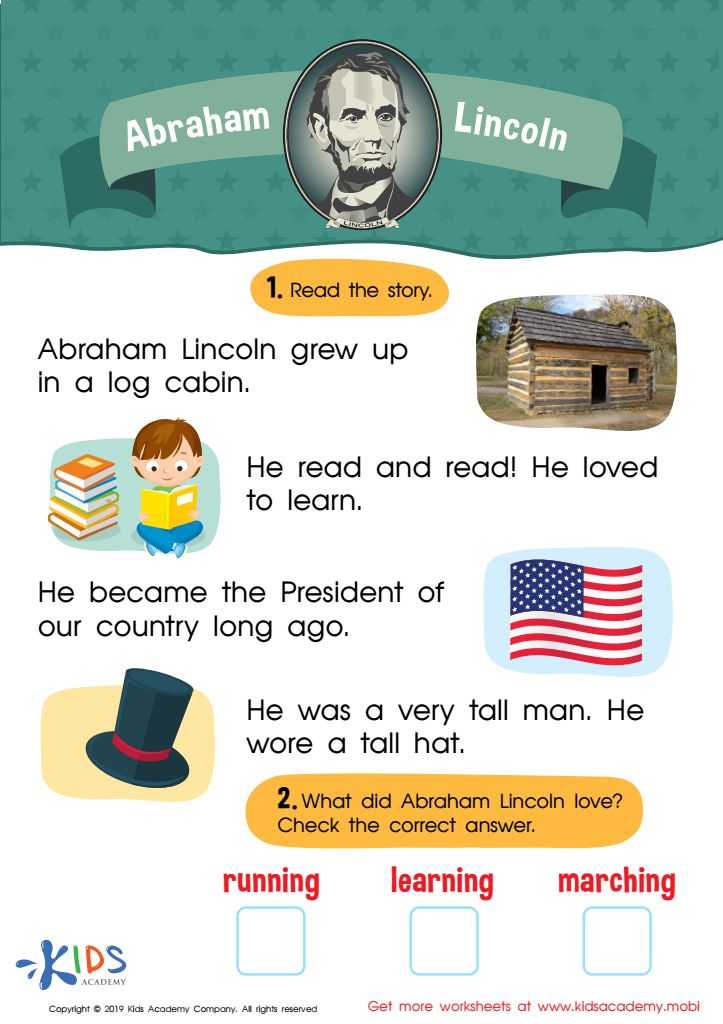
Abraham Lincoln Worksheet
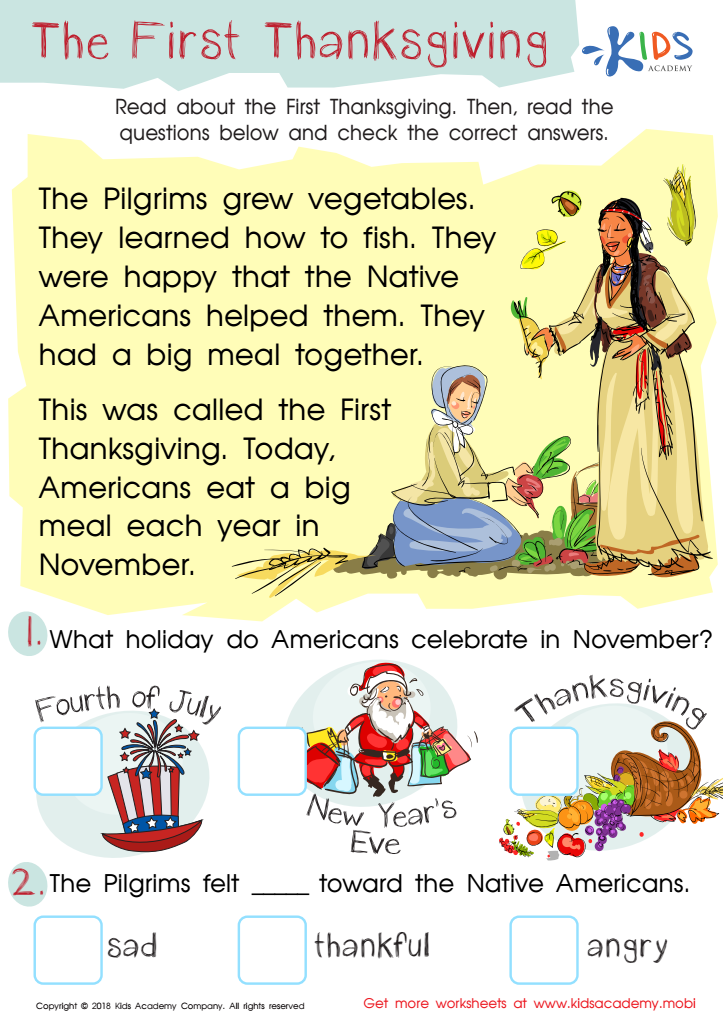
Assessment: First Thanksgiving Worksheet
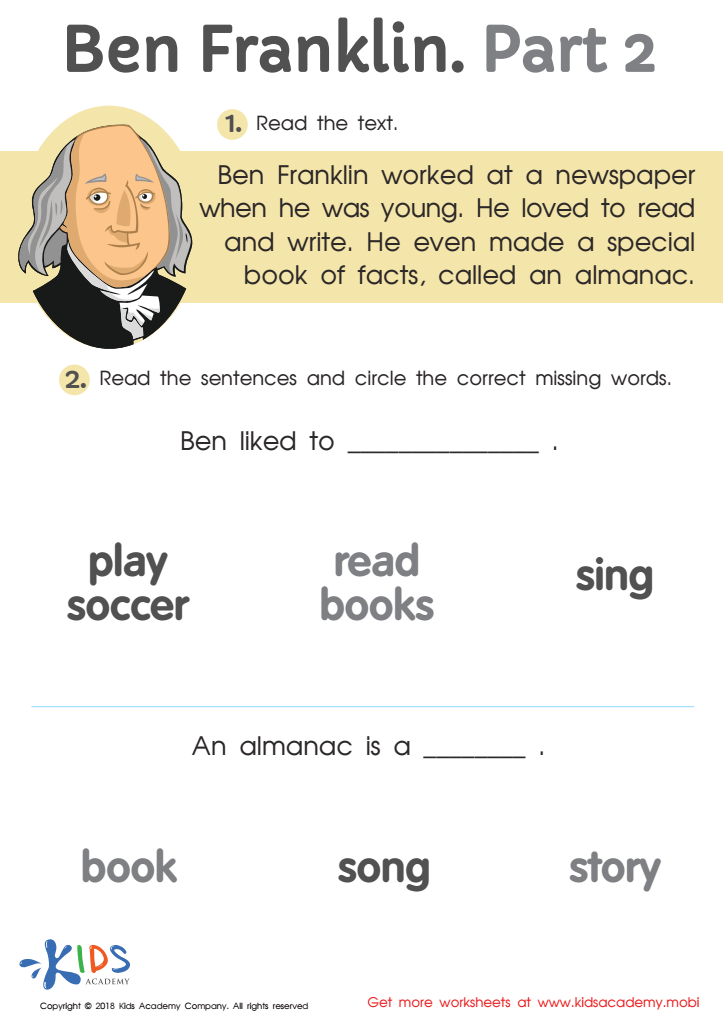
Ben Franklin Part 2 Worksheet








Parents and teachers should prioritize historical knowledge in non-fiction reading for children aged 6-8 for several key reasons. First, early exposure to history helps young learners develop a foundational understanding of the world, promoting curiosity about societies, cultures, and significant events. Non-fiction texts for this age group are crafted to engage young minds, presenting complex ideas in relatable ways that foster a love for learning.
Secondly, historical knowledge aids in the development of critical thinking skills. As children explore various perspectives and narratives, they learn to analyze information, differentiate facts from opinions, and understand the significance of context. This skill set is vital in a rapidly changing society where discernment is essential.
Moreover, incorporating history into education helps promote social-emotional development. Stories of resilience, courage, and community can inspire empathy and instill values like respect and responsibility. These early lessons shape children's identities and encourage them to become informed and active citizens.
Lastly, understanding history fosters a sense of belonging and connection. As children learn about diverse histories, they can appreciate both their own backgrounds and the richness of others, ultimately promoting inclusion and a more comprehensive worldview. Overall, integrating historical knowledge into early reading experiences is vital for holistic development.








