Logical Reasoning Reading Non-Fiction Worksheets for Ages 6-8
4 filtered results
-
From - To
Unlock your child's potential with our "Logical Reasoning Reading Non-Fiction Worksheets for Ages 6-8." Designed to enhance critical thinking, these engaging worksheets help young learners develop essential logical reasoning skills through interactive non-fiction texts. Each activity encourages kids to analyze information, draw conclusions, and make inferences, laying a strong foundation for academic success. Ideal for classroom and home use, our worksheets cater to children’s interests, keeping them motivated and engaged in their learning journey. Help your child excel in comprehension and critical thinking with these expertly crafted resources from Kids Academy!
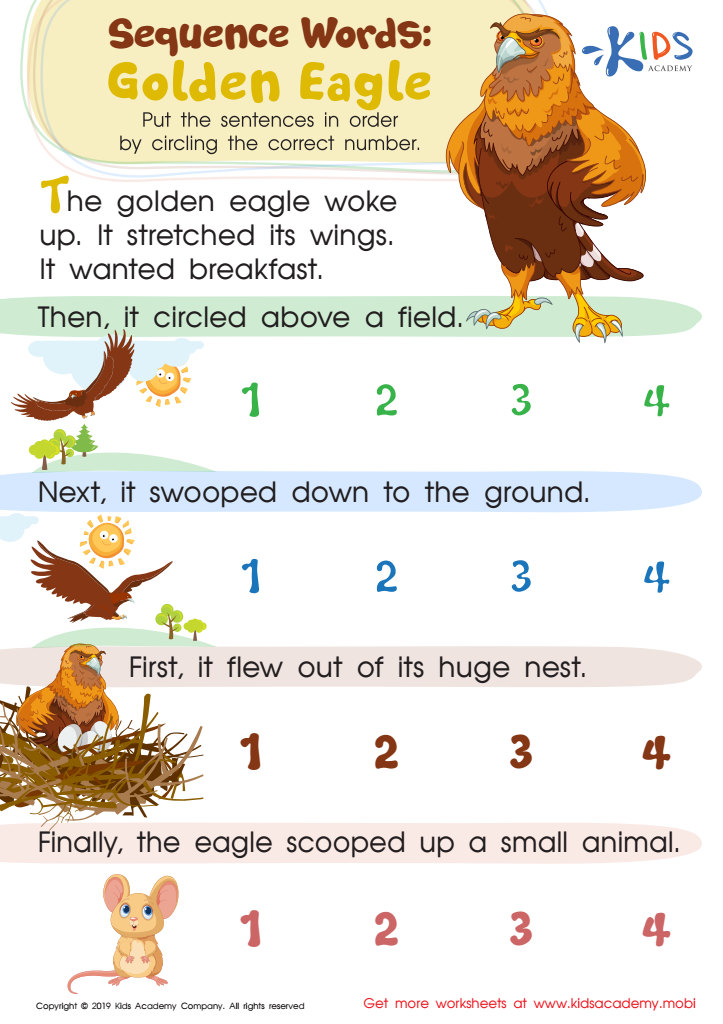
Sequence Word Eagle Worksheet
 Assign to My Students
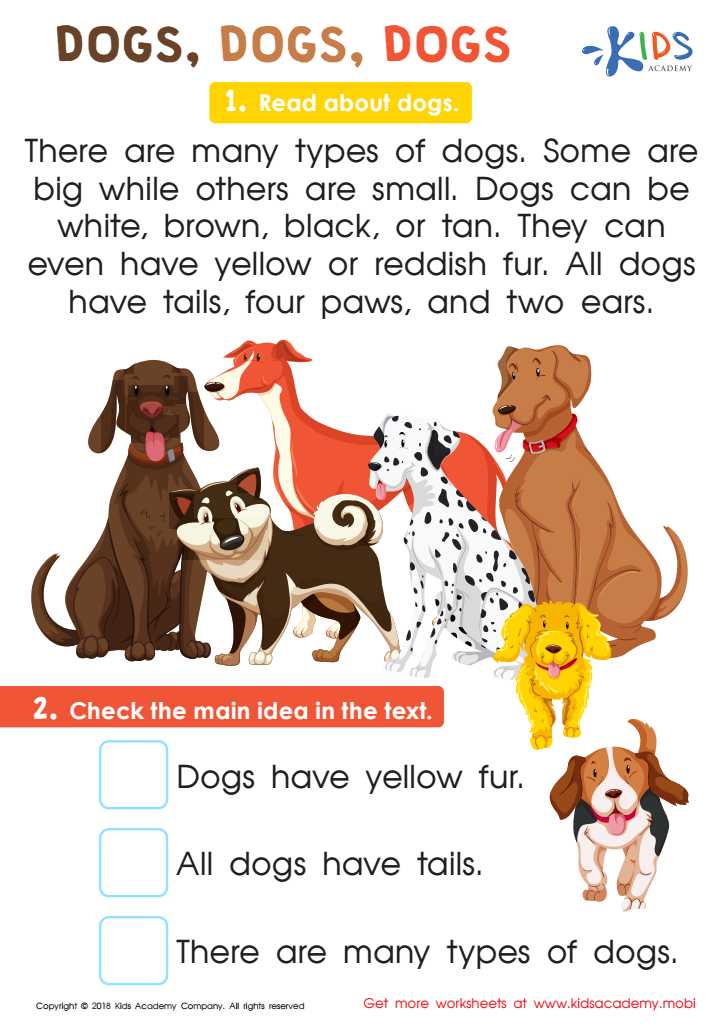
Dogs, Dogs Worksheet
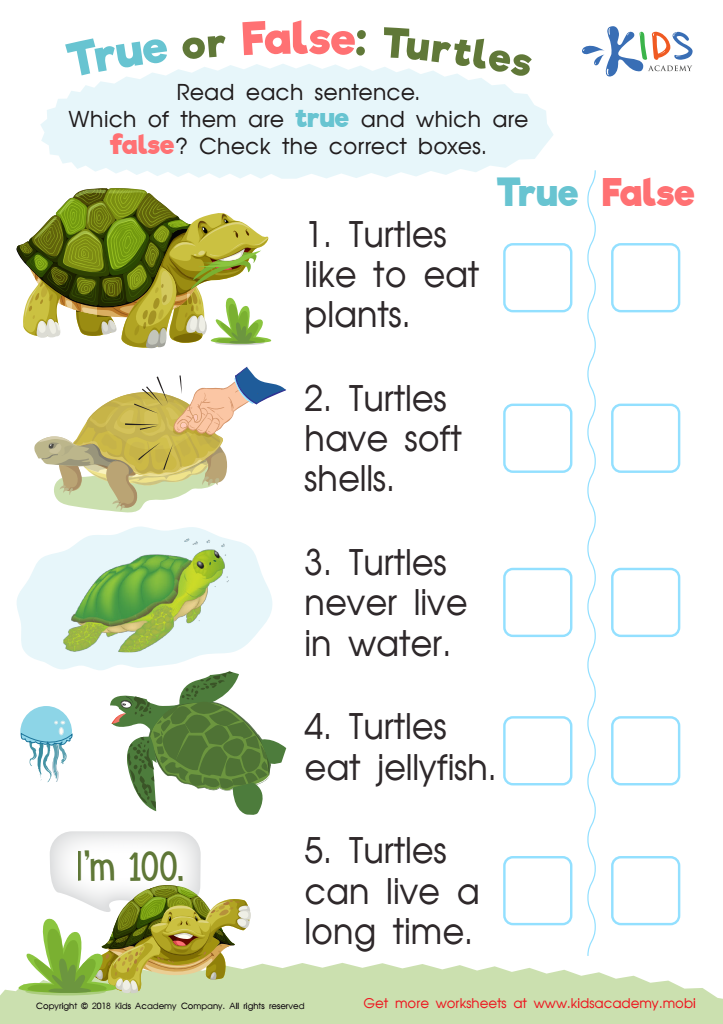
True or False: Turtles Worksheet
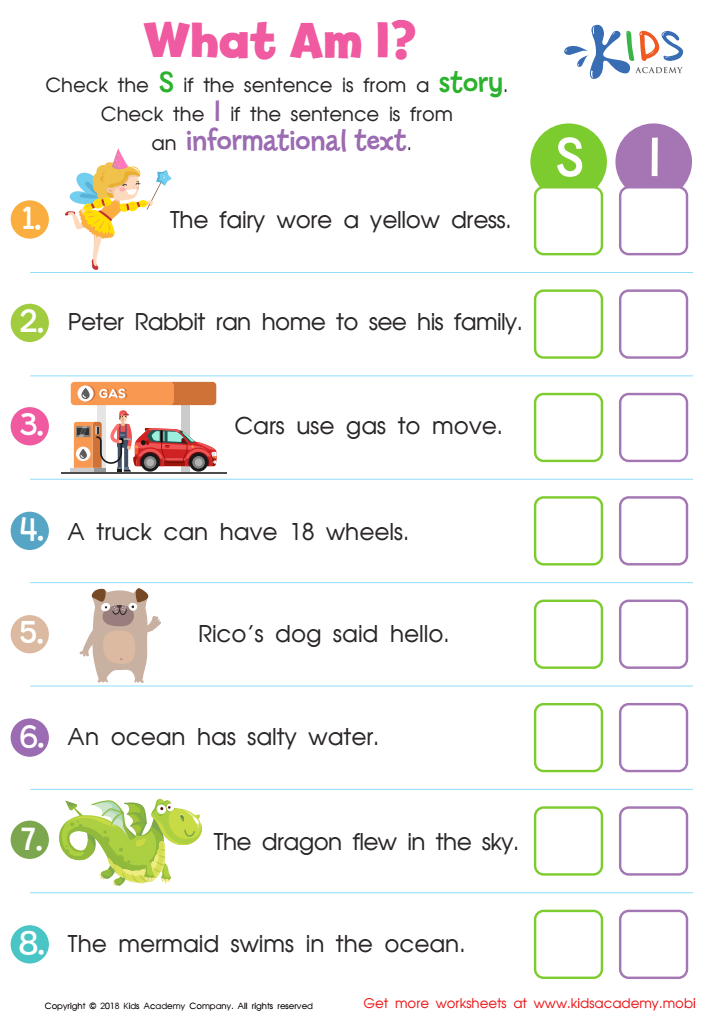
What Am I? Worksheet








At ages 6-8, children are not only refining their reading skills but also developing crucial cognitive abilities that lay the groundwork for future learning and problem-solving. Engaging in logical reasoning through non-fiction reading is particularly important during this formative period.
Firstly, non-fiction materials introduce young learners to real-world knowledge and vocabulary, directly expanding their understanding of how the world operates. This type of content often requires kids to engage with new concepts, enhancing their cognitive growth and critical thinking skills.
Logical reasoning aids children in understanding cause-and-effect relationships, recognizing patterns, and distinguishing between fact and opinion. As kids learn to process information logically, they become better equipped to solve problems, think critically, and make informed decisions—skills that are invaluable in academic settings and daily life.
Furthermore, fostering these abilities at an early age enhances academic performance across subjects. Logical reasoning and non-fiction comprehension contribute significantly to achievements in science, mathematics, and advanced literacy.
Parents and teachers focus on logical reasoning and non-fiction reading because these skillsets not only bolster a child's immediate academic capabilities but also pave the way for long-term intellectual and personal development. Nurturing these talents equips children with foundational tools for lifelong learning and success.








