Understanding life cycles Reading Non-Fiction Worksheets for Ages 6-8
3 filtered results
-
From - To
Discover the fascinating world of life cycles with our engaging non-fiction reading worksheets designed for ages 6-8! These worksheets help young learners explore the different stages of various organisms, from butterflies to plants, through captivating texts and visuals. By encouraging critical thinking and comprehension skills, our resources make learning about biology both fun and accessible. Ideal for classroom activities or at-home education, each worksheet features age-appropriate content, questions, and interactive elements that promote a deeper understanding of life cycles. Get your kids excited about nature and science while building essential reading skills! Explore our collection today!
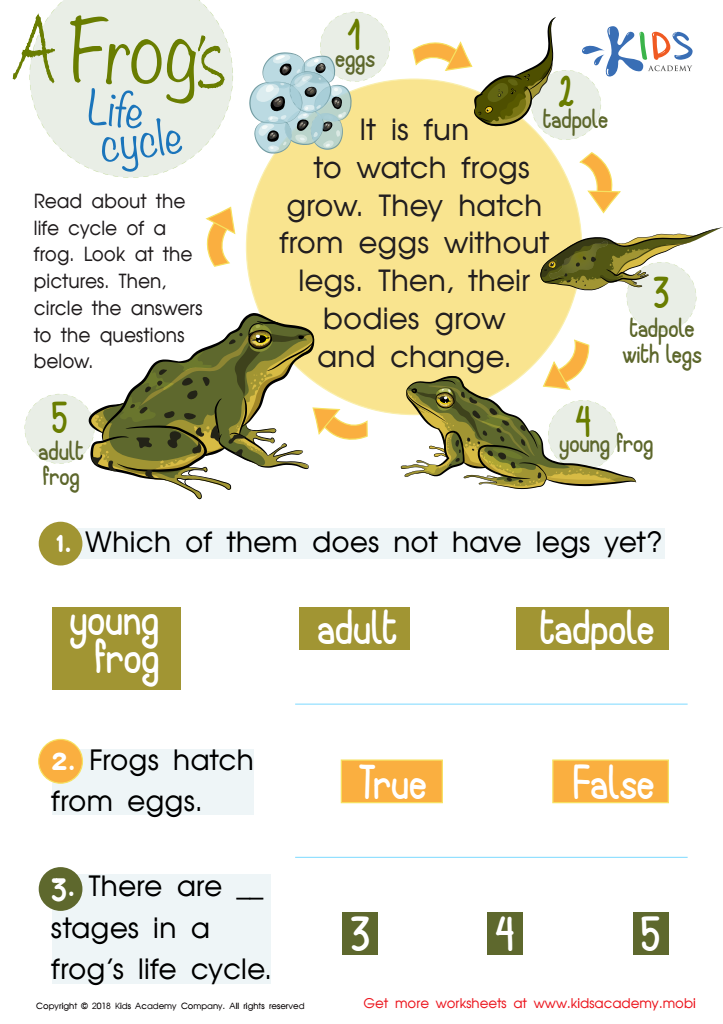
A Frog’s Life Cycle Worksheet
 Assign to My Students
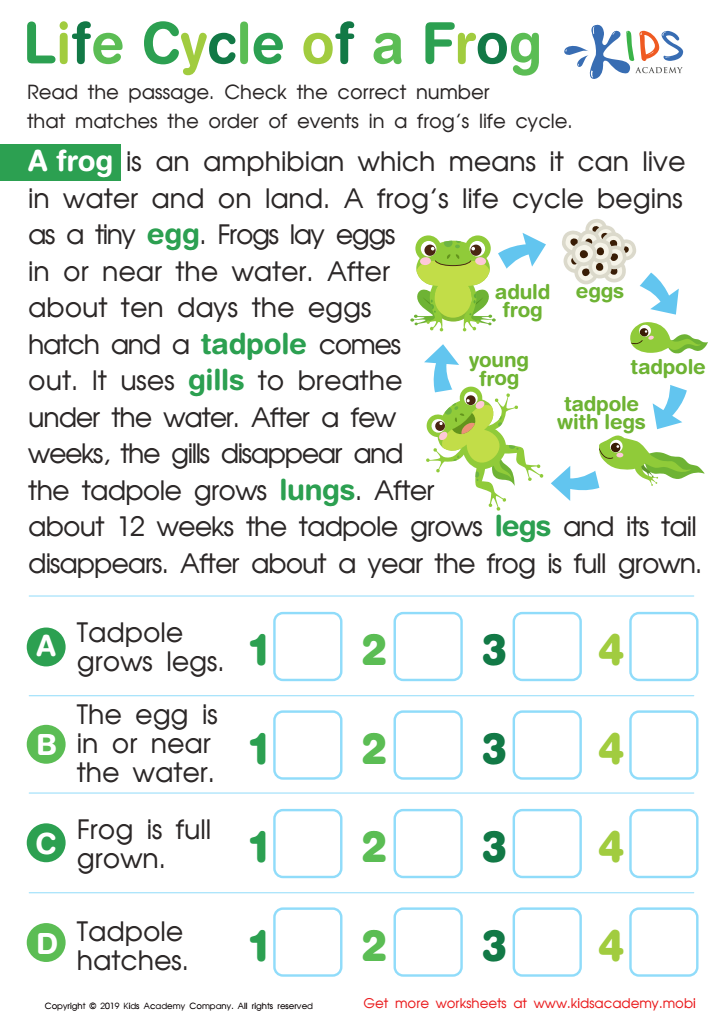
Life Cycle of a Frog Worksheet
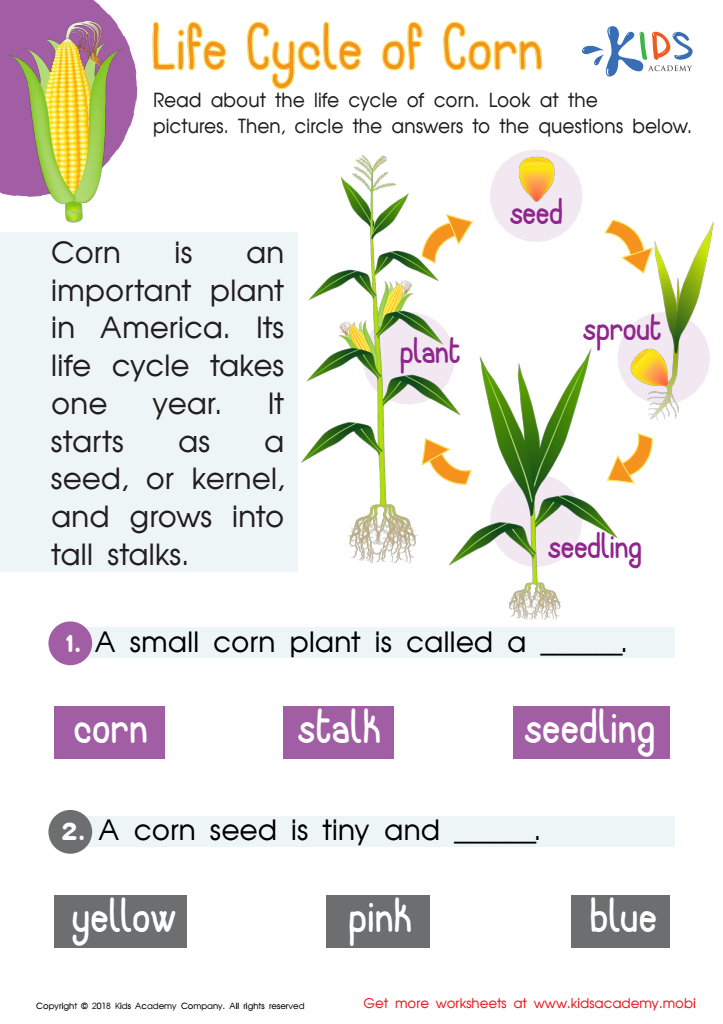
Life Cycle of Corn Worksheet








Understanding life cycles is crucial for young learners, particularly those aged 6-8, as it fosters a holistic grasp of nature and promotes critical thinking. Reading non-fiction about life cycles helps children grasp the complex processes through which living things develop, from plants to animals. This foundation in scientific literacy is essential, as it encourages curiosity and a deeper appreciation of the natural world.
Moreover, engaging with non-fiction texts introduces kids to fact-based information, enhancing their reading comprehension and vocabulary skills. At this age, children are naturally curious, and non-fiction serves as an excellent vehicle to harness that curiosity, emphasizing inquiry-based learning. It also encourages discussions between parents and teachers, promoting collaborative learning experiences.
Furthermore, understanding life cycles offers timely opportunities to discuss broader concepts such as sustainability and conservation. By learning how interconnected ecosystems are, children can develop a sense of responsibility towards the environment. This knowledge is not only relevant for academic growth; it shapes future attitudes and behaviors towards caring for our planet. Thus, prioritizing the exploration of life cycles through non-fiction texts lays the groundwork for informed, conscientious citizens of tomorrow, making it an essential focus for parents and teachers alike.








