Shape Recognition Sight Words Worksheets for Ages 6-8
5 filtered results
Difficulty Level
Grade
Age
-
From - To
Subject
Activity
Standards
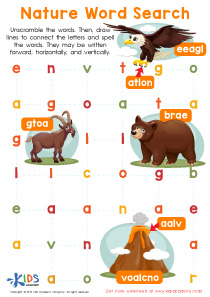
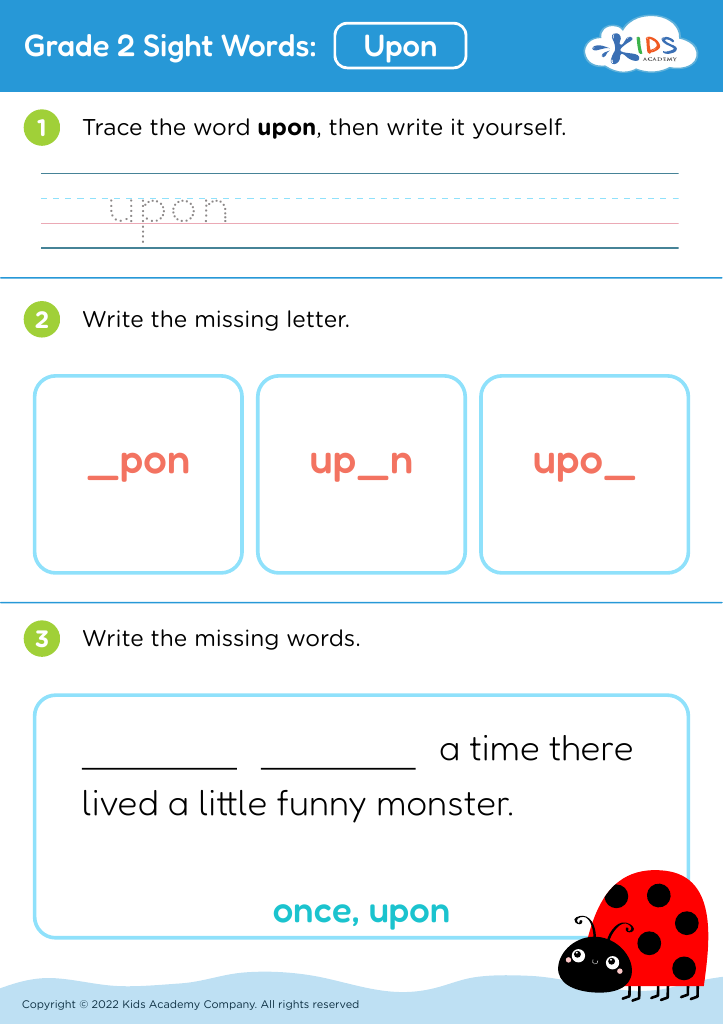
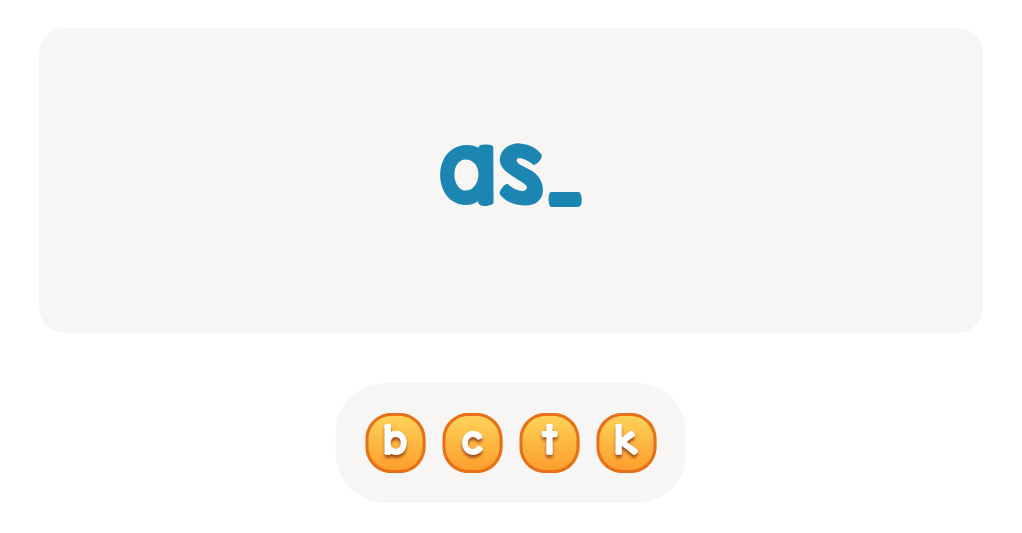
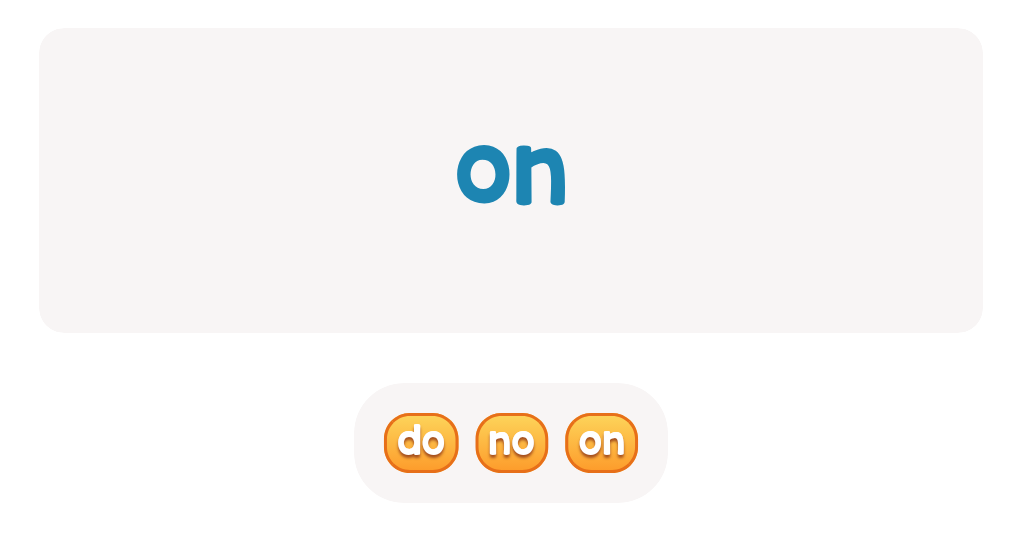
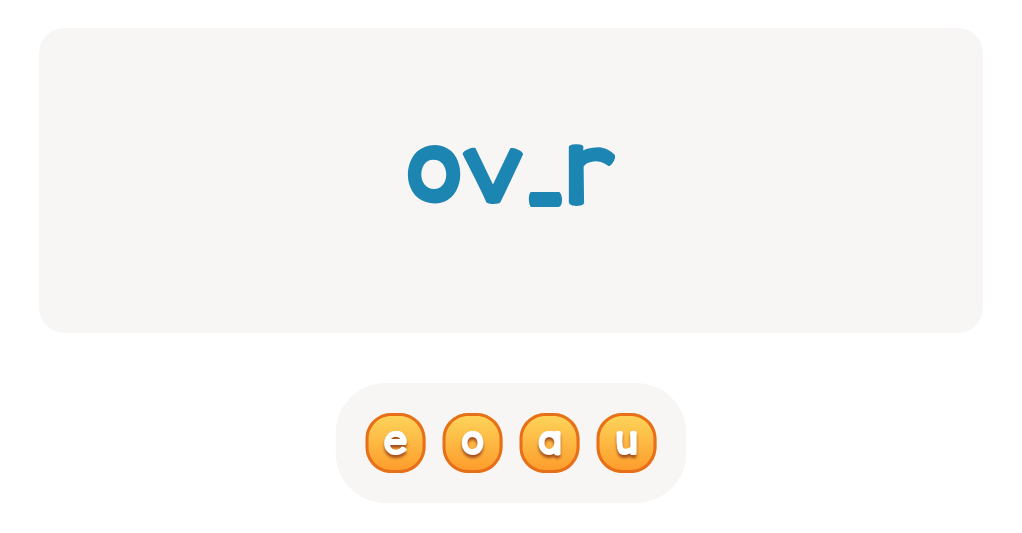
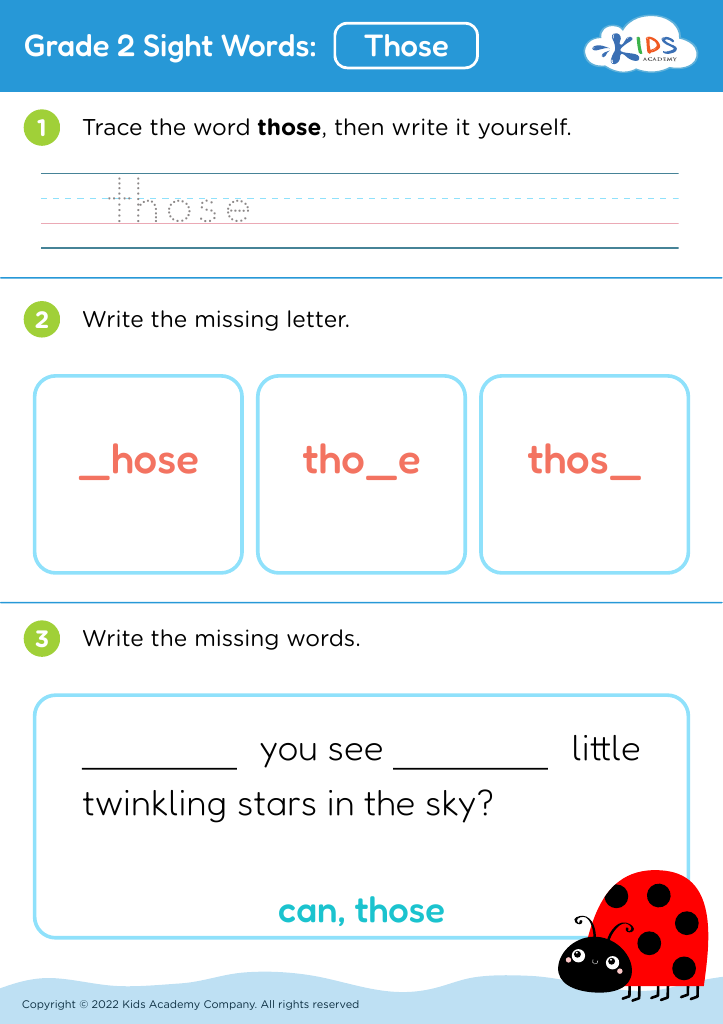
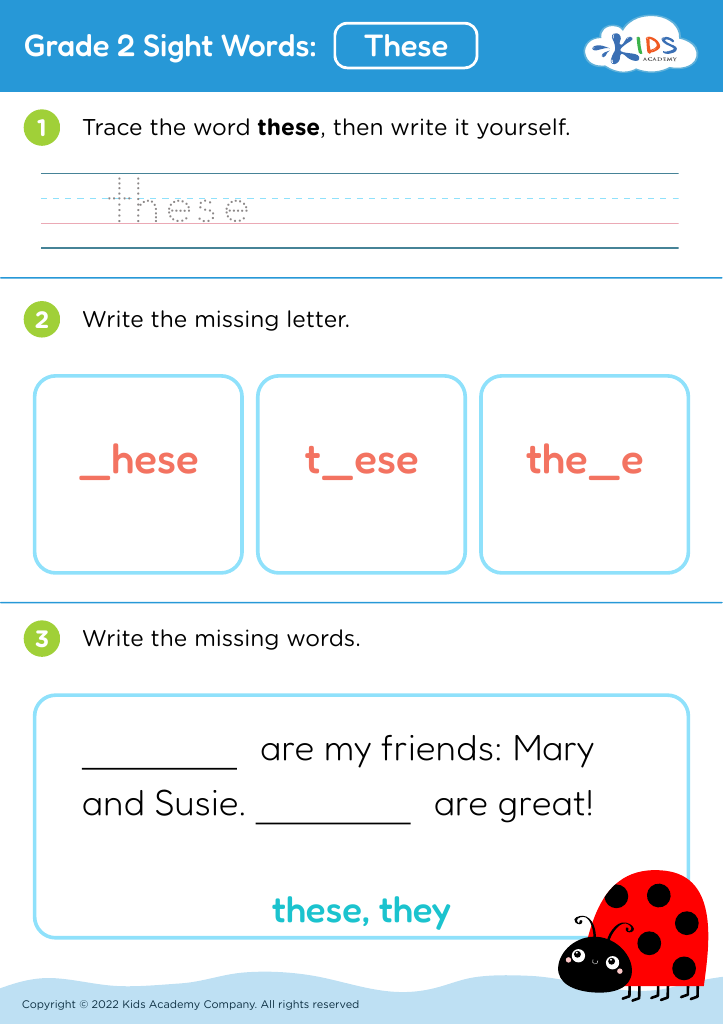
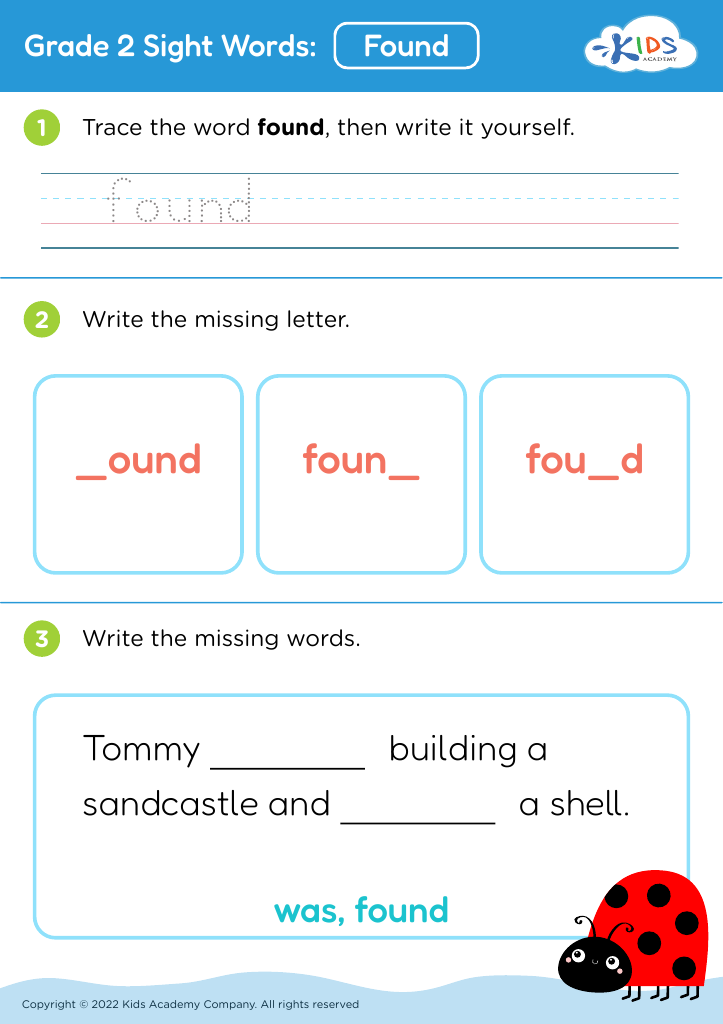
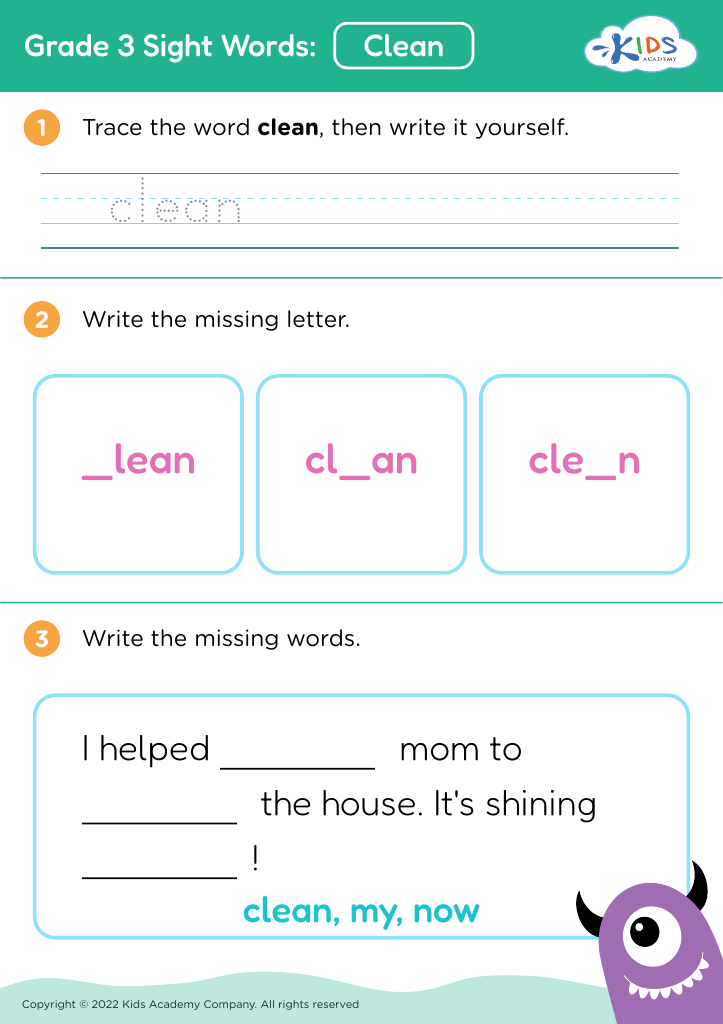
Boost your child's reading skills with our Shape Recognition Sight Words Worksheets designed for ages 6-8! These engaging worksheets seamlessly blend shape recognition and sight word practice, helping young learners build foundational literacy skills while having fun. Each activity encourages children to identify shapes, connect them with corresponding sight words, and improve their vocabulary in an interactive way. Perfect for classroom use or for additional learning at home, our worksheets support early learners in developing confidence in both shape and word recognition. Give your child the tools they need to excel in reading with these creative and educational resources today!
Favorites
With answer key
Interactive




Join Kids Academy for Free
Who is primarily going to use this learning content?








Shape recognition sight words are fundamental for children aged 6-8, as they play a crucial role in literacy development. At this age, children begin to connect visual symbols with meanings, enhancing their reading fluency and comprehension. Recognizing shapes helps students differentiate letters and words, laying a solid foundation for reading and writing skills. Additionally, these sight words often appear in everyday texts, making fluency with them essential for promoting a love of reading and a sense of achievement.
When parents and teachers prioritize shape recognition, they boost children's confidence, which can positively affect their overall learning experience. With proficient recognition, kids can focus more on comprehension rather than decoding individual letters or words, allowing them to engage more deeply with the content.
Moreover, these skills are interconnected with critical thinking and problem-solving. Identifying shapes in words translates into a better understanding of patterns and concepts in mathematics and the sciences. Thus, promoting shape recognition sight words should be a collaborative effort between parents and educators. By fostering these skills, we equip children with the tools they need to succeed in their academic journey and beyond, nurturing their curiosity, creativity, and enthusiasm for learning.