
Phonics practice ABC Letters Worksheets for Ages 6-9
3 filtered results
Difficulty Level
Grade
Age
-
From - To
Subject
Activity
Standards
Discover our engaging Phonics Practice ABC Letters Worksheets, designed specifically for children ages 6 to 9! These interactive worksheets make learning the alphabet fun and effective, helping young learners build crucial phonetic skills. Each activity is tailored to enhance letter recognition and improve reading fluency, combining visuals and hands-on exercises. Our worksheets encourage children to sound out letters, blend sounds, and create words, providing a solid foundation for future literacy development. Ideal for classrooms or at-home learning, these printable resources support your child's learning journey in a playful and stimulating way. Start practicing today and watch your child's confidence soar!
Favorites
With answer key
Interactive
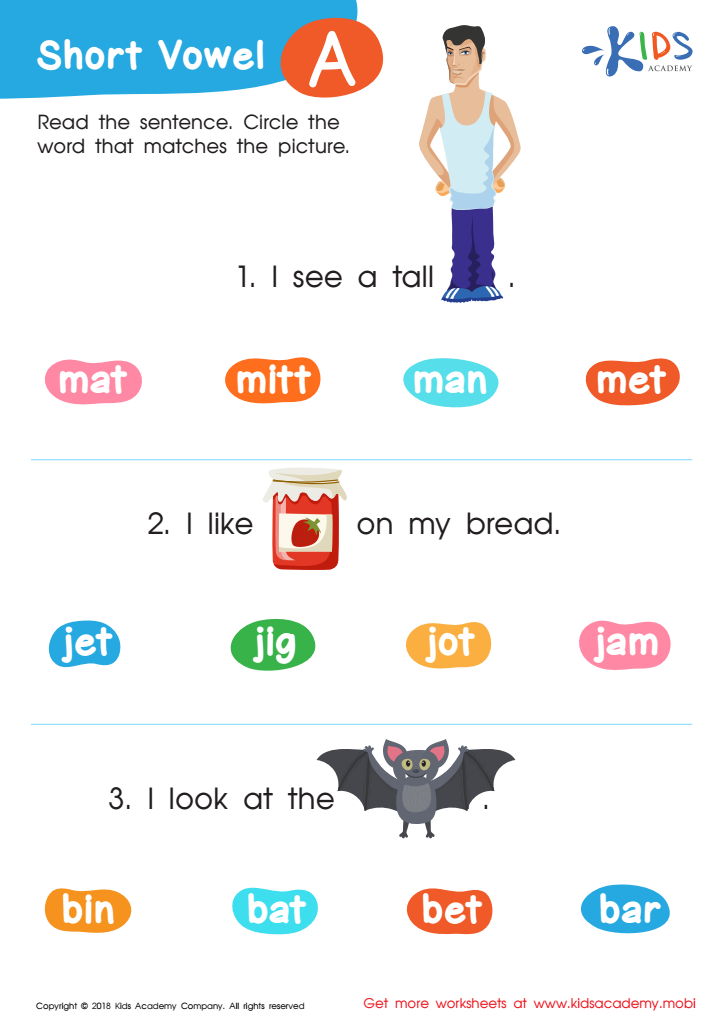
Short Vowel /a/ Worksheet
This free PDF helps new readers use sight words and pictures to read basic sentences. Then, they use accompanying word choices to find the correct word with the short a vowel sound. A key early reading skill, discriminating between short vowel sounds can be tricky in monosyllabic words, so use this PDF to help your reader reinforce it.
Short Vowel /a/ Worksheet
Worksheet

Letter A Coloring Sheet
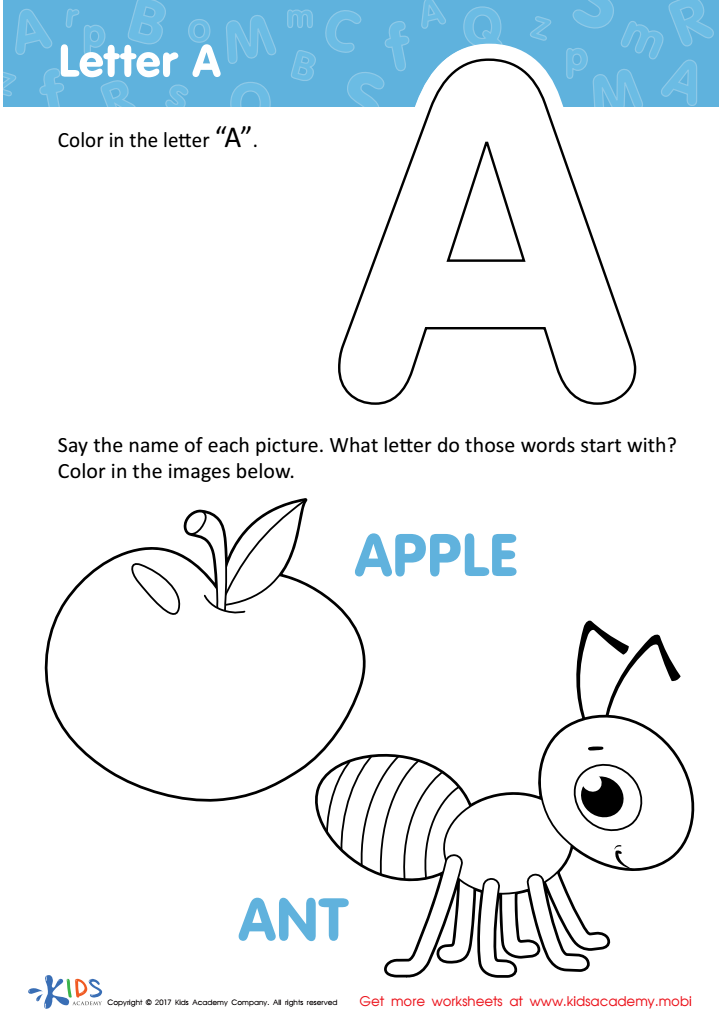
This letter "A" coloring page is great for introducing kids to the alphabet! Let them exercise their creativity while they learn to recognize letters and sounds - it's a fun and easy way to help them get started.
Download (PDF)
 Assign to My Students
Assign to My Students
Letter A Coloring Sheet
Worksheet
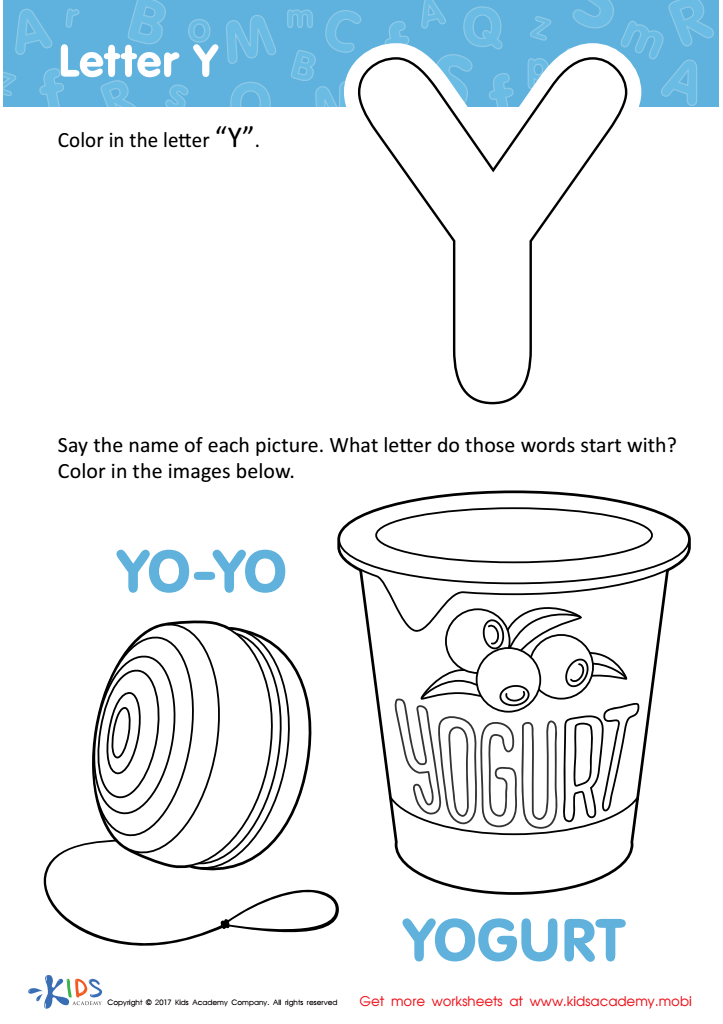
Letter Y Coloring Sheet
Let's celebrate letter "Y"! Here's a fun coloring page that'll help your child learn this end-of-the alphabet letter. It's packed with familiar objects that'll help build their art and literacy skills. So let's say "Yay"!
Download (PDF)
Assign to My Students
Assign to My Students
Letter Y Coloring Sheet
Worksheet
Join Kids Academy for Free
Who is primarily going to use this learning content?







Phonics practice is essential for children aged 6-9 as it lays the foundation for strong reading and writing skills. During these formative years, children are mastering the basics of language and literacy. Phonics helps them understand the relationship between letters and their corresponding sounds, which is crucial for decoding words.
When parents and teachers prioritize phonics practice, they provide children with the tools necessary for reading fluency and comprehension. As kids learn to blend sounds, they become more confident readers, enabling them to tackle increasingly complex texts. This skill not only improves literacy but also positively impacts academic performance across subjects.
Additionally, phonics practice can enhance a child’s vocabulary and spelling abilities. It engages auditory and visual learning styles, catering to diverse learning needs. This approach also fosters a love for reading by making it accessible and enjoyable, as children experience the joy of decoding stories independently.
Moreover, early intervention in phonics support can identify any potential reading difficulties and address them before they escalate. Ultimately, by valuing phonics practice, parents and teachers play a pivotal role in cultivating lifelong learning habits and empowering children to thrive academically and emotionally.







