Alphabet Recognition Cursive Alphabet Worksheets for Ages 6-9
7 filtered results
-
From - To
Enhance your child's cursive writing and alphabet recognition skills with our expertly designed worksheets tailored for ages 6-9. These engaging printable activities from Kids Academy focus on mastering cursive alphabet, providing fun and educational exercises to boost writing confidence and fluency. Each worksheet encourages practice through tracing and writing, targeting effective learning. Perfect for at-home practice or supplementary classroom material, our resources help young learners develop a solid foundation in cursive handwriting while improving their alphabet comprehension. Set your child on the path to success with our captivating and repetitive learning tools!
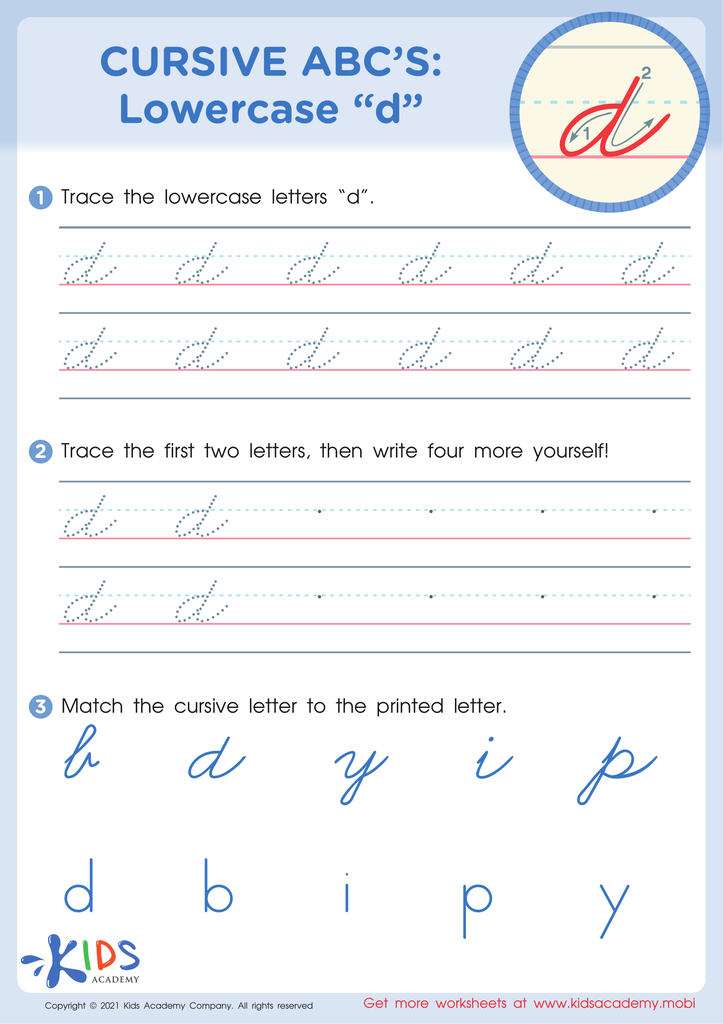
Cursive ABCs: Lowercase d
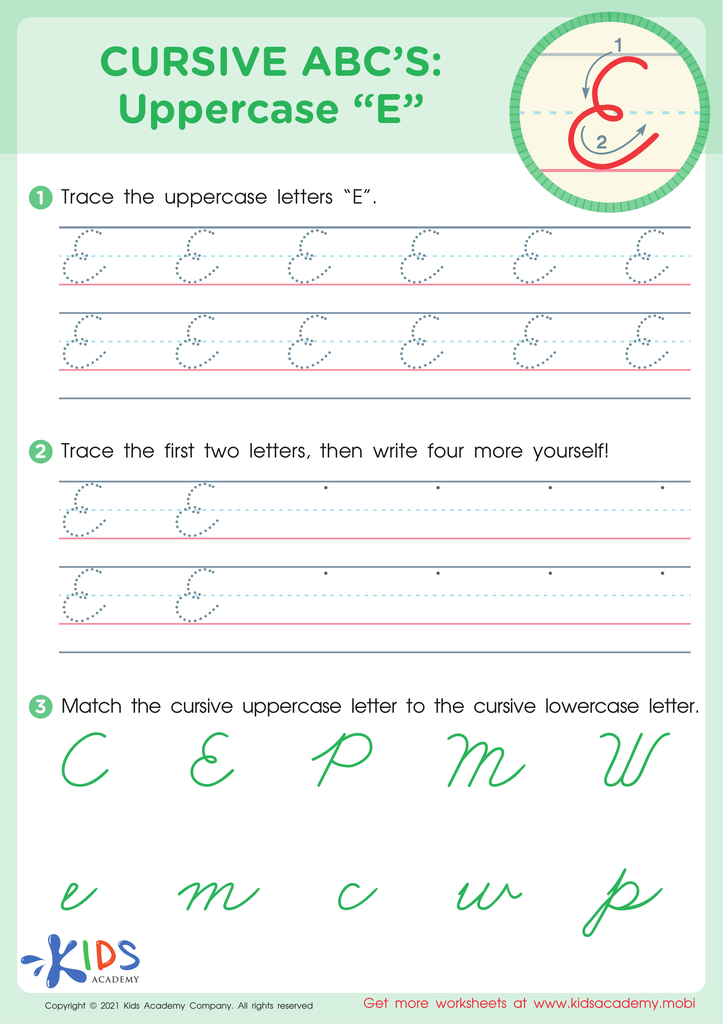
Cursive ABCs: Uppercase E
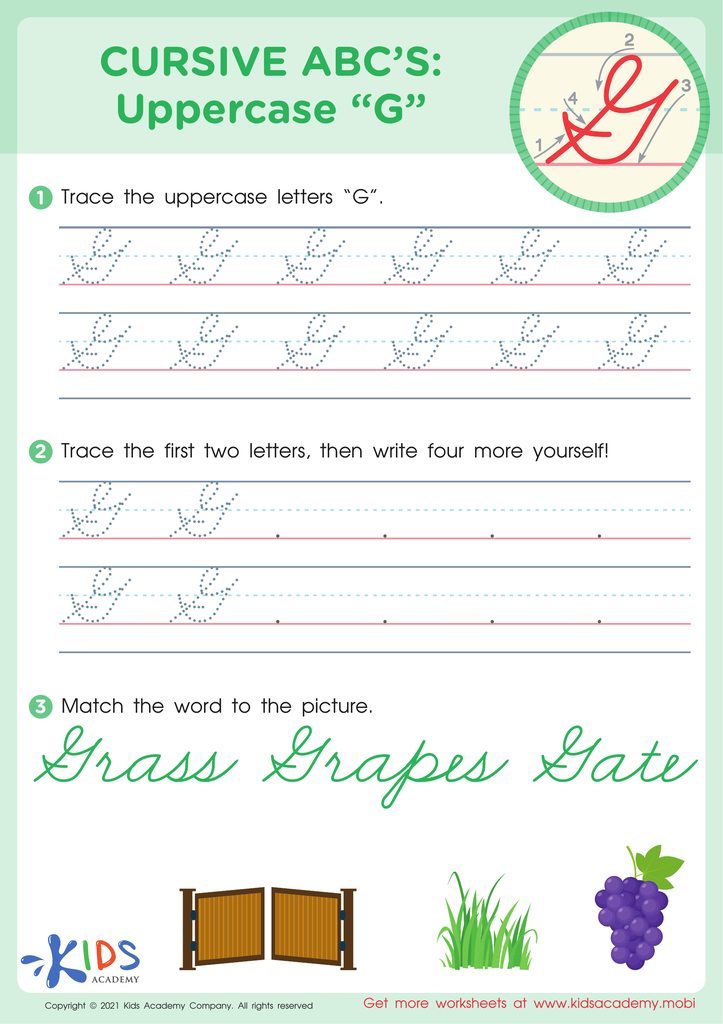
Cursive ABCs: Uppercase G
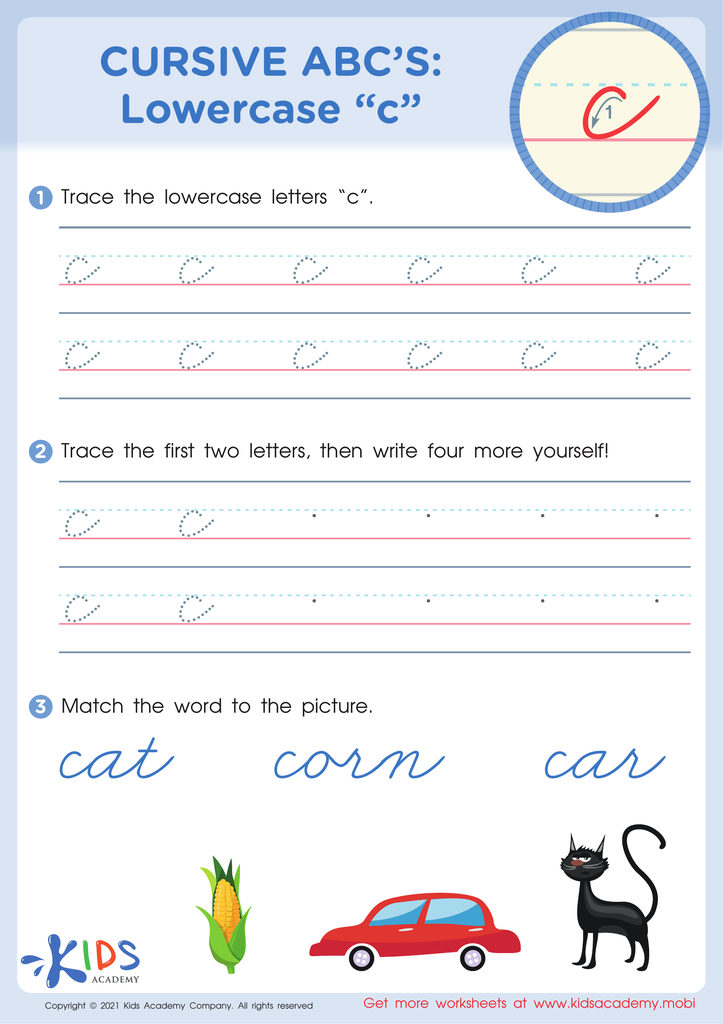
Cursive ABCs: Lowercase c
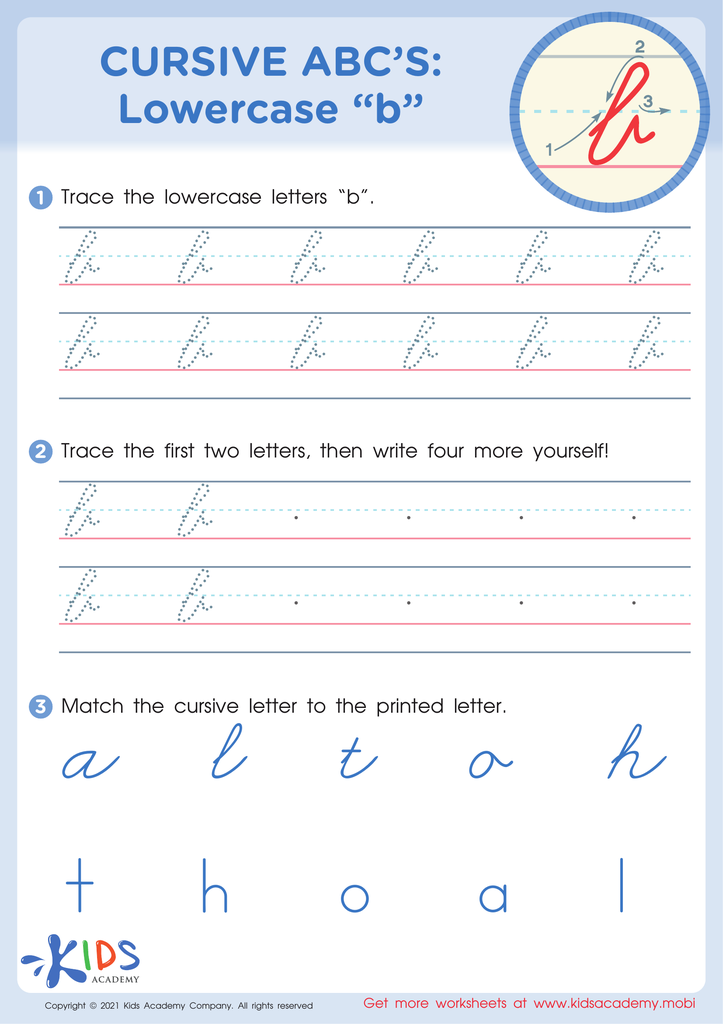
Cursive ABCs: Lowercase b
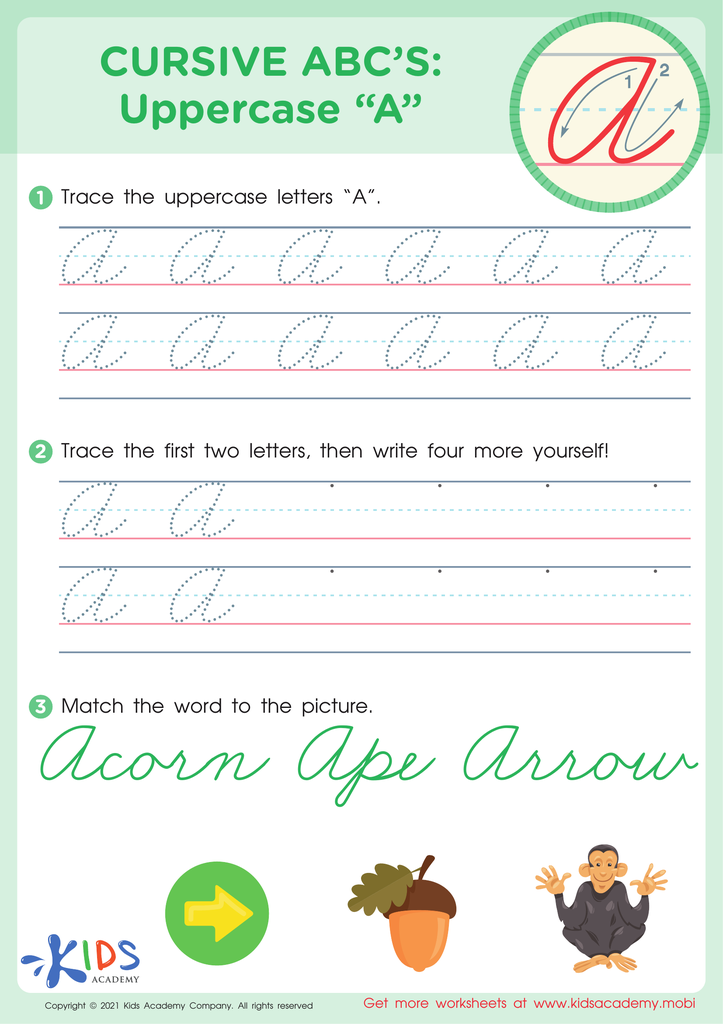
Cursive ABCs: Uppercase A
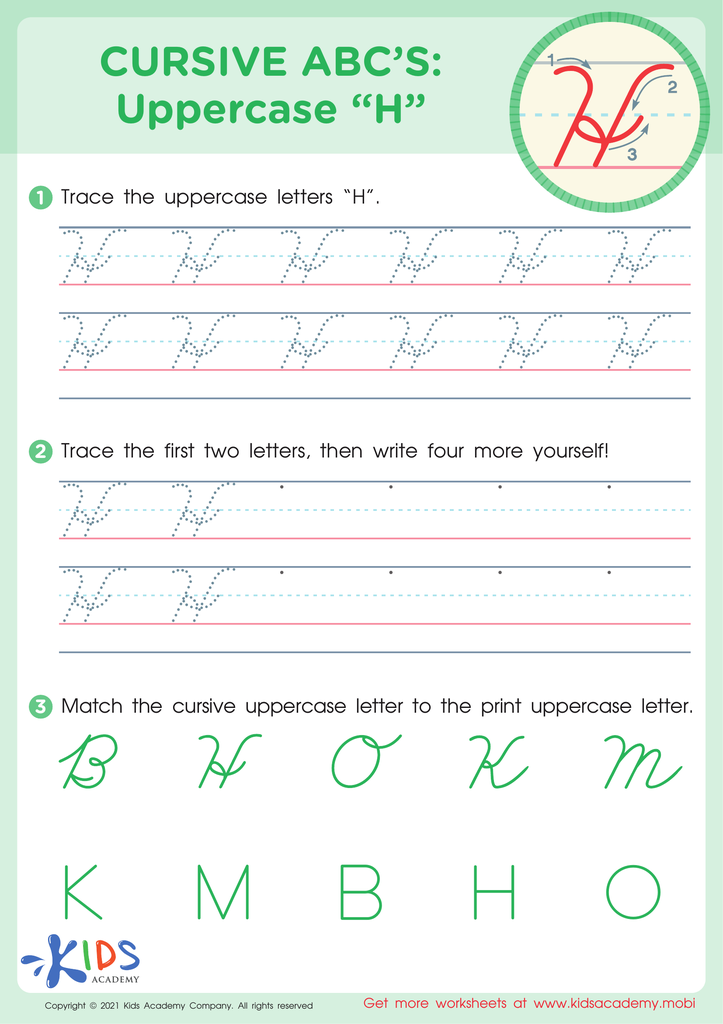
Cursive ABCs: Uppercase H





Alphabet recognition, particularly in cursive, is crucial for children ages 6-9 as it significantly shapes their foundational literacy skills. This age range typically corresponds to early elementary school years, where children transition from pre-readers to fluent readers and writers. Cursive writing, despite being less emphasized in some modern curricula, possesses vital educational benefits.
Firstly, cursive writing can enhance fine motor skills and hand-eye coordination, laying a strong groundwork for other academic and everyday activities. The continuous flow of cursive letters mimics natural hand movements, which can be inherently easier and more rhythmical for many children compared to the stop-and-start motions of print writing.
Moreover, learning cursive may improve cognitive development. The act of writing in cursive activates different brain functions than keyboard typing or print writing. It fosters spatial discipline, as children learn to connect letters correctly and consistently, contributing to better consistency in spelling and understanding of word structures.
Additionally, cursive writing supports literacy by connecting letters in a word seamlessly, potentially aiding in better reading fluency and comprehension. Teachers and parents play critical roles in encouraging these skills. If introduced and reinforced properly, cursive writing practice not only bridges historical forms of communication but also enriches the overall academic growth and future learning capabilities of young learners.







