Spelling practice Elementary Phonics Worksheets for Ages 6-9
3 filtered results
-
From - To
Introduce your child to the foundational world of spelling with our Elementary Phonics Worksheets for Ages 6-9. Perfect for early learners, these printable activities focus on enhancing spelling skills through phonics-based exercises. Each worksheet is designed to make learning fun and effective, using engaging themes and imagery that captivate young minds. Through systematic practice, kids will learn to recognize letter patterns, improve word identification, and build confidence in their spelling abilities. Suitable for both classroom and home use, our worksheets are an essential resource to support your child's educational journey. Help your child spell out success today!
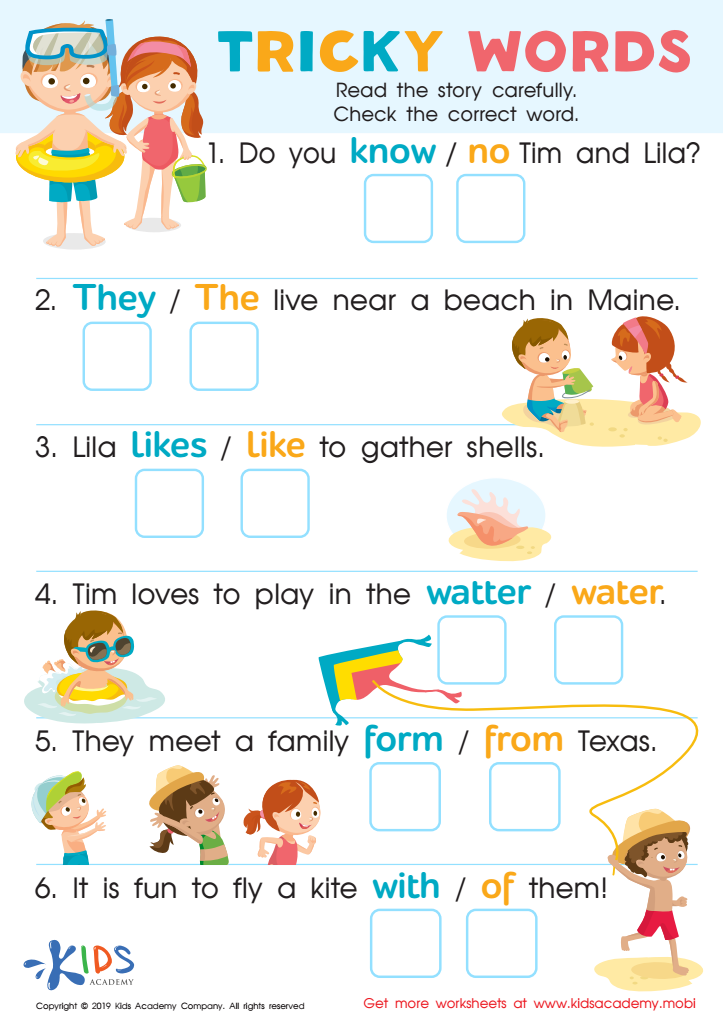
Tricky Words Worksheet
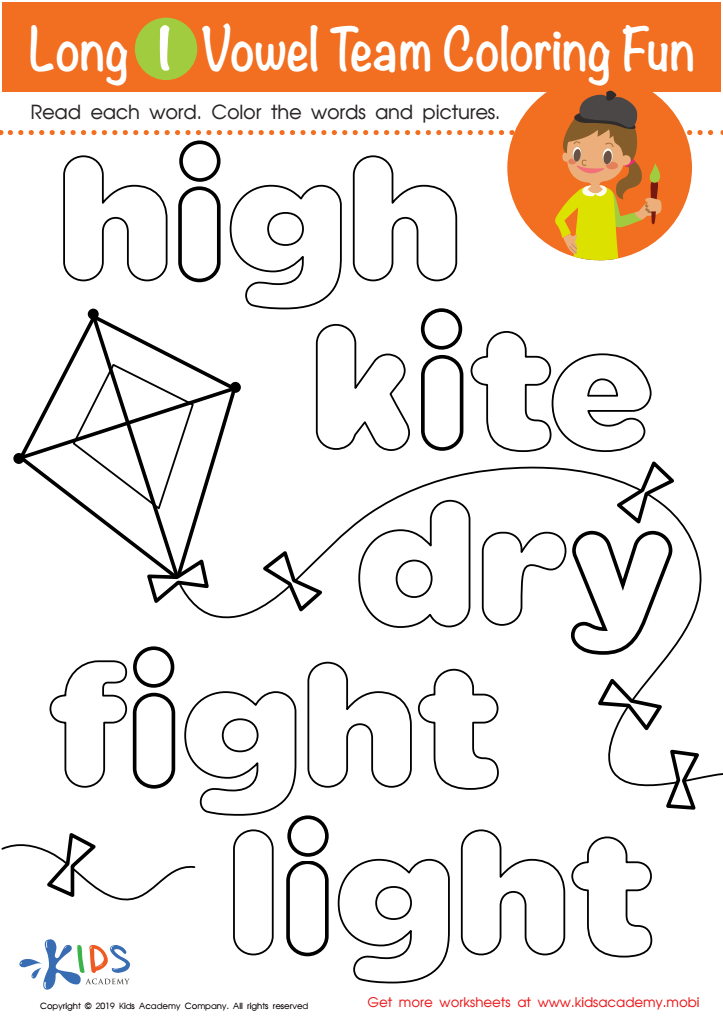
Long I Vowel Team Coloring Worksheet
 Assign to My Students
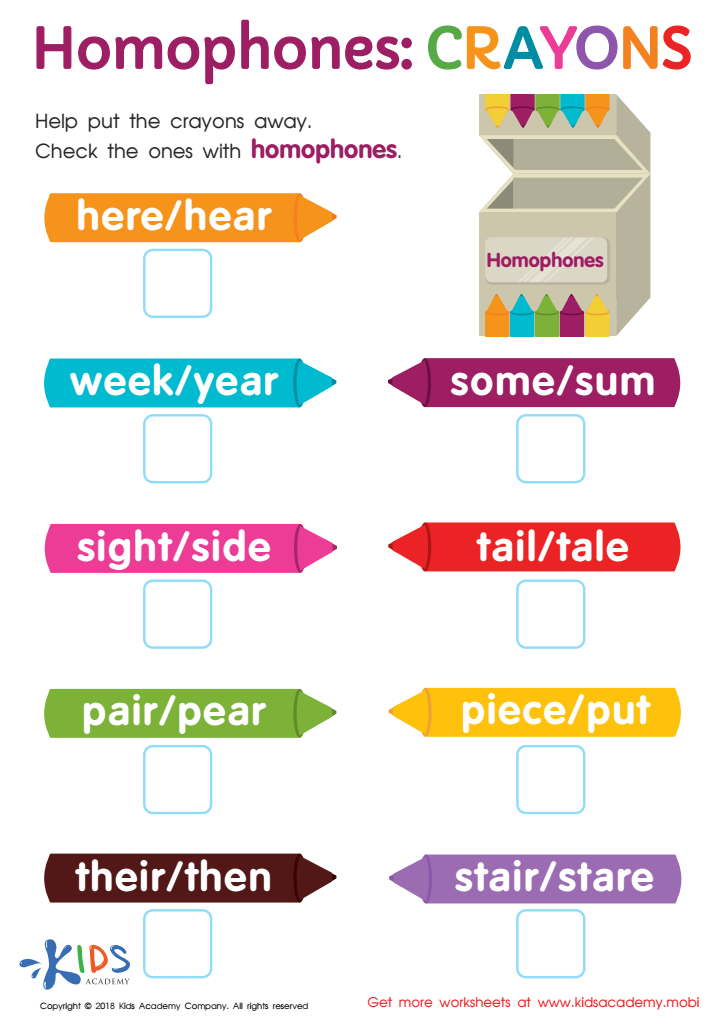
Homophones: Crayons Worksheet




Spelling practice and elementary phonics are fundamental for children aged 6-9 because they form the bedrock of literacy. This crucial developmental stage is when children transition from recognizing letters to reading fluently and writing accurately. Phonics instruction helps children understand the relationship between letters and sounds, which is essential for word decoding, a primary step in reading. Proficient reading skills enable children to explore and understand their world through books, fostering imaginations and knowledge acquisition.
Spelling practice complements phonics by reinforcing the understanding of word structures, patterns, and grammar. It allows children to recognize spelling rules and exceptions, improving their writing accuracy and readability. When children spell correctly, they communicate more effectively, boosting both their academic performance and self-esteem.
Moreover, regular spelling practice combats the confusion that can arise from irregular spellings that are common in English. Early mastery mitigates future learning difficulties related to reading and writing, and promotes a lifelong love of learning.
For teachers, structured spelling and phonics lessons create a systematic learning environment that addresses different linguistic needs. For parents, supporting these practices at home reinforces school learning, nurtures quality parent-child interactions, and actively contributes to their child’s educational development and future success.







