
Vocabulary enhancement Ending Sounds Worksheets for Ages 6-9
3 filtered results
Difficulty Level
Grade
Age
-
From - To
Subject
Activity
Standards
Boost your child's vocabulary with our engaging Ending Sounds Worksheets designed for ages 6-9! These fun and interactive worksheets focus on reinforcing vocabulary by enhancing the understanding of ending sounds in words. Perfect for early grade learners, these resources help improve phonemic awareness, spelling, and reading skills. Each worksheet features captivating illustrations and a variety of exercises such as matching, filling in blanks, and sorting words, making learning enjoyable and effective. Ideal for parents and educators alike, these materials provide a solid foundation for language development. Empower your child to build their vocabulary while having fun - download our worksheets today!
Favorites
With answer key
Interactive
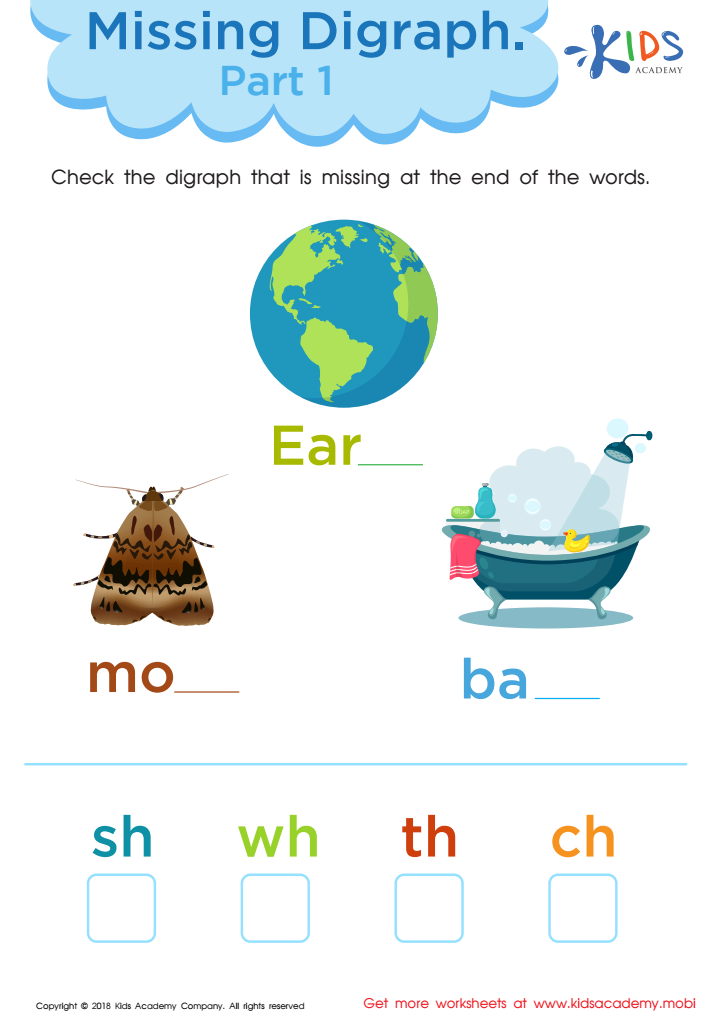
Missing Digraph: Part 1 Worksheet
Practice the 'th' digraph with this worksheet! Ask kids to say the words shown and sound out the letters below each image. Check the box with the correct digraph to complete. Examples include 'earth', 'bath' and 'moth', all ending with the same two letters. Phonics teaches that digraphs are two letters that make one sound.
 Assign to My Students
Missing Digraph: Part 1 Worksheet
Worksheet
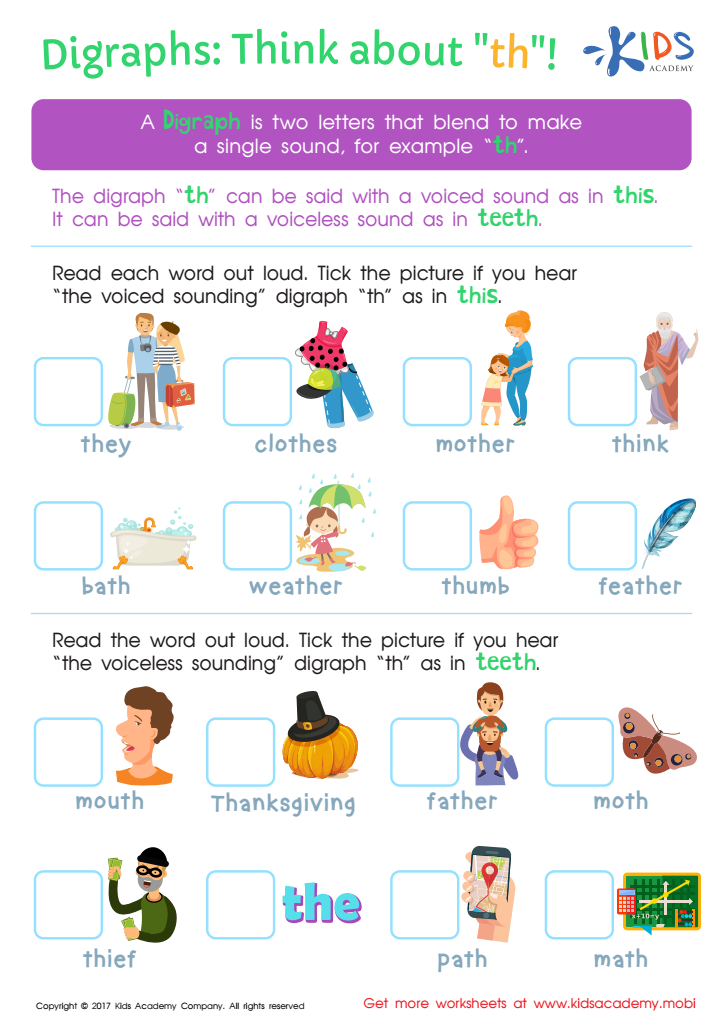
Digraphs: Think About "th" Worksheet
Help your child master phonics with this illustrated digraph Th printable worksheet. It will help recognize "Th" words, differentiate voiced and voiceless sounds and understand key concepts. Use similar words while they work to reap its full benefits!
Digraphs: Think About "th" Worksheet
Worksheet
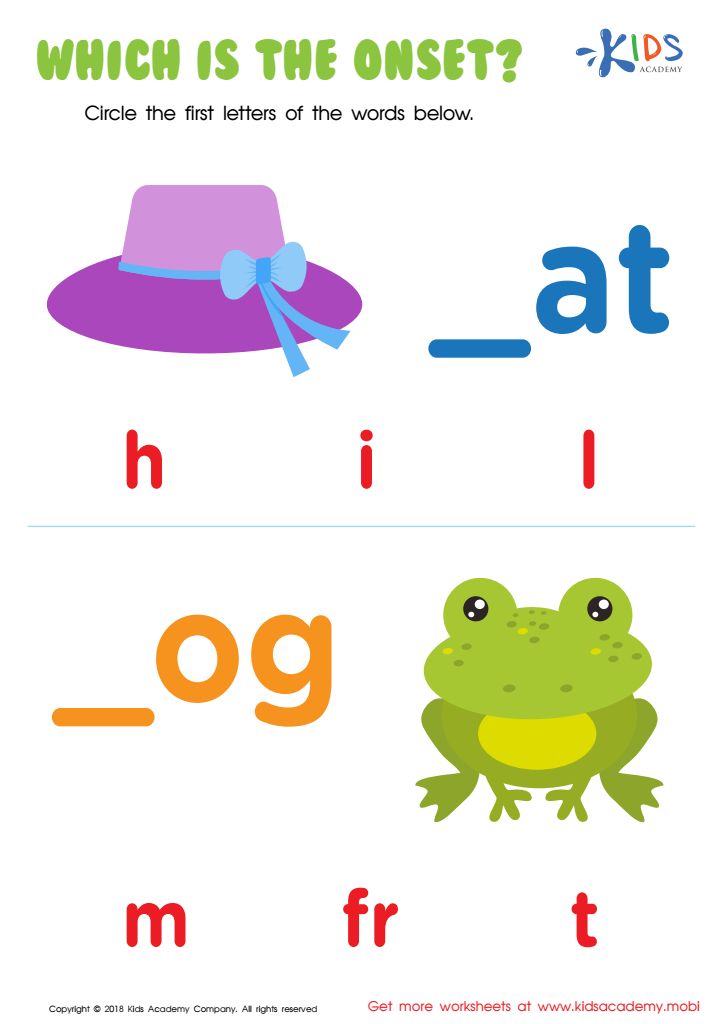
Which Is the Onset? Worksheet
Help your children learn to spell with this bright, fun worksheet. Struggling with spelling small words can make reading and writing sentences difficult. Encourage them to look at the pictures, say the names aloud and circle the correct first letter from the options. They will soon overcome any reluctance to spell.
Which Is the Onset? Worksheet
Worksheet
Join Kids Academy for Free
Who is primarily going to use this learning content?






Vocabulary enhancement, particularly in understanding ending sounds, is crucial for children aged 6-9 as it lays the foundation for successful reading and writing skills. During this developmental stage, children are rapidly expanding their oral vocabulary, and recognizing ending sounds plays a pivotal role in phonemic awareness, a skill directly tied to literacy development.
Parents and teachers should prioritize vocabulary enhancement because it aids in decoding unfamiliar words, supports spelling proficiency, and boosts overall language comprehension. Mastering ending sounds helps children identify word patterns and sound correspondences, making it easier for them to determine word meanings and improve their reading fluency.
Furthermore, enhancing vocabulary through ending sounds encourages active listening and pronunciation skills, fostering effective communication. Versatile vocabulary enables children to express themselves clearly and creatively, enriching their conversations and writing.
Ultimately, the early identification of ending sounds influences children's academic confidence and reading levels, significantly impacting their long-term educational journey. Parents and teachers who prioritize this aspect pave the way for a love of language, helping children become proficient readers, writers, and communicators who can critically engage with the world around them. Investing time in vocabulary activities can create lasting benefits for children in this critical stage of their development.








