
Motor skills development Alphabet Worksheets for Ages 6-9
6 filtered results
Difficulty Level
Grade
Age
-
From - To
Subject
Activity
Standards
Unlock your child's potential with our Motor Skills Development Alphabet Worksheets, specially designed for ages 6-9! These engaging worksheets combine alphabet learning with essential fine motor skills practice. Kids will love tracing letters, connecting dots, and coloring vibrant images, all while enhancing their hand coordination and dexterity. Each activity is crafted to be both educational and fun, fostering a love for learning. Perfect for classroom use or at-home learning, these worksheets help children develop confidence in writing and letter recognition. Explore our collection today and watch your child thrive as they master the alphabet while improving their motor skills!
Favorites
With answer key
Interactive

Letter H Tracing Page
Trace the letter "H", then practice writing its lowercase form. Finally, choose your favorite form of transport and ride away! Get our worksheets to make learning fun and easy.
Letter H Tracing Page
Worksheet
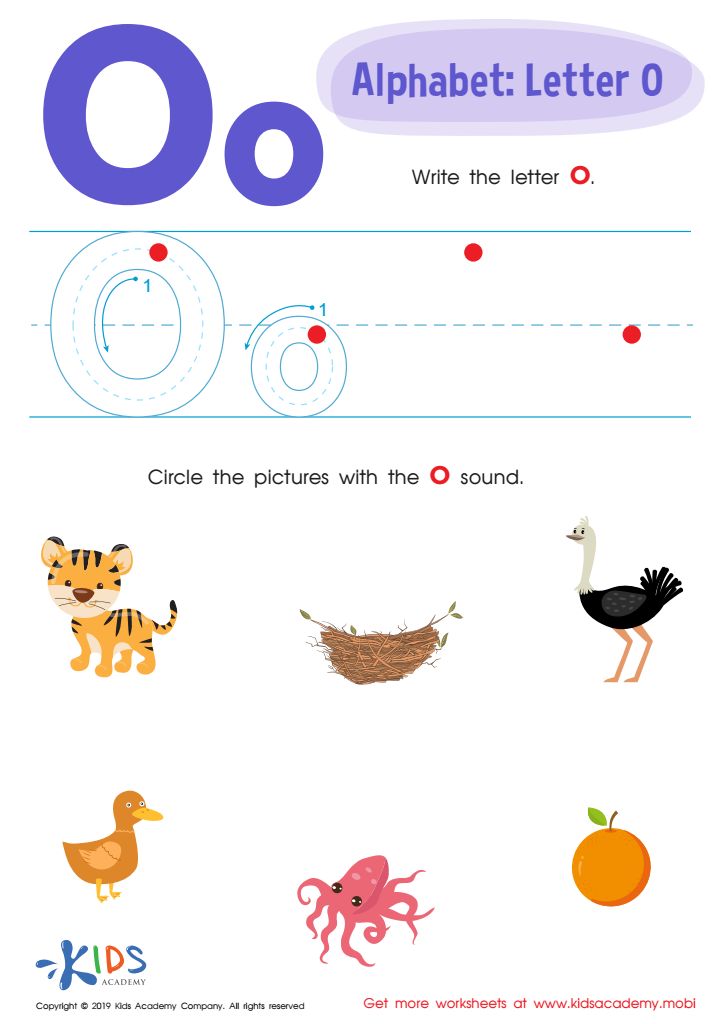
Letter O Tracing Worksheet
This worksheet gives kids the chance to trace the letter "O" while also circling pictures that have the "O" sound. Visual and hands-on learners will benefit from the visuals and tracing, helping them learn the letter "O" with ease. It's the perfect way to learn what "octopus" and "ostrich" start with!
Letter O Tracing Worksheet
Worksheet
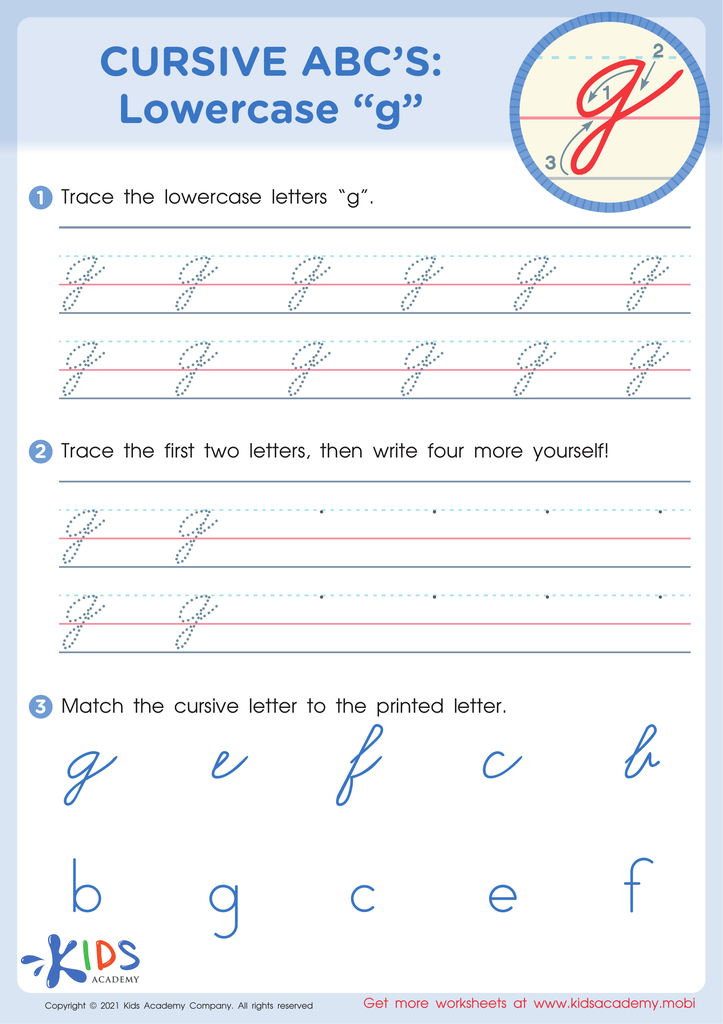
Cursive ABCs: Lowercase g
Help your kids learn to write cursive with this worksheet. Guide them as they trace the letter 'g' and complete the tasks, testing their mastery of the lowercase letter. With practice, they'll soon feel confident in their cursive writing.
Cursive ABCs: Lowercase g
Worksheet
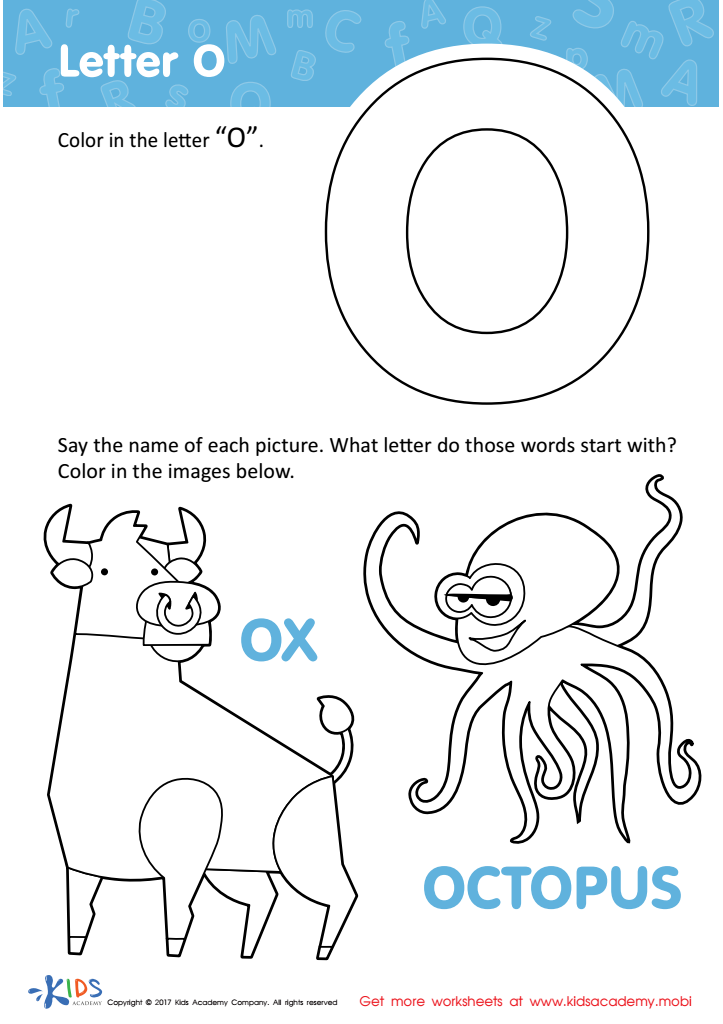
Letter O Coloring Sheet
Oh my! The letter "O" is so much fun. Coloring in the octopus and ox on this delightful letter "O" coloring page can help your child have fun while strengthening their recognition of the letter and sound.
Download (PDF)
 Assign to My Students
Assign to My Students
Letter O Coloring Sheet
Worksheet
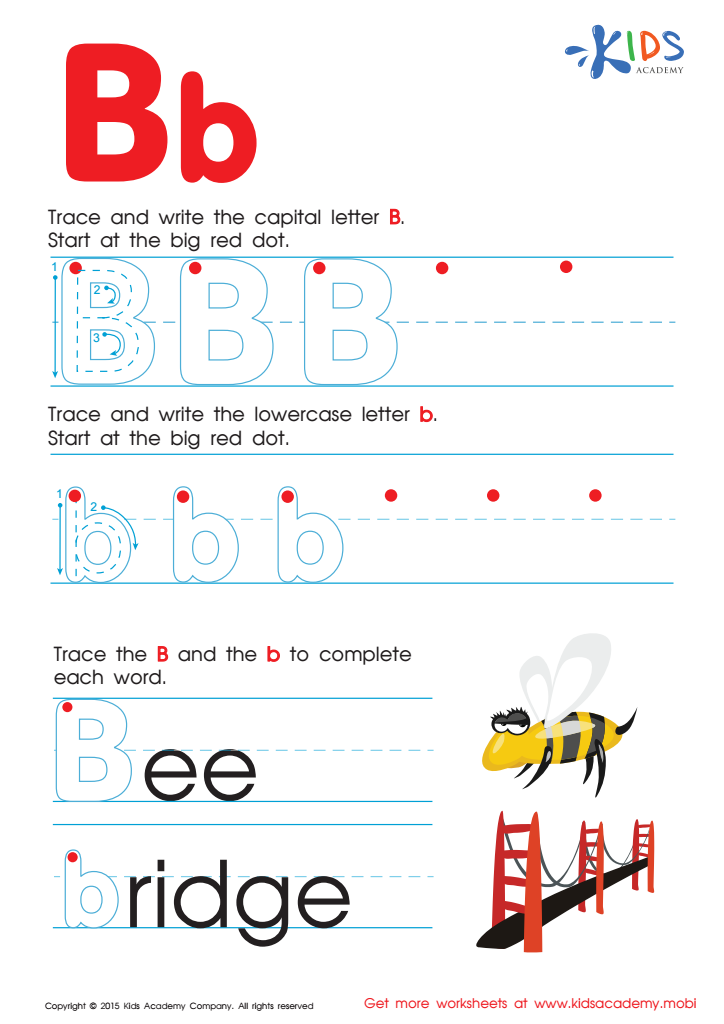
Letter B Tracing Page
Ready to learn the Alphabet? Put your pencil on the red dot and trace & write both capital & lowercase "B". Then have a look at the pictures. Catch the bee, cross the bridge & write the letters to complete the words. More ABC worksheets for kindergarten available!
Letter B Tracing Page
Worksheet
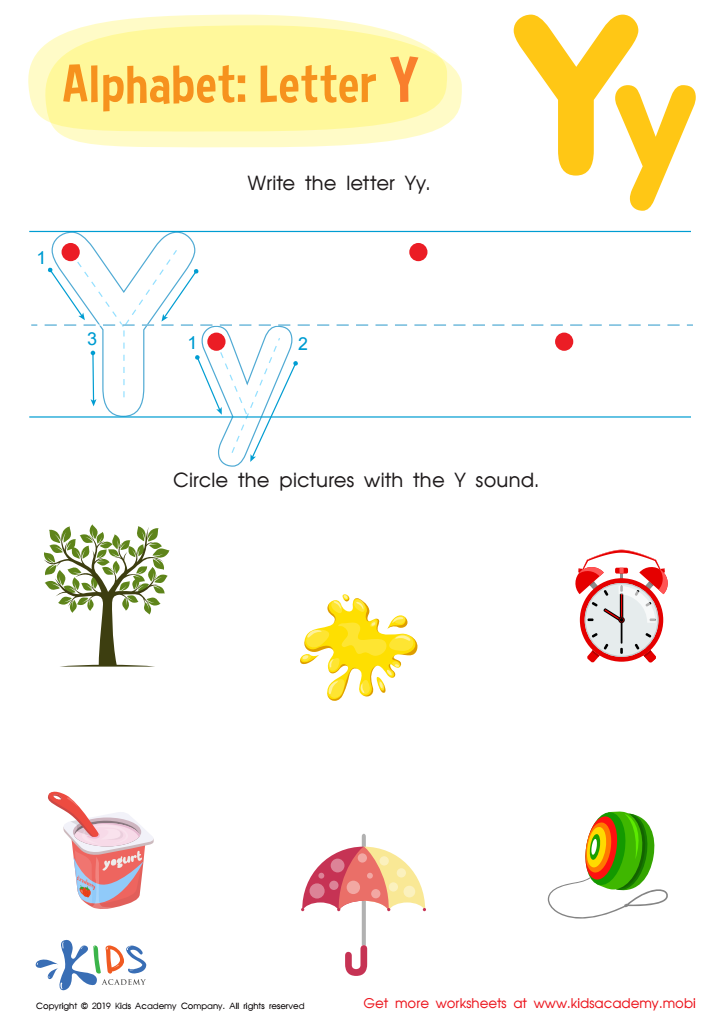
Letter Y Tracing Worksheet
Does your child need help with learning the final letters of the alphabet? This PDF worksheet is perfect then! Kids can practice tracing the letter «Y» and circle pictures that start with the same sound. Options include «yellow» and «yogurt». It's a great way of honing their letter-learning skills.
Letter Y Tracing Worksheet
Worksheet
Join Kids Academy for Free
Who is primarily going to use this learning content?






Motor skills development is crucial for children aged 6-9, as it forms the foundation for various academic, social, and physical tasks. During this stage, children are refining both fine and gross motor skills, which significantly impact their ability to perform in school and daily life.
Fine motor skills, such as writing and using scissors, are essential for completing assignments and taking notes. Strong fine motor abilities enable children to express themselves creatively through arts and crafts. Simultaneously, gross motor skills enhance coordination and balance, vital for participation in physical education and recreational activities, fostering a healthy lifestyle.
Parents and teachers should be invested in this development because it facilitates not just physical abilities, but cognitive and social growth as well. As children improve their motor skills, they gain confidence, leading to a greater willingness to engage with peers and participate in group activities. Additionally, proficiency in these skills often correlates with academic success, as children who are more coordinated can focus better and participate more actively in classroom experiences.
By prioritizing the development of motor skills, parents and teachers can help children build a strong foundation for lifelong learning, health, and social interaction better preparing them for challenges ahead.







