Rhyming skills Alphabet Worksheets for Ages 6-9
3 filtered results
-
From - To
Enhance your child's learning journey with our engaging Rhyming Skills Alphabet Worksheets designed for ages 6-9. These worksheets provide a fun and interactive way for young learners to develop phonemic awareness, an essential reading skill. Through a variety of activities, such as matching, fill-in-the-blanks, and creative exercises, children will explore the rhythmic patterns of words while reinforcing their understanding of the alphabet. Our thoughtfully crafted materials cater to diverse learning styles, making it easy for parents and educators to support literacy development. Encourage creativity, boost vocabulary, and promote a love for language with our delightful rhyming worksheets today!
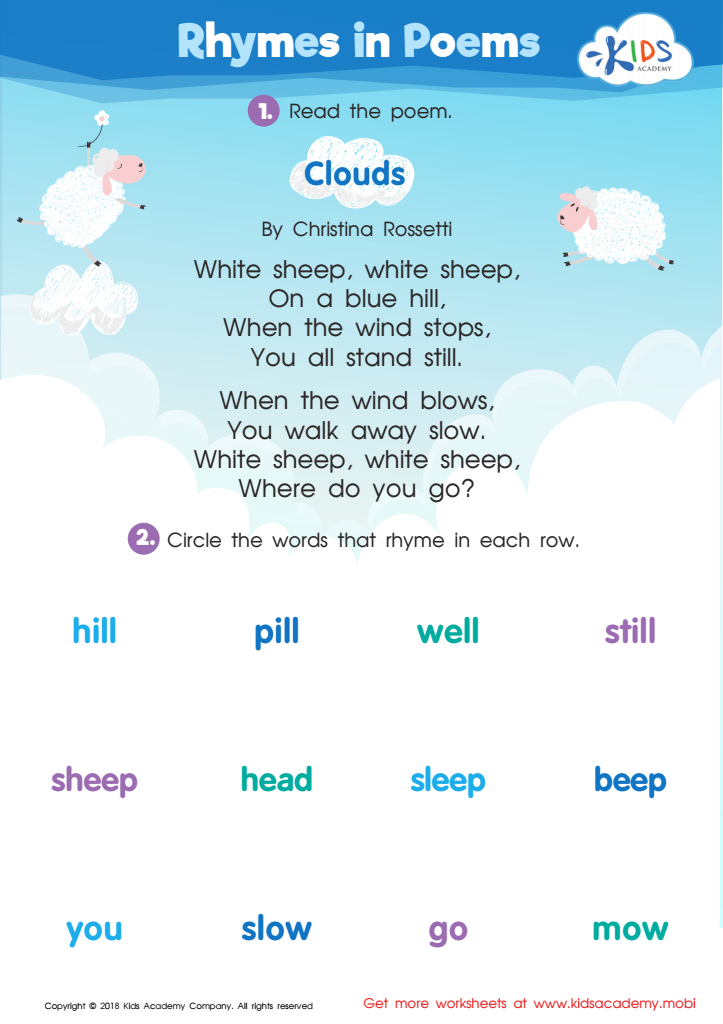
Rhymes in Poems Worksheet
 Assign to My Students
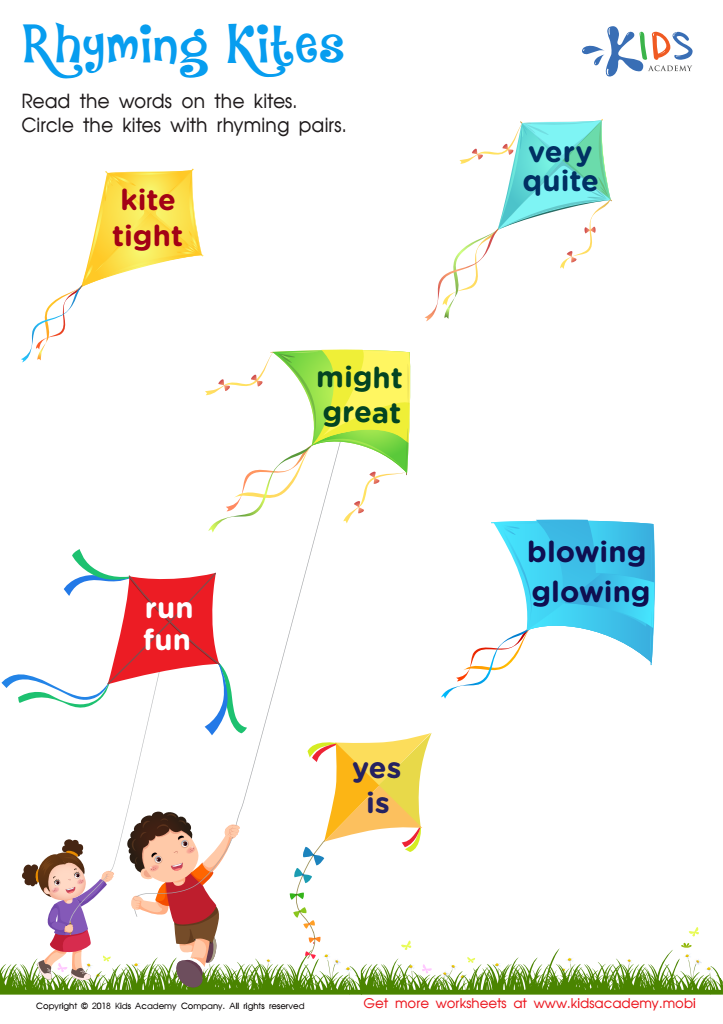
Rhyming Kites Worksheet
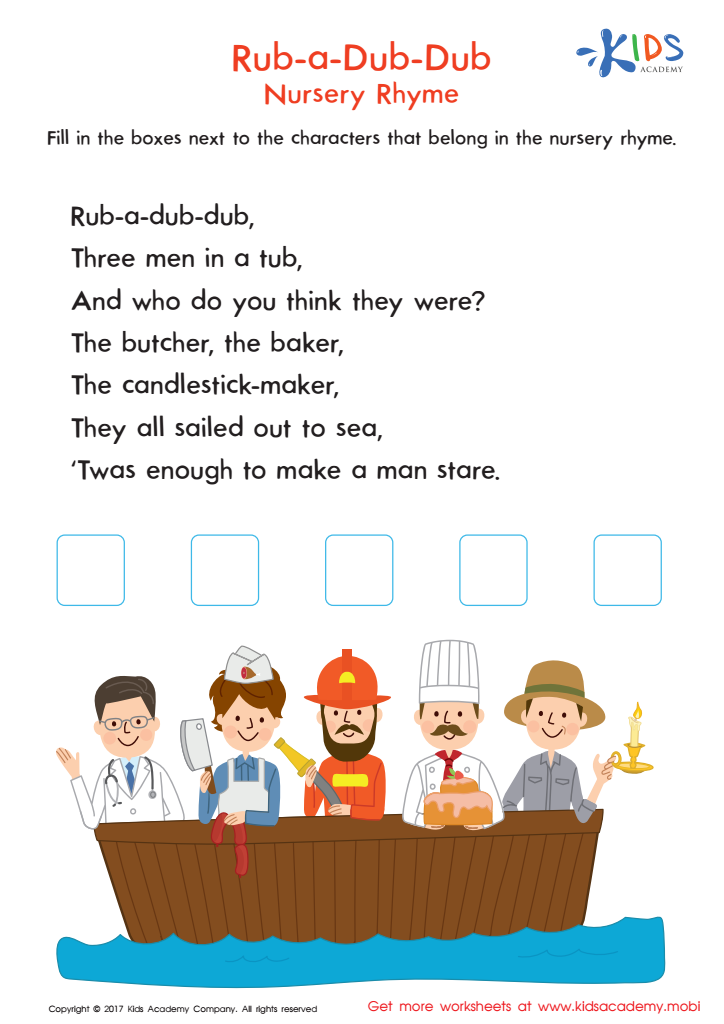
Rub a Dub Dub Printable








Rhyming skills are essential for early literacy development, especially for children aged 6-9. For parents and teachers, fostering these skills has profound impacts on a child's reading and writing abilities. When children engage with rhymes, they strengthen their phonemic awareness—understanding that words are made up of sounds. This awareness is crucial as it enhances their ability to decode words, an essential skill for reading fluency.
Additionally, rhyming introduces children to patterns in language, which cultivates listening skills and improves their vocabulary. As they explore different rhymes, they become more aware of word structures, aiding their spelling and comprehension abilities.
Moreover, engaging in rhyming activities can be a fun and enjoyable way to connect with children. It encourages creativity through songwriting or storytelling and can significantly impact their confidence in expressing themselves. Rhyming games can also be a tremendous bonding experience, promoting a love for language from an early age.
In summary, prioritizing rhyming skills not only helps children become proficient readers and writers but also enriches their overall language development, social interaction, and enjoyment of learning. This emphasis can lay a strong foundation for their future academic success.







