Visual discrimination Alphabet Worksheets for Ages 6-9
5 filtered results
-
From - To
Enhance your child's reading and cognitive skills with our engaging Visual Discrimination Alphabet Worksheets designed for ages 6-9. These worksheets focus on helping young learners distinguish between letters through fun and interactive activities. By using these resources, children will improve their ability to identify, match, and differentiate letters, laying a strong foundation for future reading and writing success. With colorful illustrations and age-appropriate challenges, our visual discrimination worksheets make learning enjoyable and effective. Perfect for both home and classroom use, these printables support essential skill development in a playful, hands-on manner. Help your child thrive in their literacy journey today!
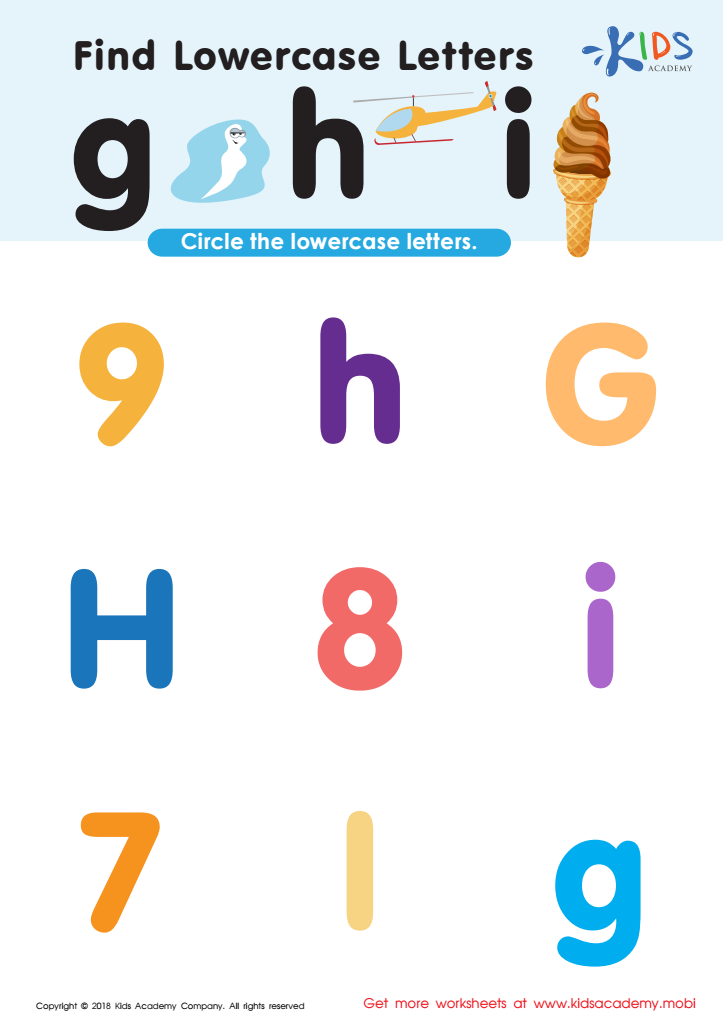
Find Lowercase Letters g h i Worksheet
 Assign to My Students
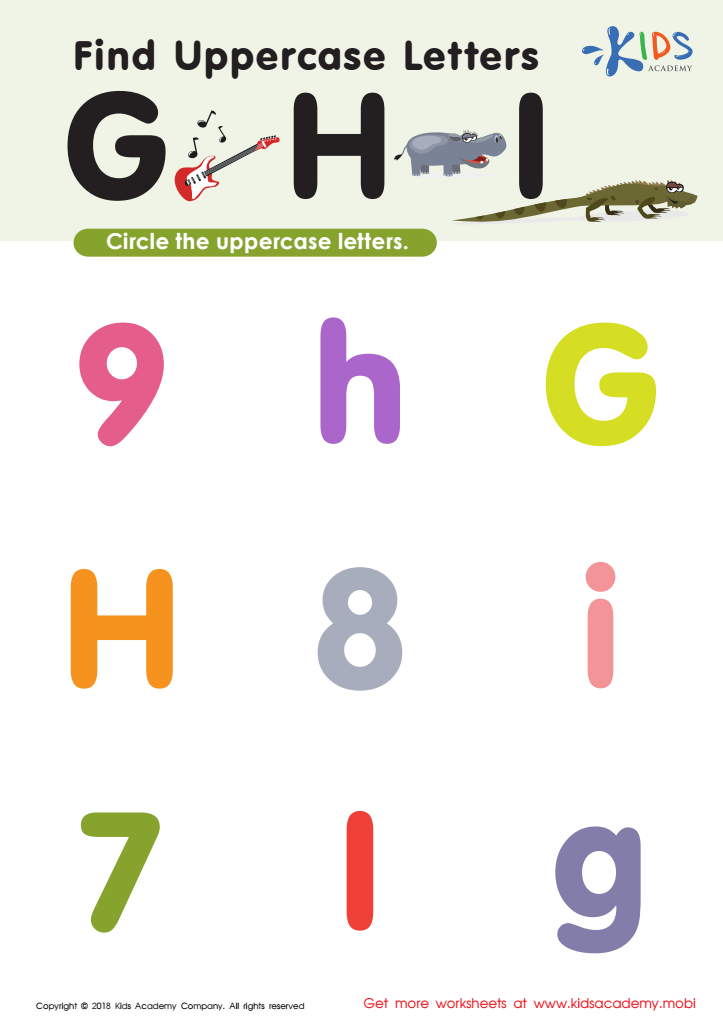
Find Uppercase Letters G, H, and I Worksheet
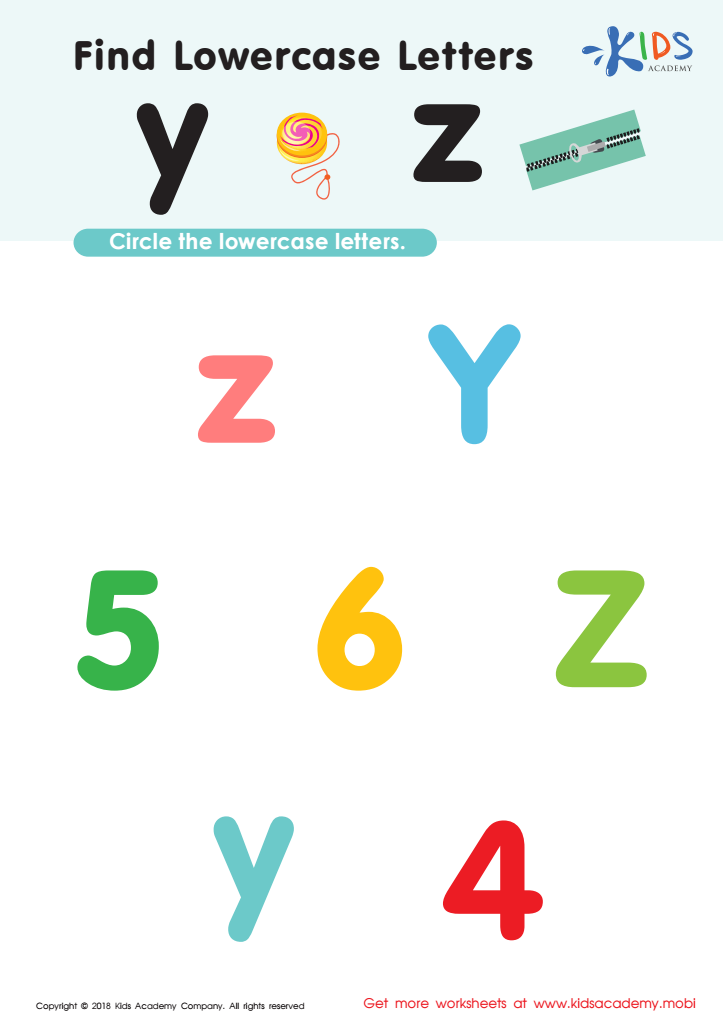
Find Lowercase Letters y z Worksheet
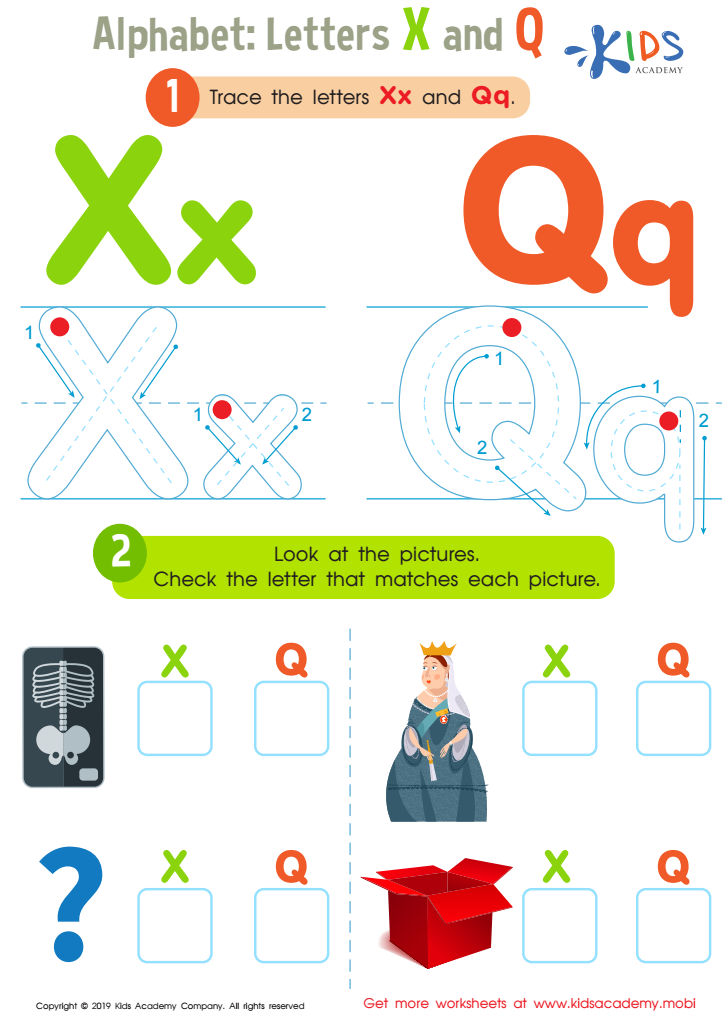
Letters X and Q Tracing Worksheet
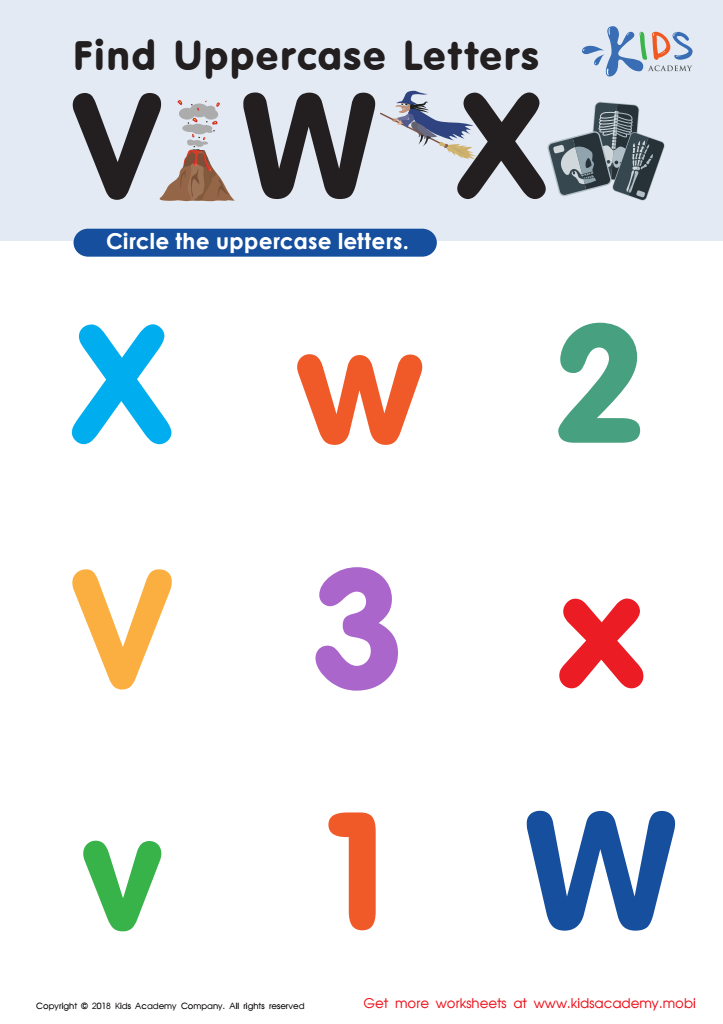
Find Uppercase Letters V, W, X Worksheet








Visual discrimination is a crucial skill for children aged 6-9, particularly as they are mastering reading and writing. This skill involves the ability to notice differences and similarities in shapes, letters, and numbers. For parents and teachers, fostering visual discrimination can significantly enhance a child’s academic performance and overall learning experience.
Firstly, strong visual discrimination skills aid in the recognition of letters, enabling children to identify and differentiate between similar-looking letters such as 'b' and 'd,' or 'p' and 'q.' This conceptual understanding is essential for developing strong reading skills and preventing common mistakes that can hinder progress.
Moreover, visual discrimination plays a vital role in mathematics, as kids learn to recognize numbers and patterns, essential concepts in problem-solving and computation. In a broader context, developing this skill can support children in areas such as visual arts, where perception of forms and spatial relationships is significant.
In addition to academic benefits, enhancing visual discrimination fosters confidence in children, motivating them to engage actively in their learning. By incorporating activities that bolster this skill, parents and teachers can create a supportive educational environment that lays a solid foundation for lifelong learning and success.







