
Alphabet sequencing Letter Recognition Worksheets for Ages 6-9
5 filtered results
Difficulty Level
Grade
Age
-
From - To
Subject
Activity
Standards
Enhance your child's linguistic skills with our Alphabet Sequencing Letter Recognition Worksheets designed for ages 6-9! These engaging, educational worksheets are carefully crafted to strengthen foundational alphabet knowledge, ensuring a smooth transition into advanced literacy. Perfect for home and classroom settings, our activities focus on letter identification, sequence ordering, and critical thinking. Each colorful sheet presents fun challenges that will keep young learners motivated and progressing. With consistent practice, your child will master alphabet sequencing and boost their confidence in reading and writing. Download today from Kids Academy for playful and productive learning!
Favorites
With answer key
Interactive
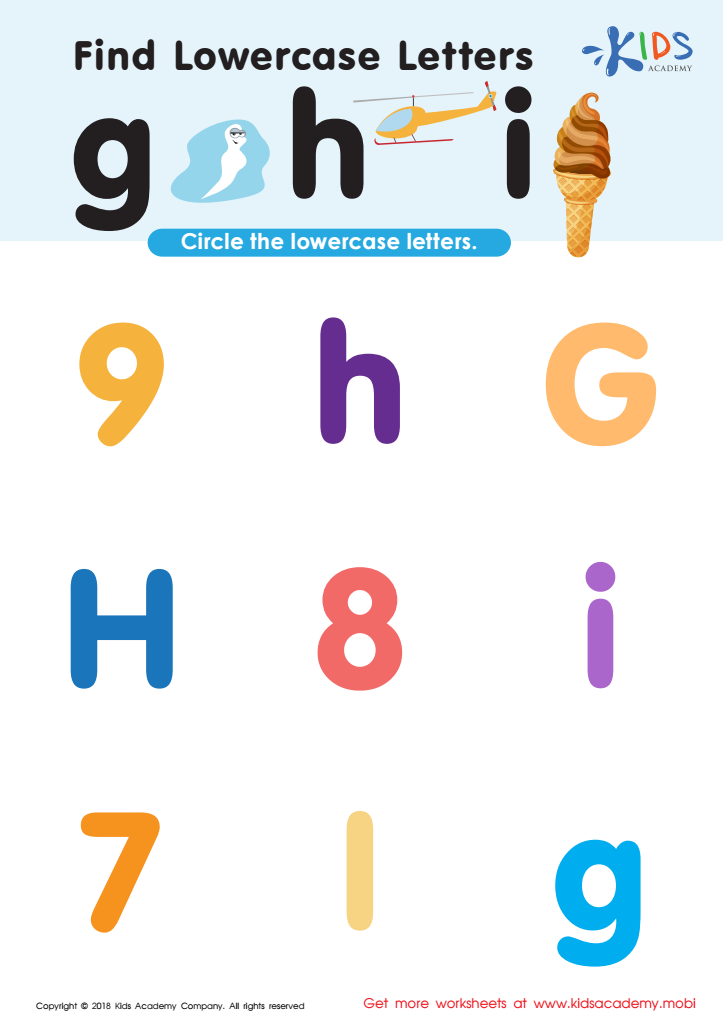
Find Lowercase Letters g h i Worksheet
Turn learning into a fun journey with your child! Use this free worksheet to find and circle the lowercase letters hidden amongst uppercase letters and numbers. Your child will understand what you're teaching them as they enjoy the search.
 Assign to My Students
Find Lowercase Letters g h i Worksheet
Worksheet
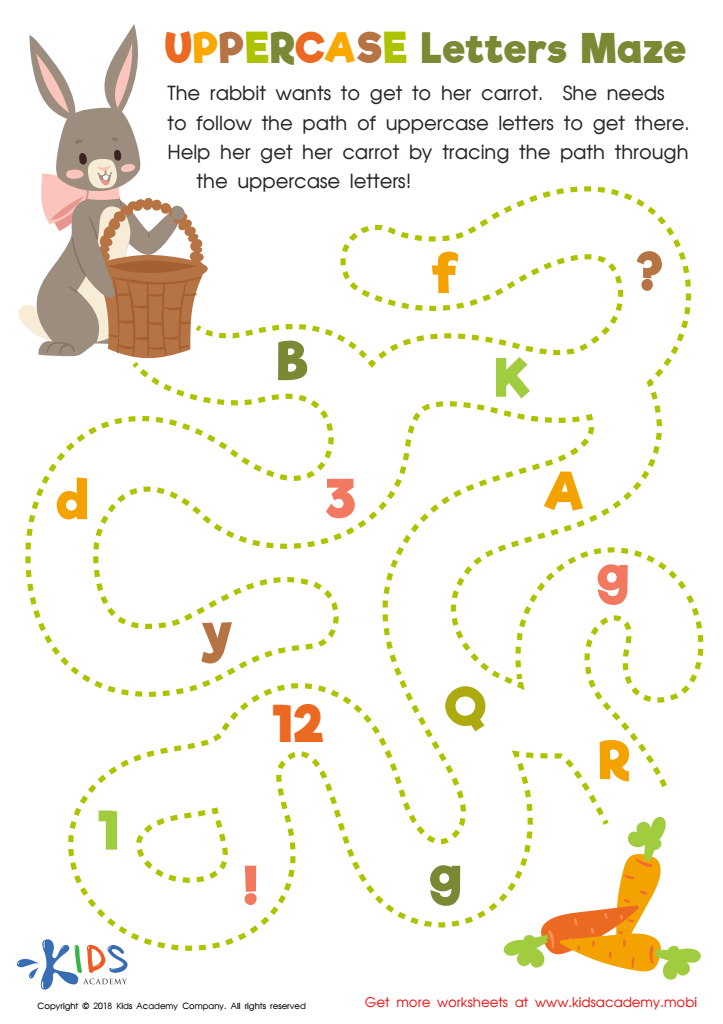
Uppercase Letters Maze Worksheet
Kids can have fun helping a rabbit find her carrot by picking the path with uppercase letters. This worksheet teaches letter differentiation while building confidence. Kids will have a great time while getting an essential skill!
Uppercase Letters Maze Worksheet
Worksheet
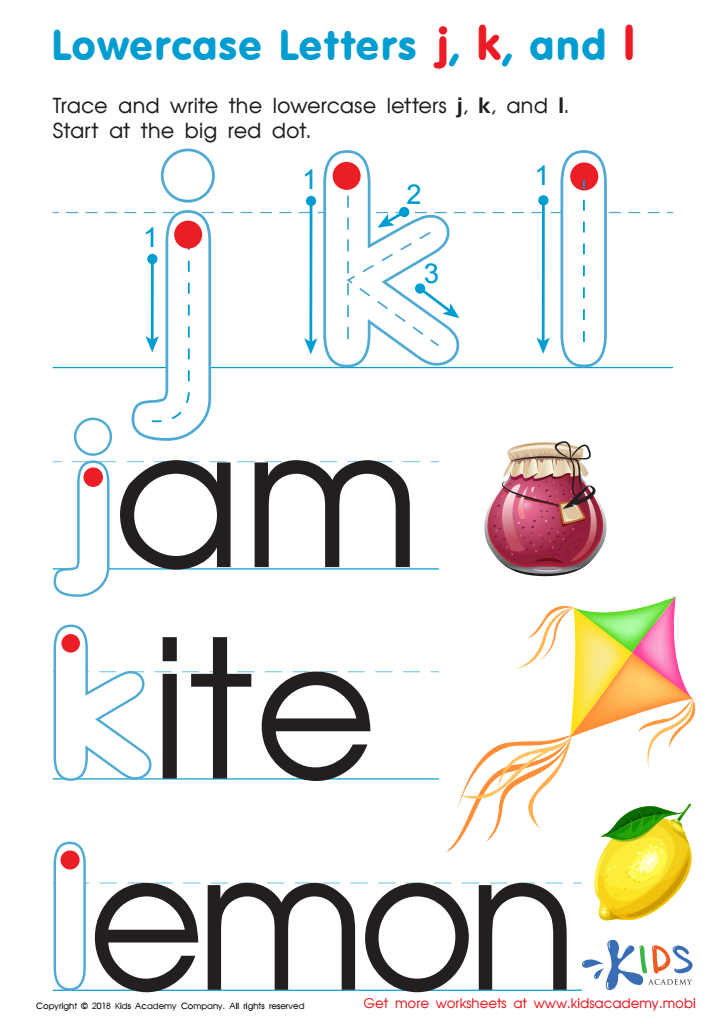
Lowercase Letters j k l Worksheet
Teach your child the difference between uppercase and lowercase letters. Have them trace and write the lowercase letters j, k, and l, starting at the red dot. Guide your child's hand to form the letters correctly.
Lowercase Letters j k l Worksheet
Worksheet
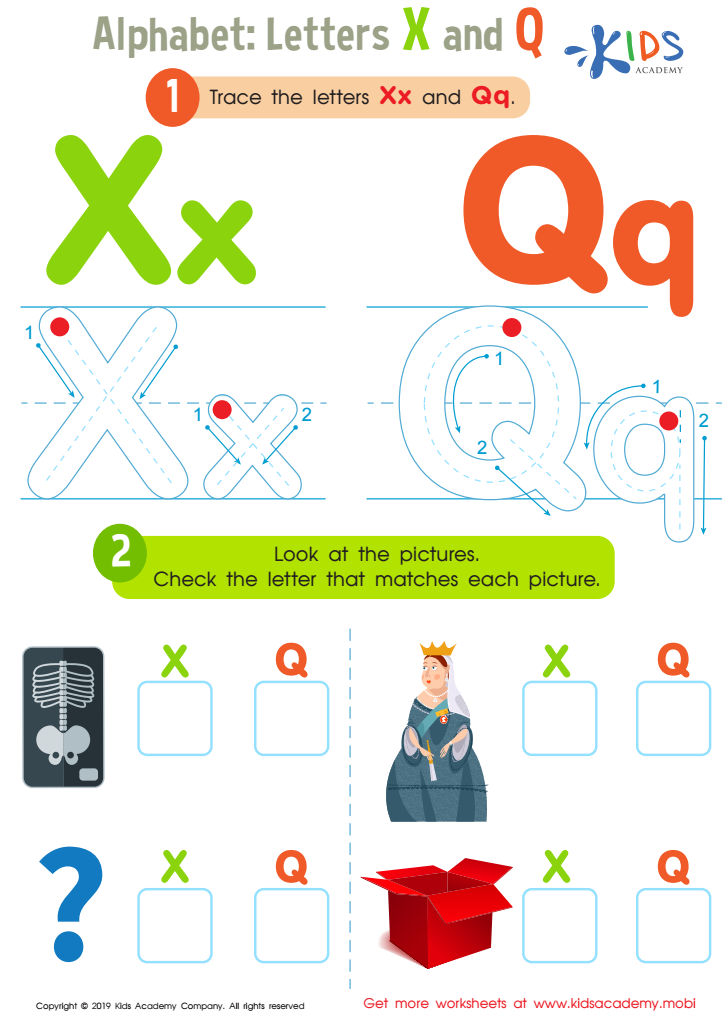
Letters X and Q Tracing Worksheet
Do you want your students to improve writing and letter recognition? This worksheet is a great place to start! Kids can trace the letters «X» and «Q» and identify pictures that match each letter. With a little encouragement, they'll do a great job!
Letters X and Q Tracing Worksheet
Worksheet
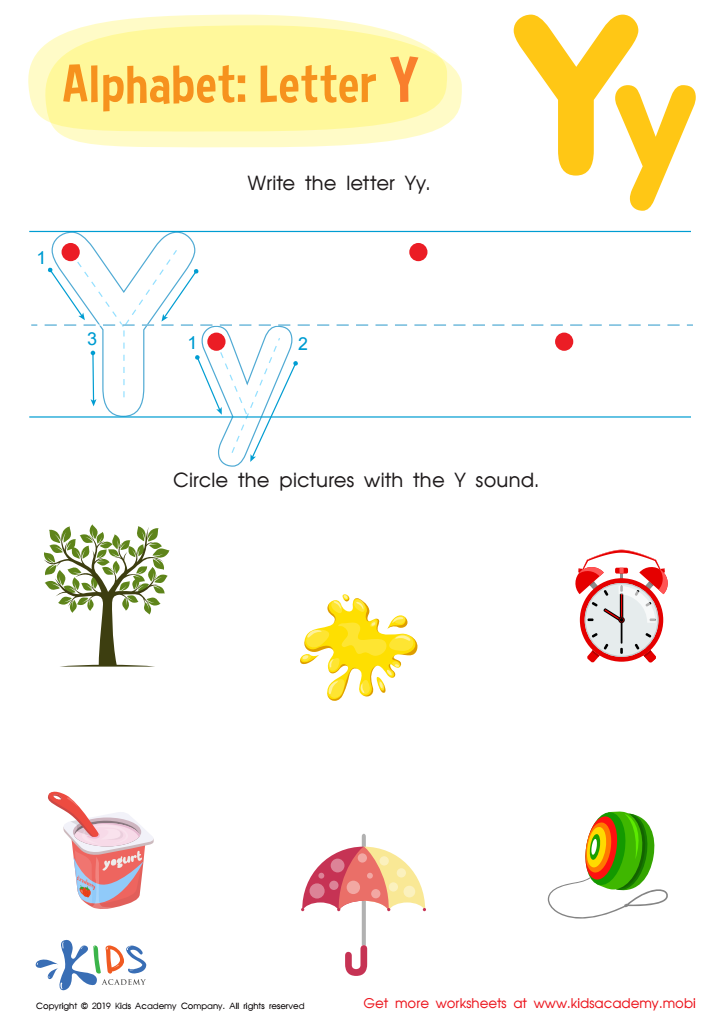
Letter Y Tracing Worksheet
Does your child need help with learning the final letters of the alphabet? This PDF worksheet is perfect then! Kids can practice tracing the letter «Y» and circle pictures that start with the same sound. Options include «yellow» and «yogurt». It's a great way of honing their letter-learning skills.
Letter Y Tracing Worksheet
Worksheet
Join Kids Academy for Free
Who is primarily going to use this learning content?








Parents and teachers should prioritize alphabetical sequencing and letter recognition for children aged 6 to 9 because these skills are foundational to literacy development. Alphabetical sequencing helps children understand the structure of language and the concept of orderly arrangement, which are critical for tasks such as dictionary use, indexing, and organizing information logically. Mastery of the alphabet in sequence enables students to efficiently navigate and utilize alphabetized systems they will encounter throughout their education and daily life.
Letter recognition, on the other hand, is a key predictor of reading success. When children recognize letters easily, they can focus better on understanding words and eventually sentences, facilitating smooth reading progression. Early proficiency in letter recognition boosts phonemic awareness—the ability to hear, identify, and manipulate individual sounds in spoken words—which directly supports decoding skills necessary for fluent reading.
Additionally, strong alphabet and letter recognition skills enhance a child’s confidence and love for learning, paving the way for academic success. Teachers and parents play a crucial role in making these learning experiences engaging and enjoyable, ensuring that children possess the literacy skills essential for their academic journey and beyond. Fostering these skills concurrently narrows learning gaps early, reducing future academic obstacles.







