
Alphabetical understanding Letter Recognition Worksheets for Ages 6-9
3 filtered results
Difficulty Level
Grade
Age
-
From - To
Subject
Activity
Standards
Discover our engaging Alphabetical Understanding Letter Recognition Worksheets tailored for children aged 6-9. These interactive worksheets are designed to enhance letter recognition skills while making learning fun! Help your child identify, differentiate, and match letters through various activities that promote visual and auditory understanding of the alphabet. With colorful graphics and age-appropriate exercises, our worksheets foster early literacy development. Ideal for both classroom settings and at-home practice, these resources will guide young learners in mastering their letters with confidence. Empower your child’s reading journey today with our comprehensive and captivating letter recognition worksheets!
Favorites
With answer key
Interactive
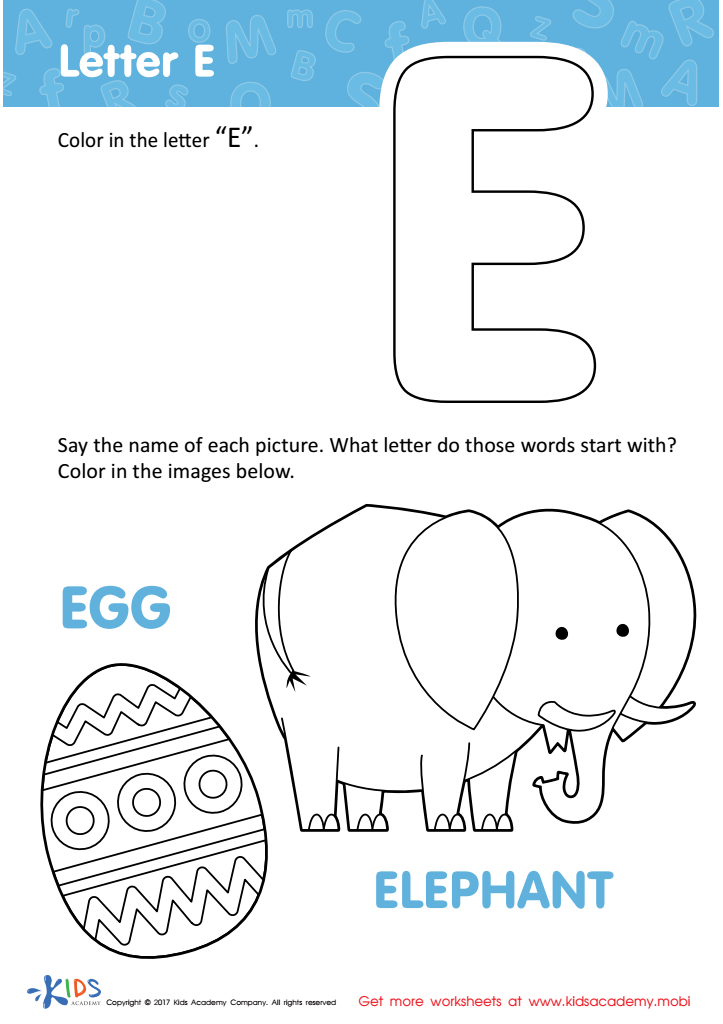
Letter E Coloring Sheet
Coloring pages are great for teaching kids the alphabet and words! This "E" page features a cute elephant and Easter egg. Kids will love it and learn the letter "E" at the same time. 80 words
Download (PDF)
 Assign to My Students
Assign to My Students
Letter E Coloring Sheet
Worksheet
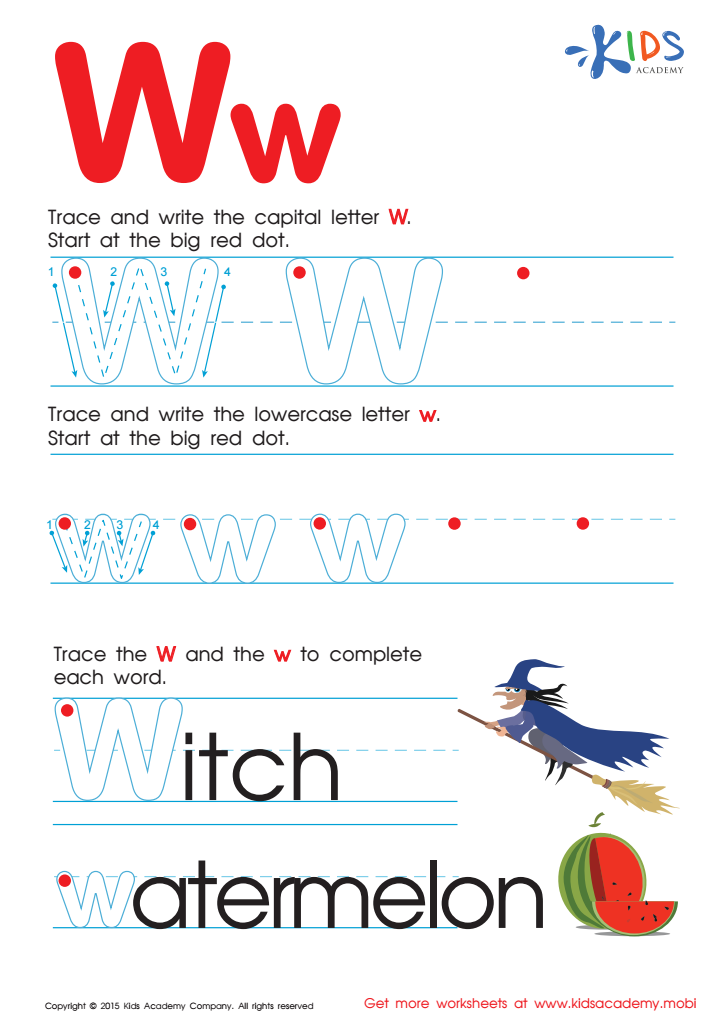
Letter W Tracing Page
Trace and write the capital and lowercase letter W with this free letter tracing worksheet by Kids Academy. Complete the words "Witch" (capital) and "watermelon" (lowercase). Check out our other kindergarten alphabet worksheets!
Letter W Tracing Page
Worksheet
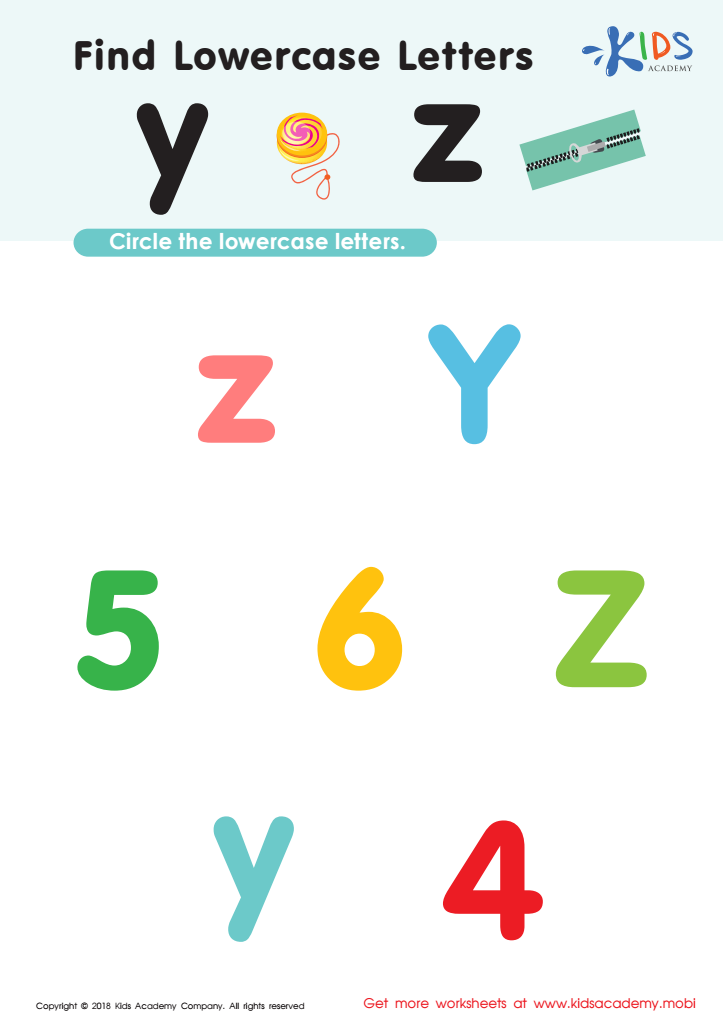
Find Lowercase Letters y z Worksheet
Help your kid learn the alphabet. Before they can move on to words and reading, they must first know the lower and uppercase letters. Show them how to find the letters y and z in this worksheet, which is filled with uppercase letters and numbers. Together, find and circle them.
Find Lowercase Letters y z Worksheet
Worksheet
Join Kids Academy for Free
Who is primarily going to use this learning content?








Alphabetical understanding and letter recognition are critical foundational skills for children aged 6 to 9, as they are essential for early literacy development. During these formative years, children typically transition from basic phonemic awareness to reading and writing independently. Mastery of letter recognition allows them to decode words, making reading not just a task, but an enjoyable activity.
Parents and teachers should prioritize these skills because they directly impact a child's ability to succeed academically and foster a love for learning. When children easily recognize letters, they can make connections between sounds and their corresponding letters, thereby enhancing their spelling, vocabulary, and comprehension abilities.
Moreover, early literacy skills are directly linked to future academic performance; children who struggle with letter recognition may find themselves at a disadvantage in later grades.
Additionally, encouraging alphabetical understanding helps boost children's confidence as they progress in reading and writing, fostering a sense of accomplishment at a young age. By creating a rich, supportive learning environment that combines play and structured activities focusing on letters, educators and parents can pave the way for lifelong learning and success. Ultimately, investing time in these foundational skills reaps benefits that extend beyond the classroom.







