
Phonics enhancement Letter Recognition Worksheets for Ages 6-9
3 filtered results
Difficulty Level
Grade
Age
-
From - To
Subject
Activity
Standards
Enhance your child's literacy skills with our Phonics Enhancement Letter Recognition Worksheets designed for ages 6-9! These engaging and interactive worksheets provide a fun way for young learners to strengthen their understanding of the alphabet and phonics. By combining letter recognition with phonemic awareness, these resources help children develop foundational reading skills essential for academic success. Each worksheet is tailored to encourage practice through colorful visuals and enjoyable activities, ensuring that learning remains exciting. Perfect for both classroom and home use, these worksheets are an excellent tool for parents and educators aiming to foster a love of reading while improving letter recognition abilities.
Favorites
With answer key
Interactive
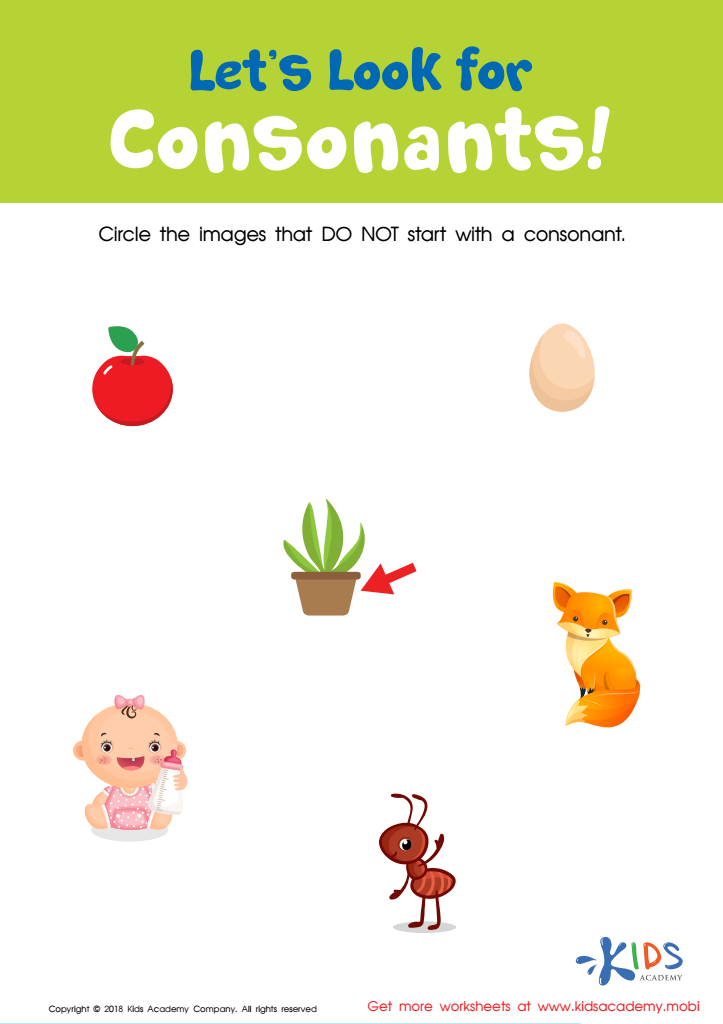
Let's Look for Consonants Worksheet
Help kids learn consonants and words that start with them. Ask them to recite the alphabet, then explain consonants are all letters but the 5 vowels. Use the worksheet to ask them to circle items without a consonant. Emphasize that's 21 consonants.
Let's Look for Consonants Worksheet
Worksheet
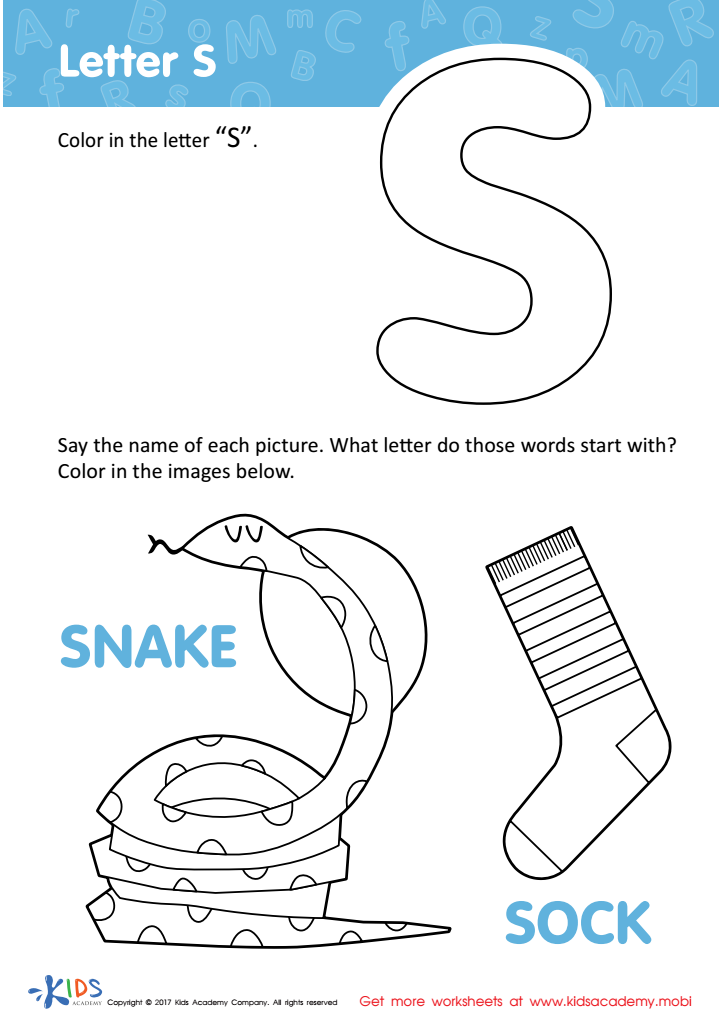
Letter S Coloring Sheet
Help your child practice recognizing the letter "S" and the sound it makes with this fun coloring page. It features a slippery snake, smelly sock and more! Give them extra practice by coming up with more "S" sounds and words.
Download (PDF)
 Assign to My Students
Assign to My Students
Letter S Coloring Sheet
Worksheet
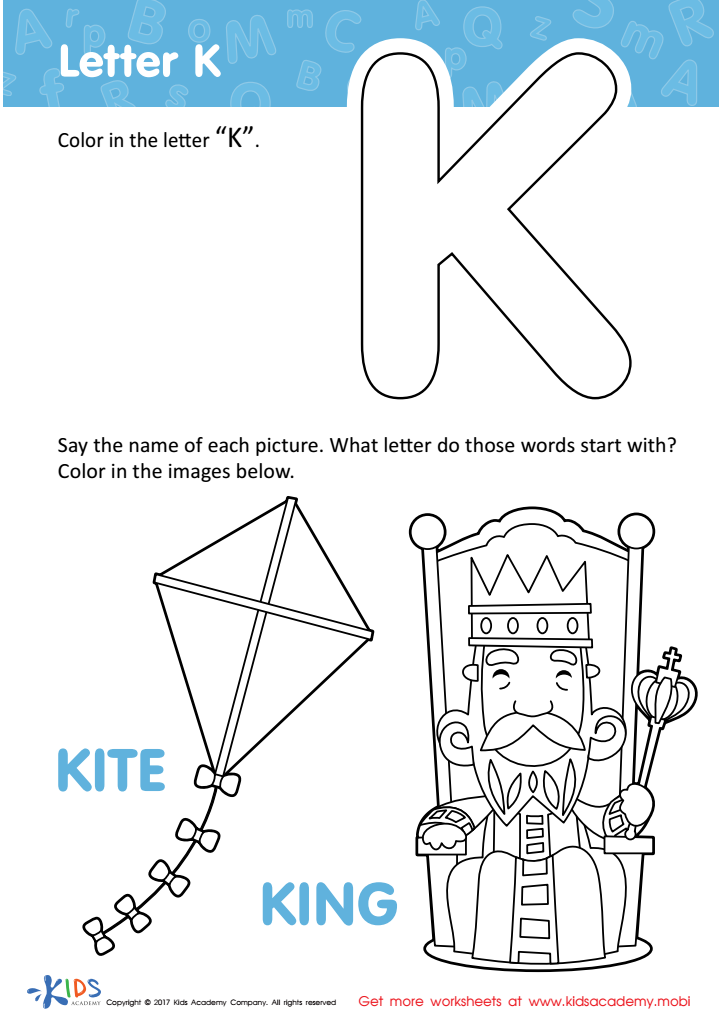
Letter K Coloring Sheet
This letter K coloring page captivates your child's creativity while learning the letter! Showcasing a king and kite, common words for their age group, it's sure to spark their imagination.
Download (PDF)
Assign to My Students
Assign to My Students
Letter K Coloring Sheet
Worksheet
Join Kids Academy for Free
Who is primarily going to use this learning content?








Phonics enhancement and letter recognition are crucial for children ages 6-9, as this stage lays the foundation for reading and writing skills. Understanding phonics equips children with the ability to decode words, greatly improving reading fluency and comprehension. As they learn to recognize letters and their corresponding sounds, they become more confident in their reading abilities, which encourages a lifelong love for literature and learning.
Strong literacy skills are directly linked to academic success across all subjects. By focusing on phonics and letter recognition, parents and teachers can help children make connections between sounds and their written forms, enhancing vocabulary and spelling prowess. Moreover, early mastery of these skills can prevent later struggles with reading, reducing the risk of frustration and disengagement.
Additionally, literacy is often tied to social-emotional development. Children who read well tend to gain confidence and demonstrate improved communication skills. When parents and teachers actively support phonics enhancement, they not only help children improve academically but also foster essential life skills. Therefore, investing time and resources to promote phonics and letter recognition in young learners is a vital step in nurturing their overall development and future success.







