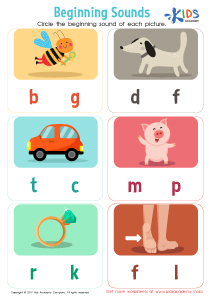
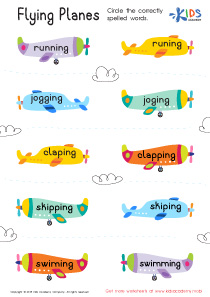
Sound Association Letter Sounds Worksheets for Ages 6-9
6 filtered results
-
From - To
Discover our engaging Sound Association Letter Sounds Worksheets designed for children aged 6-9! These interactive worksheets help young learners connect sounds with letters, strengthening their phonics skills and enhancing reading proficiency. Each activity is tailored to inspire creativity and critical thinking, making learning enjoyable and effective. Your child will engage in fun exercises that promote sound recognition, blending, and decoding, all crucial for early literacy development. Perfect for classroom use or at-home learning, these worksheets provide a strong foundation for budding readers. Dive into a world of sounds and letters with our thoughtfully crafted worksheets and watch your child's reading skills flourish!
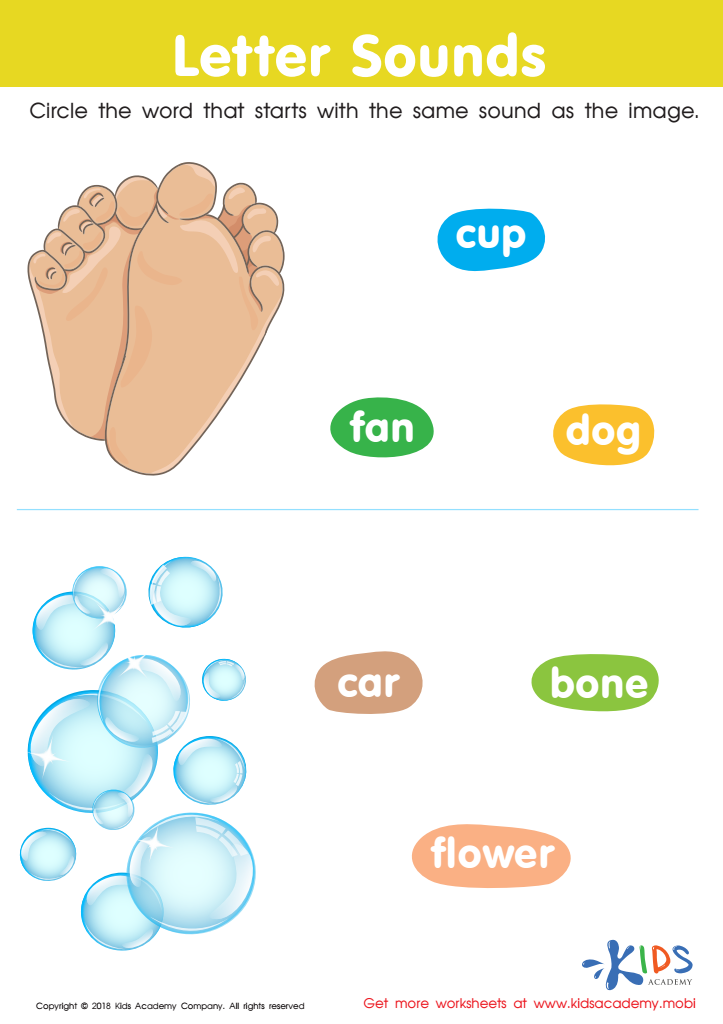
letter sounds Worksheet
 Assign to My Students
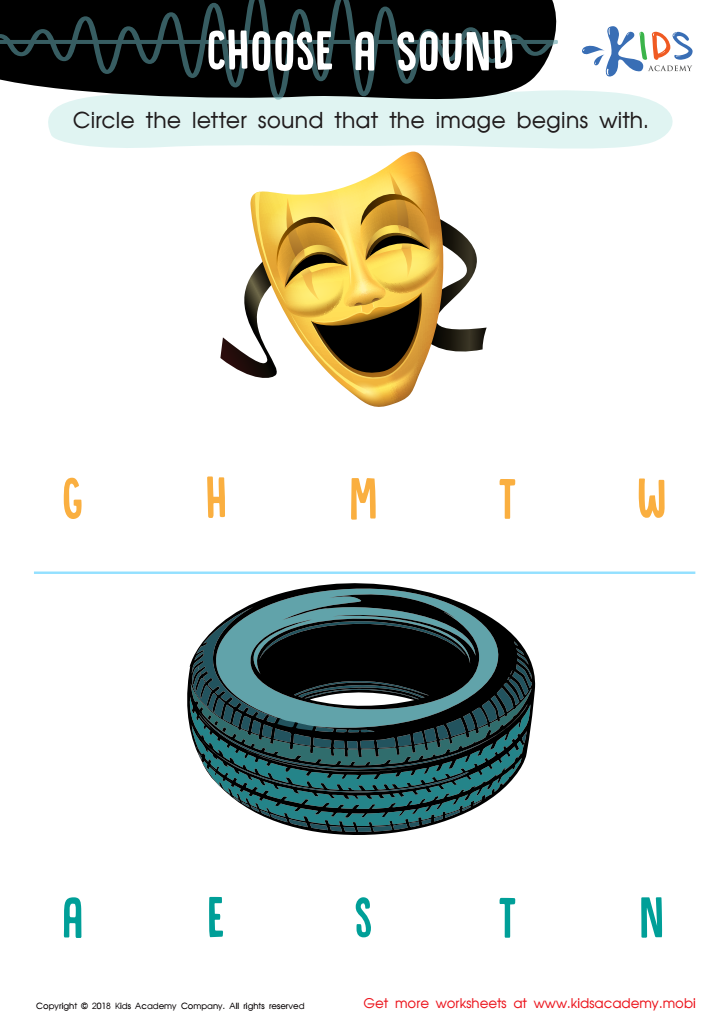
Choose a Sound Worksheet
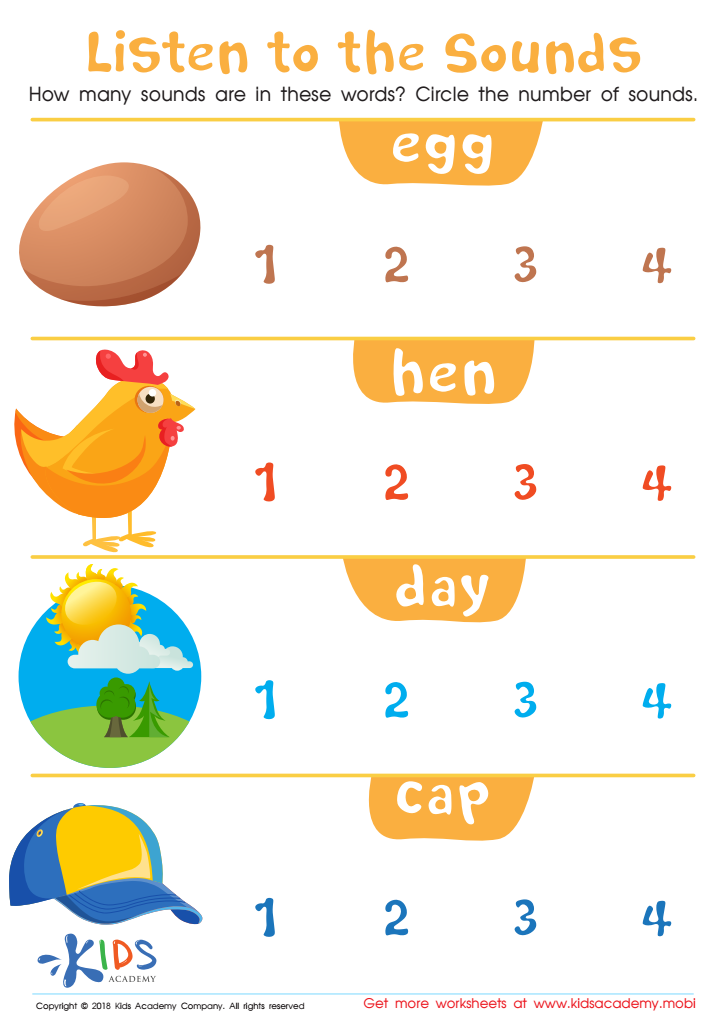
Listen to the Sounds Worksheet
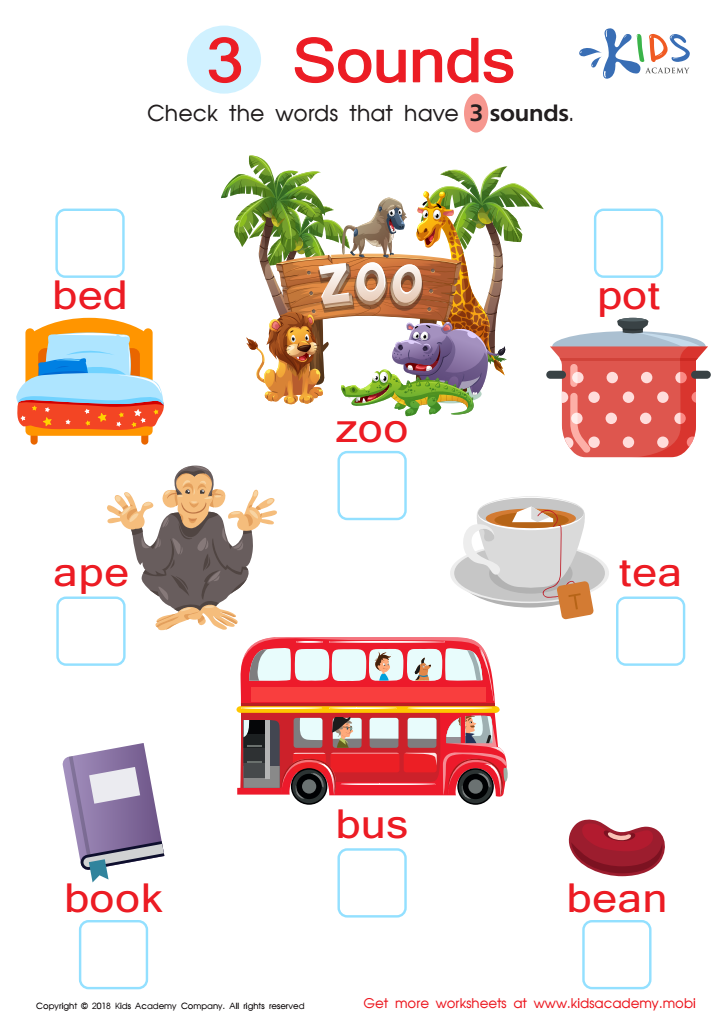
3 Sounds Worksheet
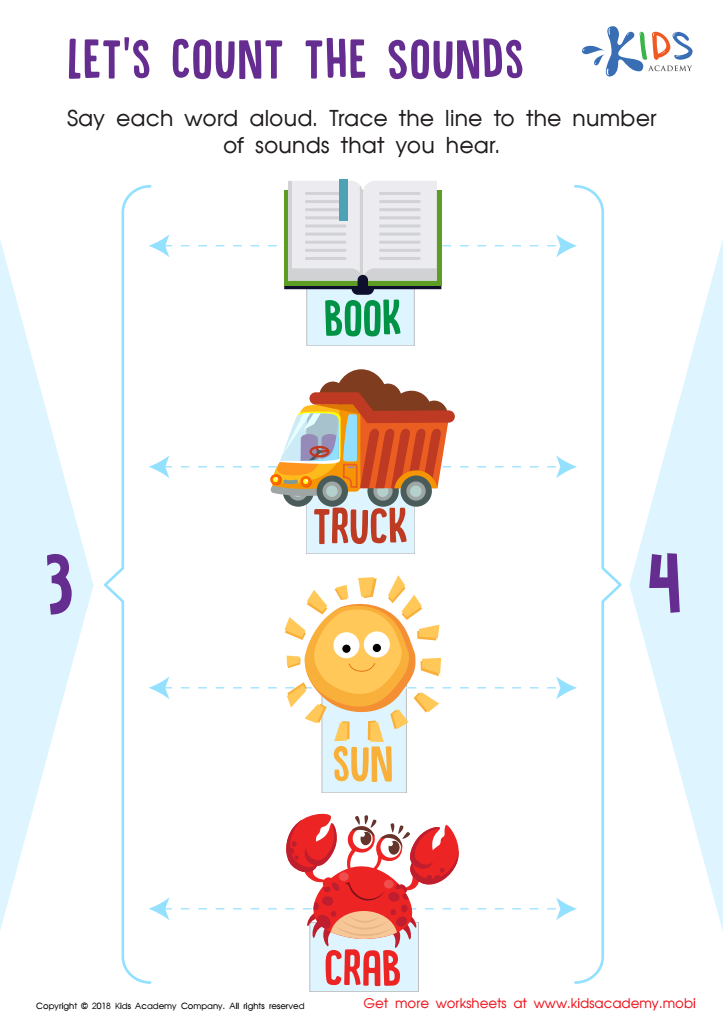
Let's Count the Sounds Worksheet
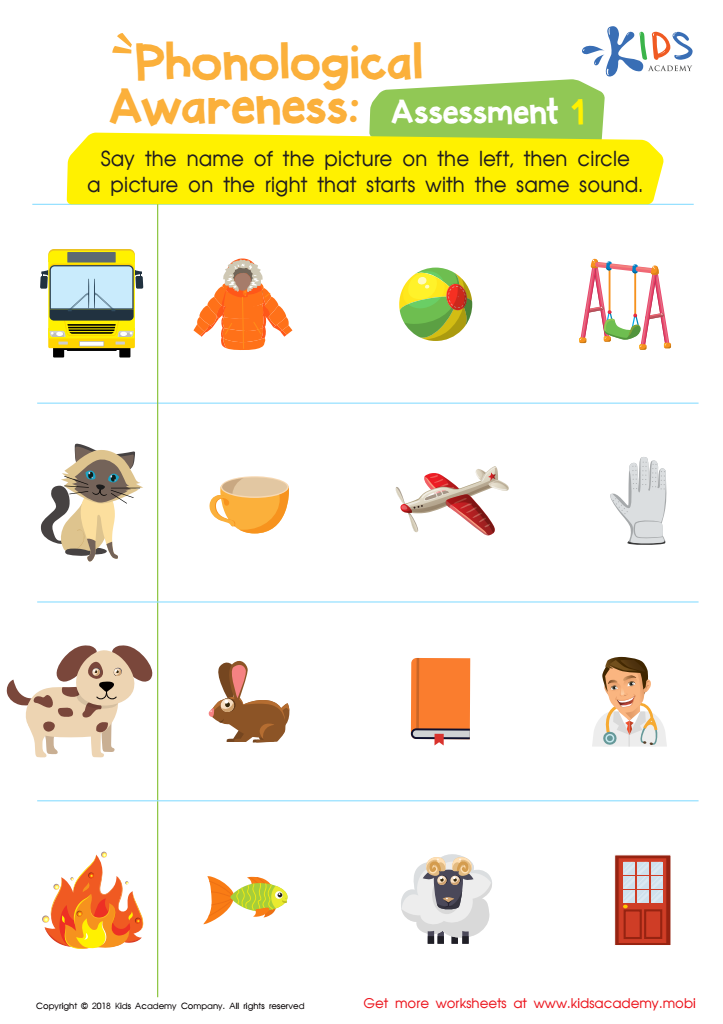
Phonological Awareness: Assessment 1 Worksheet








Sound Association, or the connection between sounds and their corresponding letters, is crucial for children ages 6-9 as it forms the foundation for literacy and language skills. Understanding letter sounds aids children in developing phonemic awareness, which is vital for reading and writing. This age group is typically at the critical stage of learning to read; mastering sound-letter associations enables them to decode words, enhancing their ability to comprehend texts.
Moreover, strong sound association skills boost spelling proficiency. As children learn to connect sounds to letters, they develop the ability to spell words phonetically, which builds confidence in their writing abilities. This correlation also facilitates vocabulary expansion—when children can sound out words, they are more inclined to read and subsequently learn new words, further enriching their language comprehension.
Teachers and parents play a significant role in fostering these skills through engaging activities and phonics strategies. Encouraging sound-letter play through games, songs, and reading aloud reinforces positive associations and makes learning enjoyable. Ultimately, prioritizing sound association in early education nurtures not only reading and writing skills but also fosters a love for learning, setting the stage for academic success in years to come.