Handwriting practice Letter U Worksheets for Ages 6-9
4 filtered results
Difficulty Level
Grade
Age
-
From - To
Subject
Activity
Standards
Enhance your child's writing skills with our "Handwriting Practice Letter U Worksheets" designed for ages 6-9. These engaging and educational worksheets aid young learners in mastering the upper and lowercase letter 'U' through structured practice and fun activities. Ideal for both classroom and at-home use, these sheets provide guided tracing exercises and ample space for independent writing. By focusing on proper penmanship, these printable worksheets help children develop fine motor skills and gain confidence in their handwriting. Make literacy enjoyable with our expertly designed, easy-to-use resources, perfectly curated for your child’s developmental needs. Explore today!
Favorites
With answer key
Interactive
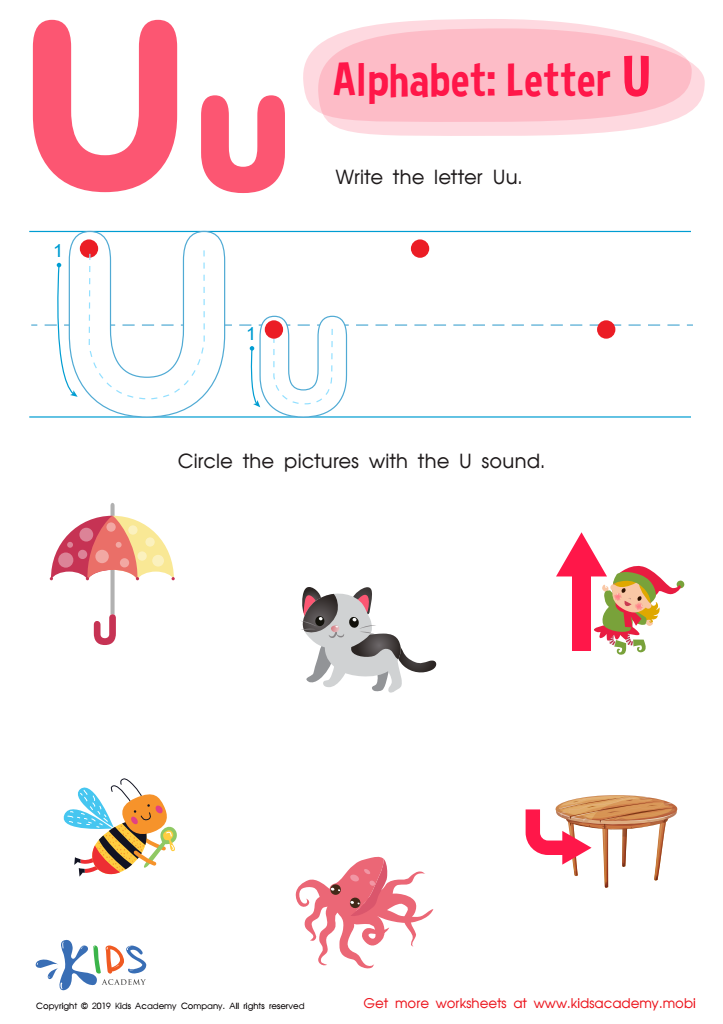
Letter U Tracing Worksheet
Your students can have fun and learn about the alphabet with this letter «U» worksheet. Pre-schoolers will trace the letter «U», circle words with the letter sound, and learn phonics while boosting their confidence. Doing these tasks will help them understand the letter more.
Letter U Tracing Worksheet
Worksheet
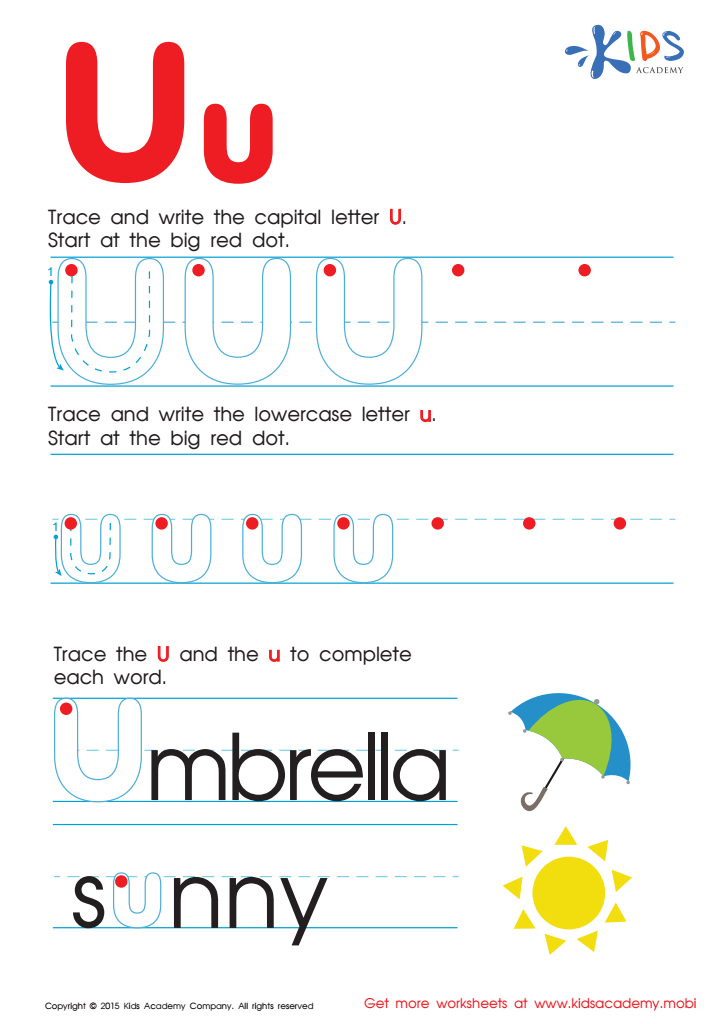
Letter U Tracing Page
Ready to trace and write the letter "U"? Use our worksheet and practice tracing both uppercase and lowercase letters. Complete the words "umbrella" and "sunny" with a capital "U". Check our full collection of alphabet printables for more activities.
Letter U Tracing Page
Worksheet
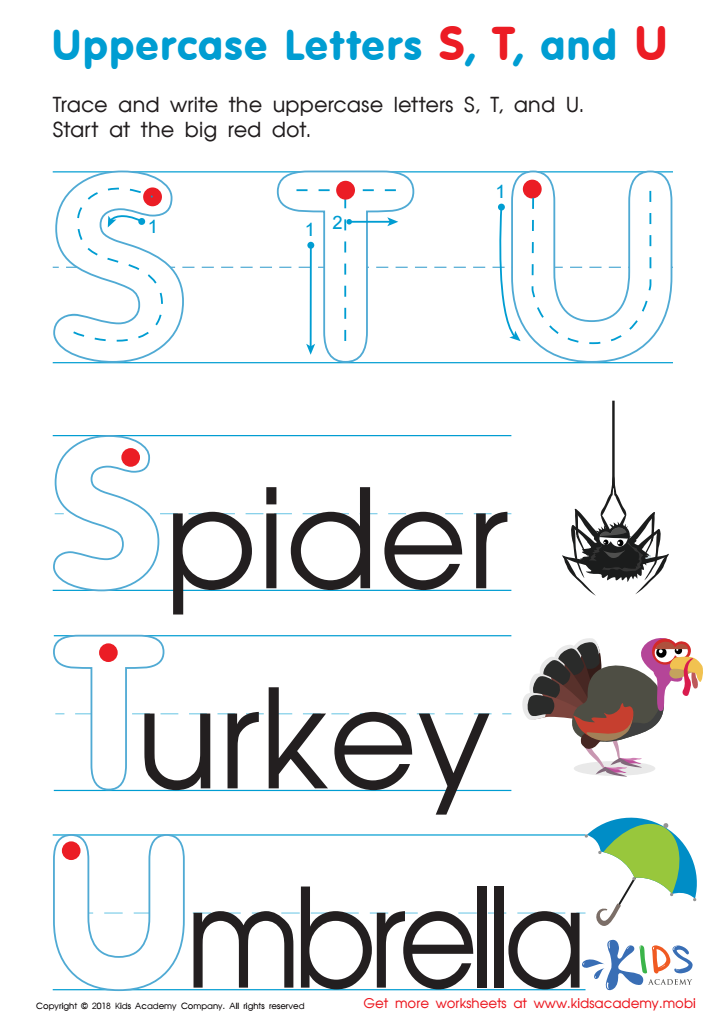
Uppercase Letters S, T, and U Worksheet
Help your kids learn to write upper-case letters with this fun tracing sheet. Start at the big red dot for each letter: S, T, and U. Show them the pictures and ask what letter each word starts with. Guide their hand and watch them learn!
Uppercase Letters S, T, and U Worksheet
Worksheet
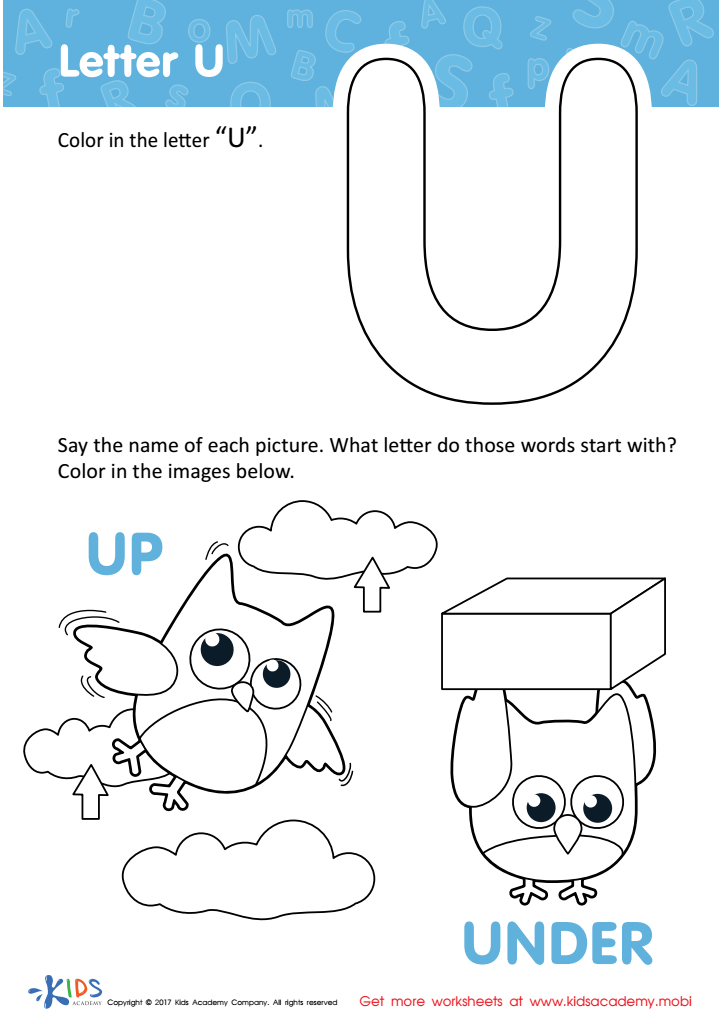
Letter U Coloring Sheet
This letter "U" coloring page helps your child learn two things at once - the letter "U" and positional words! An adorable owl character aids in understanding up and under. In a few strokes of a crayon, your child can master these concepts.
Download (PDF)
 Assign to My Students
Assign to My Students
Letter U Coloring Sheet
Worksheet
Join Kids Academy for Free
Who is primarily going to use this learning content?





Handwriting practice for the letter "U" is crucial for children aged 6-9 for several reasons. Firstly, this age range is critical for developing fine motor skills, and writing individual letters helps strengthen the hand muscles necessary for more complex tasks. Practicing the letter "U" supports this development by encouraging precision and control.
Additionally, handwriting practice enhances cognitive skills such as memory and focus. When children write letters repeatedly, they reinforce their alphabetical knowledge and improve their ability to recognize patterns and sequences. This is important not only for reading and writing but also for overall academic performance and future learning.
Moreover, mastering the letter "U" contributes to building self-confidence. As children see their handwriting improve, they experience a sense of achievement and pride, which motivates them to tackle more challenging tasks. This positive reinforcement can extend to other areas of their schoolwork and personal growth.
Teachers and parents should also recognize that good handwriting is essential for clear communication. Legible writing facilitates better teacher feedback and improves classroom interaction, enhancing the learning experience for everyone.
In summary, handwriting practice for the letter "U" promotes fine motor skill development, cognitive skills, self-confidence, and effective communication, making it a foundational aspect of a child's early education.