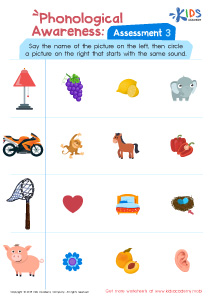
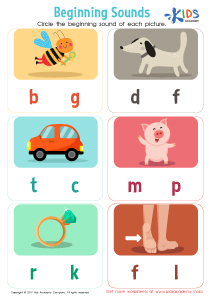
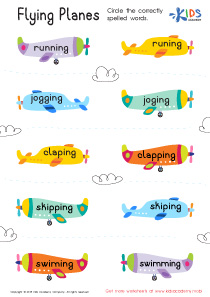
Rhyming skills development Rhyming Worksheets for Ages 6-9
4 filtered results
-
From - To
Enhance your child's literacy with our engaging Rhyming Worksheets designed for ages 6-9! Ideal for early learners, these worksheets focus on developing critical rhyming skills, essential for phonemic awareness and reading fluency. Each activity encourages creativity and helps children recognize word patterns through fun rhymes and playful exercises. Kids will enjoy matching words, completing sentences, and engaging with charming illustrations that make learning enjoyable. Foster a love for reading while supporting your child's educational journey. Perfect for at-home practice or classroom use, our Rhyming Worksheets are a valuable resource for nurturing budding readers. Explore and watch their confidence soar!
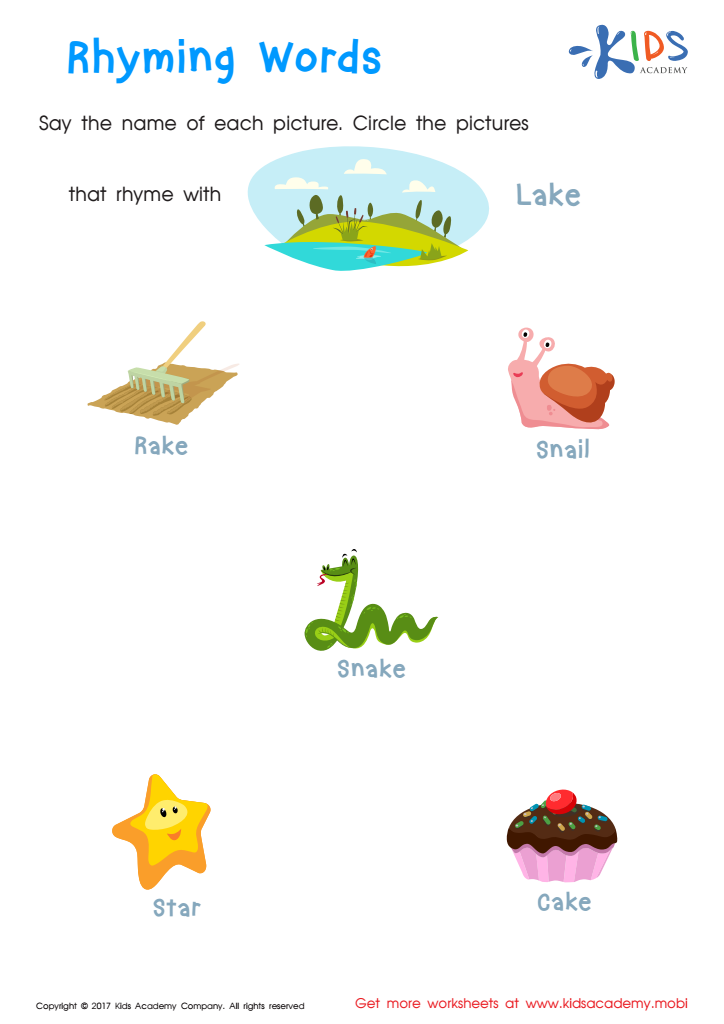
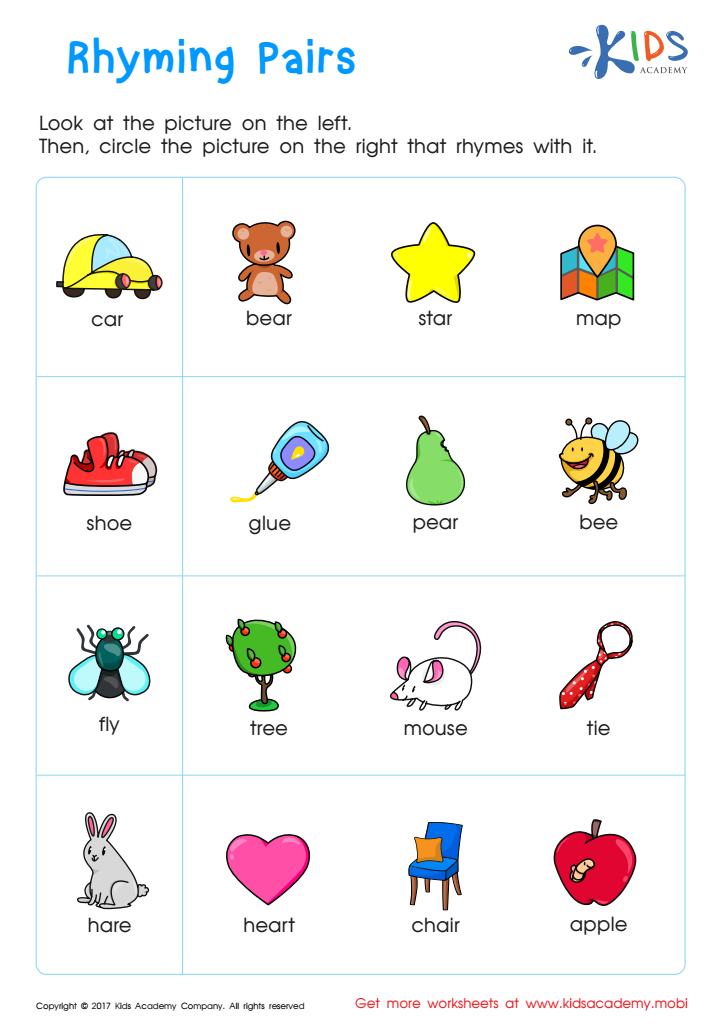
Rhyming Words Rhyming Worksheet
 Assign to My Students
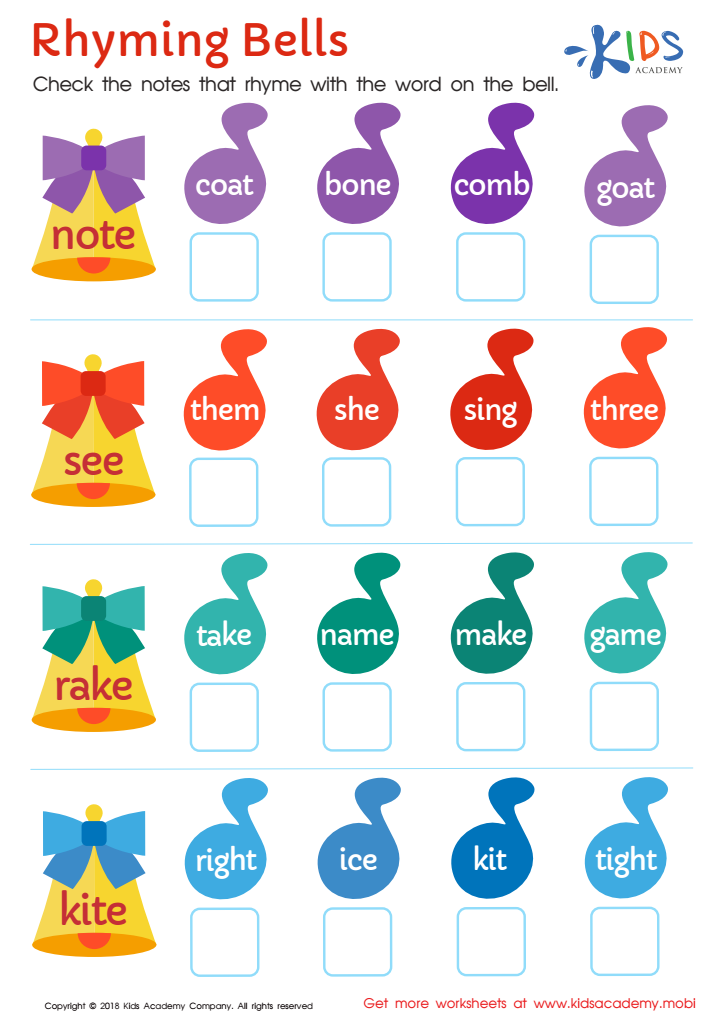
Rhyming Bells Worksheet
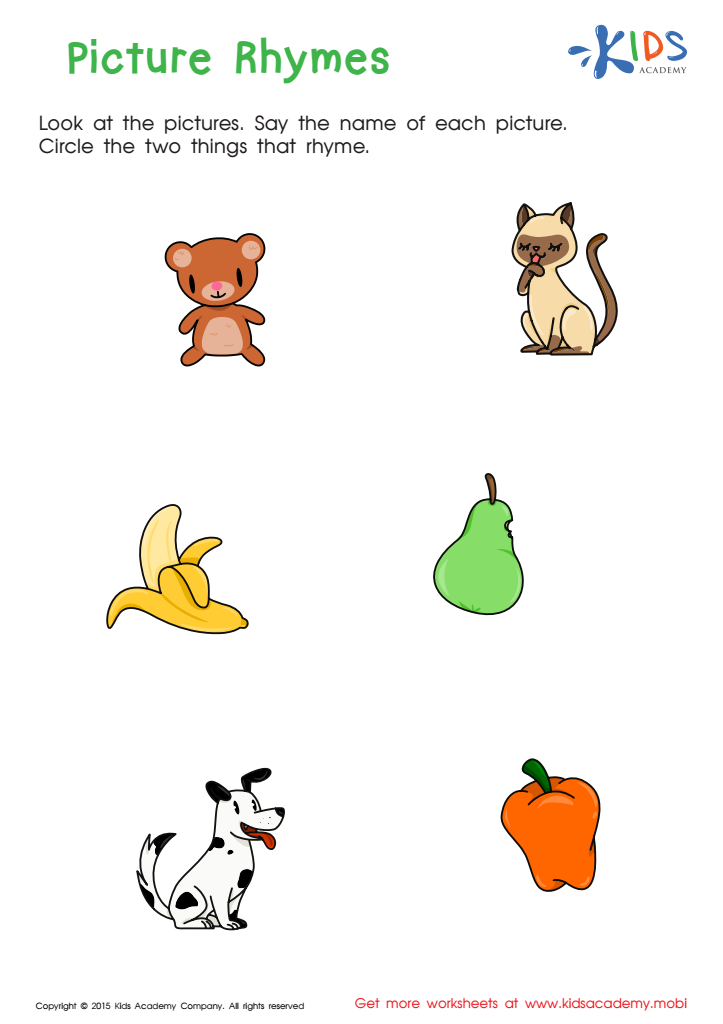
First Words: Picture Rhymes Worksheet







Rhyming skills play a crucial role in the literacy development of children aged 6-9, making it essential for parents and teachers to pay attention to this aspect of learning. Rhyming enhances phonological awareness, the ability to recognize and manipulate the sounds in words. This foundational skill is vital for reading and writing since it helps children decode unfamiliar words and develop spelling skills.
Moreover, rhyming fosters vocabulary growth and language development. Engaging with rhymes introduces children to new words and promotes an understanding of word families and syllable patterns. This experience can make learning more enjoyable and boost confidence as children recognize patterns in language.
Additionally, rhyming supports memory and listening skills. Rhymes are often catchy and repetitive, making it easier for children to memorize and recall information. Activities centered around rhymes, such as songs and poems, can make learning more playful and interactive, encouraging a love for reading.
Finally, rhyming can improve cognitive skills by challenging children to think about word relationships, sparking creativity in their use of language. By prioritizing rhyming skill development, parents and teachers can set children on a promising path toward successful literacy and communication.