
Phonics Skills Two Letter Phonics Worksheets for Ages 6-9
7 filtered results
Difficulty Level
Grade
Age
-
From - To
Subject
Activity
Standards
Explore our engaging "Two Letter Phonics Worksheets" designed for children ages 6-9! These worksheets are perfect for young learners to develop foundational phonics skills through fun activities that enhance reading and writing abilities. Each worksheet focuses on two-letter phonics, providing a variety of exercises to help children recognize letter combinations, decode words, and build confidence in their literacy skills. Ideal for classroom teachers and homeschoolers alike, our worksheets use visual aids and interactive tasks to make learning enjoyable. Help your child unlock the world of reading with our comprehensive resources today!
Favorites
With answer key
Interactive
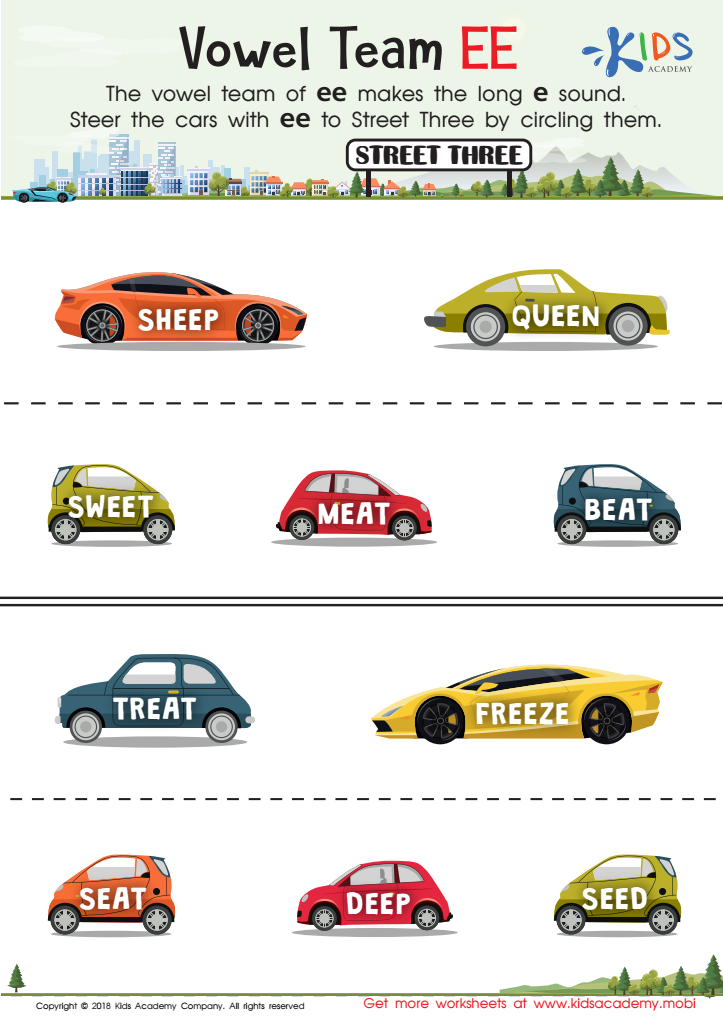
Vowel team ee Worksheet
Revised:
Kids will have a blast steering cars with the -ee digraph towards Street Three! This fast-paced worksheet reinforces that -ee makes the long -e sound while boosting fine motor skills. Kids will love the bright colors and stay engaged with this fun printable. Get ready for hours of off-road excitement!
 Assign to My Students
Vowel team ee Worksheet
Worksheet
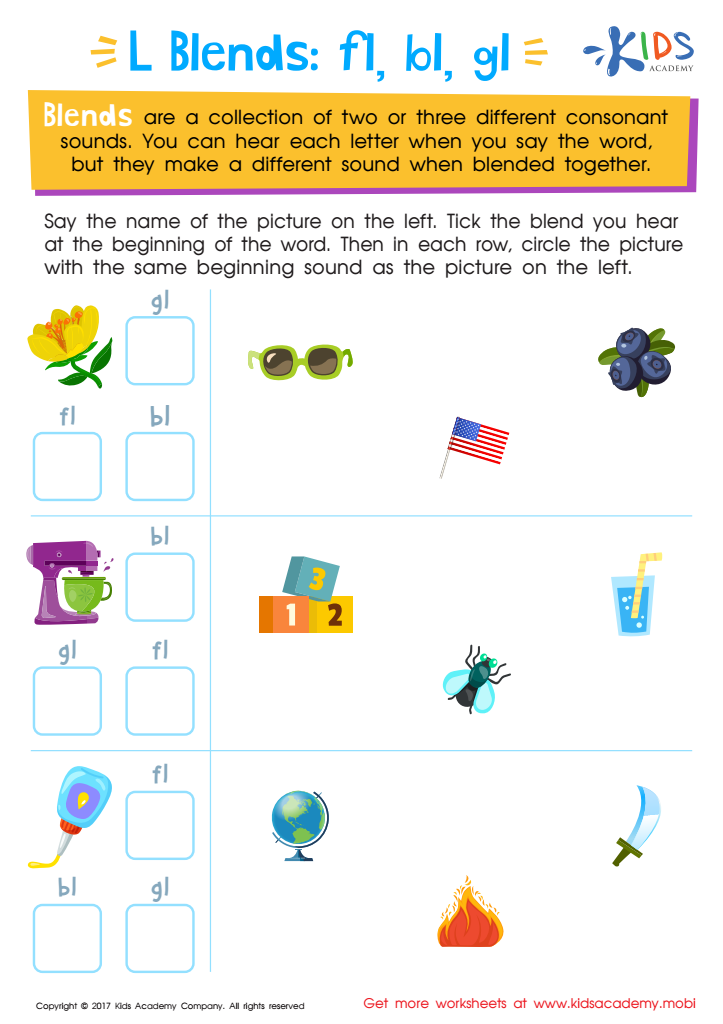
Blending Consonants: "Fl", "Bl" and "Gl" Printable
Help your child master consonant blends Fl, Bl, and Gl with this printable worksheet. Find words associated with the pictures and learn to better understand the difference between consonant blends. Vibrant images motivate and aid in learning. Download now for improved phonics success!
Blending Consonants: "Fl", "Bl" and "Gl" Printable
Worksheet
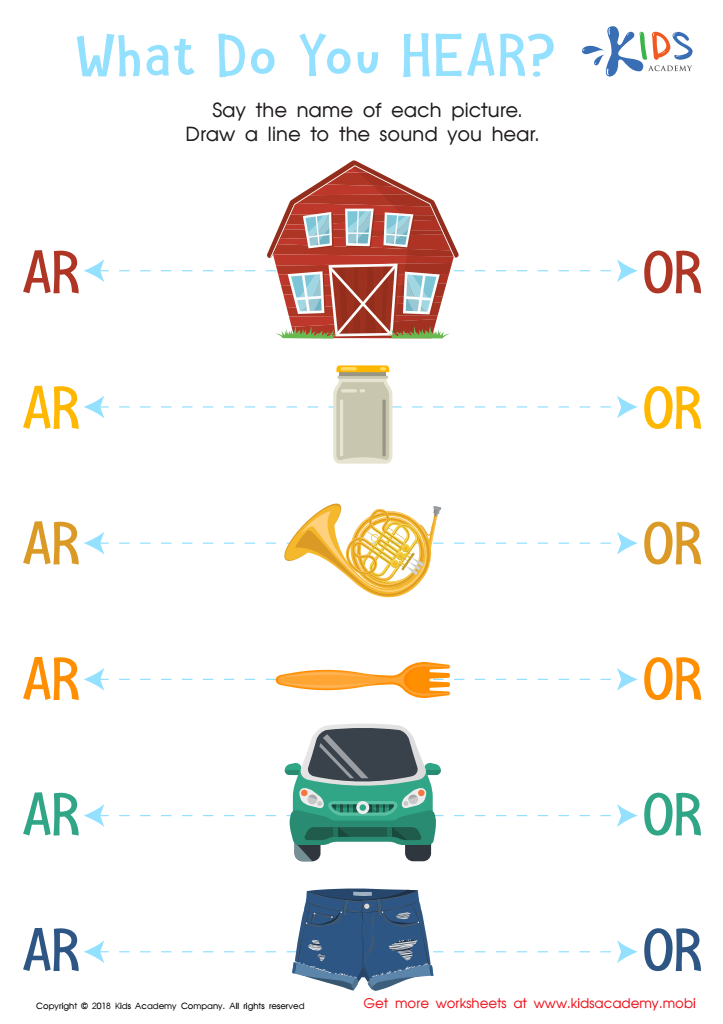
What do you hear Worksheet
Kids can practice distinguishing between r-controlled vowel teams /ar/ and /or/ with this worksheet. The pictures help identify the words and the sounds heard. Tracing a line to the correct sound supports fine motor skills development.
What do you hear Worksheet
Worksheet
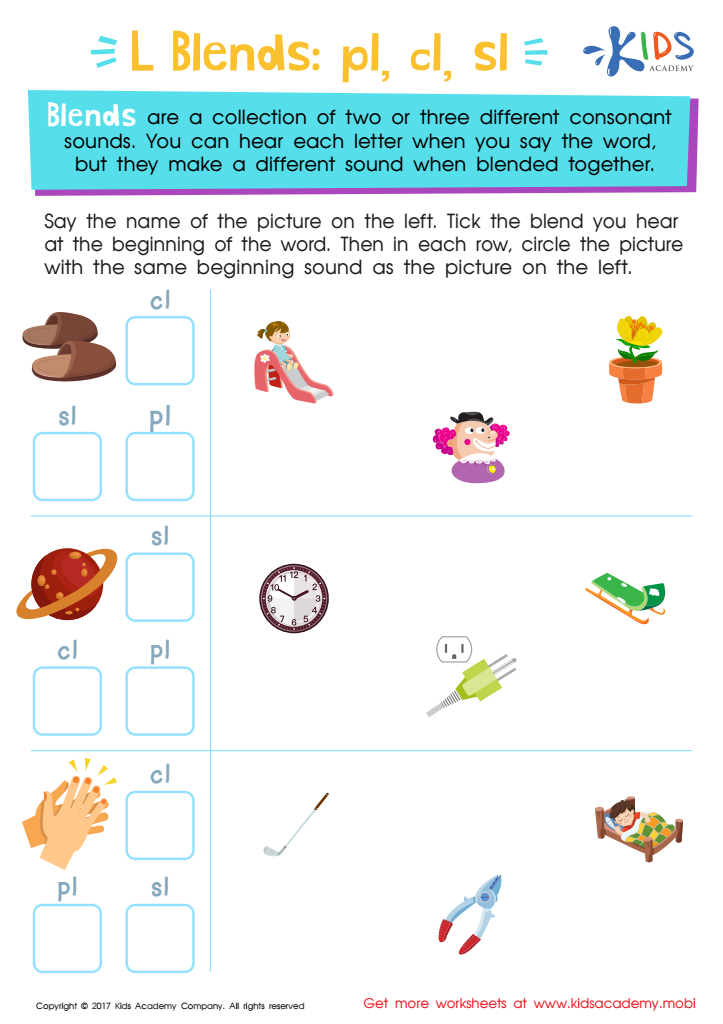
L Blends: "Pl", "Cl" and "Sl" Printable
This printable worksheet will help your child recognize and identify the Pl, Cl, and Sl consonant blends, sound them out, and identify them in print. Improve your child's reading and writing skills with fun and colorful phonics practice!
L Blends: "Pl", "Cl" and "Sl" Printable
Worksheet
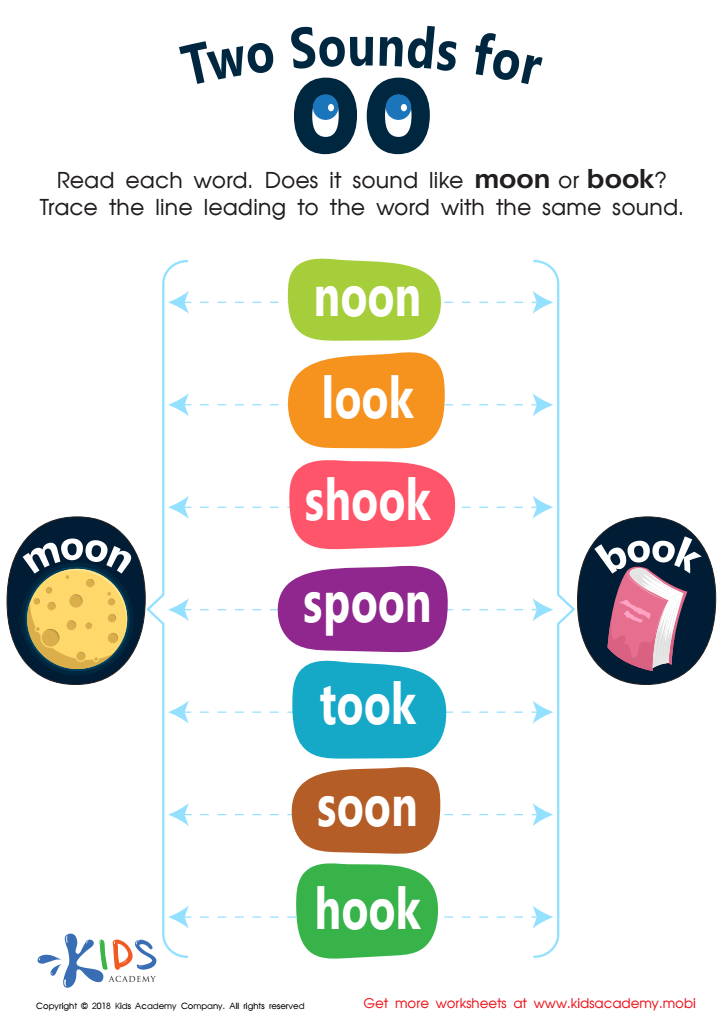
Two Sounds for OO Worksheet
This worksheet helps kids learn the different sounds of the -oo digraph. They match words based on whether they sound like moon or book, plus practice fine motor skills tracing lines. Fun and educational!
Two Sounds for OO Worksheet
Worksheet
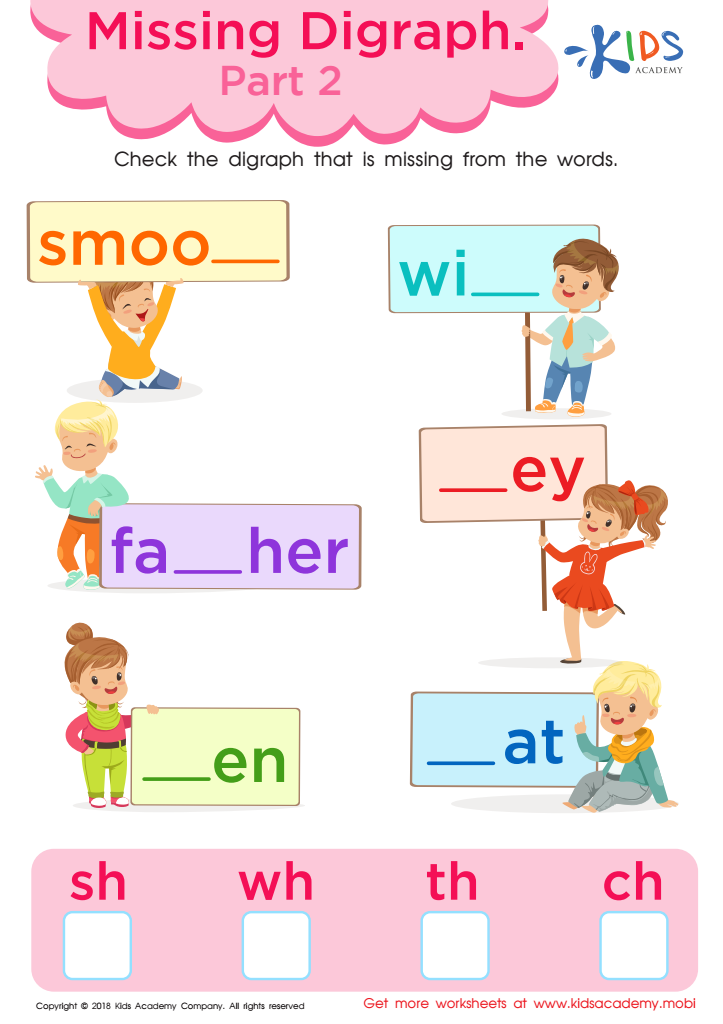
Missing Digraph: Part 2 Worksheet
Practice the "th" digraph with this fun worksheet from Kids Academy! See how it appears at the beginning, middle, or end of words and help learners fill in the blanks. Check if they got it right by finding the th digraph at the bottom!
Missing Digraph: Part 2 Worksheet
Worksheet
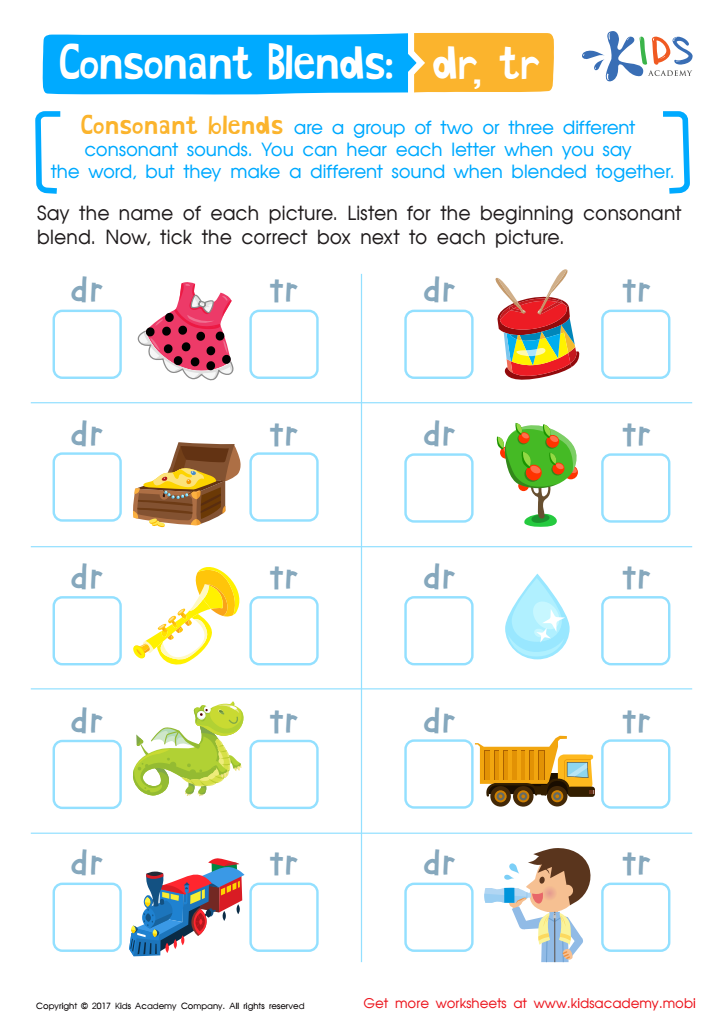
Consonant Blends: "Dr" and "Tr" Printable
Pictures of the words provide a visual cue, and sound-outs help with auditory cues.
Consonant Blends: "Dr" and "Tr" Printable
Worksheet
Join Kids Academy for Free
Who is primarily going to use this learning content?



Phonics skills, particularly two-letter phonics, are crucial for children aged 6-9 as they form the foundational building blocks of reading and writing. During these formative years, children are transitioning from recognizing individual letters to understanding how combinations of letters can create distinct sounds and words. Mastery of two-letter phonics helps children decode words more efficiently, enhancing their reading fluency and comprehension.
By focusing on two-letter combinations, children learn important phonetic patterns that are prevalent in many words. This knowledge empowers them to tackle unfamiliar words, fostering independence in their reading journey. Furthermore, a solid foundation in phonics supports overall literacy development, enabling students to express themselves more effectively in writing.
Parents and teachers play a vital role in reinforcing these skills through engaging activities, such as phonics games, storytelling, and interactive reading sessions. By paying attention to phonics instruction, educators and caregivers can cultivate a love for reading and learning in children, preparing them for academic success. Ignoring basic phonics skills may lead to difficulties later on, potentially affecting a child's confidence and future learning experiences. Thus, prioritizing two-letter phonics is essential in nurturing proficient, enthusiastic readers who can thrive beyond the classroom.







