Alphabet understanding Upper & Lowercase Letters Worksheets for Ages 6-9
3 filtered results
-
From - To
Introduce young learners to the world of letters with our comprehensive Alphabet Understanding Upper & Lowercase Letters Worksheets designed for ages 6-9. Tailored specifically for budding readers, these engaging worksheets help students recognize and differentiate between uppercase and lowercase letters. Through fun activities and targeted practice, children enhance their literacy skills, laying a solid foundation for future reading and writing. Our expertly crafted worksheets not only nurture letter formation and recognition but also make learning enjoyable. Embrace an enriching educational experience that boosts confidence and fosters a love for learning. Start your child's alphabet journey today!
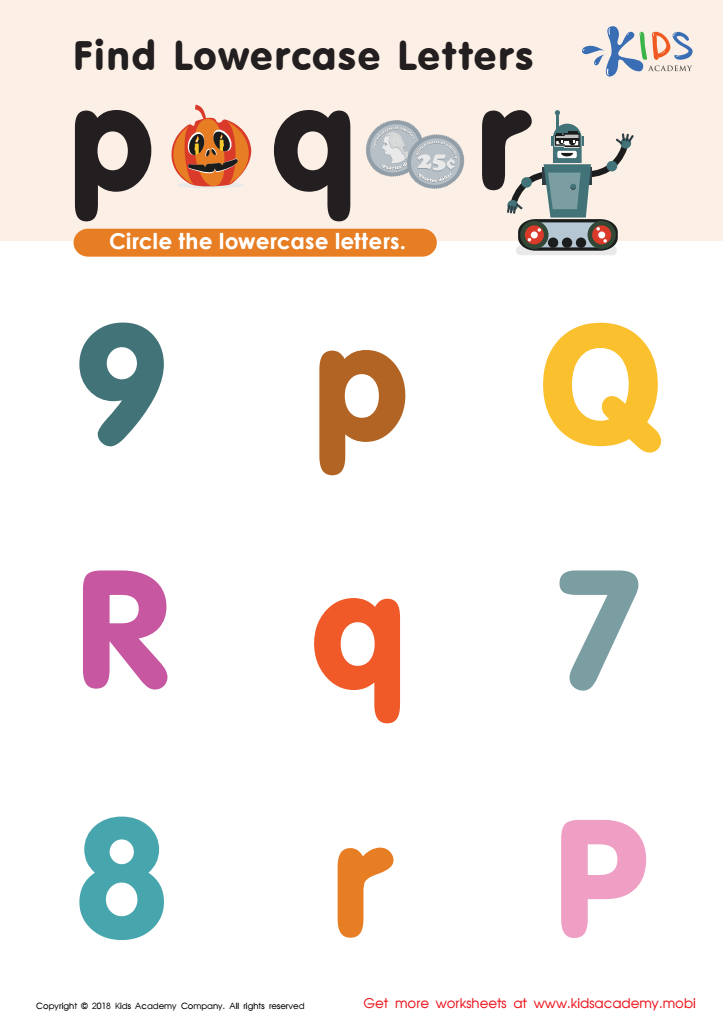
Find lowercase Letters p q r Worksheet
 Assign to My Students


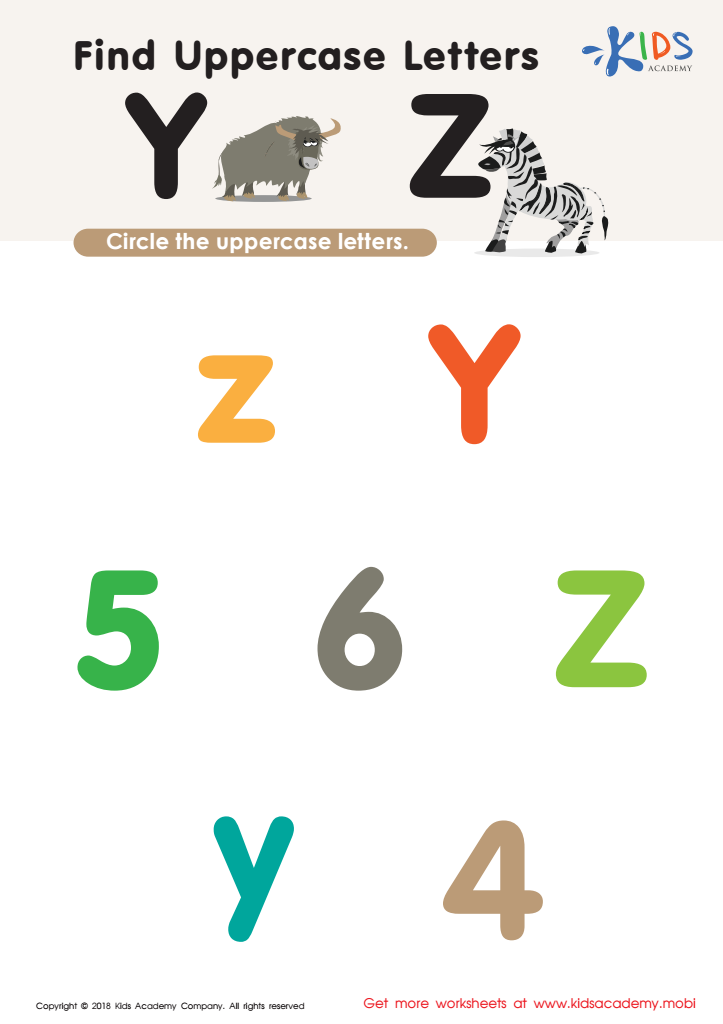
Find Uppercase Letters Y Z Worksheet
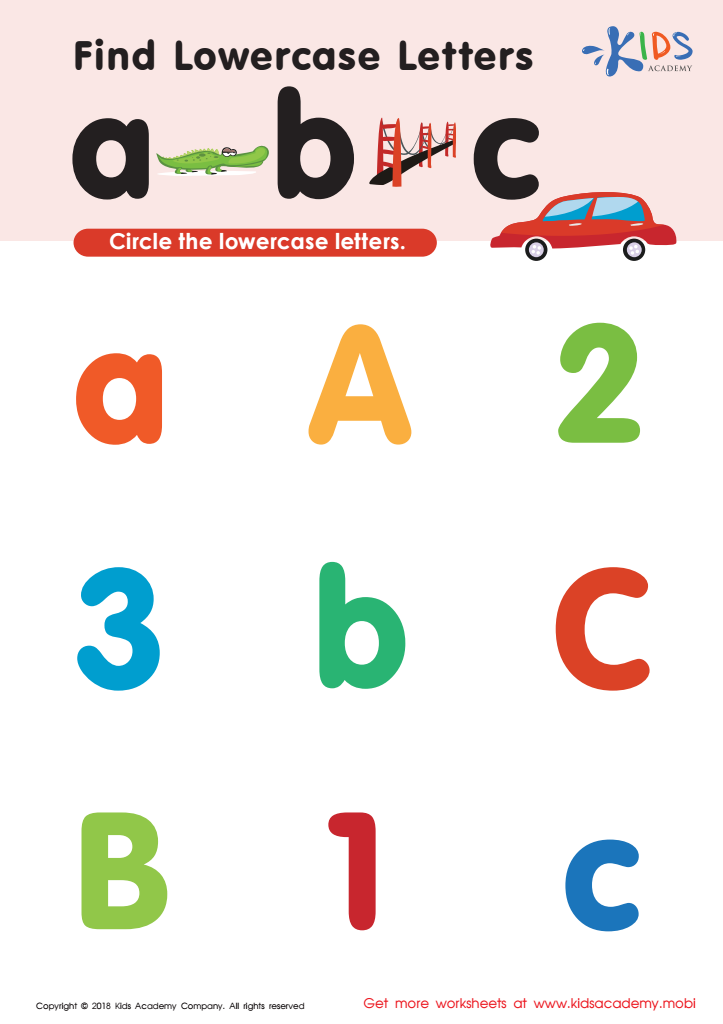
Find lowercase letters a b c Worksheet






Understanding the alphabet, including both uppercase and lowercase letters, is fundamental for children ages 6-9 as it serves as the cornerstone of literacy development. At this stage, children are transitioning from pre-reading skills to becoming proficient readers and writers, making it vital for parents and teachers to focus on their grasp of the alphabet. Mastery of uppercase and lowercase letters enhances phonemic awareness, aiding children in recognizing letter sounds, which is crucial for reading fluency.
Additionally, distinguishing between uppercase and lowercase letters supports proper writing skills, including the conventions of capitalizing the first letter of sentences and proper nouns. This knowledge also aids in the development of spelling, where recognizing letter patterns can lead to more accurate word formation. Understanding both cases reduces confusion when children encounter text in varied formats, such as books, worksheets, and digital content.
From an emotional standpoint, confidence in alphabet knowledge builds a child's self-esteem and promotes a love for reading and learning. This foundational skill can significantly impact academic success across all subjects. Therefore, ensuring that children understand both uppercase and lowercase letters equips them with essential tools for lifelong learning and effective communication.







