Fine motor skills development Upper & Lowercase Letters Worksheets for Ages 6-9
3 filtered results
-
From - To
Enhance your child's fine motor skills while mastering uppercase and lowercase letters with our engaging worksheets for ages 6-9. These carefully designed activities promote hand-eye coordination and strengthen grip control through fun and interactive exercises. Each worksheet encourages children to trace, color, and connect letters, making learning both enjoyable and effective. Our resources align with early literacy goals, ensuring that your young learners build a solid foundation in letter recognition and writing skills. Perfect for parents and educators, these worksheets are a valuable tool for fostering creativity and confidence in budding readers and writers. Start their alphabet journey today!

I Stands High Worksheet
 Assign to My Students











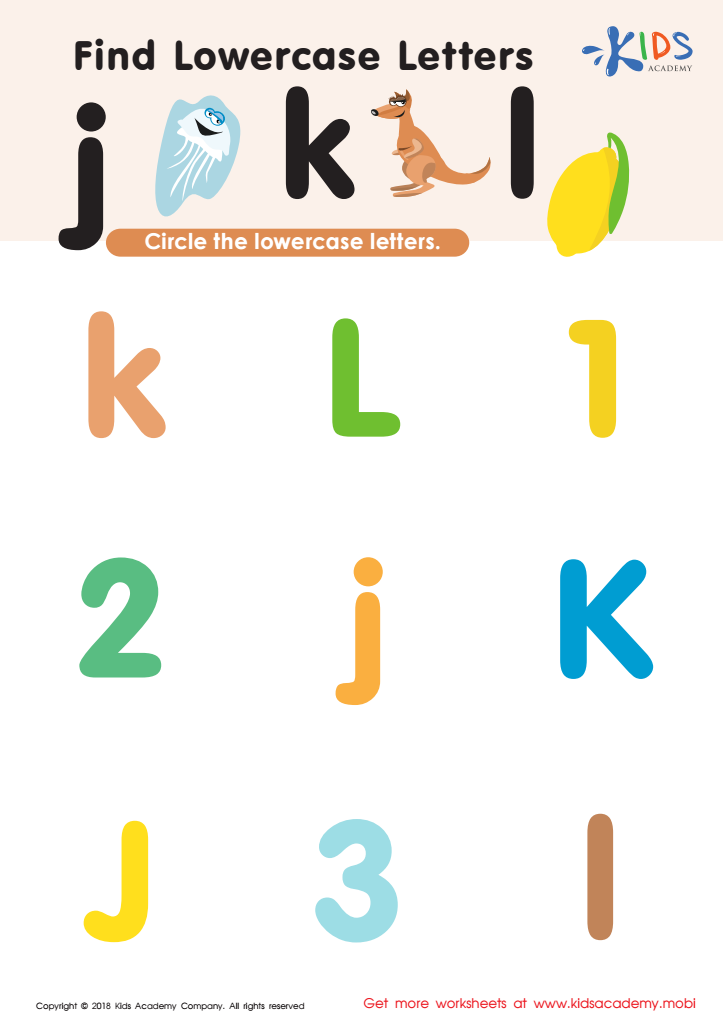
Find Lowercase Letters j k l Worksheet
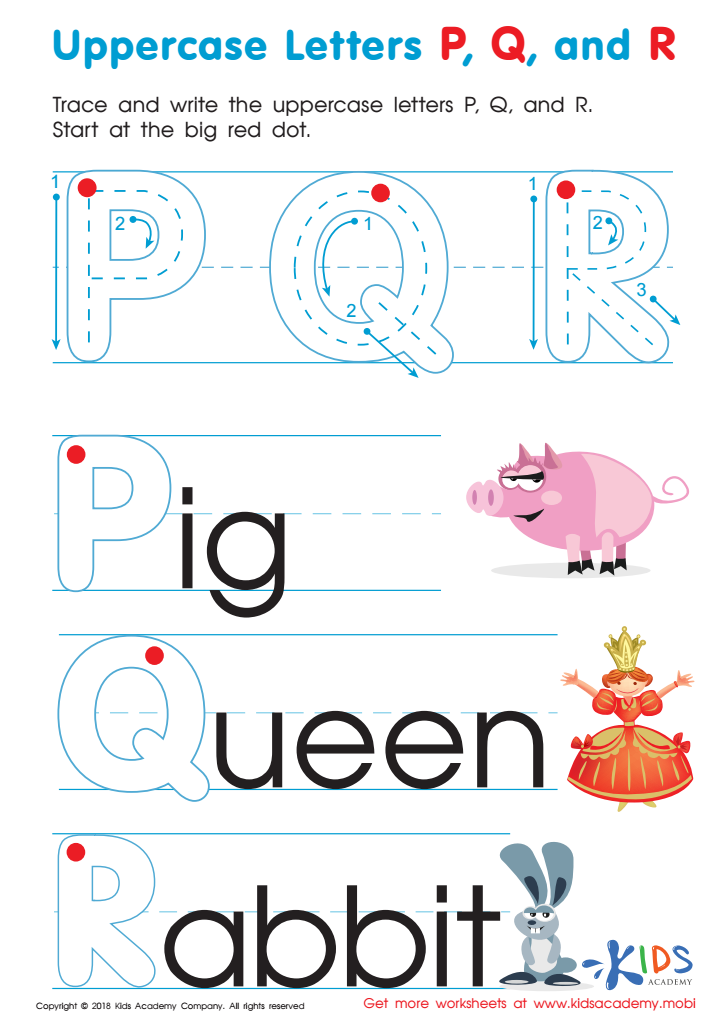
Uppercase Letters P, Q, and R Worksheet






Fine motor skills are crucial for children aged 6-9, as they significantly impact their ability to write, manipulate objects, and participate in daily activities. When developing fine motor skills, children learn how to control hand movements, which is particularly important for writing both uppercase and lowercase letters.
Mastering the formation of letters promotes proper grip and hand-eye coordination, which facilitate better handwriting skills. This not only enhances a child's writing ability but also boosts their confidence in expressing themselves through written communication. As children learn to distinguish between uppercase and lowercase letters, they become better readers and spellers, laying a strong foundation for literacy development.
Moreover, strong fine motor skills contribute to children’s independence, allowing them to perform tasks like zipping up jackets or buttoning shirts. This not only fosters self-esteem but also encourages problem-solving and perseverance as they tackle challenges associated with mastering these skills.
Parents and teachers should prioritize fine motor skills development in everyday activities and play. Simple tasks like drawing, cutting, or playing with building blocks can encourage this growth. By nurturing these skills, they help children gain vital tools for success in academic settings and beyond.







