Lowercase letter writing Upper & Lowercase Letters Worksheets for Ages 6-9
3 filtered results
-
From - To
Our Lowercase Letter Writing Upper & Lowercase Letters Worksheets for Ages 6-9 make mastering the alphabet fun and engaging! Perfect for early learners, these printable worksheets help children practice both uppercase and lowercase letter formation. With clear instructions and engaging activities, kids will enhance their handwriting skills, improve fine motor coordination, and gain confidence in their writing abilities. Designed by educational experts, these resources cater to diverse learning styles, fostering a love for writing. Ideal for classroom or at-home use, our worksheets support literacy development and are an excellent tool for young learners to achieve alphabet mastery.
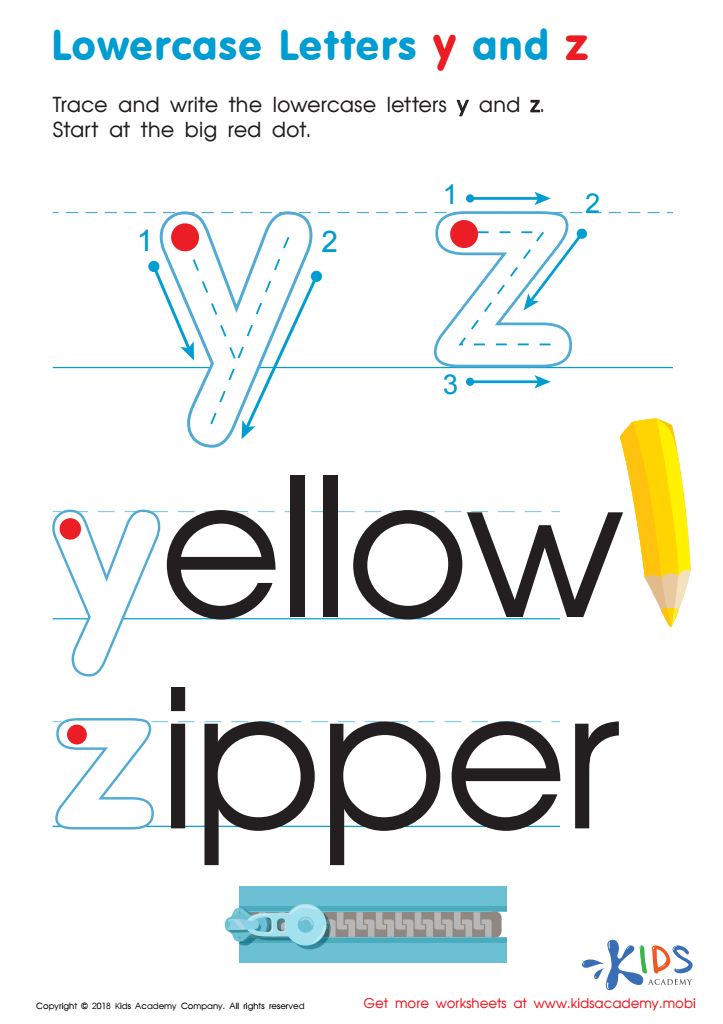
Lowercase Letters y z Worksheet
 Assign to My Students

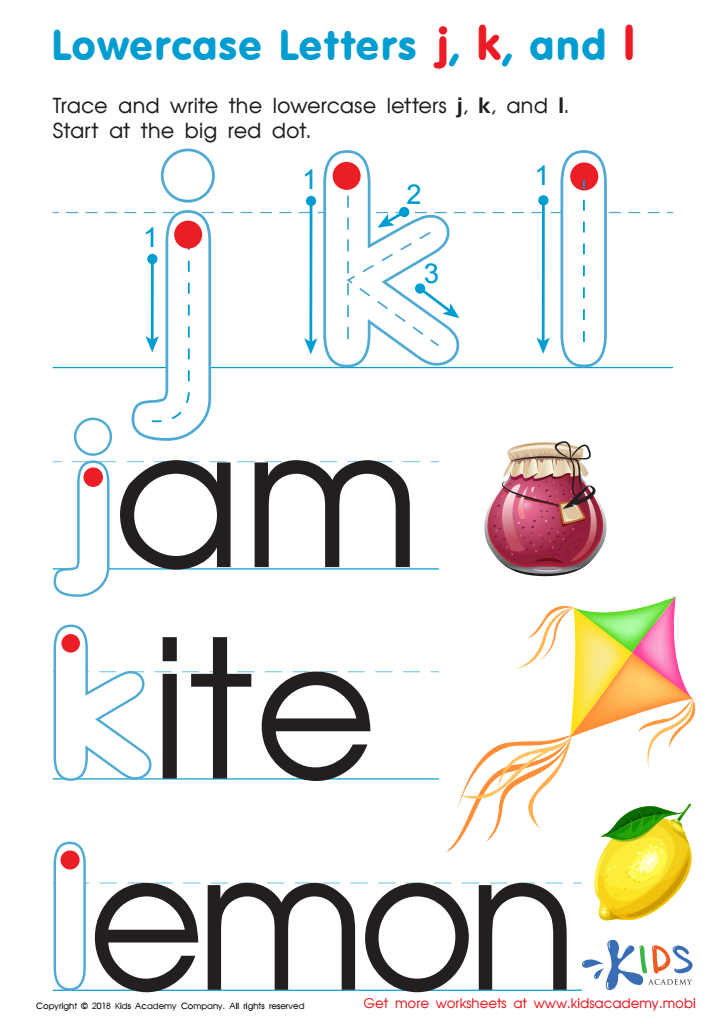
Lowercase Letters j k l Worksheet
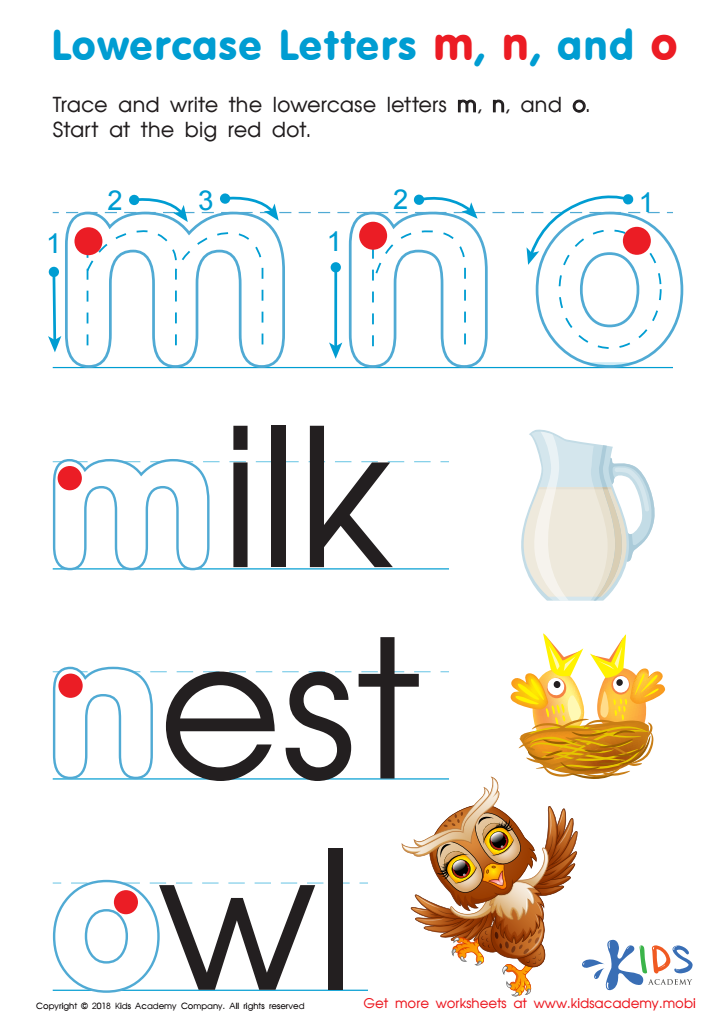
Lowercase Letters m n o Worksheet






Caring about a child's ability to write both uppercase and lowercase letters, especially between the ages of 6 and 9, is crucial for their early literary development. During this foundational stage, mastering the differences between the two forms aids in recognizing and interpreting written text effectively. A fluid transition between uppercase and lowercase usage ensures that the child can read, write, and spell accurately, laying a strong foundation for future academic success.
Writing in lowercase also enhances fine motor skills, as these letters often require more precision and control compared to uppercase letters. This practice can improve hand-eye coordination and set the stage for better handwriting overall. Additionally, a clear understanding of letter cases helps a child learn the rules of capitalization—such as using uppercase for the beginning of sentences and proper nouns—which is essential for writing coherently and reading complex texts later on.
In terms of self-confidence, being proficient in letter writing enables children to participate actively in classroom activities, boosting their social and academic confidence. For parents and educators, encouraging proper letter formation cultivates an environment of literacy that underscores the importance of clear communication, creativity, and lifelong learning habits. This early investment inevitably pays dividends in the child's educational journey and beyond.







