Uppercase identification Upper & Lowercase Letters Worksheets for Ages 6-9
5 filtered results
-
From - To
Explore our engaging Uppercase Identification worksheets designed for children ages 6-9! Perfect for improving letter recognition, these interactive activities focus on distinguishing between uppercase and lowercase letters. Young learners will enjoy colorful illustrations and fun exercises that make learning enjoyable and effective. Our worksheets not only enhance alphabet familiarity but also support fine motor skills development through tracing and matching tasks. Ideal for both classroom and at-home learning, these resources will boost confidence and literacy skills. Get started today and watch your child's understanding of upper and lowercase letters grow, setting the foundation for successful reading and writing!
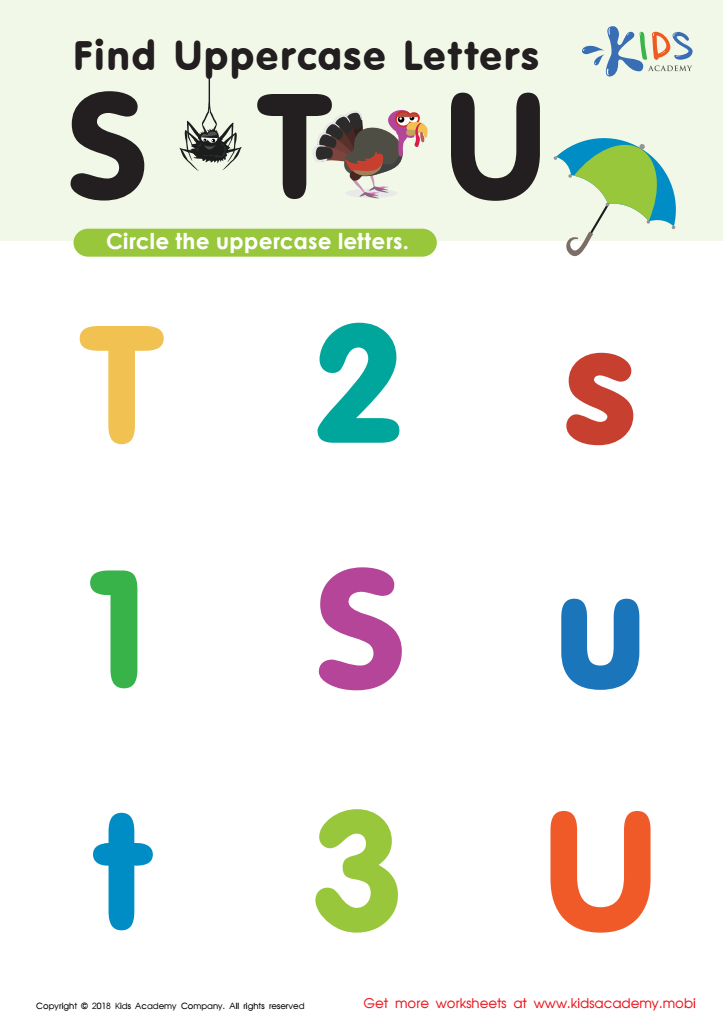
Find Uppercase Letters Worksheet
 Assign to My Students

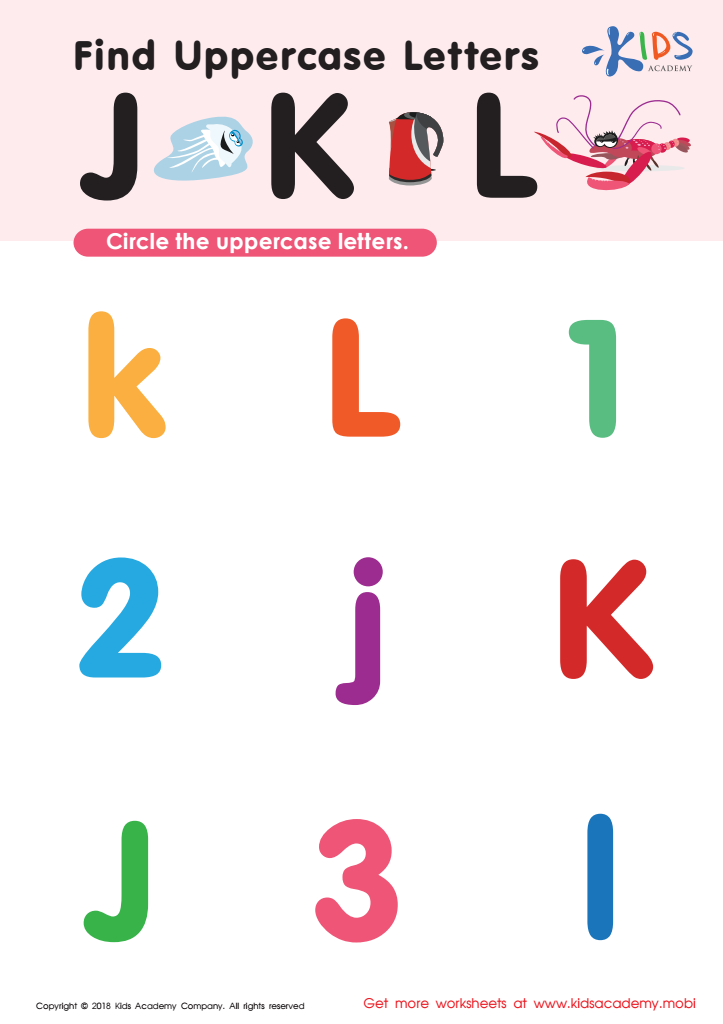
Find Uppercase Letters J, K, and L Worksheet
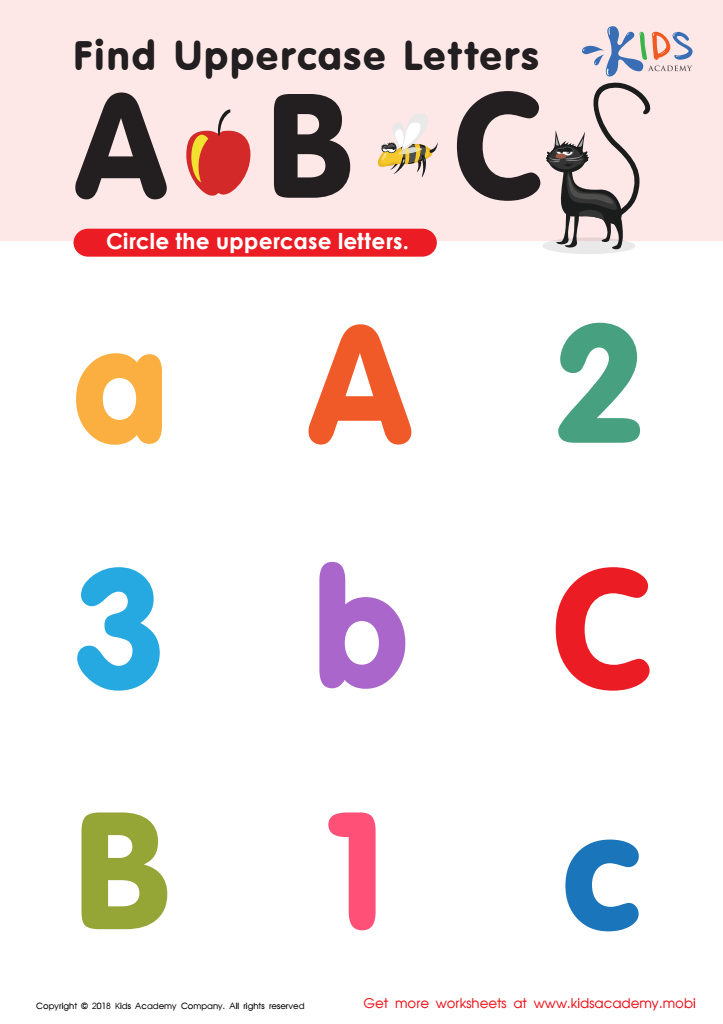
Find Uppercase Letters A, B, and C Worksheet
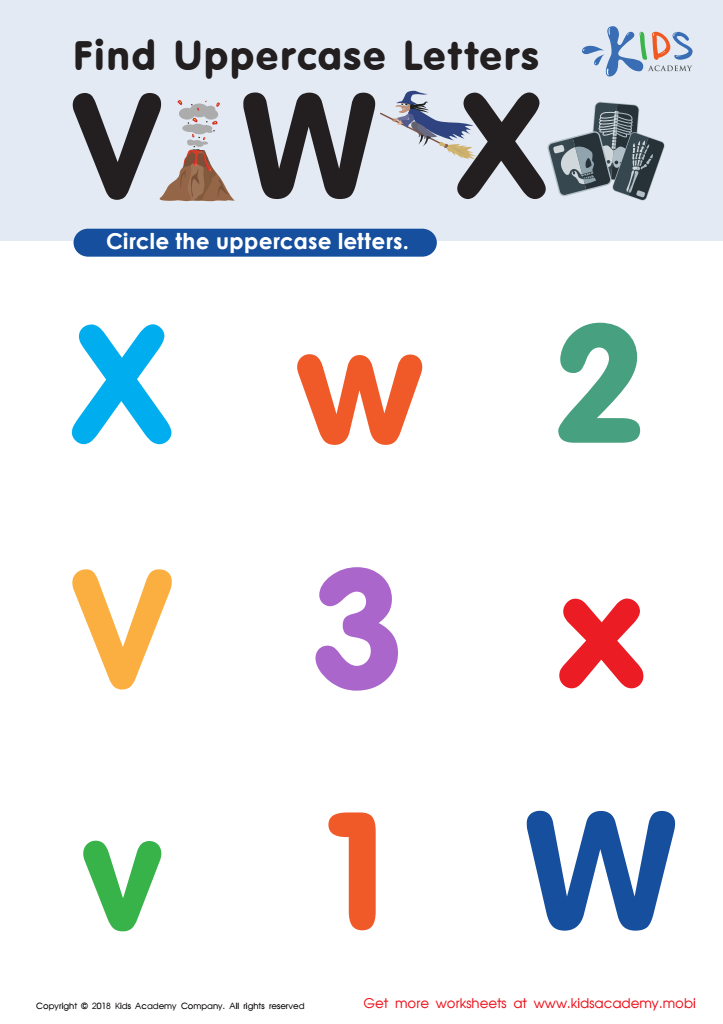
Find Uppercase Letters V, W, X Worksheet
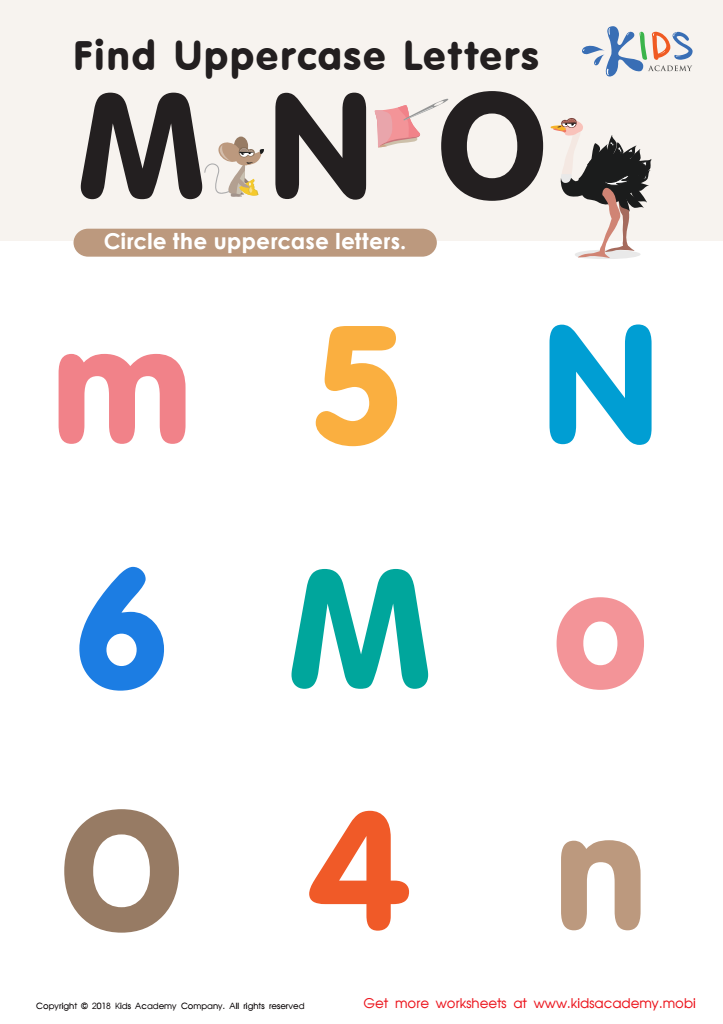
Find Uppercase Letters M, N, and O Worksheet






Uppercase and lowercase letter identification is crucial for children aged 6-9, as it lays the foundation for their literacy skills and overall academic success. At this age, children are typically transitioning from learning to read to reading to learn. Mastery of letter recognition directly impacts their ability to decode and understand words, which is essential for reading fluency.
Understanding uppercase letters is important because they are often used at the beginnings of sentences and proper nouns, which are key components in grammar. Children who can easily identify and differentiate between uppercase and lowercase letters can better comprehend the structure of written language, leading to improved comprehension skills.
Moreover, letter identification contributes to writing skills. When children recognize both forms, they're more confident in their writing, allowing them to focus on conveying ideas instead of struggling with spelling or formatting.
For teachers and parents, fostering this skill also encourages positive engagement with literacy. Fun activities and games around uppercase and lowercase letters can develop a child's love for learning, making them more enthusiastic readers and writers. Ultimately, understanding these letters supports critical thinking and communication skills that are essential for lifelong learning.







