Visual discrimination Upper & Lowercase Letters Worksheets for Ages 6-9
4 filtered results
-
From - To
Enhance your child’s reading readiness with our Visual Discrimination Upper & Lowercase Letters Worksheets for ages 6-9. These engaging worksheets are designed to help young learners identify and distinguish between uppercase and lowercase letters. By practicing with these printables, children will improve their letter recognition, visual perception, and fine motor skills. Perfect for classroom activities, homeschooling, or supplemental practice, our worksheets offer diverse exercises that spark interest and boost confidence. Foster a love for learning with fun, interactive activities that lay a strong foundation for reading success. Download the worksheets today and watch your learner flourish!
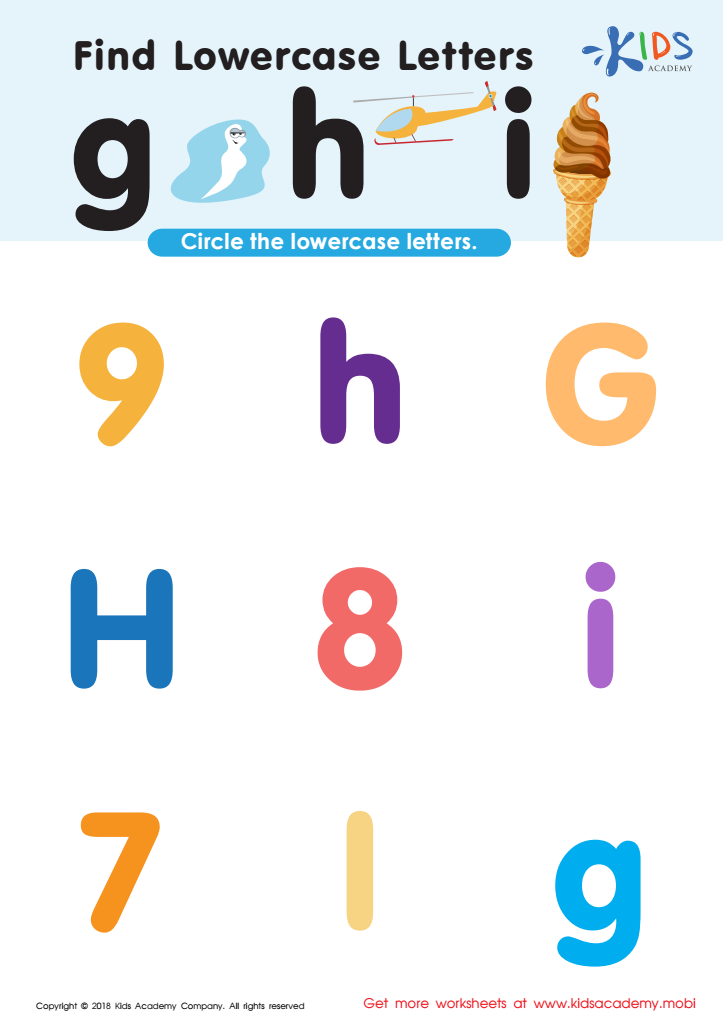
Find Lowercase Letters g h i Worksheet
 Assign to My Students





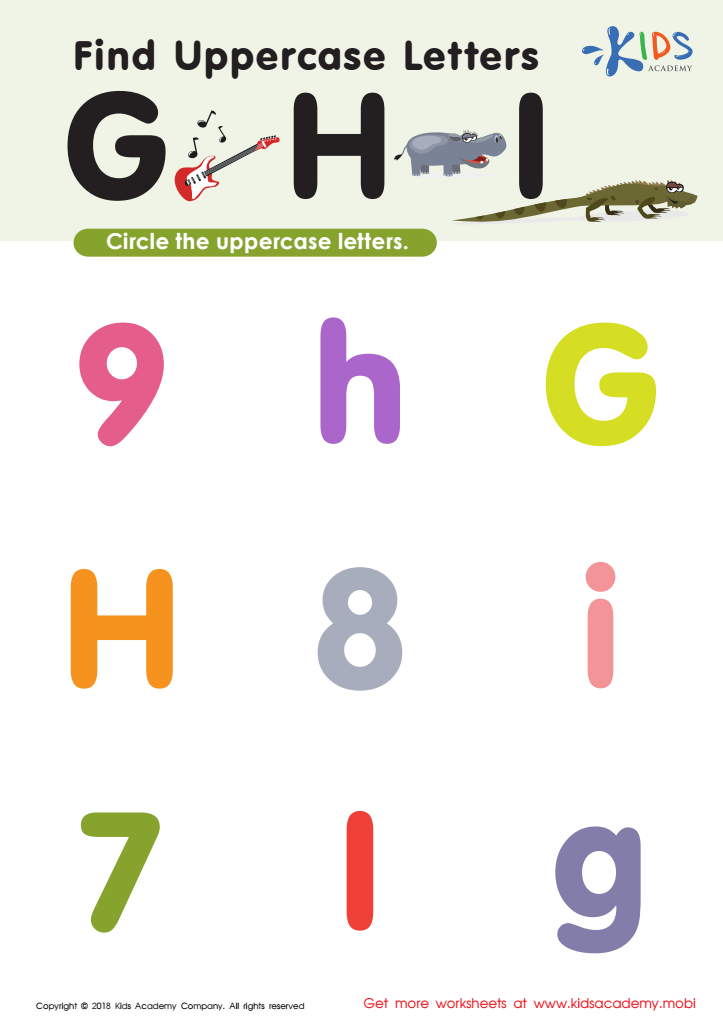
Find Uppercase Letters G, H, and I Worksheet
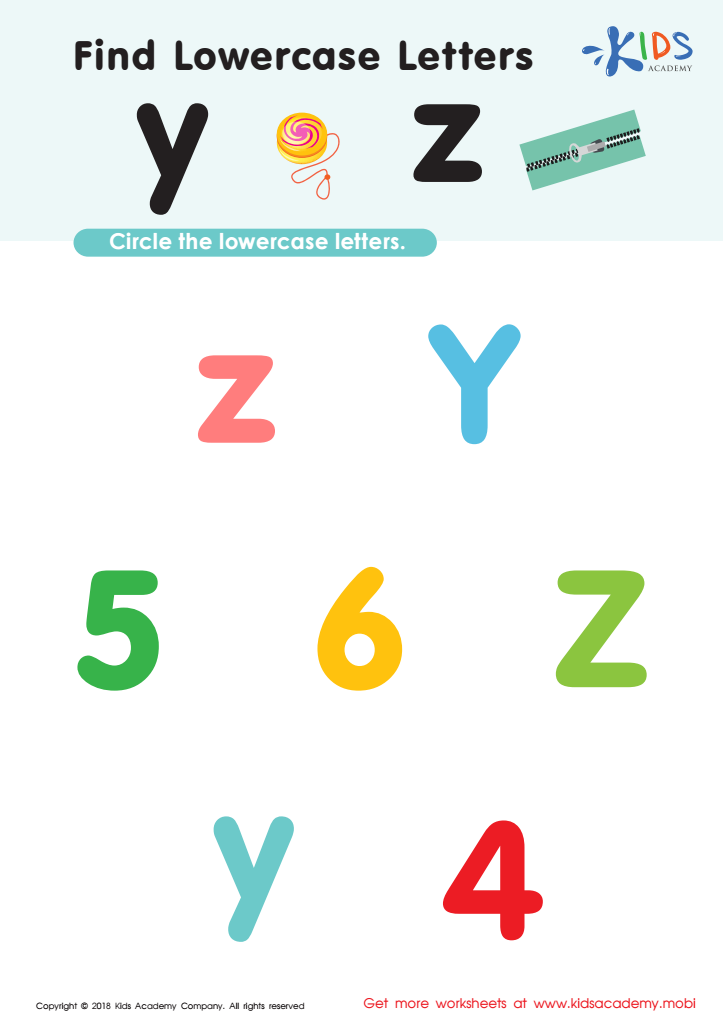
Find Lowercase Letters y z Worksheet
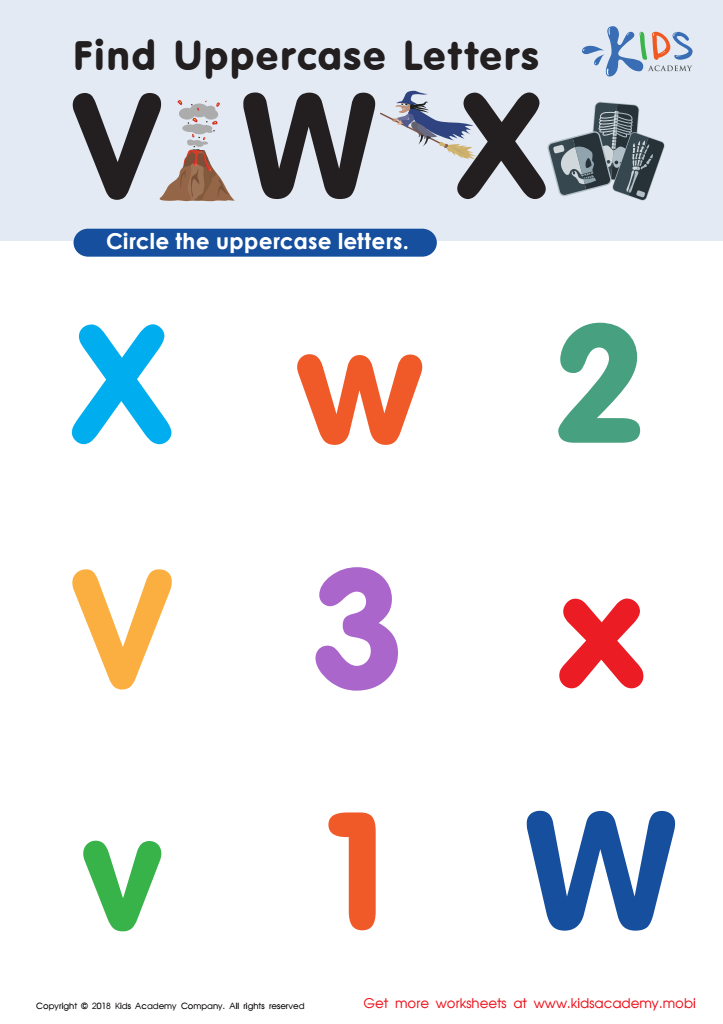
Find Uppercase Letters V, W, X Worksheet






Visual discrimination between uppercase and lowercase letters is crucial for children aged 6-9 as it forms the foundation of their reading and writing skills. At this developmental stage, children are transitioning from learning to read to reading to learn. Recognizing the subtle differences between upper and lowercase letters—like 'b' and 'B' or 'p' and 'P'—enhances their ability to decode words quickly and accurately, improving reading fluency and comprehension. This skill is also critical for writing, as understanding letter case is essential for sentence formation, proper nouns, and overall grammar.
For parents and teachers, investing time and effort in supporting this skill means fostering a child's confidence and competence in literacy. Activities that enhance visual discrimination can help avoid common mistakes that lead to frustration and hinder progress. Incorporating games, flashcards, and hands-on activities like sorting letters or matching cases can make learning engaging and effective.
By emphasizing the importance of visual discrimination skills, adults can create a strong literacy foundation, setting children up for academic success across all subjects. Additionally, mastery of this skill contributes to better overall communication, as children can effectively process written information and express themselves clearly in writing.
Overall, prioritizing visual discrimination of upper and lowercase letters equips children with the essential tools needed for their educational journey.







