Phonics recognition Vowels Worksheets for Ages 6-9
4 filtered results
Difficulty Level
Grade
Age
-
From - To
Subject
Activity
Standards
Explore our engaging Phonics Recognition Vowels Worksheets designed specifically for children ages 6-9! These interactive resources help young learners master vowel sounds, an essential building block for reading and vocabulary development. Packed with fun activities, including matching exercises, fill-in-the-blanks, and visual aids, these worksheets promote phonemic awareness and listening skills. Our printable materials feature vibrant illustrations to keep kids motivated as they explore the world of vowels. Perfect for at-home learning or classroom use, these worksheets guarantee an enjoyable phonics experience. Start enhancing your child's reading skills today with our comprehensive collection of vowel-focused worksheets!
Favorites
With answer key
Interactive
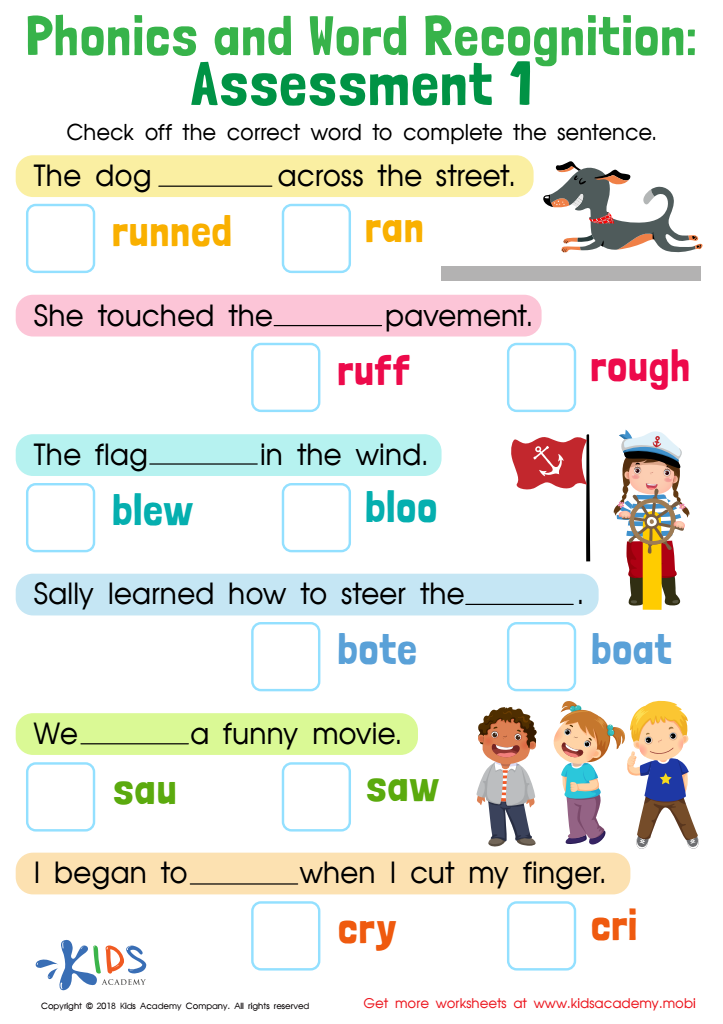
Phonics and Word Recognition: Assessment 1 Worksheet
This worksheet tests phonetics and word recognition. Students should be familiar with past tense verbs. Read incomplete sentences, then read multiple options and help students select the correct one.
 Assign to My Students
Phonics and Word Recognition: Assessment 1 Worksheet
Worksheet
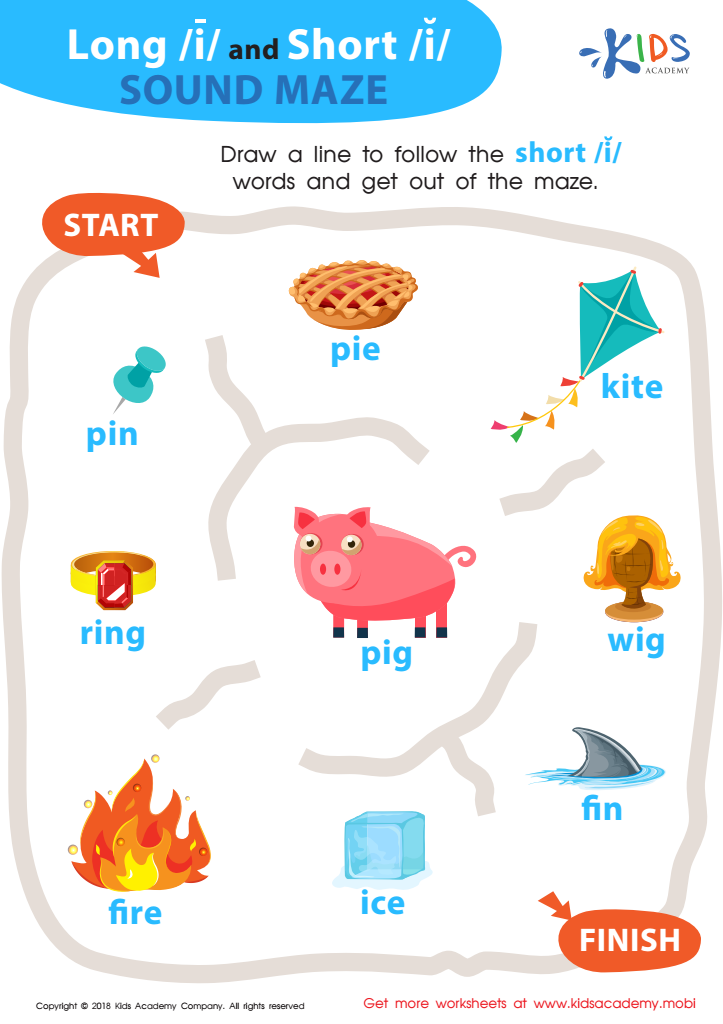
Reading: Long I and Short I Sound Maze Worksheet
Question your students if the worksheet is entertaining. They may respond negatively! Nonetheless, this activity will bring satisfaction while learning the distinction between a long and short I sound. Students read the words in the maze and only follow the words with the short I sound to finish the exercise. Grasping the difference between long and short vowels is demanding, but this worksheet helps students understand this reading skill.
Reading: Long I and Short I Sound Maze Worksheet
Worksheet
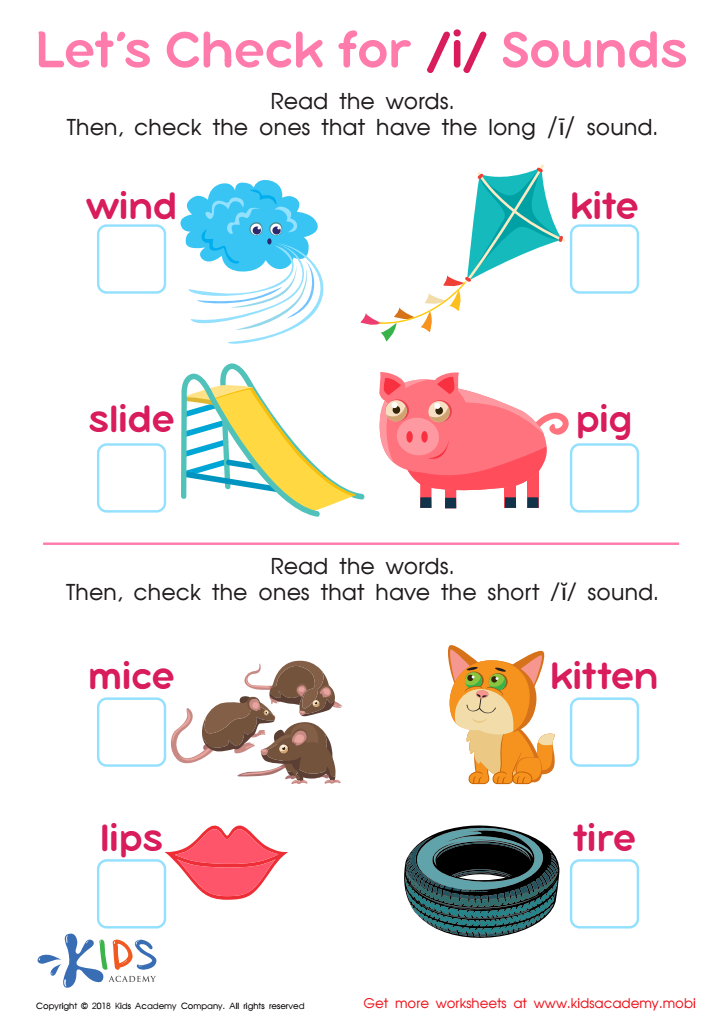
Let's Check for «i» Sounds Worksheet
This fun worksheet with pictures boosts phonics skills - differentiating between long «ī» and short «i» sounds in 1- and 2-syllable words. Kids use picture clues to read words, then check off the correct ones. It's a great way for new readers to practice early reading skills and find success on their own.
Let's Check for «i» Sounds Worksheet
Worksheet
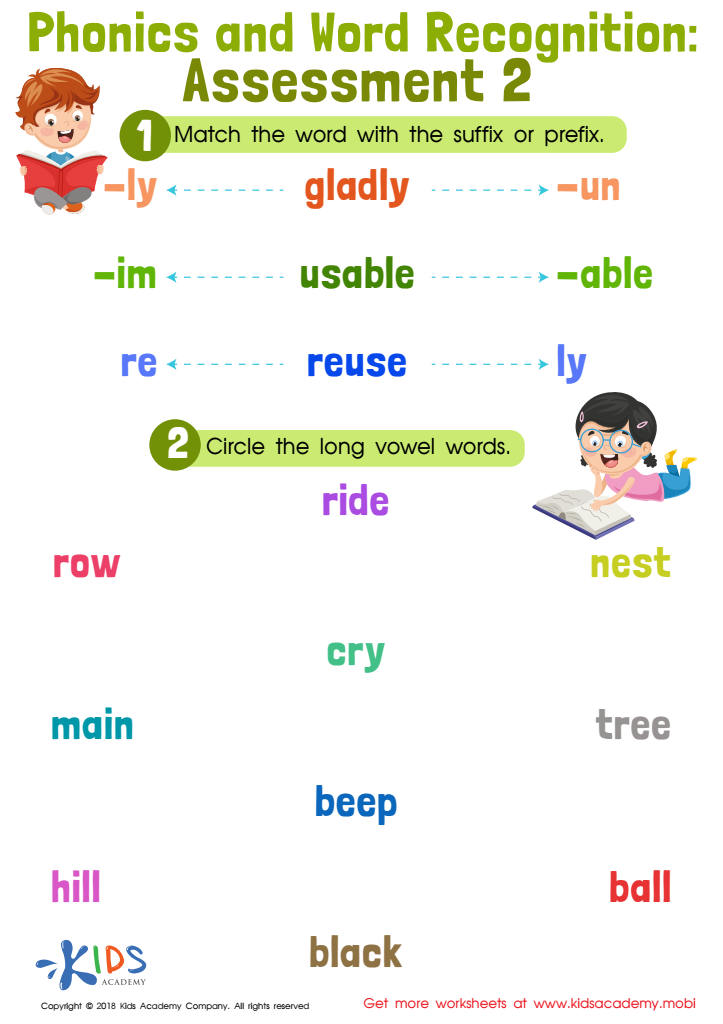
Phonics and Word Recognition: Assessment 2
Give kids common examples of suffixes and prefixes, such as "un-," "unhappy," "ness," "happyness." Ask them to match each word in the word recognition exercise to the correct suffix or prefix. Test phonetic understanding by having them circle the long vowel sounds.
Phonics and Word Recognition: Assessment 2
Worksheet
Join Kids Academy for Free
Who is primarily going to use this learning content?





Phonics recognition, especially focusing on vowels, is crucial for children aged 6-9 as it lays the foundation for reading proficiency and overall literacy skills. Vowels are central to word formation, making them essential for decoding both simple and complex words. Children begin to develop their reading fluency at this stage, and understanding vowel sounds enables them to sound out words independently, boosting their confidence and encouraging a love for reading.
Moreover, recognizing vowel patterns helps children spell more accurately, enhancing their writing abilities. With a solid grasp of phonics, children are better equipped to tackle more challenging texts as they progress in school, which keeps them engaged and motivated in their learning journey.
Teachers and parents play a pivotal role in this developmental phase. Engaging children with vibrant phonics activities can make learning fun and interactive, improving their retention of sound recognitions. Furthermore, fostering a supportive environment for practice can greatly influence their literacy trajectory.
In essence, emphasizing phonics recognition, particularly vowels, empowers children with essential skills that are critical for their educational success and fosters a lifelong love for reading. Understanding these foundational elements collectively shapes their future learning experiences.