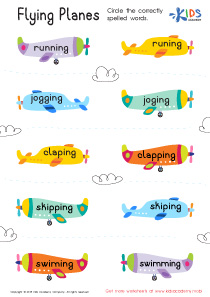
Phonics skills development Vowels Worksheets for Ages 6-9
5 filtered results
Difficulty Level
Grade
Age
-
From - To
Subject
Activity
Standards
Enhance your child’s reading abilities with Phonics Skills Development Vowels Worksheets tailored for ages 6-9. These engaging worksheets are designed to help young learners master short and long vowel sounds, crucial for their reading and pronunciation skills. Each printable worksheet provides various fun and educational activities that support phonics learning, ensuring your child can recognize, read, and write vowel sounds confidently. Boost your child’s linguistic development and phonetic knowledge with these expertly crafted worksheets. Perfect for home or classroom use, they provide the practice needed to lay the foundation for successful reading and spelling skills.
Favorites
With answer key
Interactive
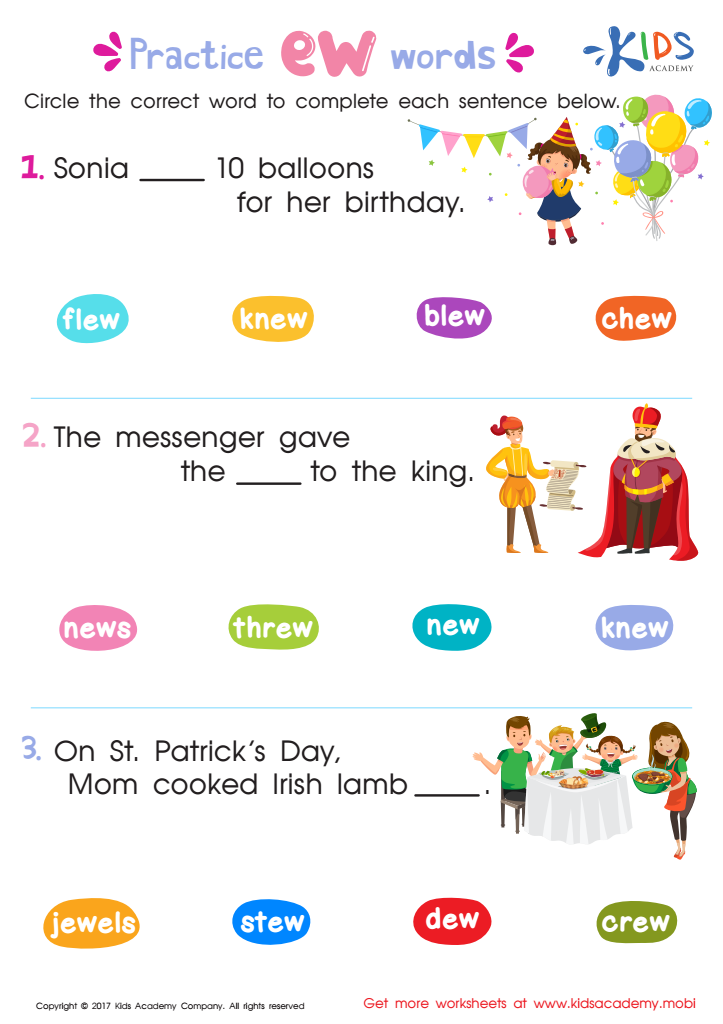
EW Words Worksheet
Practice the diphthong ew and boost your child's vocabulary with this fun ew words worksheet! Filled with illustrations, it will help your child hone their reading and spelling skills. Plus, the tricky words will make it both enjoyable and rewarding!
EW Words Worksheet
Worksheet
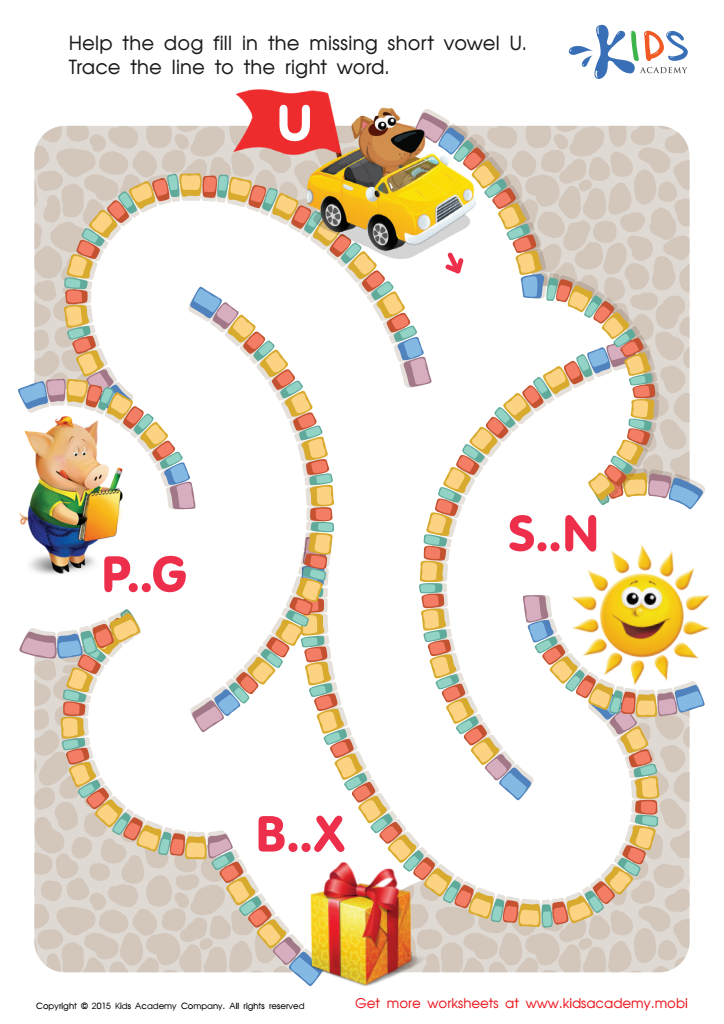
Short Vowel Sound U Worksheet
Practice abc phonics to help young learners link sounds to letters. This free printable phonics worksheet helps your kid learn the short vowel sound U. Guide them through the maze to help the dog complete the word "sun". Make sure they say the word out loud to emphasize the short U sound. Check out more phonics worksheets with mazes here.
Short Vowel Sound U Worksheet
Worksheet
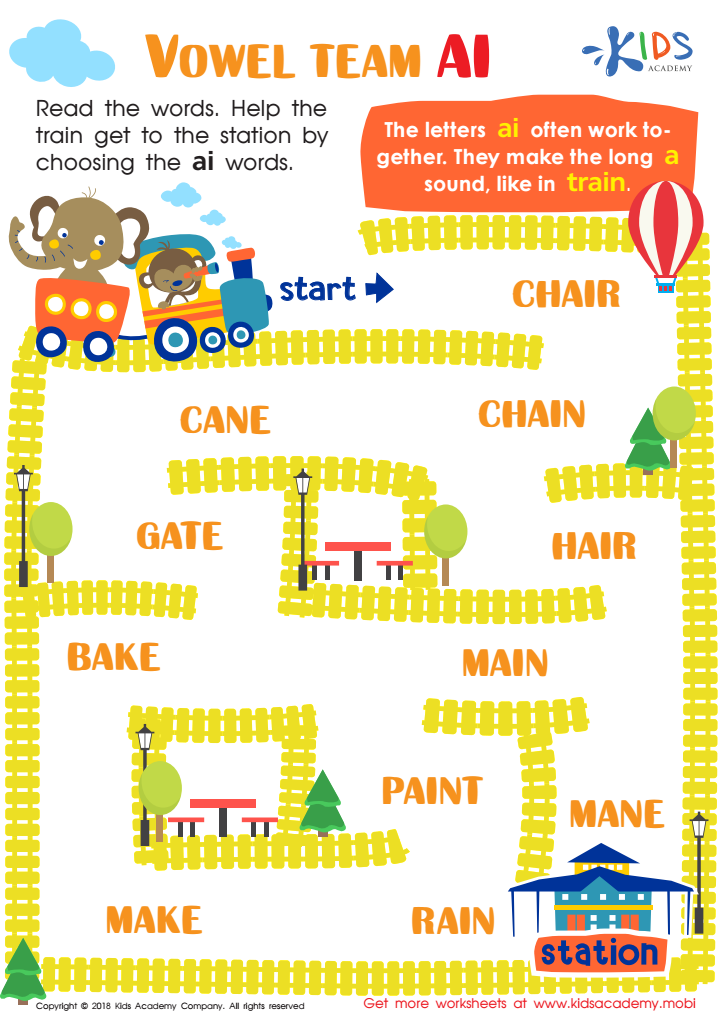
Vowel team ai Worksheet
Kids will have a blast learning about the -ai digraph with this fun worksheet. They'll read words with it and practice their motor skills as they help the animal duo get back to the train station. With success, they'll smile and enjoy the activity!
Vowel team ai Worksheet
Worksheet
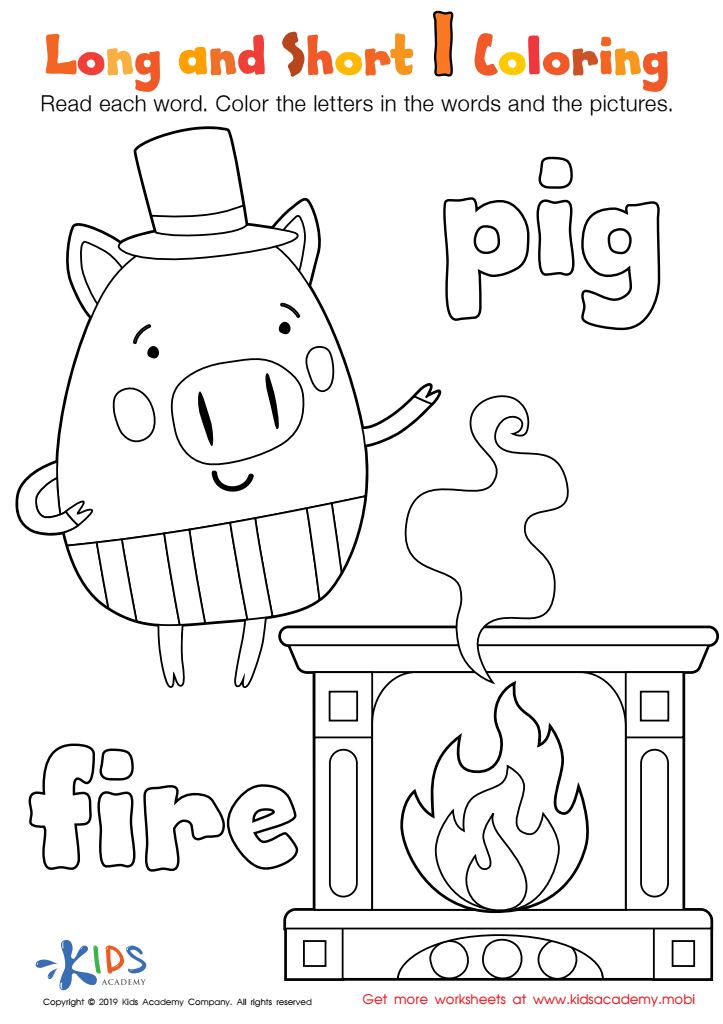
Long and Short I Worksheet
Print the worksheet and have the students read "pig" and "fire". Check for understanding the difference between long and short vowels. Color in words and pictures to make learning phonics fun! This exercise is perfect for introducing the topic to your students.
Download (PDF)
 Assign to My Students
Assign to My Students
Long and Short I Worksheet
Worksheet
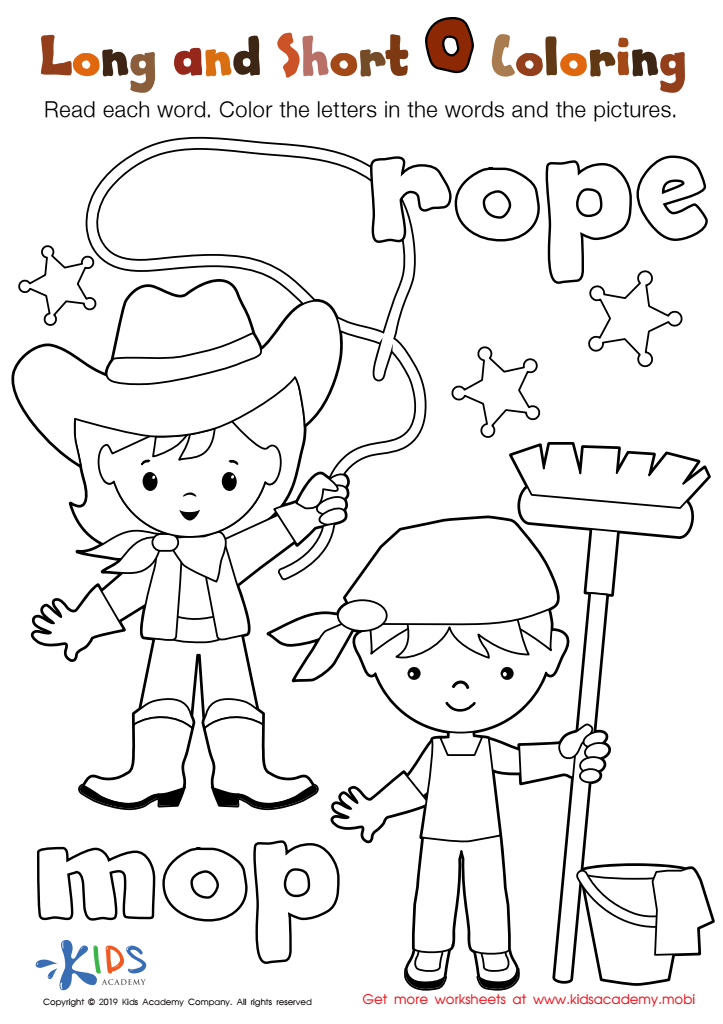
Long and Short O Worksheet
Help your students recognize the difference between long and short «Os» with this fun printout. Let them read and color-in "rope" and "mop" simultaneously. Listen to the different sounds, then color the words and pictures. Great for classes, it'll make your phonics lesson memorable and enjoyable.
Download (PDF)
Assign to My Students
Assign to My Students
Long and Short O Worksheet
Worksheet
Join Kids Academy for Free
Who is primarily going to use this learning content?





Phonics skills development, particularly in understanding vowels, is foundational for children ages 6 to 9 as it underpins their ability to read, write, and communicate effectively. At this critical age, children transition from learning to recognize letters to reading words fluently and comprehending text. Vowels play a crucial role in this development because they are the building blocks of word formation.
Understanding vowel sounds helps children decode words, improving their reading fluency and accuracy. Vowels are involved in almost every syllable of the English language, thus knowing them is essential for blending sounds and forming complete words. Children with strong phonics skills can independently figure out new words, boosting their confidence and fostering a love for reading. This skill directly affects their academic performance across all subjects by enhancing vocabulary and comprehension.
Moreover, phonics instruction magnifies the potential for effective spelling and writing. With a firm grasp of vowel sounds, children are better equipped to spell words correctly, aiding in clearer written communication. This early success in literacy builds a strong academic foundation and inspires continued educational curiosity and achievement. Therefore, parents and teachers must prioritize phonics and vowel recognition in early education to promote long-term literacy and cognitive development.