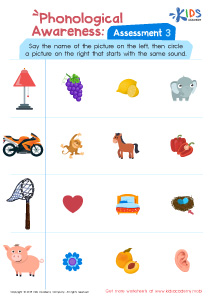
Sound Association Vowels Worksheets for Ages 6-9
3 filtered results
-
From - To
Enhance your child's vowel recognition and pronunciation skills with our Sound Association Vowels Worksheets, specially designed for ages 6-9. These engaging, educational worksheets emphasize the connection between written vowels and their corresponding sounds, aiding early literacy development. Through a variety of fun activities, kids can practice distinguishing between short and long vowel sounds, paving the way for improved reading and spelling. Perfect for classroom use or at-home practice, our printable resources support playful learning, ensuring a well-rounded educational experience that builds a solid foundation for future language mastery. Download now and start your child’s journey to confident reading!
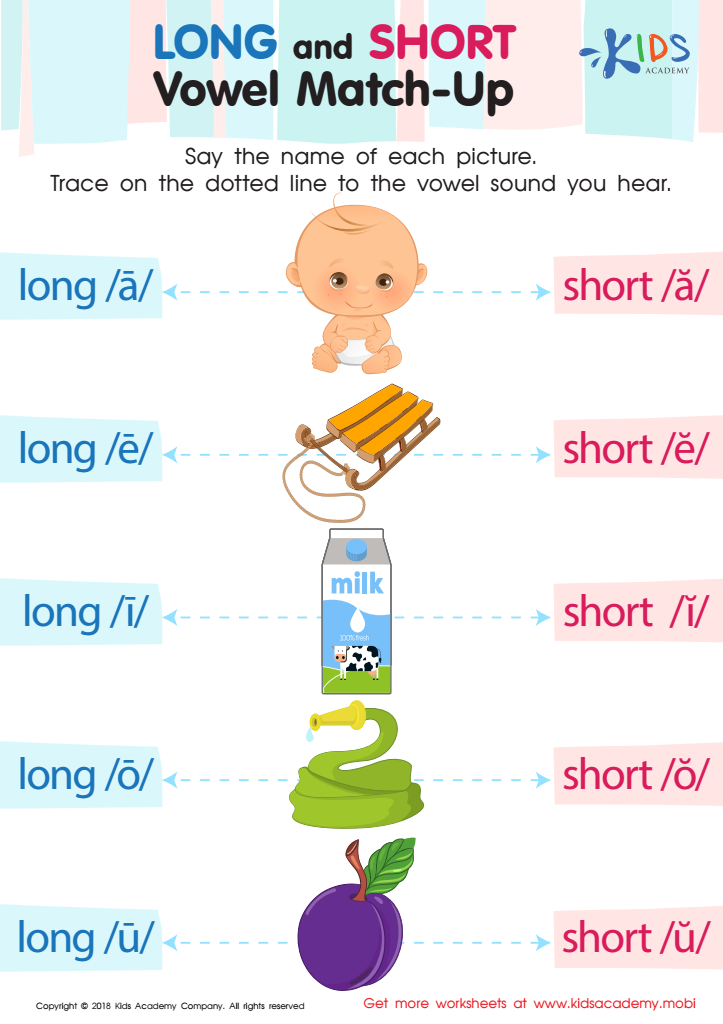
Long and Short Vowel Match up Reading Worksheet
 Assign to My Students
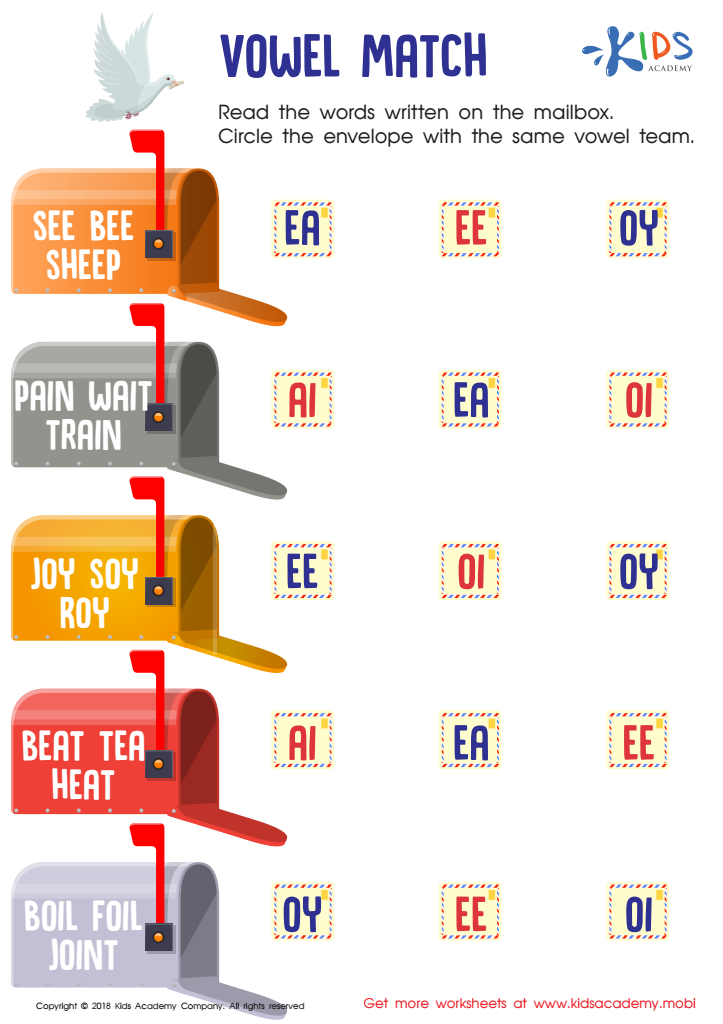
Vowel match Worksheet
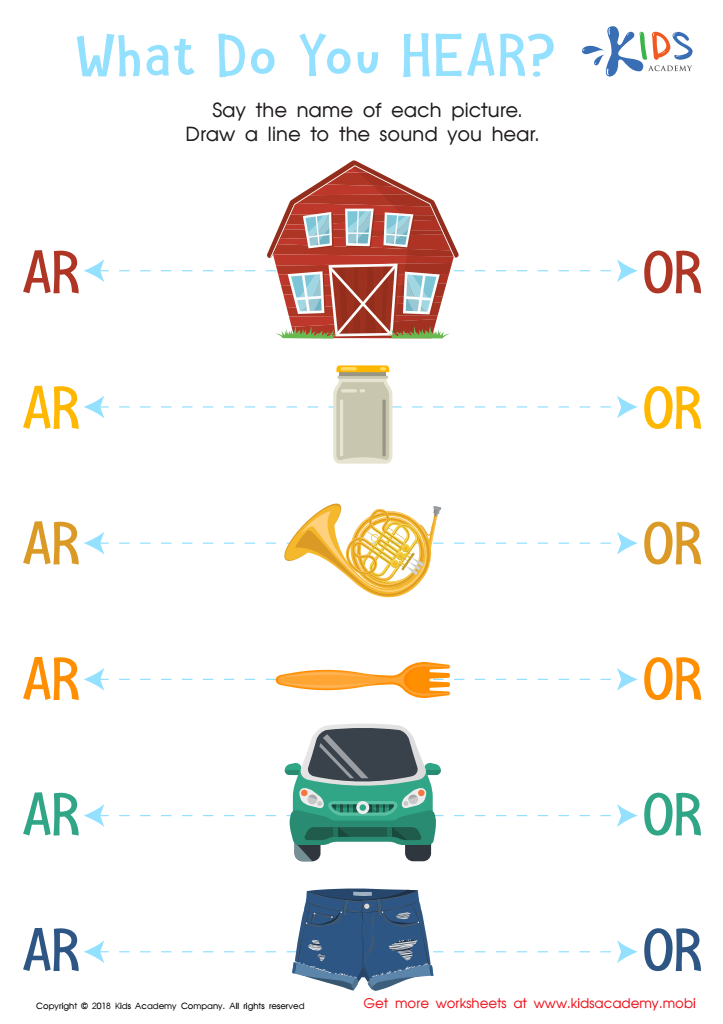
What do you hear Worksheet





Parents and teachers should care about sound association vowels for ages 6-9 because they are foundational to early literacy and language development. At this age, children are in a critical period for learning to read and write. Vowel sounds, in particular, are crucial because they form the building blocks of words and influence pronunciation, comprehension, and spelling.
Sound association involves linking sounds with their corresponding letters, aiding in phonemic awareness—the ability to hear, identify, and manipulate phonemes. This skill is essential for decoding words when reading. Children who struggle with vowel sound associations often find it harder to read fluently and comprehend text, leading to potential long-term academic challenges.
By focusing on vowel sounds, educators and parents support a child’s ability to blend and segment words, enhancing reading fluency and writing skills. Early mastery of these sounds increases confidence and enthusiasm for reading, setting a strong foundation for future learning. Engaging activities like song, play, and repetition can make learning these sound associations fun and effective, making a significant impact on a child's educational journey.
In summary, prioritizing vowel sound association for young learners is pivotal as it directly supports their overall literacy development, paving the way for academic success and a lifelong love of reading and learning.