
Understanding vowel sounds Vowels Worksheets for Ages 6-9
4 filtered results
Difficulty Level
Grade
Age
-
From - To
Subject
Activity
Standards
Unlock your child's reading potential with our "Understanding Vowel Sounds" worksheets designed for ages 6-9! These engaging activities effectively teach the essential vowel sounds, blending fun with learning to build foundational phonics skills. Perfect for early readers, these worksheets help kids identify and differentiate long and short vowels, enhancing their reading fluency and spelling abilities. With vibrant illustrations and interactive exercises, learning becomes an exciting adventure. Ideal for classroom use or at-home practice, our worksheets pave the way for your young learner's academic success. Start your child's journey to mastering vowel sounds today!
Favorites
With answer key
Interactive
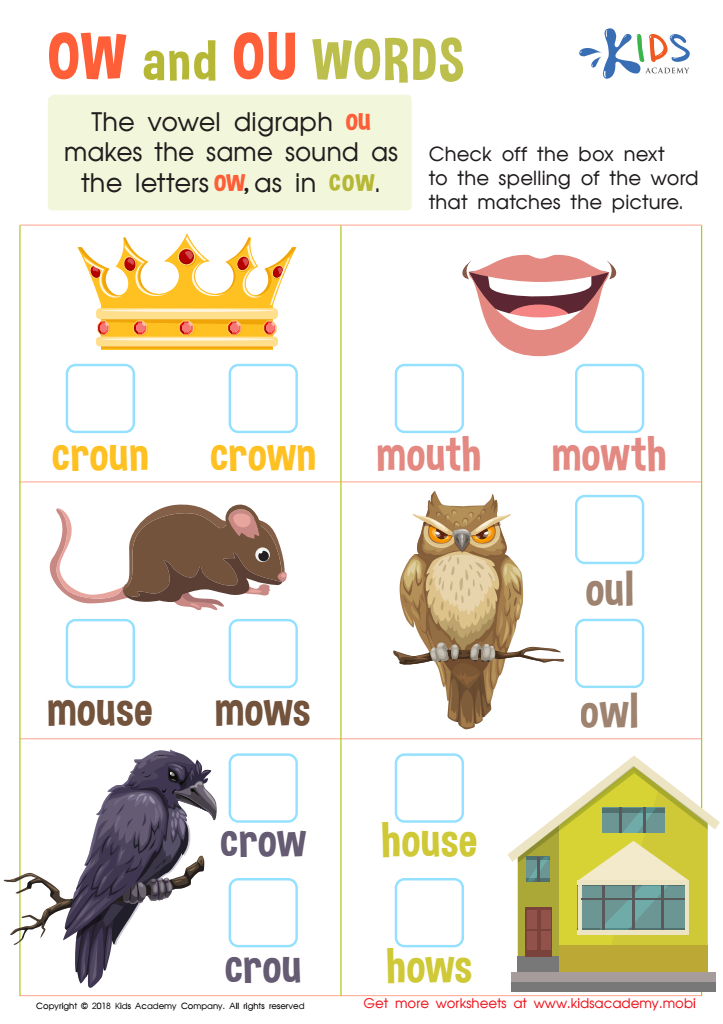
Reading: OW and OU Words Worksheet
Help your kids learn phonetics! Explain the different sounds and long/short variations. Emphasize that some vowel sounds are the same, e.g. ou = ow in cow. For practice, have them read aloud the words in the worksheet and check the box next to the spelling that matches the picture.
Reading: OW and OU Words Worksheet
Worksheet
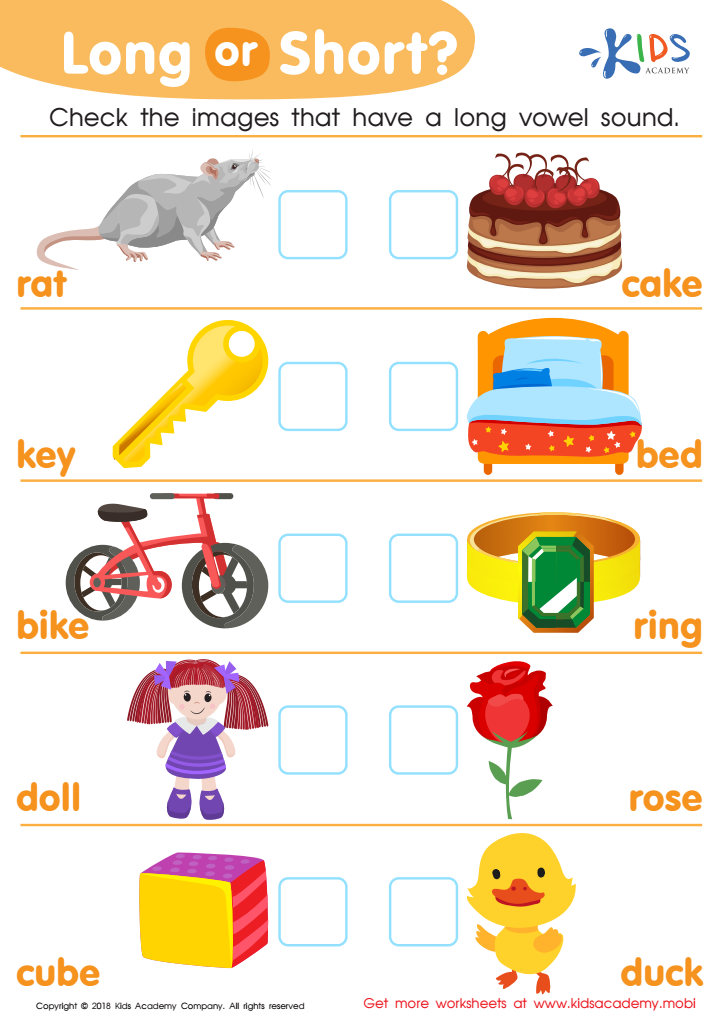
Long or Short Reading Worksheet
Every new reader needs to learn to recognize long and short vowel sounds. This phonics worksheet uses pictures of high-frequency words to help. Kids read the words and then check off images with long vowel sounds. It helps them learn to decode words and improves fine motor skills.
Long or Short Reading Worksheet
Worksheet
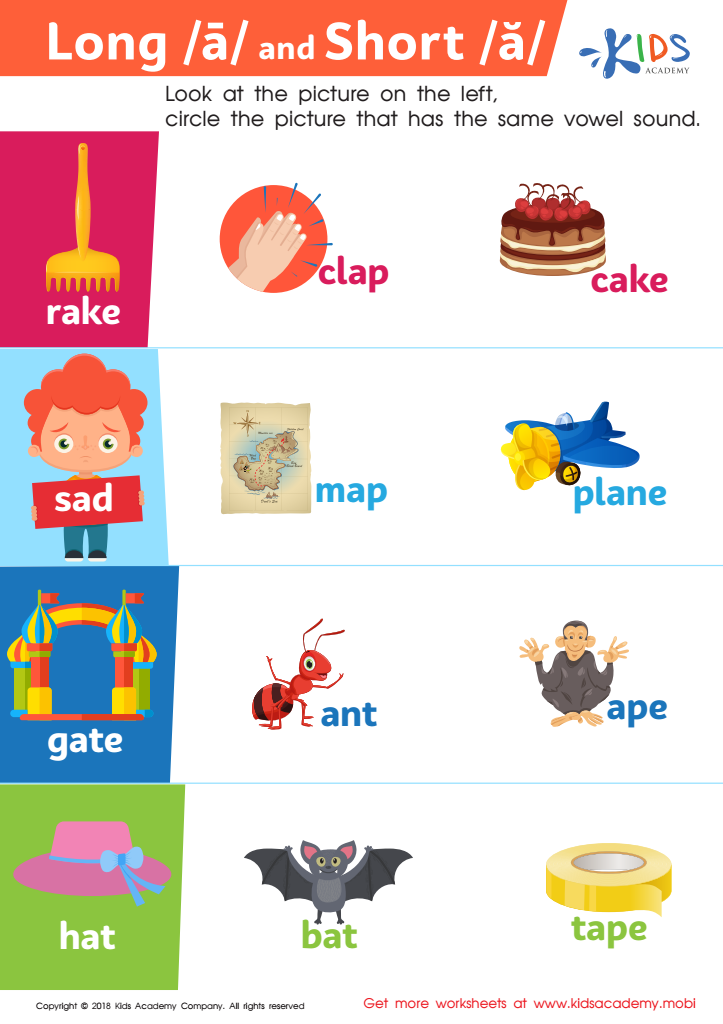
Reading: Long a and Short a Worksheet
This printable helps students practice distinguishing the long and short A sound. Pictures provide clues to read each word and students identify if it has a short or long sound. By completing this worksheet, children gain mastery of the phonics skill.
Reading: Long a and Short a Worksheet
Worksheet
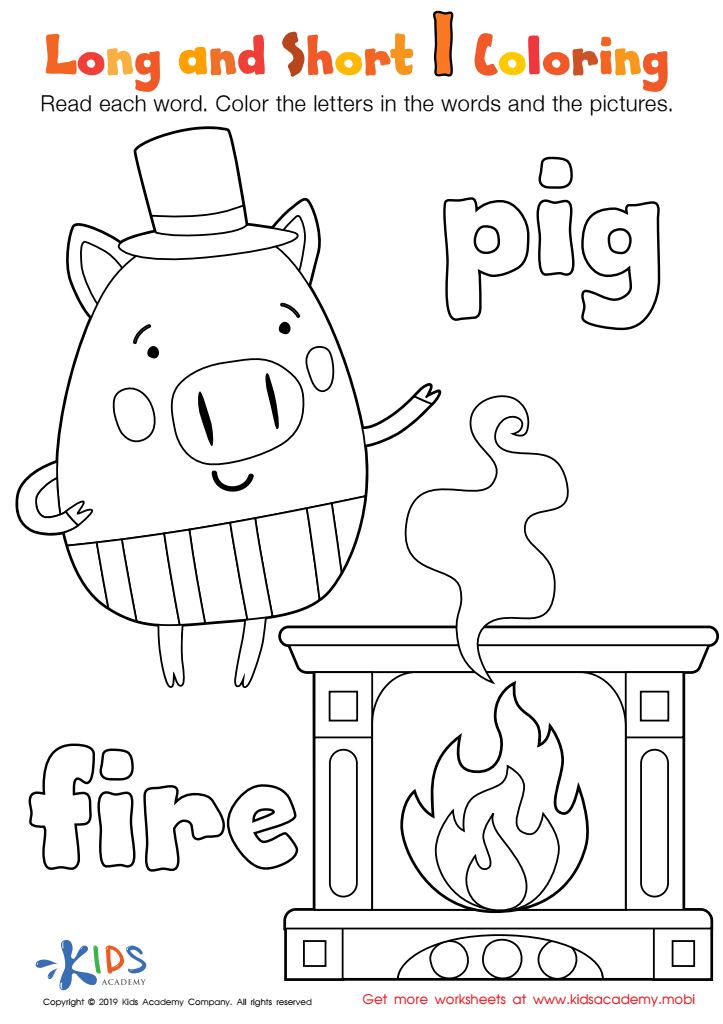
Long and Short I Worksheet
Print the worksheet and have the students read "pig" and "fire". Check for understanding the difference between long and short vowels. Color in words and pictures to make learning phonics fun! This exercise is perfect for introducing the topic to your students.
Download (PDF)
 Assign to My Students
Assign to My Students
Long and Short I Worksheet
Worksheet
Join Kids Academy for Free
Who is primarily going to use this learning content?





Understanding vowel sounds is crucial for children aged 6-9 as it forms the foundation of their reading and writing skills. At this developmental stage, children are typically transitioning from recognizing letters to reading fluently. Vowel sounds are particularly important because they are part of every syllable in the English language and influence the way words are pronounced and understood.
Mastering vowel sounds aids in phonemic awareness—the ability to hear, identify, and manipulate phonemes, the smallest units of sound. This skill is critical for decoding words, spelling accurately, and understanding meaning. For instance, distinguishing between short and long vowel sounds can change the entire meaning of a word (like "bit" vs. "bite").
Furthermore, a solid grasp of vowel sounds supports a child's ability to recognize complex word structures, enhancing their vocabulary and reading comprehension. As children learn to manipulate vowel sounds, their ability to decode unfamiliar words also improves, fostering greater reading confidence and enjoyment.
For parents and teachers, focusing on vowel sounds helps identify and address potential reading difficulties early on. Engaging activities that emphasize vowel sounds can make learning fun and interactive, ensuring that children develop these essential literacy skills efficiently. Active support from parents and teachers can create a strong literacy foundation, paving the way for academic success and lifelong learning.







