Vocabulary development Vowels Worksheets for Ages 6-9
6 filtered results
-
From - To
Enhance your child’s vocabulary with our engaging Vowels Worksheets for Ages 6-9, meticulously crafted to strengthen foundational language skills. Our resources at Kids Academy focus on fun and interactive ways to learn vowels, essential for confident reading and writing. Through a variety of activities, young learners can identify, pronounce, and use vowels effectively across different contexts. These worksheets not only improve vocabulary but also aid in overall literacy development. Start your child’s journey to language proficiency today, supporting their educational growth in enjoyable and meaningful ways. Visit Kids Academy for effective learning tools and resources.
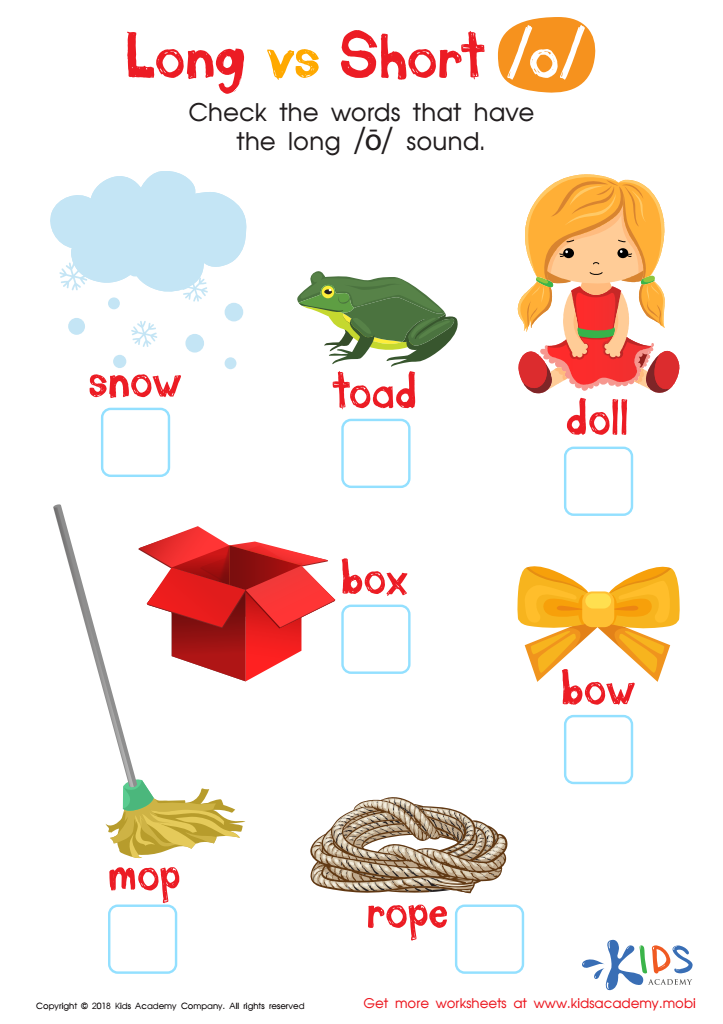
Long vs Short O Reading Worksheet
 Assign to My Students
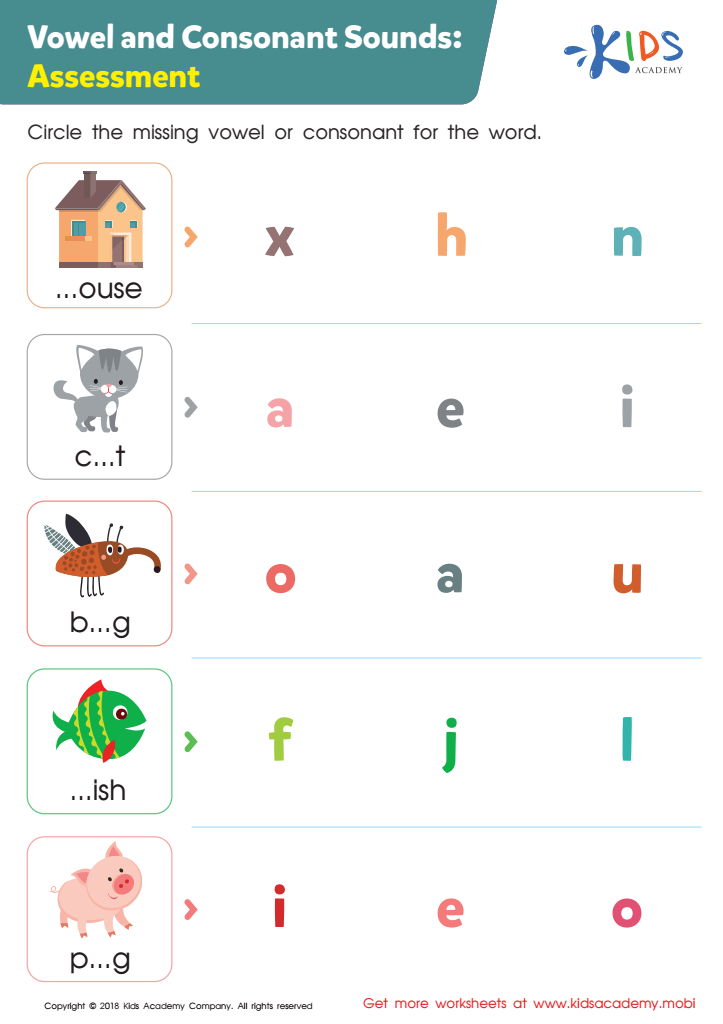
Vowel and Consonant Sounds: Assessment Worksheet
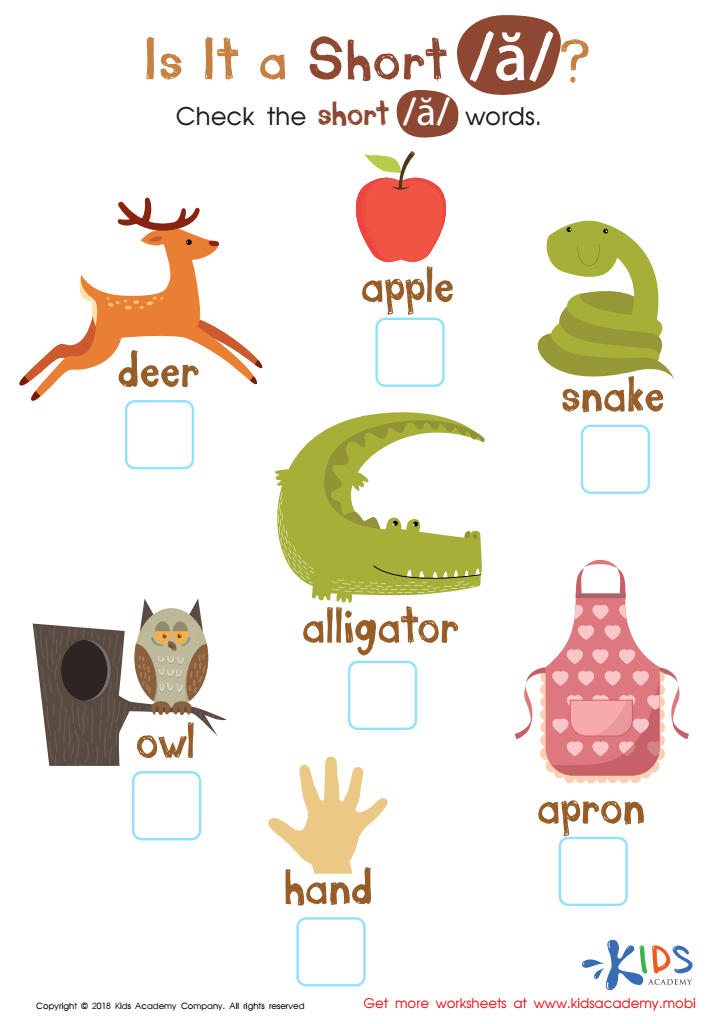
Is It Short A? Reading Worksheet
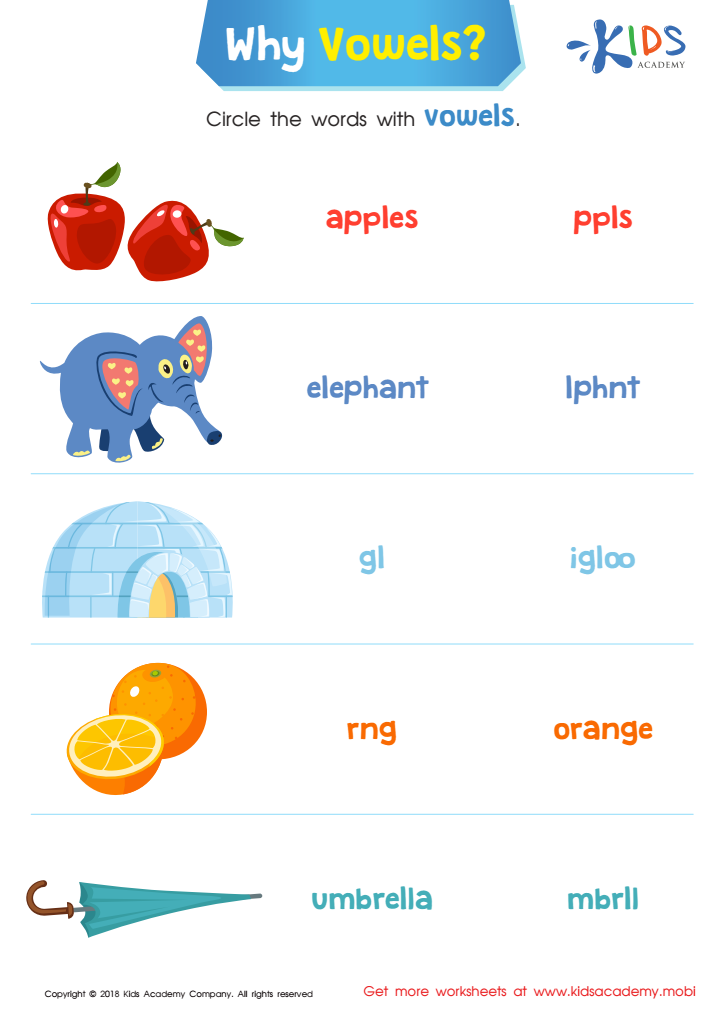
Why Vowels? Reading Worksheet
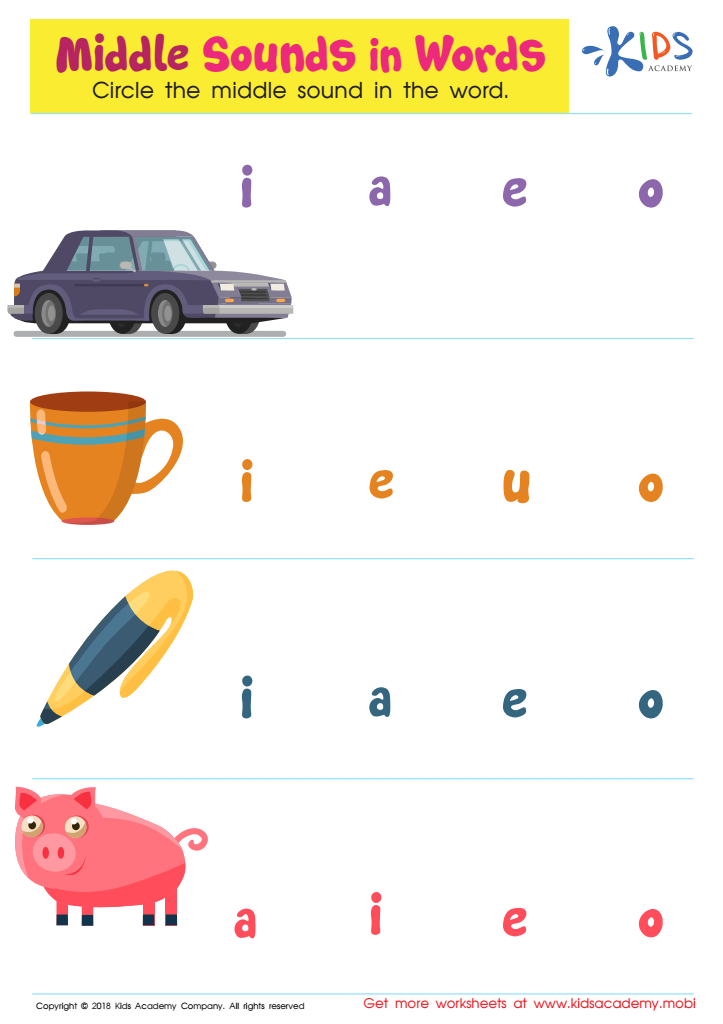
Middle Sounds in Words Worksheet
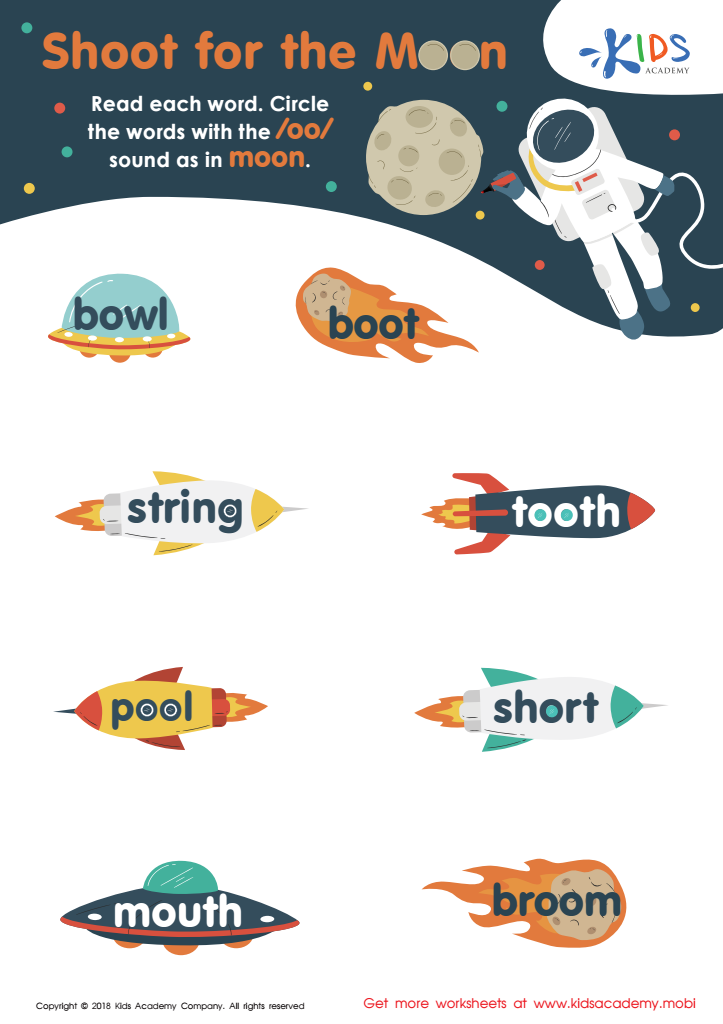
Reading: Shoot for the Moon Worksheet





Vocabulary development and understanding vowels for children ages 6-9 are crucial for their academic success and language proficiency. At this age, children undergo significant literacy growth that sets the foundation for their future reading and communication skills. Vocabulary development not only helps children understand what they read and hear, but also enhances their ability to express themselves clearly and effectively.
Vowels play a central role in this process. Mastery of vowels is essential for accurate pronunciation, spelling, and reading fluency. Vowels occur in virtually every word, and understanding their varied sounds and rules can unlock decoding skills necessary for reading new words. This understanding aids in the development of phonemic awareness, which is the ability to hear, identify, and manipulate individual sounds in words—an essential prereading skill. Poor phonemic awareness can lead to reading difficulties, which can affect overall academic performance and self-esteem.
Moreover, a strong vocabulary allows children to engage more fully in classroom activities, fostering a love for learning and reading. It also enables them to describe their emotions and experiences more precisely, which is vital for social interactions and emotional development. Therefore, parents and teachers must prioritize vocabulary building and vowel comprehension during these early years to support holistic linguistic and cognitive growth.







