Critical Thinking Chess Worksheets for Ages 6-9
4 filtered results
-
From - To
Unlock your child's potential with our Critical Thinking Chess Worksheets for ages 6-9! Designed to merge fun with educational value, these worksheets are perfect for young minds eager to explore the strategic world of chess. Each activity encourages kids to think logically, plan ahead, and solve complex problems, all while enjoying the timeless game of chess. Ideal for enhancing cognitive skills, boosting problem-solving abilities, and fostering creativity, our engaging worksheets make learning both entertaining and impactful. Prepare your child for academic success and beyond with resources crafted by educational experts. Start your child's journey to strategic mastery today!
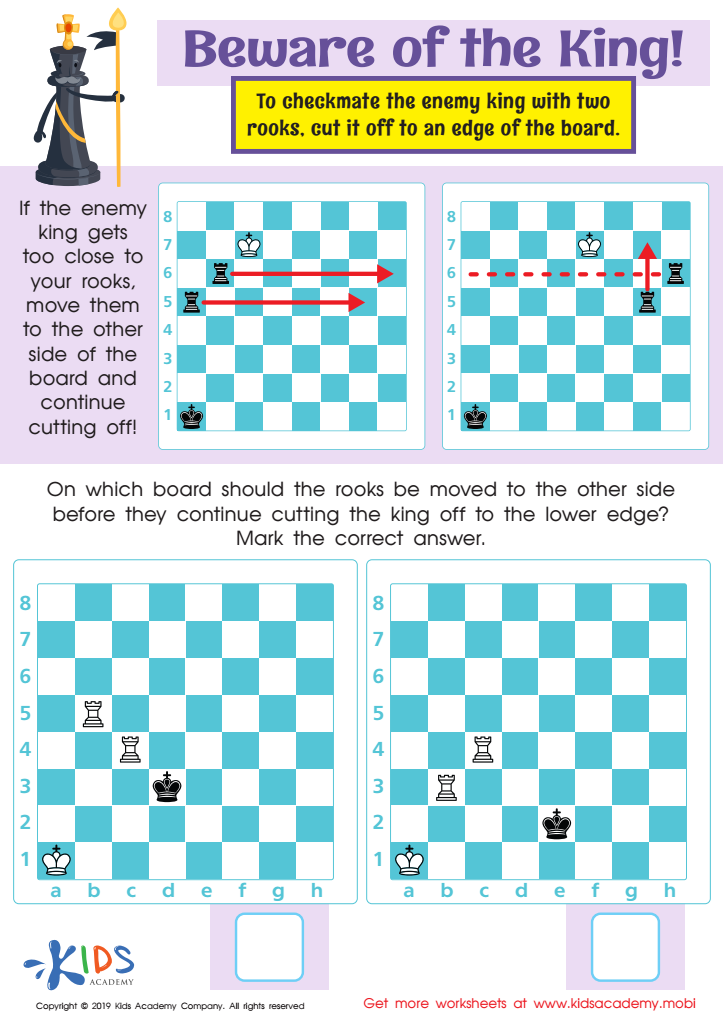
Beware of the King! Worksheet
 Assign to My Students
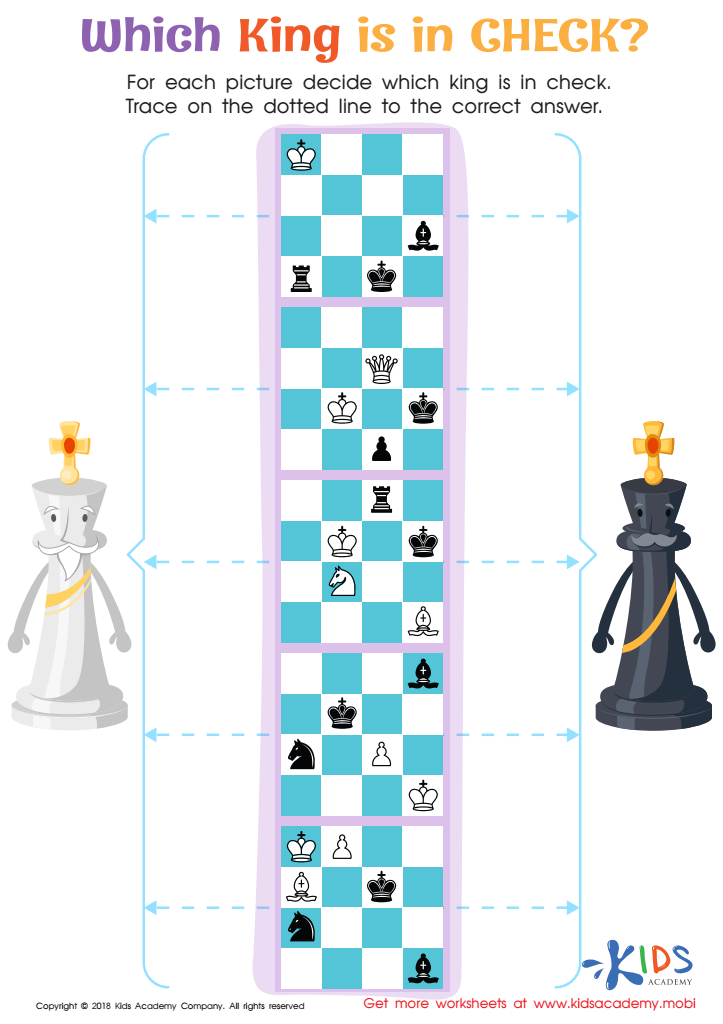
Which King is in Check? Worksheet
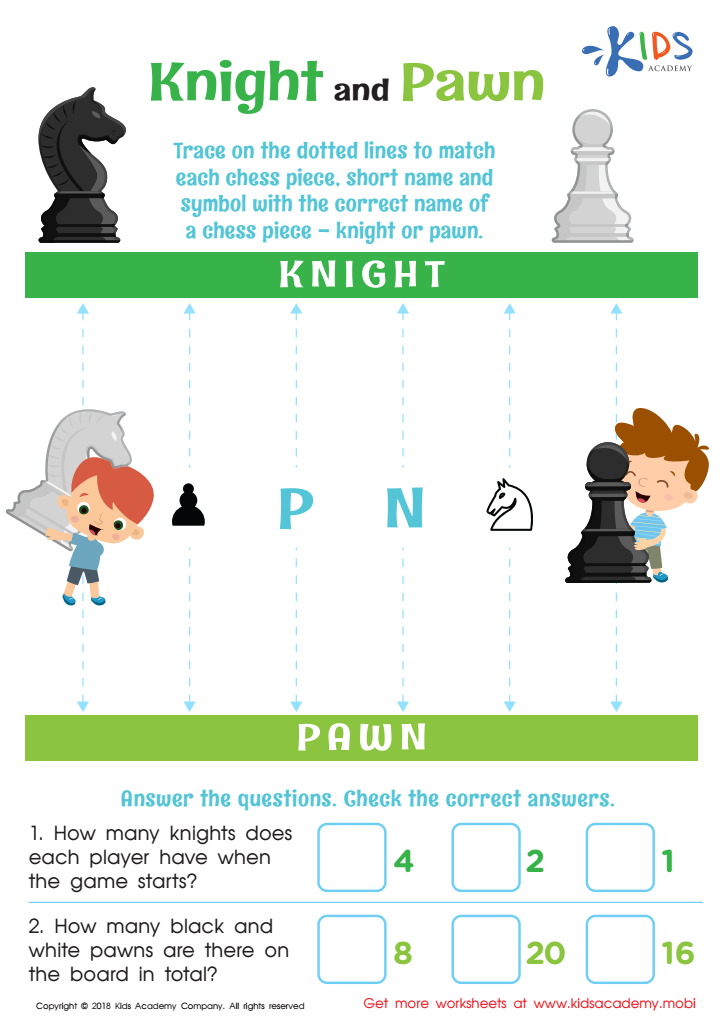
Knight and Pawn Worksheet
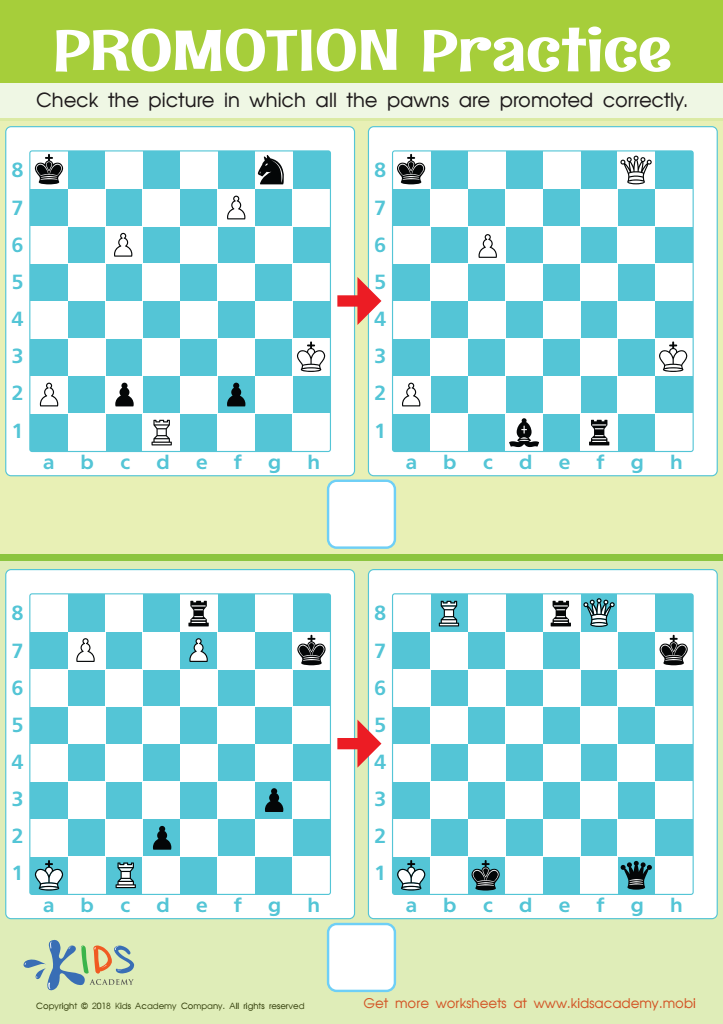
Promotion Practice Worksheet


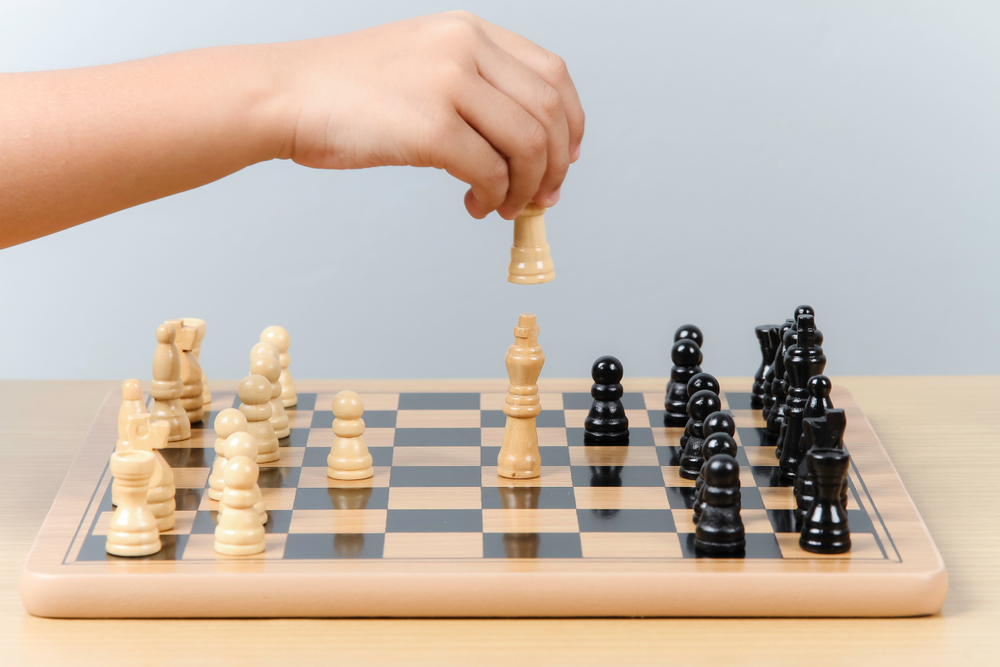




Critical Thinking Chess for ages 6-9 is an incredibly valuable tool that can help boost cognitive development and problem-solving skills at an early age. Engaging in chess encourages young minds to think strategically and foresee various outcomes, enhancing their ability to plan and make decisions. This skill set is transferable to everyday situations where logical reasoning and critical thinking are essential.
Introducing children to chess at a young age can also foster patience and concentration. Since the game requires planning several moves ahead, it pushes children to stay focused and patiently analyze the board before making decisions. This can be beneficial in school settings where sustained concentration during tasks or instruction is often required.
Additionally, chess helps improve memory and spatial skills. Remembering different moves and their outcomes strengthens the memory, while understanding the positioning of pieces on the board taps into spatial awareness, a talent useful in subjects like mathematics and science.
Moreover, playing chess does not just have academic benefits. It teaches life skills such as accountability and sportsmanship, since each move they make is their own decision and they experience both the wins and losses resulting from their choices.
Overall, introducing Critical Thinking Chess to early grade students cultivates well-rounded intellectual and emotional faculties, setting a strong foundation for future learning and personal growth.