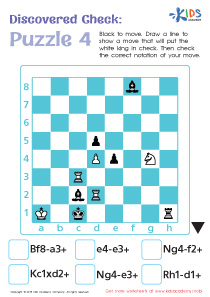
Decision making skills Chess Worksheets for Ages 6-9
3 filtered results
Difficulty Level
Grade
Age
-
From - To
Subject
Activity
Standards
Enhance your child's critical thinking and decision-making skills with our engaging Chess Worksheets designed for ages 6-9. These printable activities are perfect for young learners to develop strategic thought processes and analytical abilities through the timeless game of chess. Each worksheet offers fun, age-appropriate exercises that challenge kids to plan their moves, anticipate outcomes, and solve problems creatively. Ideal for both beginners and young chess enthusiasts, these worksheets provide a fantastic foundation for success in both chess and everyday decision-making situations. Visit Kids Academy to explore and download these enriching resources today!
Favorites
With answer key
Interactive
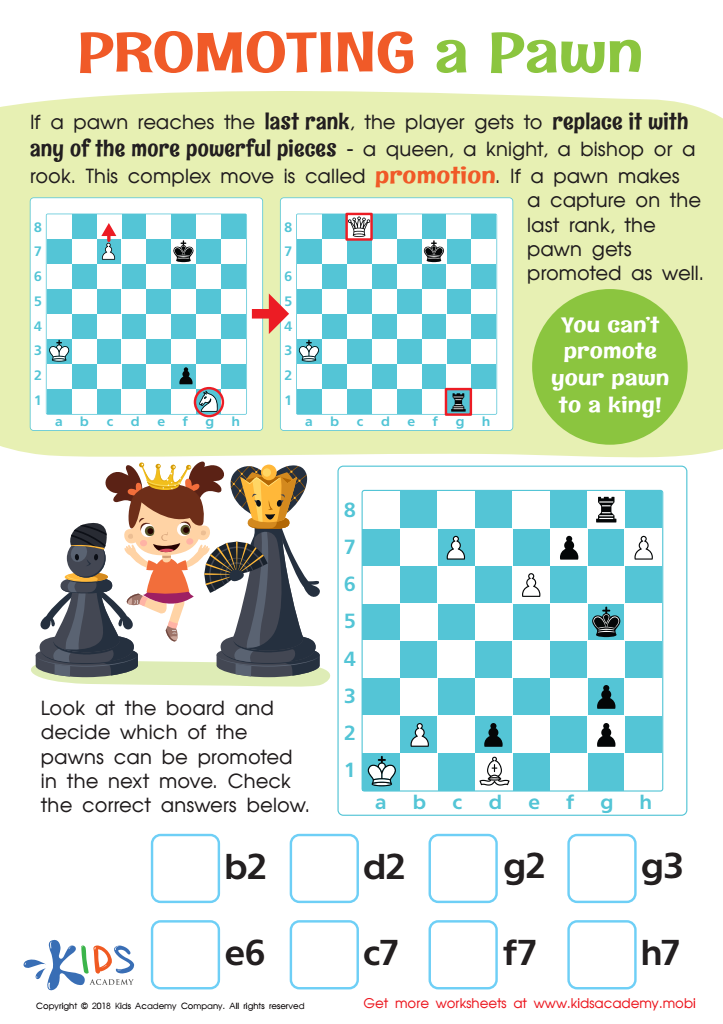
Promoting a Pawn Worksheet
Teach your kids all about pawns with this fun worksheet! Pawns may seem restricted, but experienced players can guide them across the board. If a pawn reaches the last rank, the player can upgrade it to a more powerful piece (e.g. queen, knight), or promote it if it captures an enemy piece. Give them the tools to master the game!
 Assign to My Students
Promoting a Pawn Worksheet
Worksheet
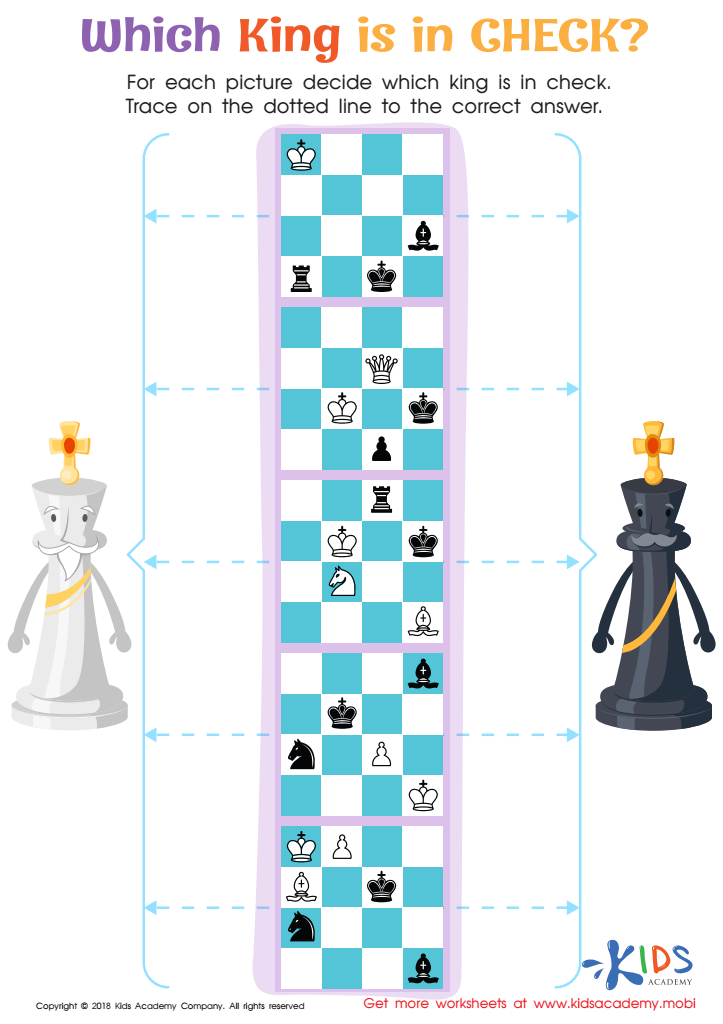
Which King is in Check? Worksheet
Teaching your children chess helps them solve problems, think critically, and develop logical patterns. With this free PDF, they'll analyze five boards to decide if the black or white king is in check. Tracing the lines, they'll improve their skills while having fun.
Which King is in Check? Worksheet
Worksheet
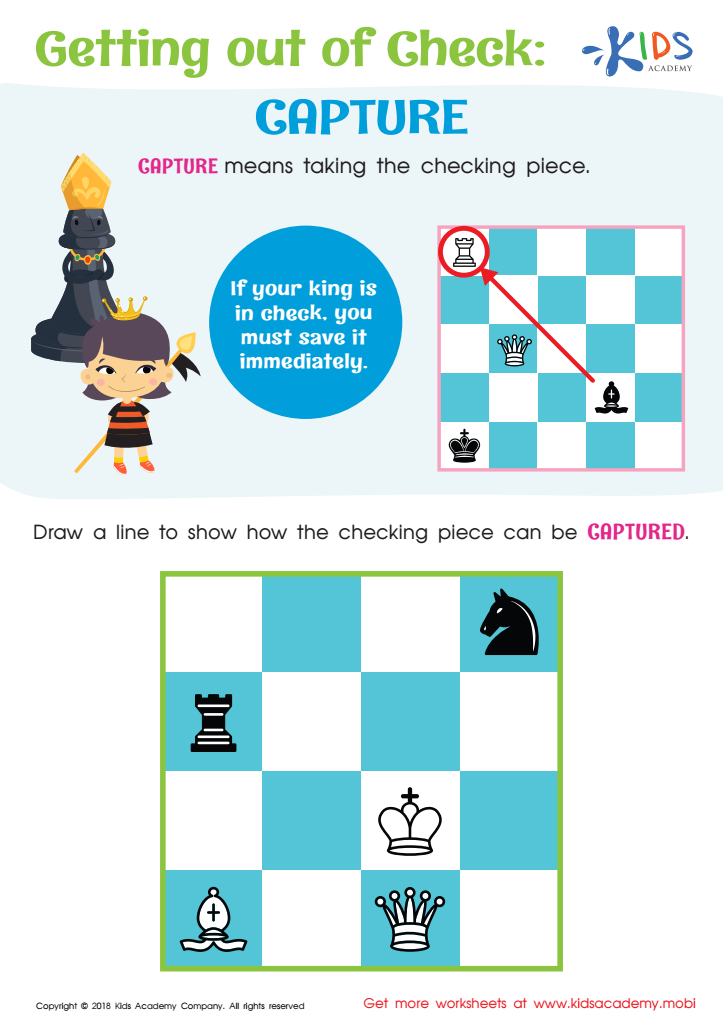
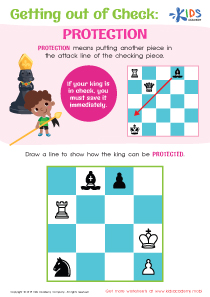
Getting out of Check: Capture
Kids love chess because it combines strategy and the thrill of outwitting their opponents! This free chess strategy worksheet teaches kids how to protect and capture the threatening piece when their king is in danger. The downloadable includes sample boards to practice with. Get it today and have your chess whiz mastering the game in no time!
Getting out of Check: Capture
Worksheet
Join Kids Academy for Free
Who is primarily going to use this learning content?







Parents and teachers should care about decision-making skills developed through chess for children ages 6-9 because these skills are foundational for their intellectual and personal growth. During these formative years, children’s brains are exceptionally malleable and can benefit immensely from activities that promote critical thinking and problem-solving.
Chess, a game that requires strategic planning, foresight, and evaluation of consequences, imparts important cognitive benefits. It encourages children to think ahead, anticipate possible responses, and make informed decisions based on careful analysis. This mirrors situations they'll encounter in daily life where they need to weigh options and foresee potential outcomes before acting.
Moreover, playing chess enhances concentration and patience, teaching children the value of deliberate and thoughtful actions. The game also promotes perseverance, as young players must persist through challenges and sometimes losses, building resilience and a growth mindset. This is especially crucial in the 6-9 age range, where attitudes towards learning and struggles are being deeply ingrained.
Fostering decision-making skills through chess also aids social and emotional development. By making autonomous decisions and experiencing the outcomes, children build confidence and responsibility. Thus, incorporating chess into a child’s routine not only hones their intellect but also shapes essential life skills that pave the way for holistic development.