Color recognition 3 Little Pigs Worksheets for Ages 6-9
5 filtered results
Difficulty Level
Grade
Age
-
From - To
Subject
Activity
Standards
Discover our engaging "Color Recognition 3 Little Pigs Worksheets" designed specifically for children ages 6 to 9! These interactive worksheets combine the classic tale of the three little pigs with fun color recognition activities. Young learners will enhance their understanding of colors through vibrant illustrations and creative exercises, encouraging both artistic expression and cognitive development. Each worksheet challenges kids to identify and color various elements of the story, promoting fine motor skills while reinforcing color knowledge. Perfect for homeschooling or classroom use, these worksheets offer a delightful way to blend literature and art, turning learning into a joyous adventure!
Favorites
With answer key
Interactive
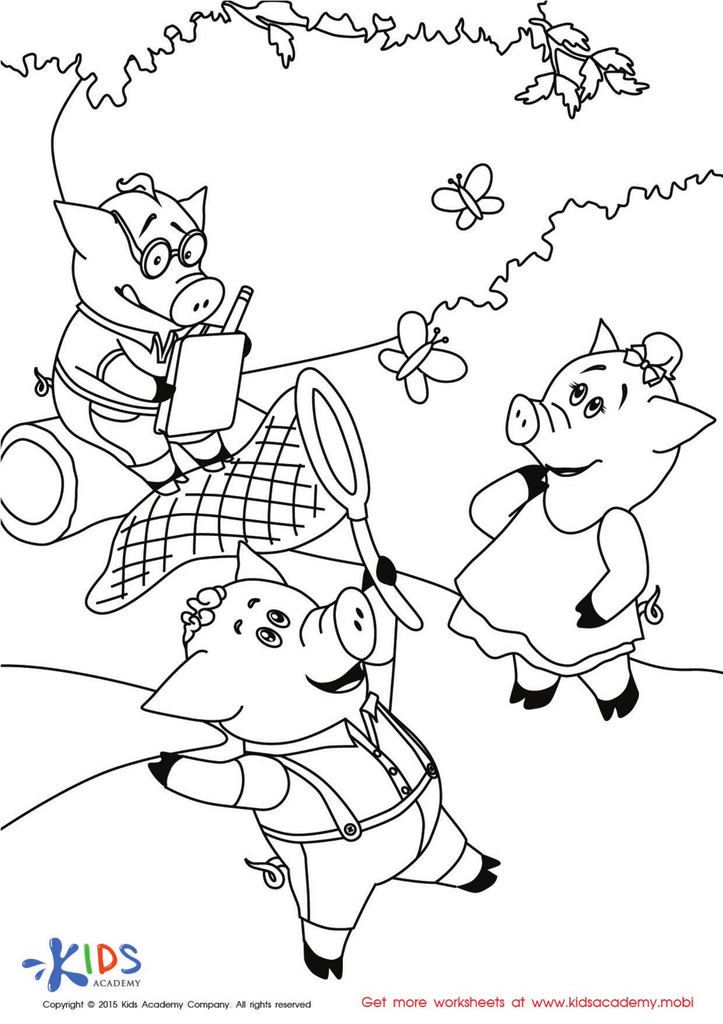
The Three Little Pigs Coloring Worksheet
Let your kid bring this simple scene to life with some color! Have them make the grass green, the sky blue and the butterflies joyful. After they finish, why not ask them what will happen next to the two idling pigs and the hardworking one? Check our website for more coloring book pages to collect the full story of the Three Little Pigs.
The Three Little Pigs Coloring Worksheet
Worksheet
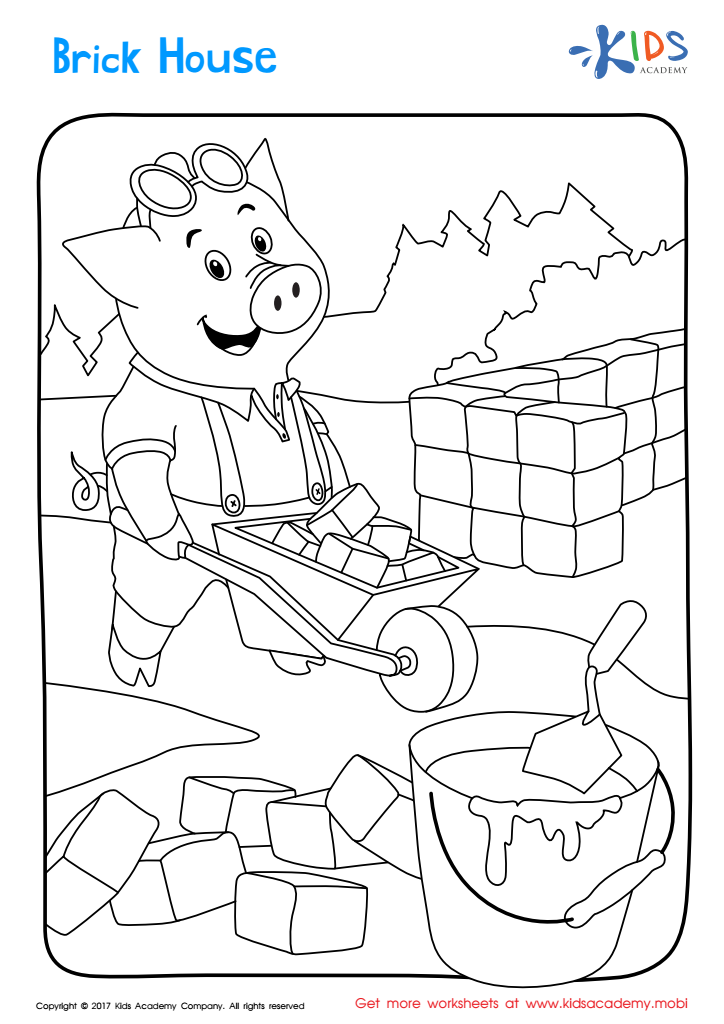
Brick House Printable Coloring Page
Let your child's imagination run wild as they color this delightful brick house from the 3 Little Pigs story! It's a great way to encourage creative expression, build imagination and have fun. Plus, use it as an opportunity to retell the story afterwards!
Download (PDF)
 Assign to My Students
Assign to My Students
Brick House Printable Coloring Page
Worksheet
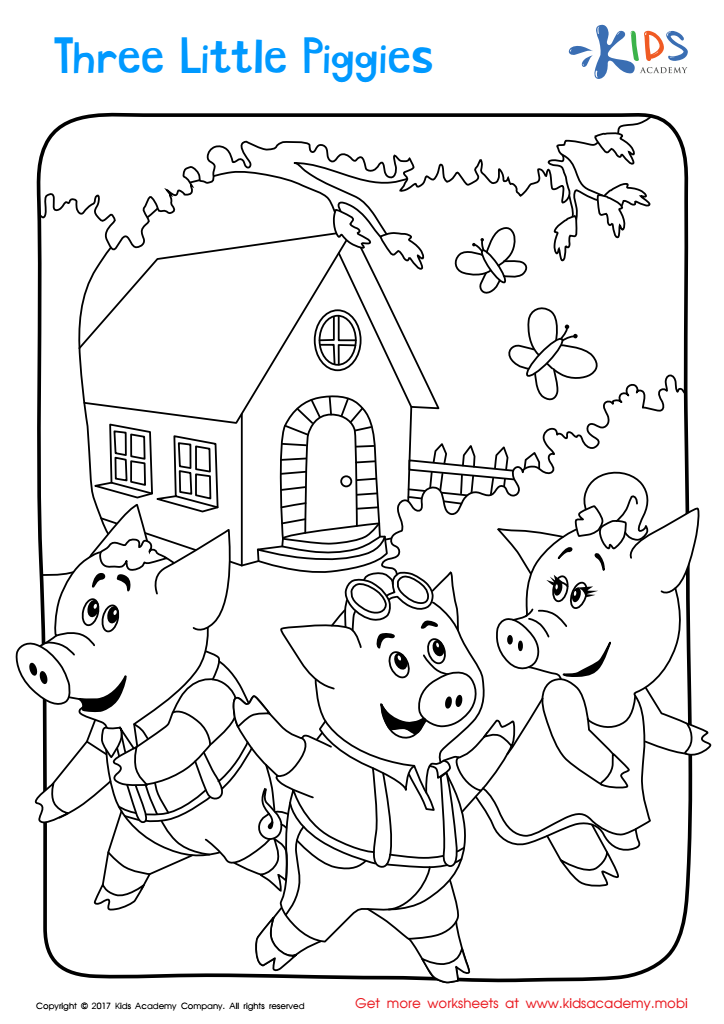
Three Little Piggies Printable Coloring Page
Recall a childhood favorite with your child and color in the Three Little Piggies printable. It's a great way to excite them for reading, as it helps them learn about characters and plot.
Download (PDF)
Assign to My Students
Assign to My Students
Three Little Piggies Printable Coloring Page
Worksheet
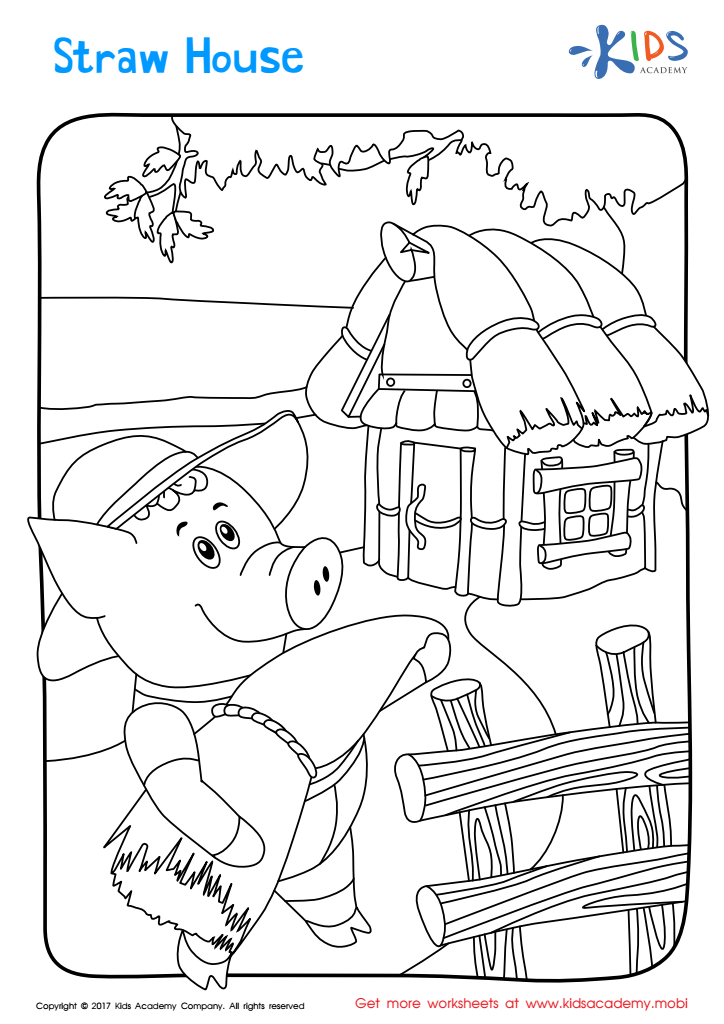
Straw House Printable Coloring Page
As they color, remind them of the Three Little Pigs' fable by having them imagine the scene. Fun and educational—a perfect combination! (80 words)
Have your child color this adorable Straw House coloring page and imagine the Three Little Pigs' fable! Remind them of the story as the big bad wolf shows up, and watch as they delight in the joy of the little pig building his straw house. Educational and fun—a great combo!
Download (PDF)
Assign to My Students
Assign to My Students
Straw House Printable Coloring Page
Worksheet
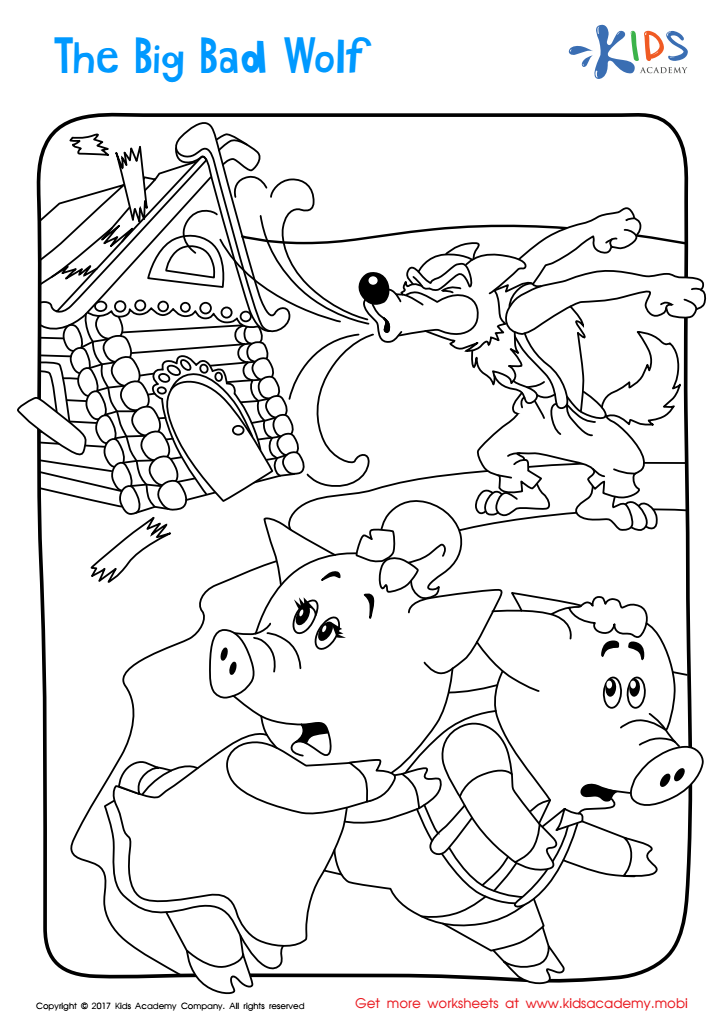
Big Bad Wolf Printable Coloring Page
Let your child have fun coloring the Big Bad Wolf blowing down the little pig's house! This printable coloring page introduces the classic tale, helping to develop reading comprehension skills.
Download (PDF)
Assign to My Students
Assign to My Students
Big Bad Wolf Printable Coloring Page
Worksheet
Join Kids Academy for Free
Who is primarily going to use this learning content?


Color recognition is an essential developmental skill for children aged 6-9 and plays a crucial role in their cognitive and social growth. Introducing concepts like color through engaging narratives, such as "The Three Little Pigs," enhances comprehension and retention, making learning enjoyable and effective. This classic story incorporates vibrant illustrations and dynamic characters, which vividly represent different colors, helping children identify and differentiate between them.
Engaging with colors in stories aids in language development, allowing children to expand their vocabulary by associating colors with emotions, objects, and contexts within the tale. This storytelling method not only captivates young learners but also fosters creative thinking and imagination as they visualize the scenes.
Additionally, recognizing colors helps children navigate their environment more effectively. It enhances their ability to make connections between items in real life and those in stories, leading to better problem-solving skills as they observe their surroundings. Consequently, incorporating color recognition within educational activities strengthens fine motor skills through art projects and crafts. In sum, teaching color recognition through beloved stories empowers children to enrich their understanding of the world, supports emotional learning, and lays the groundwork for critical thinking as they interact with literature and everyday life.