Filters

6 filtered results

Clear all filters
Favorites
With answer key
Interactive

6 filtered results

Difficulty Level

Grade


Explore our "Following Instructions English for Beginners Worksheets" designed specifically for children aged 6-9. These engaging worksheets focus on essential skills such as listening comprehension, sequence ordering, and task completion. Ideal for early learners, our materials help kids practice interpreting and following simple instructions, enhancing their English language proficiency. Each worksheet is filled with fun activities, vibrant illustrations, and step-by-step guidance to make learning enjoyable. Perfect for teachers and parents alike, these resources support language development while encouraging critical thinking and independent learning. Start your child’s learning journey today and watch their confidence soar as they master following instructions in English!

Check out this FREE Trial Lesson on English for Beginners for age 6-9!

Match Exactly the Same

Favorites
With answer key
Interactive
  • 6-9
  • Following instructions
  • English for Beginners
Red and Blue Coloring Fun Worksheet

Red and Blue Coloring Fun Worksheet

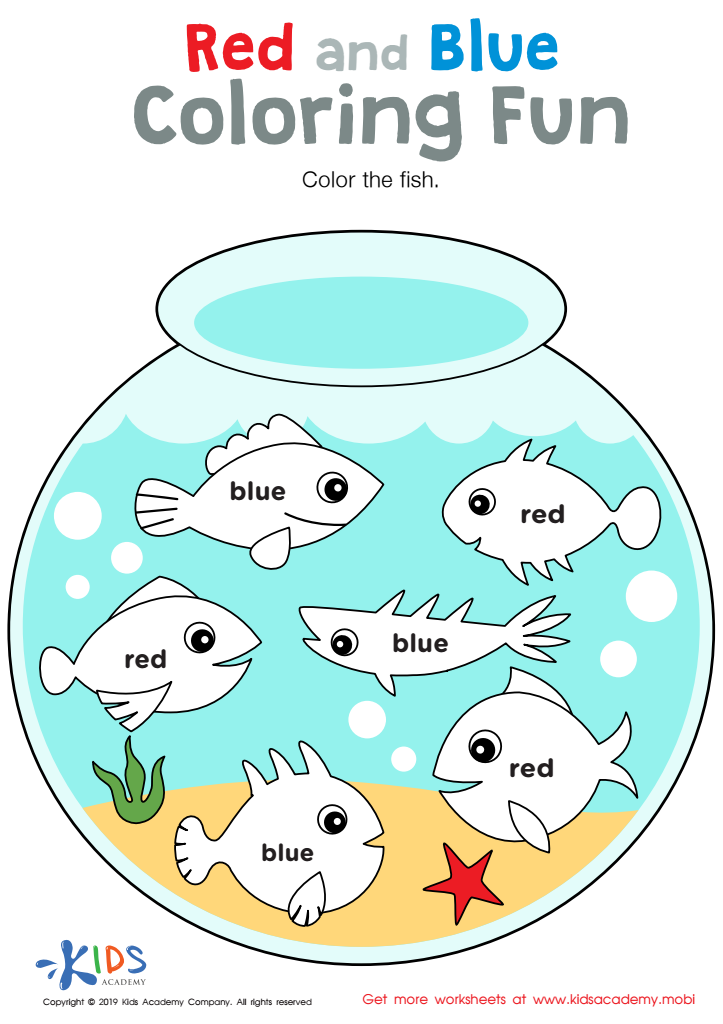
Kids know colors like red and blue. But can they read these words? Give them practice with this fun fish bowl coloring sheet. They'll look at the fish, then color them the corresponding hue. Home or classroom, they'll be sure to get a kick out of learning colors in this creative way!
Download (PDF)
Assign to My Students
Red and Blue Coloring Fun Worksheet
Worksheet
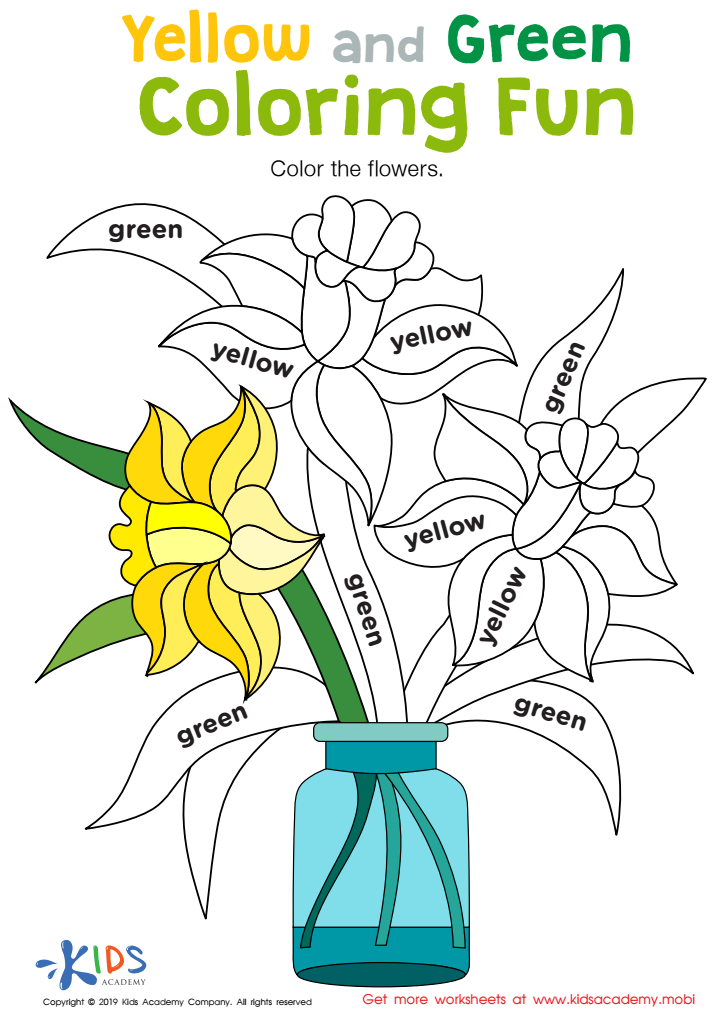
Yellow and Green Coloring Fun Worksheet

Yellow and Green Coloring Fun Worksheet

Sight words like "yellow" and "green" are easy to teach and fun for kids to learn. This free downloadable worksheet has kids read the color words and color the flower with yellow and green. A great activity for learning to read color words!
Download (PDF)
Assign to My Students
Yellow and Green Coloring Fun Worksheet
Worksheet
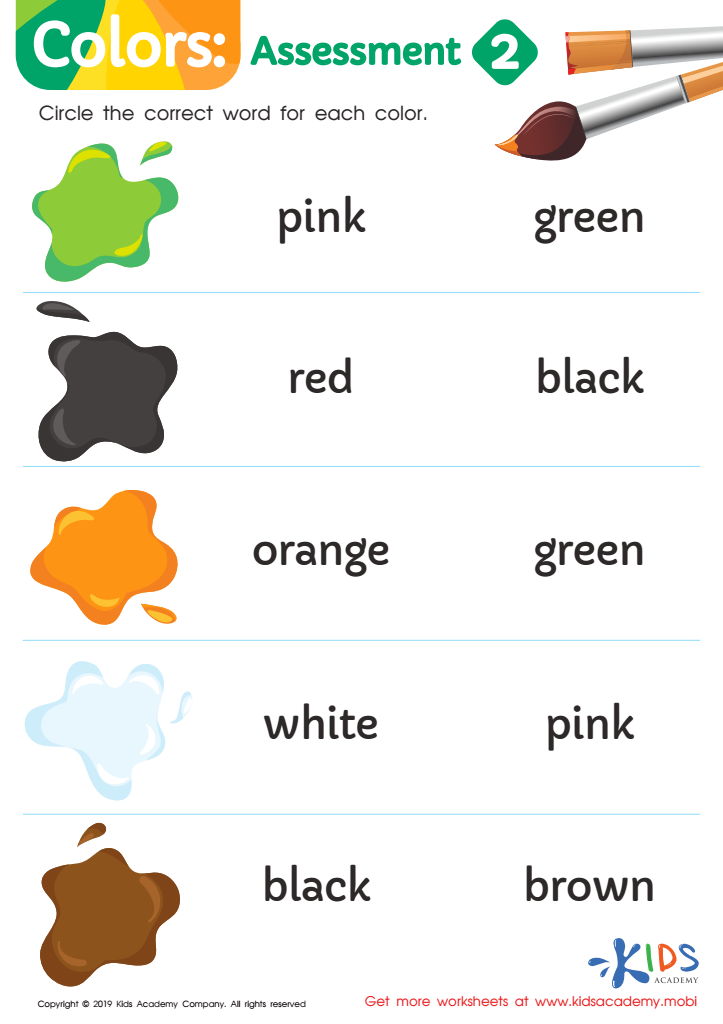
Colors: Assessment 2 Worksheet

Colors: Assessment 2 Worksheet

Teach color words to young students to build fluency and confidence. Check knowledge with an assessment worksheet. Have students look at paint samples and circle the correct color word. This assessment helps parents and teachers measure a child’s accuracy when reading color words.
Colors: Assessment 2 Worksheet
Worksheet
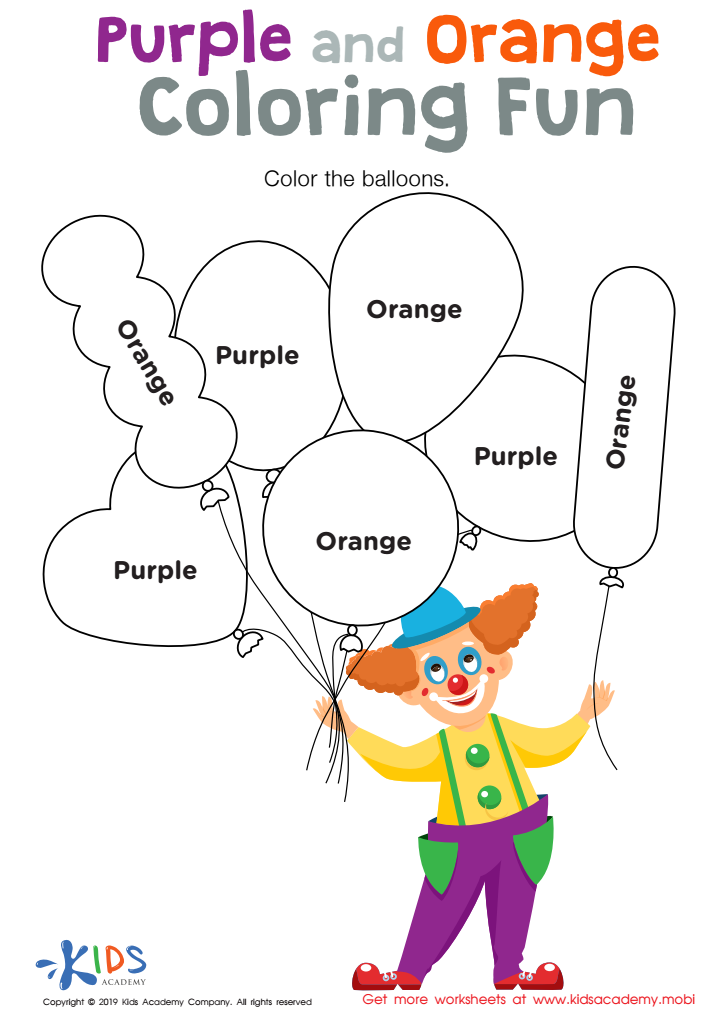
Purple and Orange Coloring Fun Worksheet

Purple and Orange Coloring Fun Worksheet

Children should learn to read color words early on. This coloring worksheet helps with that! Kids read the words "purple" and "orange" on each balloon and color them accordingly. It's a great activity for boosting literacy and having fun at the same time! Watch your child gain more reading confidence with this cute clown printable.
Download (PDF)
Assign to My Students
Purple and Orange Coloring Fun Worksheet
Worksheet
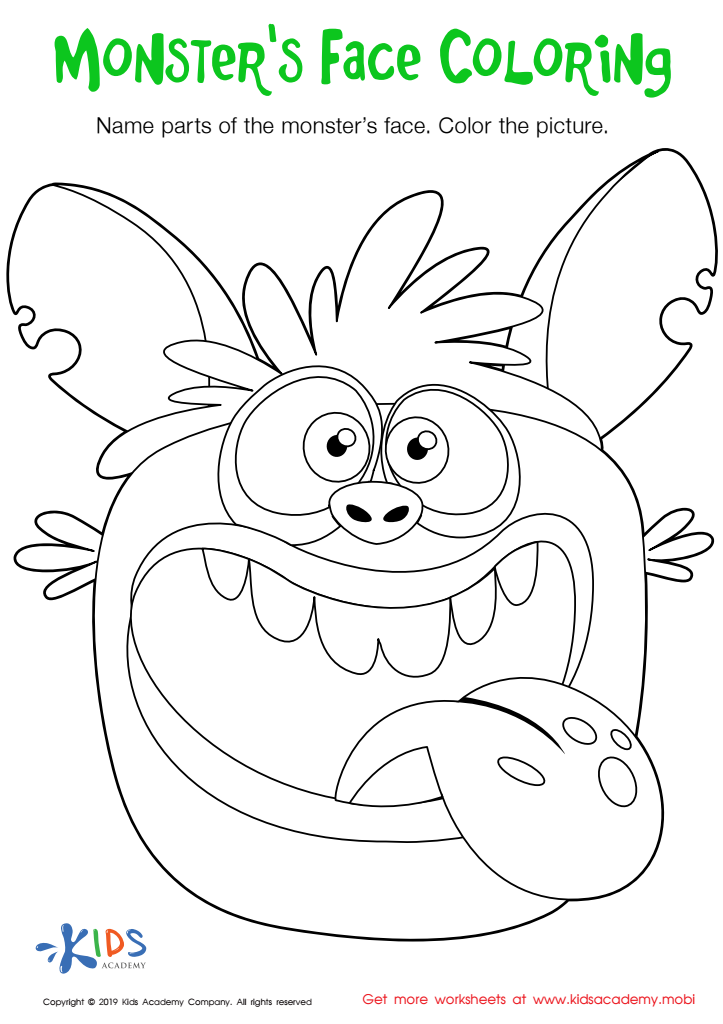
Monster's Face Coloring Worksheet

Monster's Face Coloring Worksheet

Have your students practice identifying face parts with this fun worksheet. Teach them how to say eyes, nose, mouth, and ears. Help them master these words so they can express themselves better. And have some fun with the monster coloring page too!
Download (PDF)
Assign to My Students
Monster's Face Coloring Worksheet
Worksheet
White and Pink Coloring Fun Worksheet

White and Pink Coloring Fun Worksheet

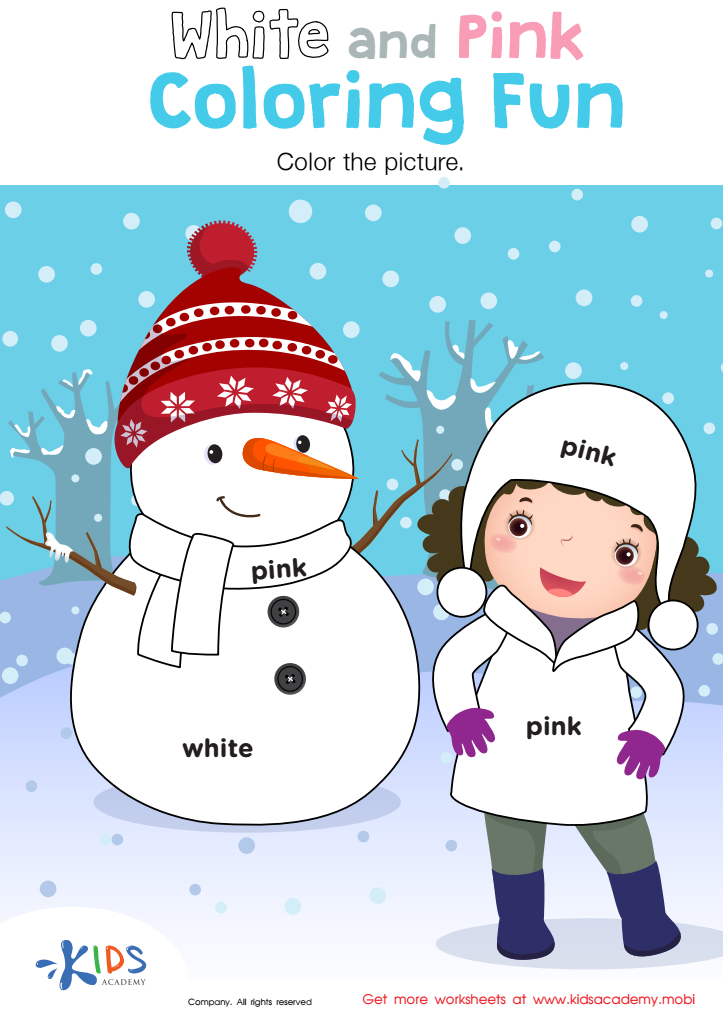
Preschoolers and kindergarten students can practice reading sight words with this fun worksheet, featuring a winter scene. Have them color the snowman white and the clothing pink. This activity is a great way to learn common sight words like white and pink and help them become confident, fluent readers.
Download (PDF)
Assign to My Students
White and Pink Coloring Fun Worksheet
Worksheet


Teaching young learners to follow instructions in English is crucial for their academic and social development. For children aged 6-9, language acquisition is closely tied to their ability to understand and execute directives. When parents and teachers focus on this skill, they are not only enhancing vocabulary but also encouraging effective communication and comprehension skills.

Following instructions aids in fostering independence and critical thinking. Children learn to process information, follow sequences, and build problem-solving strategies essential for future learning experiences. This competence in following directions also boosts a child's confidence, making them more willing to participate in activities and collaborate with peers.

Moreover, English, being a global language, empowers children to interact in a diverse world. A strong foundational understanding of how to follow instructions will equip them for higher education and daily life encounters.

For parents, building these skills at home enhances school readiness and engagement, and for teachers, promoting a structured classroom environment built on clear instructions cultivates a productive learning atmosphere. In essence, prioritizing instruction comprehension is a vital stepping stone for children to thrive both academically and socially.