Letter tracing skills English for Beginners Worksheets for Ages 6-9
3 filtered results
-
From - To
Enhance your child's English skills with our "Letter Tracing Skills for Beginners Worksheets," designed for ages 6-9. Great for young learners, these engaging worksheets help children practice writing uppercase and lowercase letters through fun, hands-on activities. Our expertly crafted exercises support the development of fine motor skills and reinforce letter recognition. Perfect for classroom or at-home learning, these printable worksheets offer a systematic approach to mastering the basics of English writing, boosting confidence and encouraging a love for learning. Help your child get ahead with these essential tools for early literacy success!
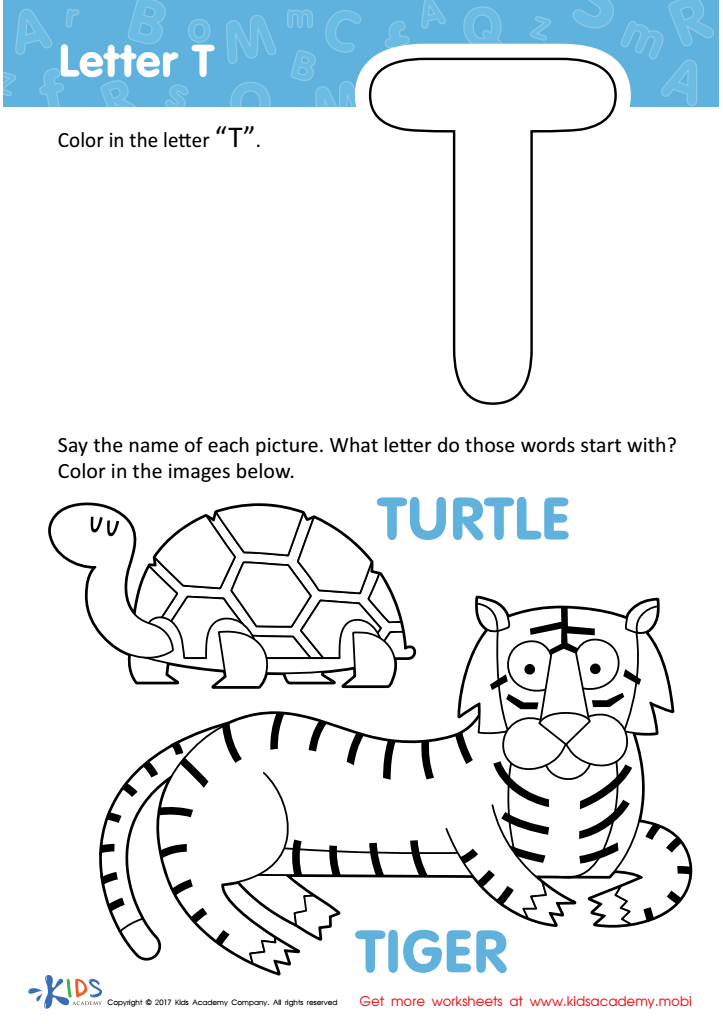
Letter T Coloring Sheet
 Assign to My Students
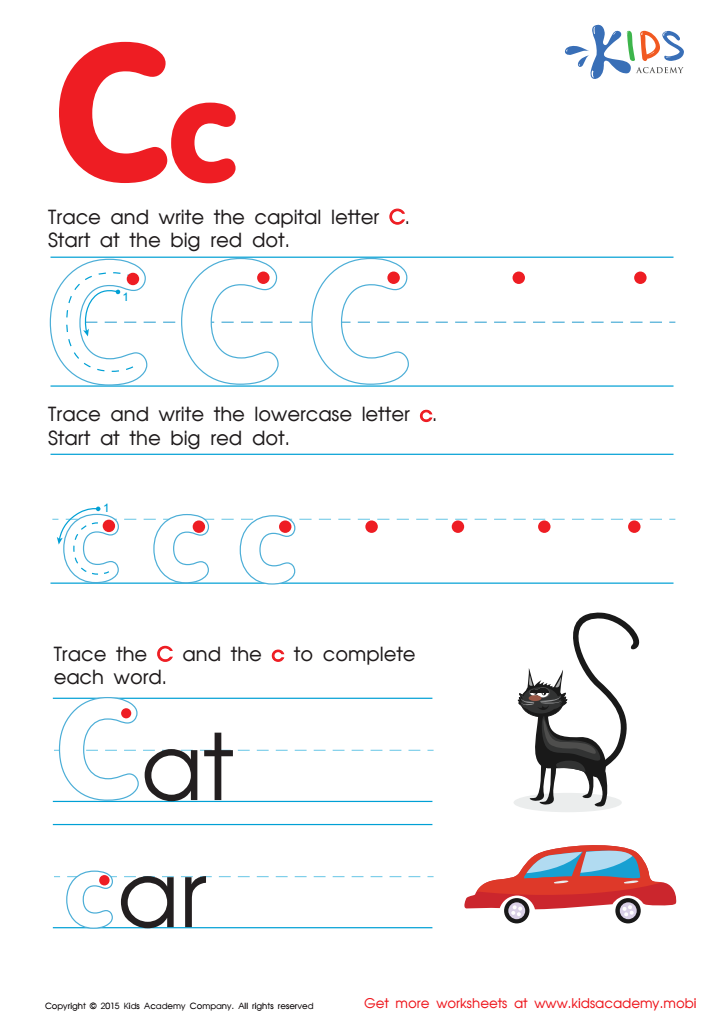
Letter C Tracing Page
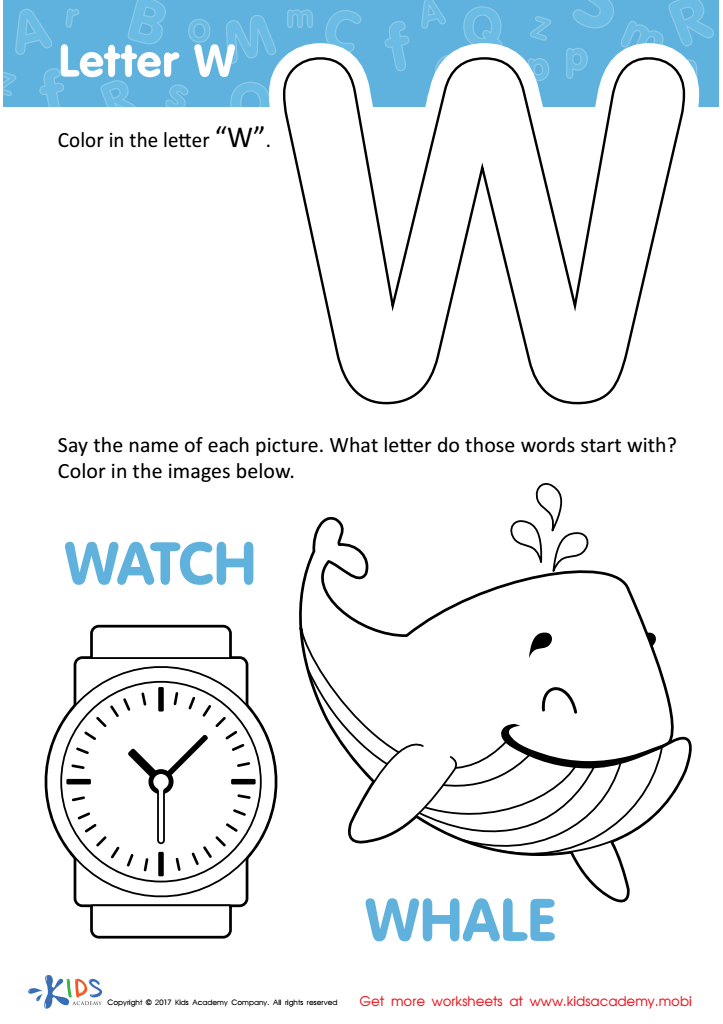
Letter W Coloring Sheet
Assign to My Students





Letter tracing skills are fundamental in the early stages of literacy development for children aged 6-9, forming the building blocks for reading and writing proficiency. Letter tracing helps children become familiar with the shape and structure of individual letters through repeated practice, enhancing their fine motor skills and hand-eye coordination. These abilities are crucial for fluid, legible handwriting, and the presence of early, consistent practice sets a strong foundation for future academic tasks.
By engaging in letter tracing, young learners also begin to solidify the association between visual letter symbols and their corresponding sounds, which is a key step in phonemic awareness and early reading. This hands-on, multisensory activity allows children to internalize and better recall letter formations, leading to increased confidence in their ability to write.
Furthermore, encouraging letter tracing within the critical age range of 6-9 establishes an environment that emphasizes the importance of literacy at an early age, instilling a sense of achievement and motivation in young students. Parents and teachers who prioritize letter tracing are fostering an invaluable skill that supports broader language development, aiding not just in immediate educational tasks, but also laying the groundwork for lifelong, functional literacy.