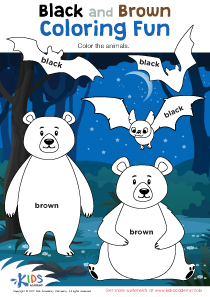
Sight words recognition English for Beginners Worksheets for Ages 6-9
4 filtered results
-
From - To
Welcome to our Sight Words Recognition Worksheets for Beginners, designed for kids aged 6-9! These engaging and comprehensive worksheets help young learners build a strong foundation in English reading by focusing on essential sight words. Suitable for ESL learners or those starting their reading journey, our materials encourage interactive learning through fun activities, including matching games, fill-in-the-blanks, and word searches. By practicing these high-frequency words, children will gain confidence in their reading skills, enhancing their overall language development. Explore our printable worksheets and empower your child's literacy journey today! Perfect for home or classroom use!
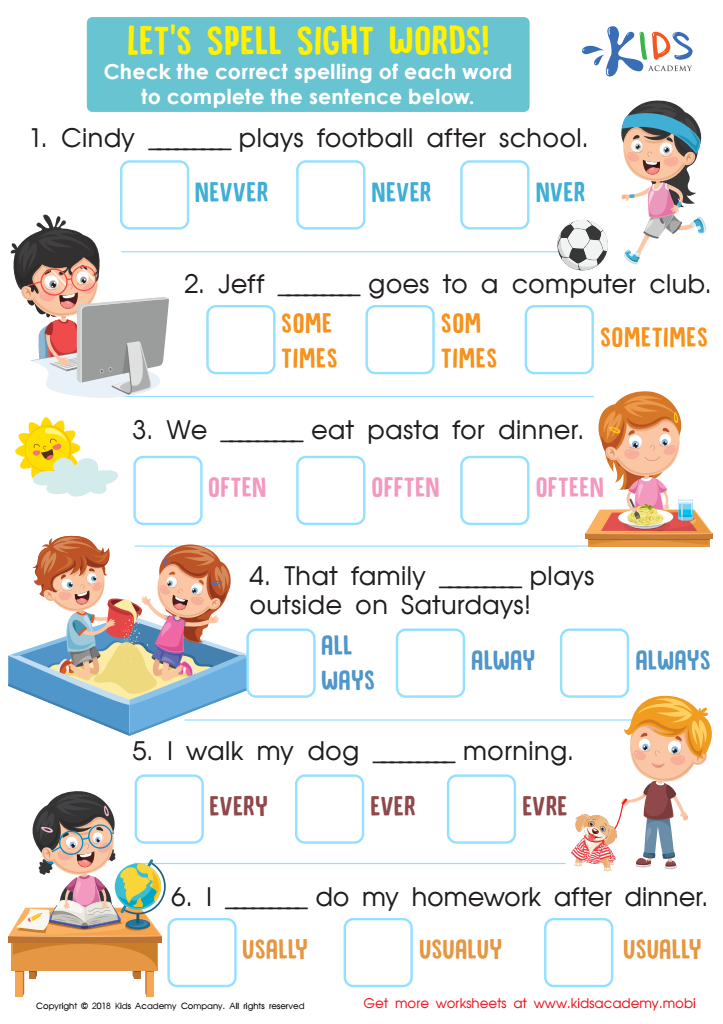
Let's Spell Sight Words Worksheet
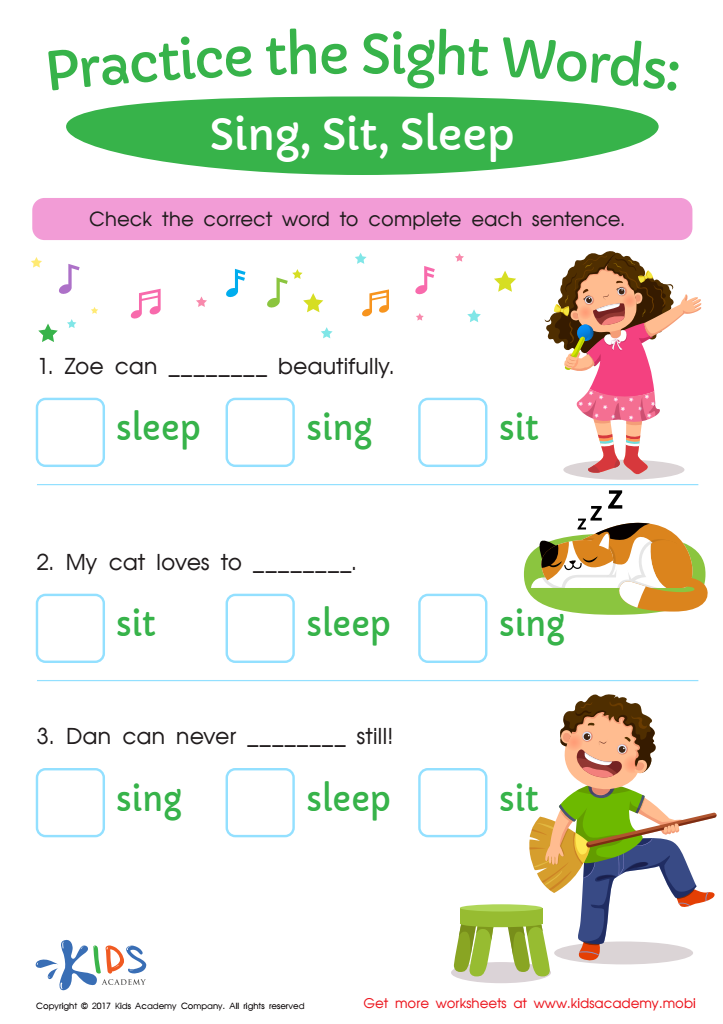
Sing, Sit, Sleep Sight Words Worksheet
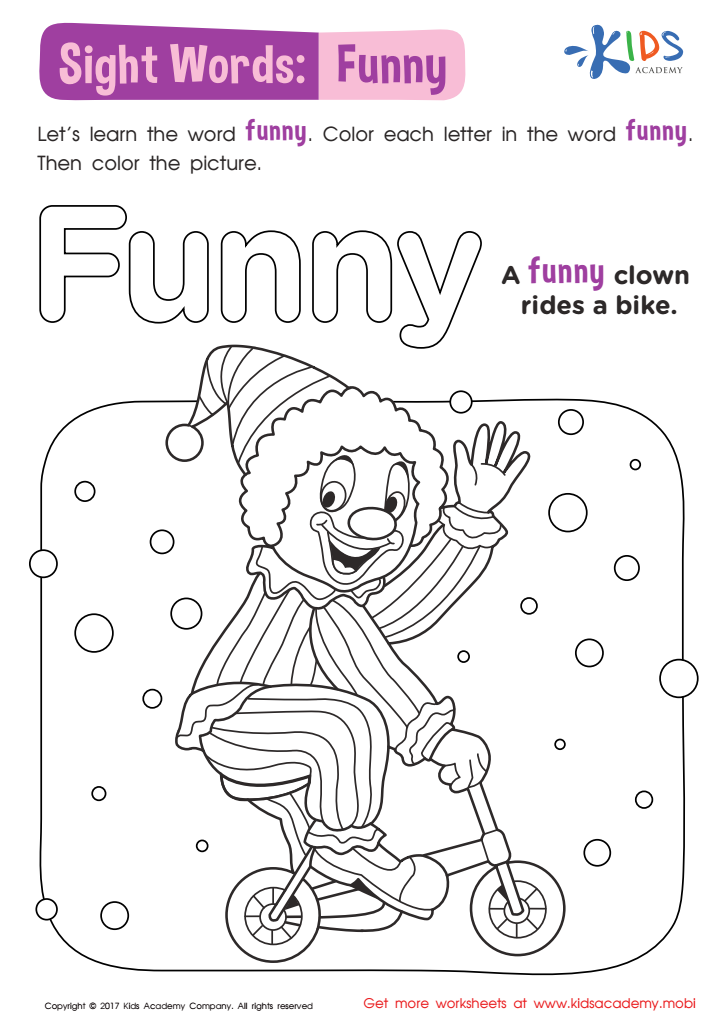
Funny Worksheet Sight Words Worksheet
 Assign to My Students
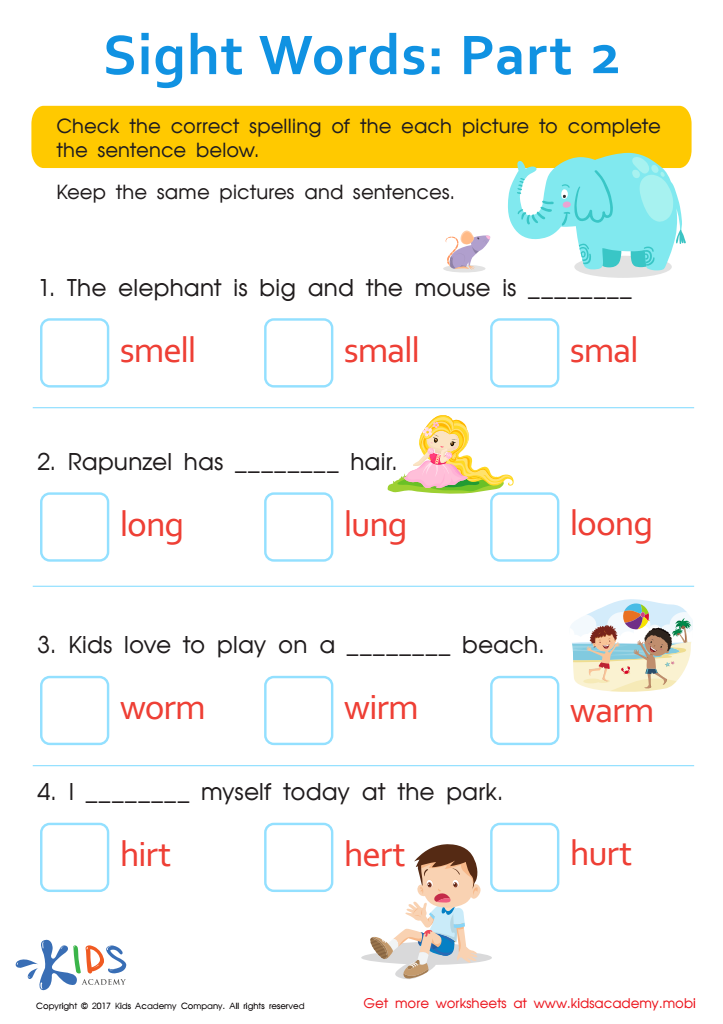
Sight Words Worksheet





Sight word recognition is a crucial skill for early readers aged 6-9, and it's essential for parents and teachers to prioritize it for several reasons. First, sight words are the most common words in the English language, often appearing in texts young learners encounter. By recognizing these words instantly, children can improve their reading fluency, which translates to greater comprehension. When kids don't have to pause to decode every word, they can focus on understanding the content.
Additionally, mastering sight words builds children's confidence. As they recognize words effortlessly, they are more likely to engage with reading materials, encouraging a lifelong love for books. This confidence not only improves literacy skills but also enhances speaking and writing abilities.
Moreover, sight word recognition is foundational for language development. It supports vocabulary acquisition, which is linked to academic success in later grades. When parents and teachers reinforce sight word learning at home and in the classroom, they provide children with tools that significantly impact their overall educational journey.
In summary, investing in sight word recognition for early readers fosters fluency, comprehension, and confidence, paving the way for a successful and enjoyable reading experience essential for their future learning endeavors.