Addition of fractions Worksheets for Ages 6-9
3 filtered results
-
From - To
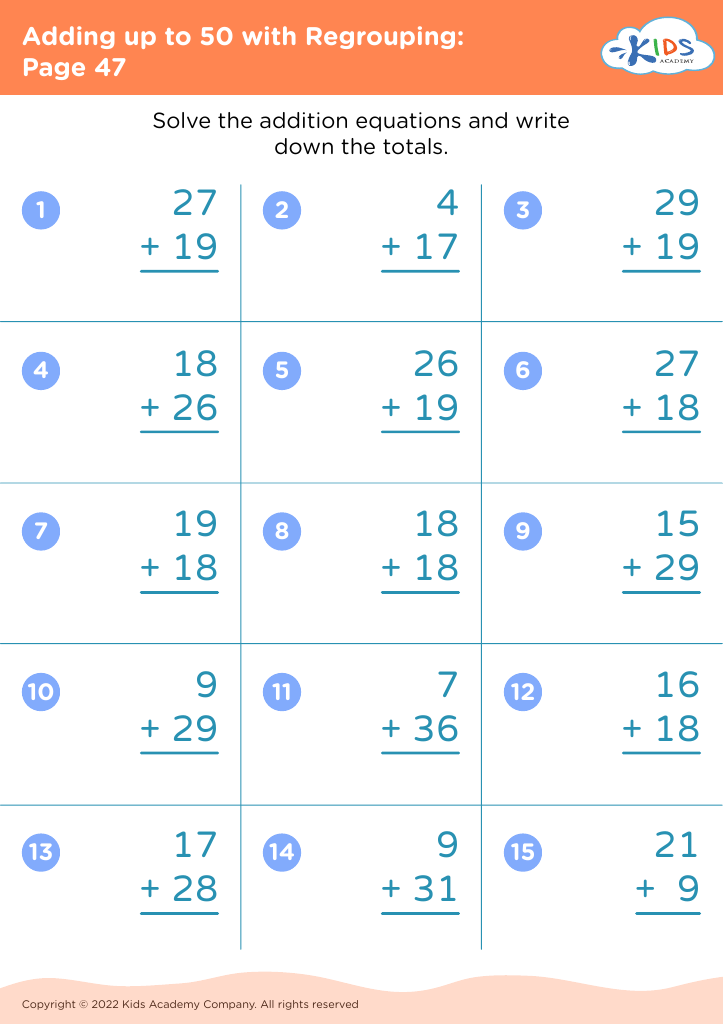
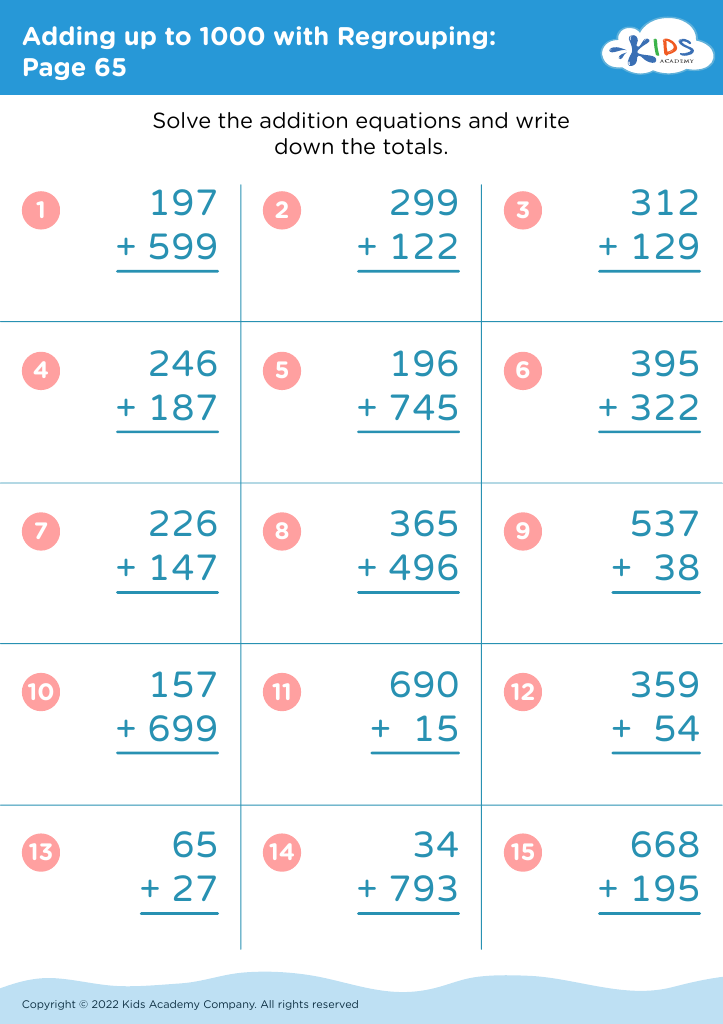
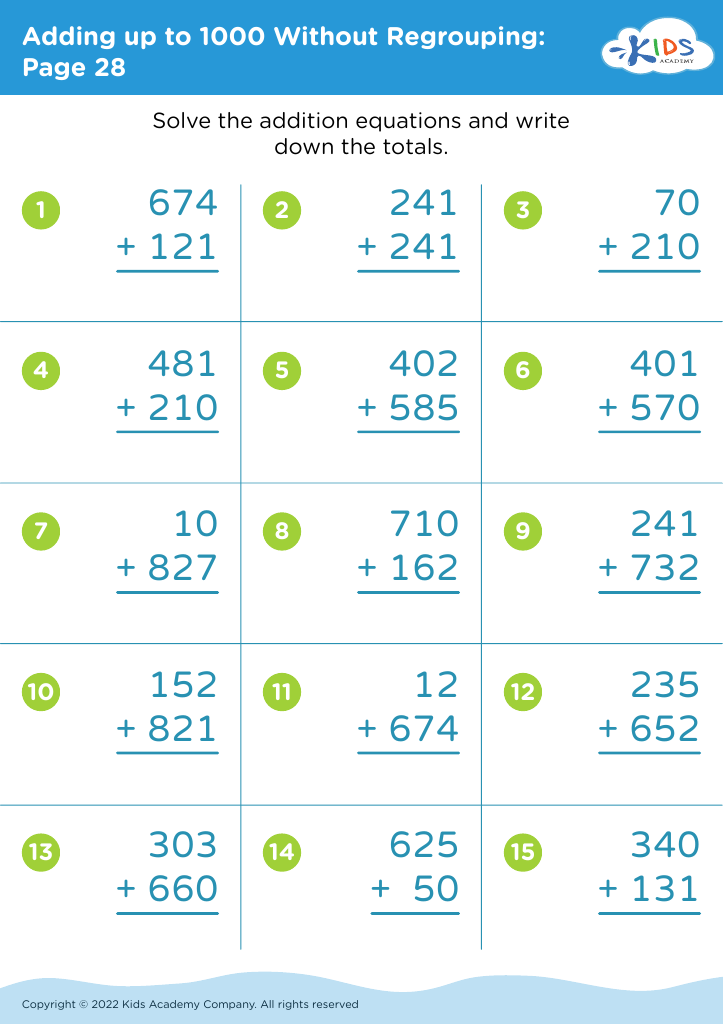
Explore our engaging "Addition of Fractions Worksheets for Ages 6-9" at Kids Academy! Tailored to make learning fun and effective, these printable worksheets help young learners master the basics of adding fractions. Through colorful designs and interactive exercises, children will develop essential math skills while enjoying every moment. Ideal for classroom or home use, these worksheets include step-by-step guidance and varied difficulty levels to accommodate different learning paces. Encourage your child to build confidence in math with our expertly crafted resources. Perfect for ages 6 to 9, these worksheets pave the way for future success in mathematics.






Understanding the addition of fractions is a crucial aspect of mathematical literacy for children aged 6-9. At this formative age, cognitive development is at a stage where foundational concepts are best absorbed. Mastering fraction addition helps build a strong mathematical foundation necessary for more advanced concepts in later years.
Firstly, learning to add fractions improves critical thinking and problem-solving skills. It requires students to grasp concepts of common denominators and equivalent fractions, nurturing flexibility in thinking and promoting deeper number sense.
Secondly, fractions are omnipresent in daily life, from cooking to dividing time and materials. Children who can manage fractions confidently will be better equipped to handle these real-world applications, enhancing their logical and practical reasoning skills.
Furthermore, early exposure to fractions helps alleviate math anxiety. A solid understanding built in the lower grades fosters confidence and reduces fear of more complex problems encountered in upper grades. Teachers and parents should focus on making fraction additions relatable and interactive through visual aids and practical experiences, reinforcing a positive attitude toward math.
In summary, caring about the addition of fractions for young students lays the groundwork for later academic success, supports everyday competence, and cultivates a confident, capable mindset toward future mathematical challenges.








