Analog Clock Understanding Worksheets for Ages 6-9
3 filtered results
-
From - To
Help your child master the art of telling time with our engaging Analog Clock Understanding Worksheets designed specifically for ages 6-9. These interactive resources foster a deep understanding of analog clocks, helping young learners grasp concepts such as hour and minute hands, fractions of an hour, and reading different times. Filled with a variety of activities, including matching, coloring, and time-telling exercises, these worksheets promote hands-on learning and critical thinking skills. Ideal for parents and teachers, they offer a fun way to reinforce classroom learning at home. Give your child the confidence to decode time with ease today!
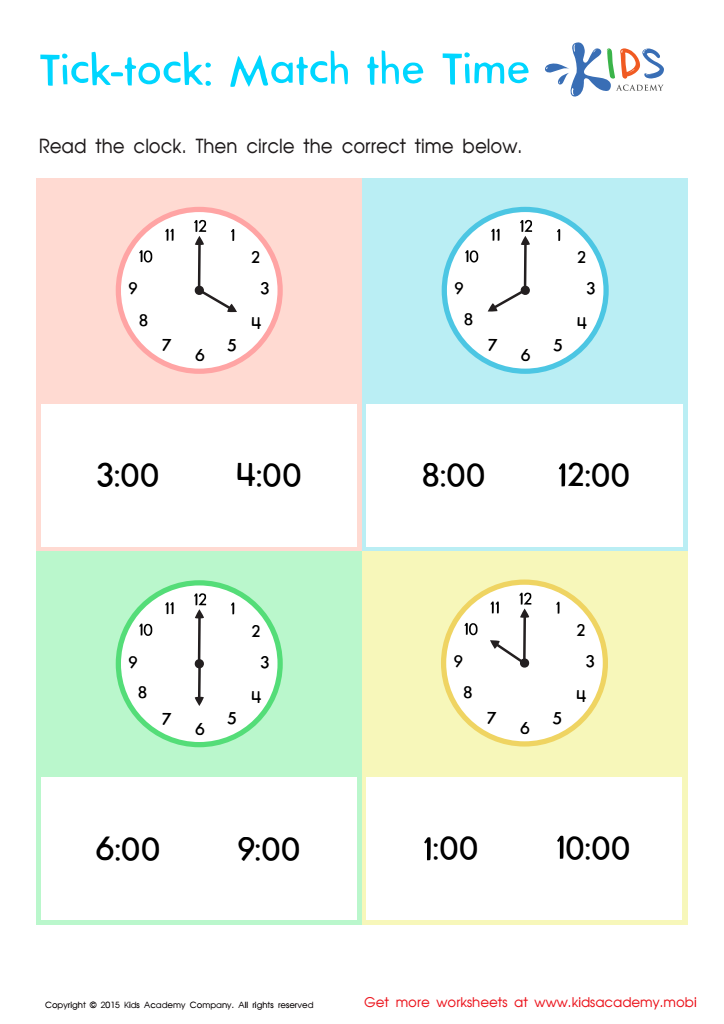
Telling The Time Worksheet: Part 4
 Assign to My Students
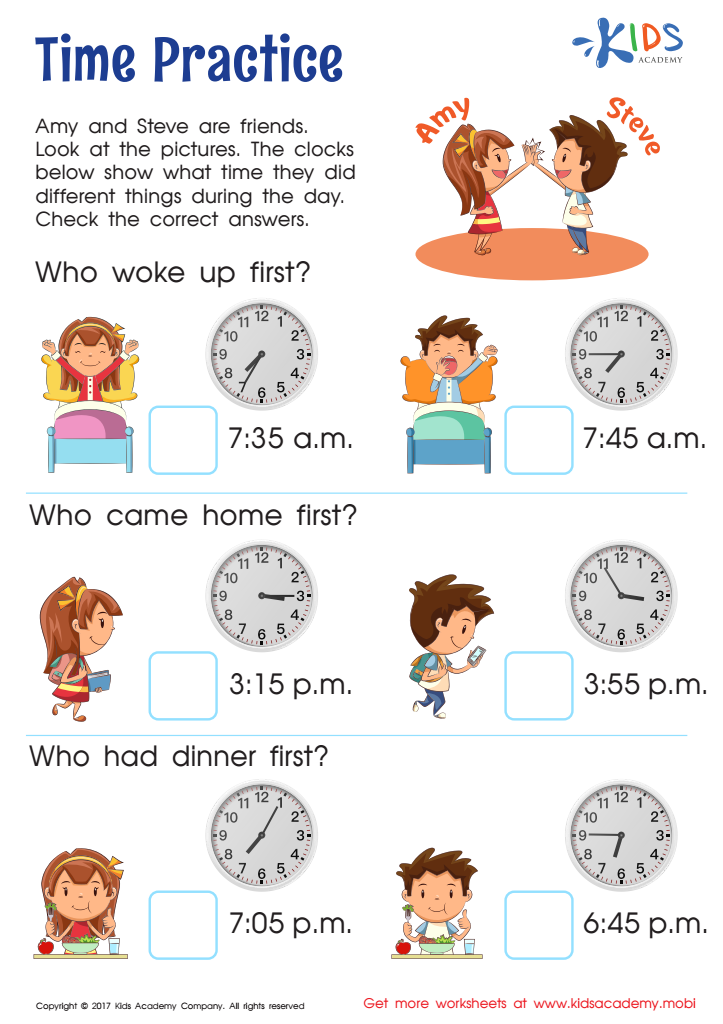
Time Practice Worksheet
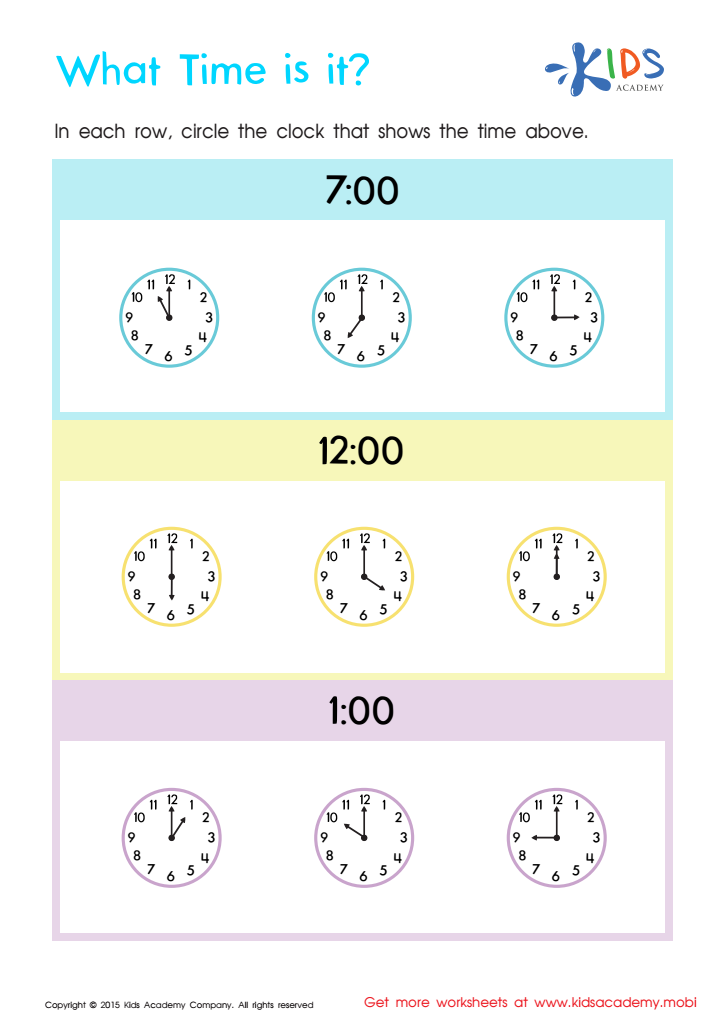
Telling The Time Worksheet: Part 3






Understanding how to read an analog clock is crucial for children aged 6-9, as it fosters essential cognitive skills and daily life practicalities. First, learning to tell time on an analog clock enhances mathematical abilities, as children develop skills in counting by fives and understanding the concepts of fractions (e.g., half-past, quarter to).
Additionally, analog clocks provide a tangible connection to the passage of time, encouraging children to plan their day and understand schedule management. This skill is vital, as it correlates to developing discipline and responsibility—qualities that will serve children throughout their lives. Unlike digital clocks, analog clocks visually represent time with moving hands, aiding in spatial awareness and the comprehension of movement and position.
Furthermore, the act of learning to tell time promotes concentration and focus, requiring children to observe carefully and make associations between numbers and their placement on the clock face. In a world increasingly dominated by technology, fostering traditional skills like reading analog clocks helps ensure a well-rounded educational experience. Therefore, parents and teachers play a crucial role in integrating time-telling activities into learning, thereby enhancing critical thinking and independence in young learners.








