Animal Classification Worksheets for Ages 6-9
9 filtered results
-
From - To
Introduce young learners to the wonders of the animal kingdom with our engaging Animal Classification Worksheets designed for ages 6-9! These thoughtfully crafted tools help children categorize and understand various species, focusing on characteristics and habitats. Tailored to enhance observational skills, critical thinking, and scientific understanding, our printable worksheets make learning fun and interactive. Ideal for classroom use or at-home enrichment, these activities support educational standards while sparking curiosity about nature's incredible diversity. Empower your young biologists with hands-on experiences that bring the subject to life, making animal classification both accessible and exciting.
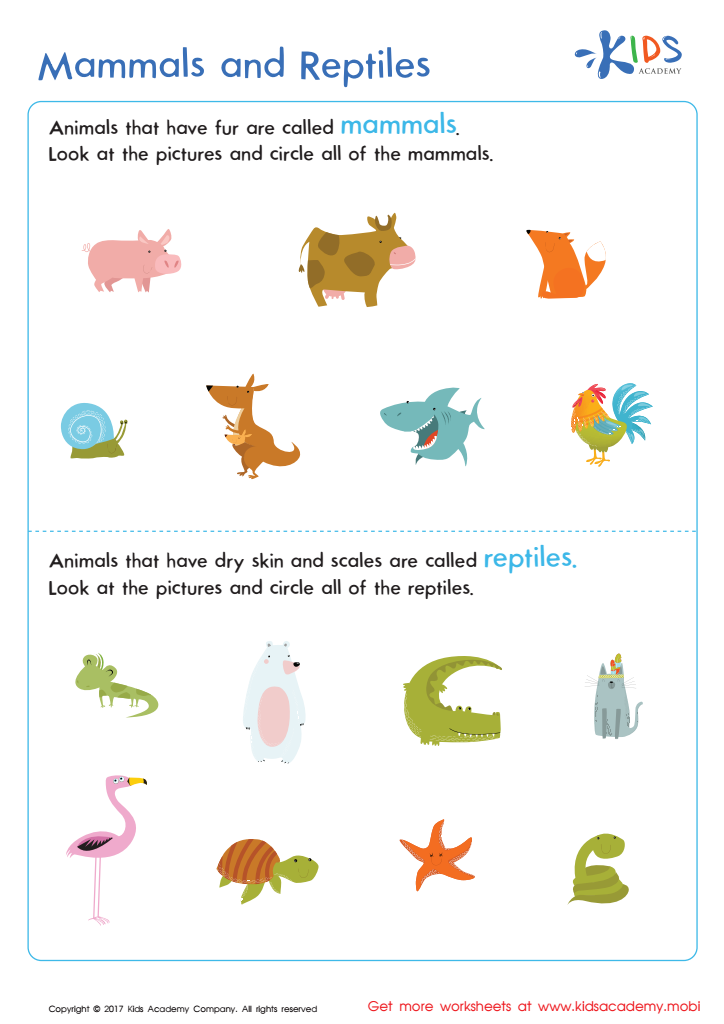
Mammals and Reptiles Worksheet
 Assign to My Students
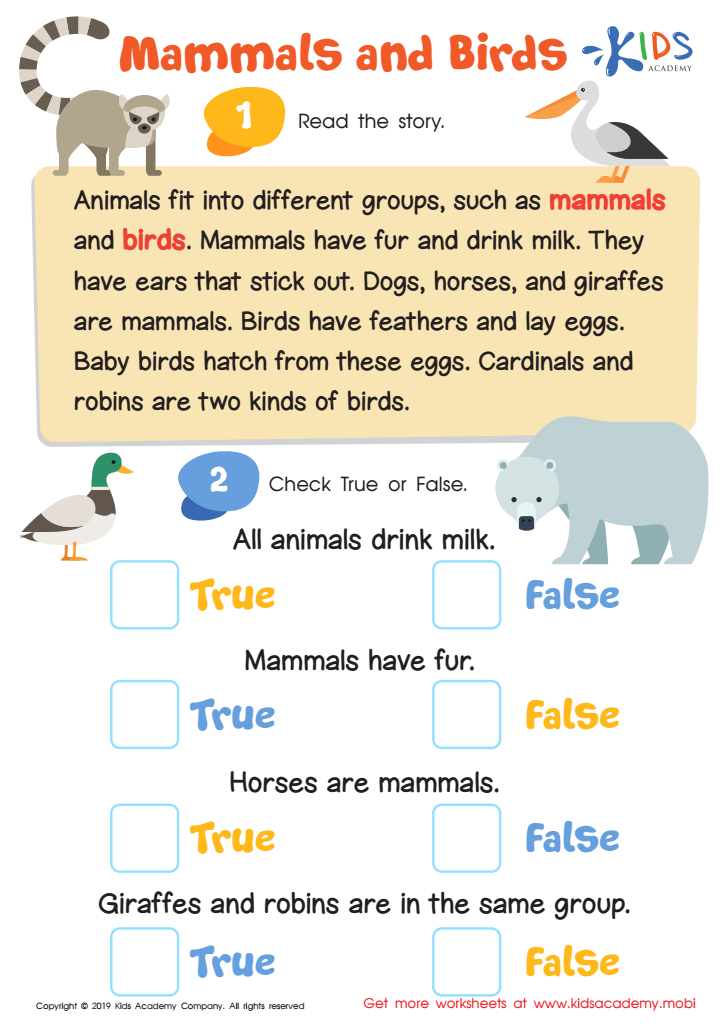
Mammals and Birds Worksheet
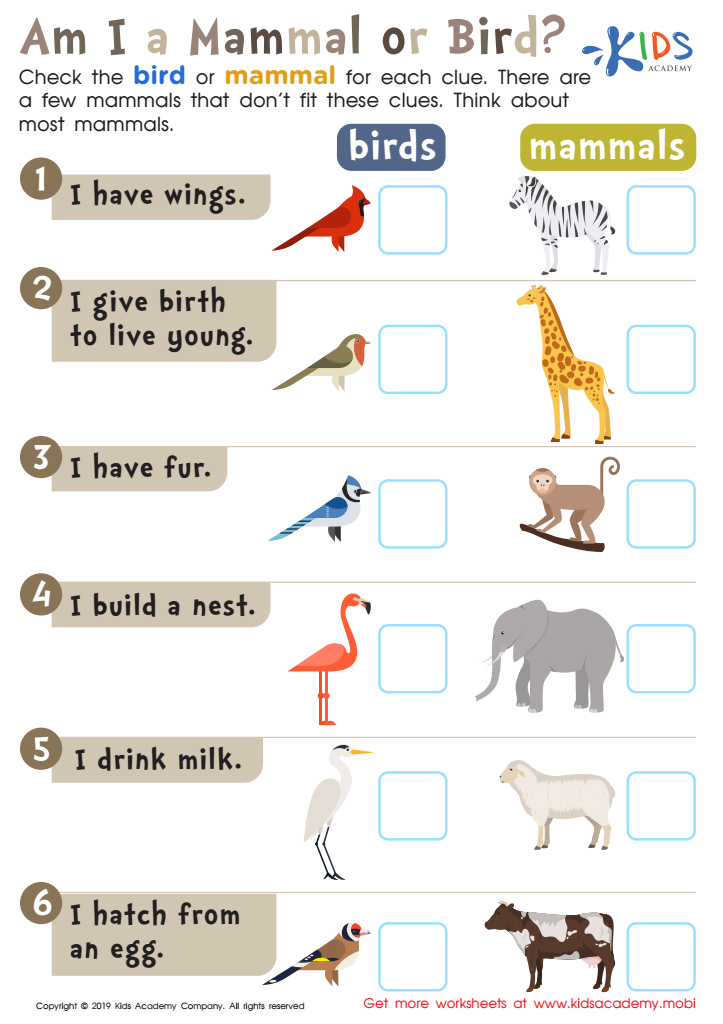
Am I a Mammal or Bird? Worksheet
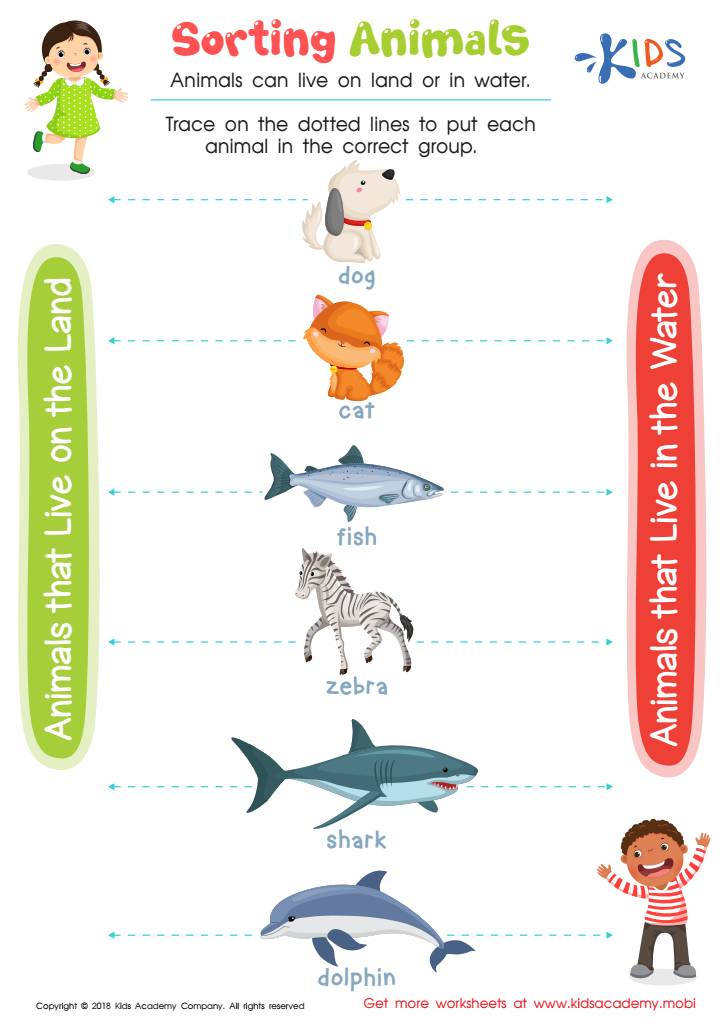
Sorting Animals Worksheet
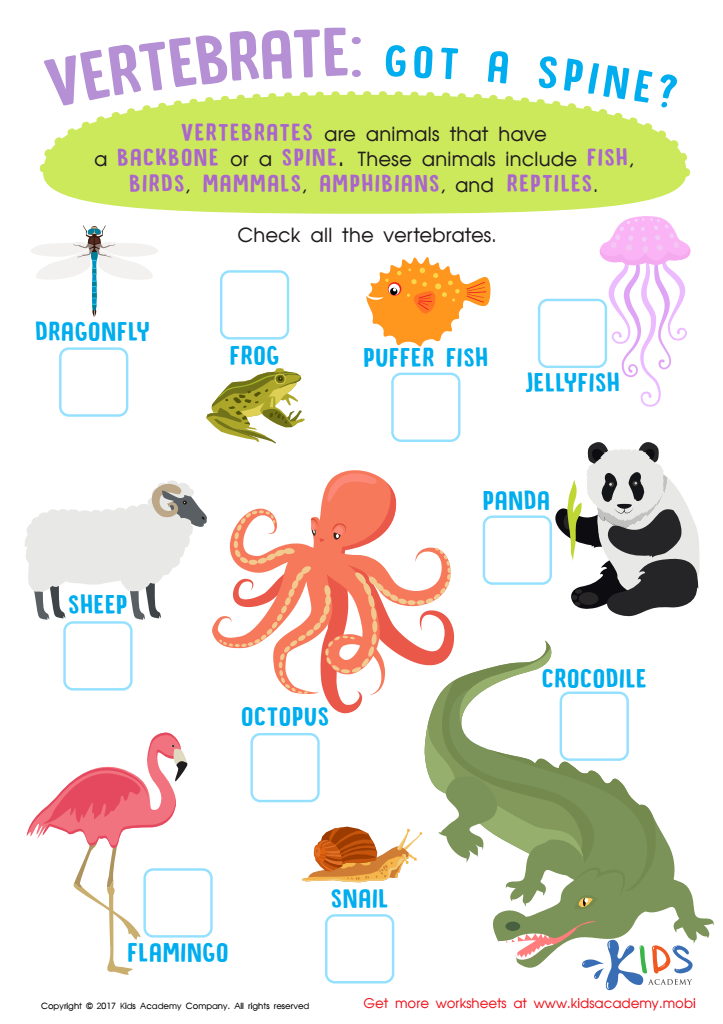
Vertebrates Animals Worksheet for 3rd Grade
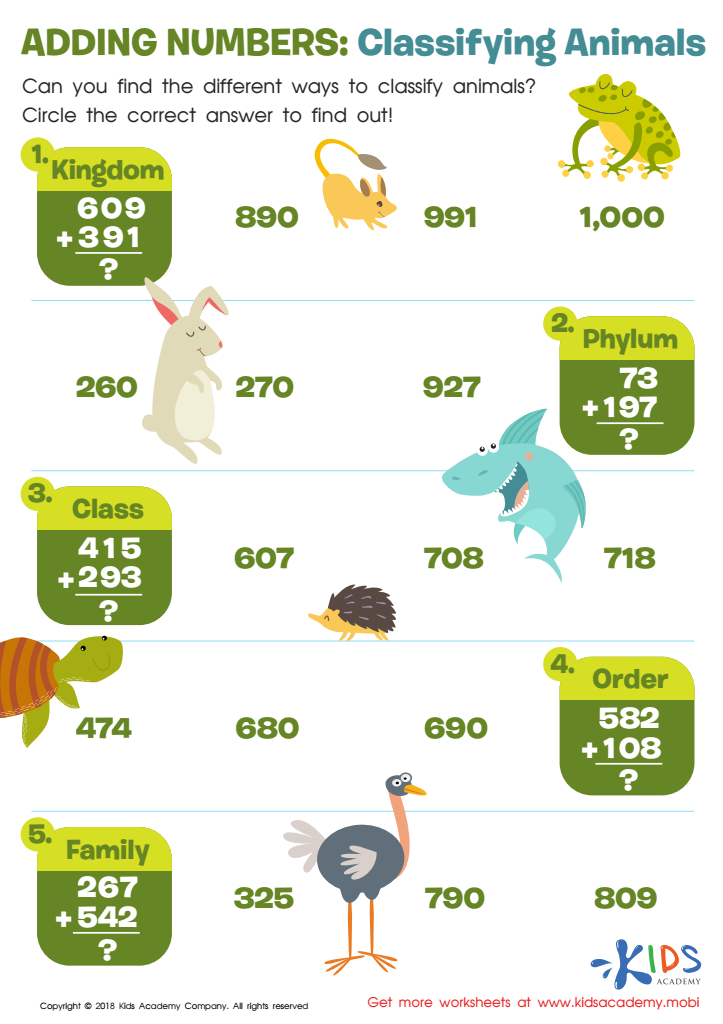
Adding Numbers: Classifying Animals Worksheet
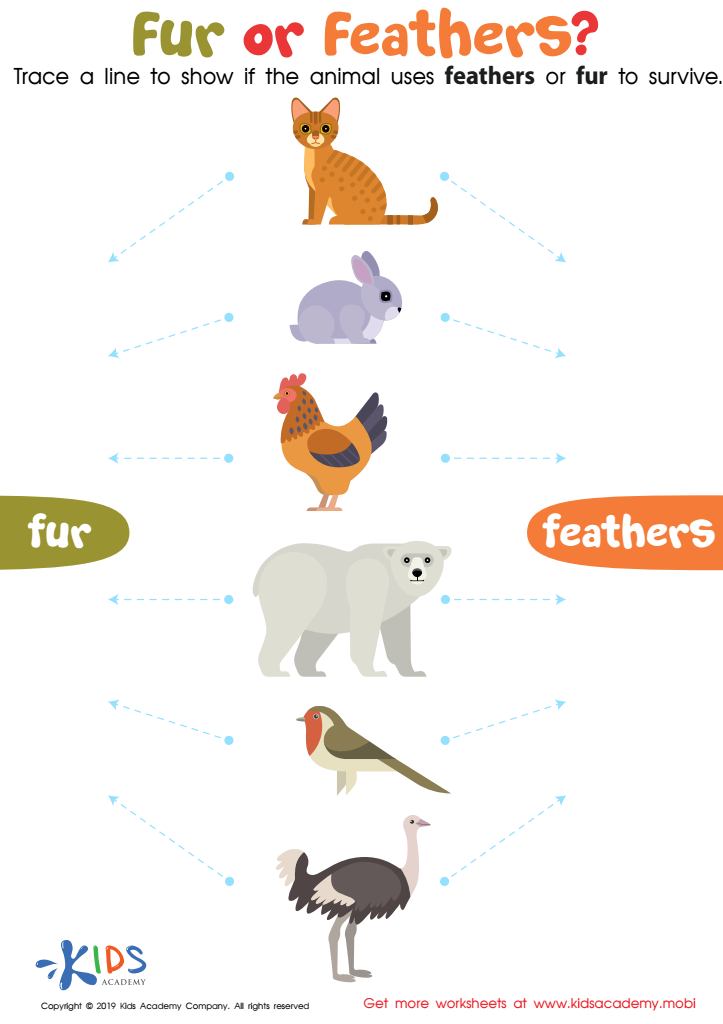
Fur or Feathers? Worksheet
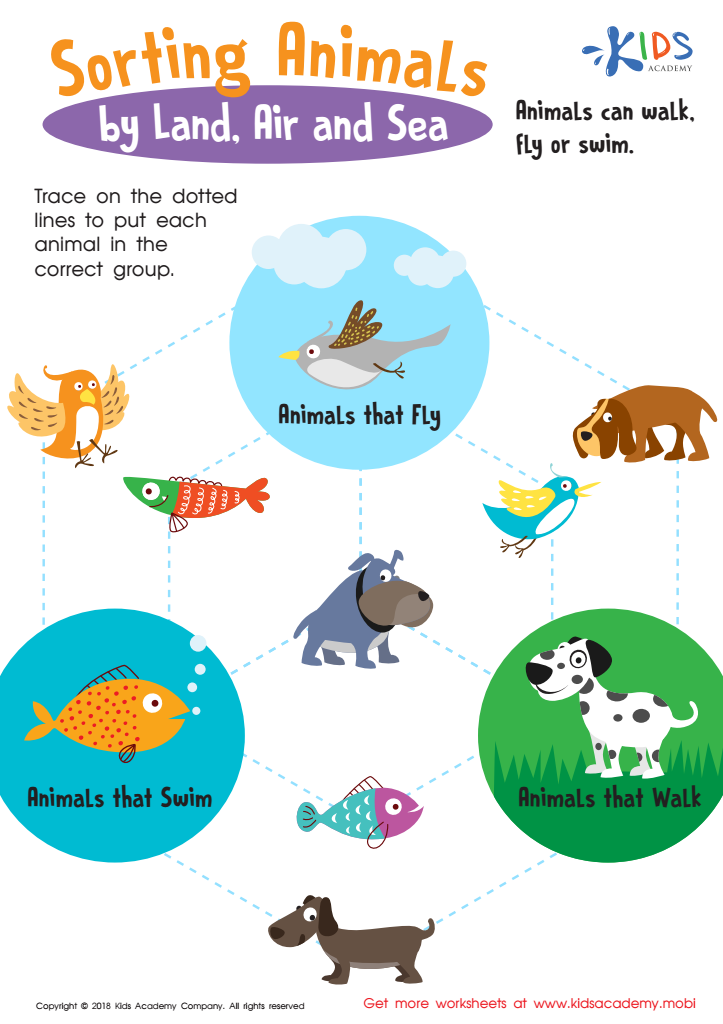
Sorting Animals by Land, Air and Sea Worksheet
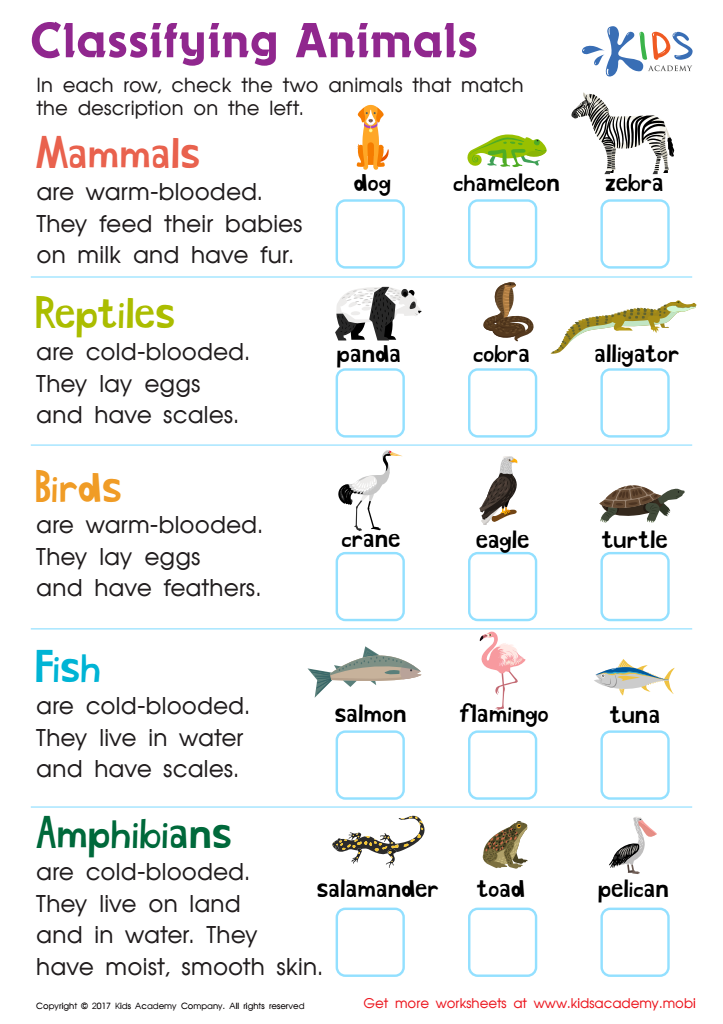
Classifying Animals Worksheet






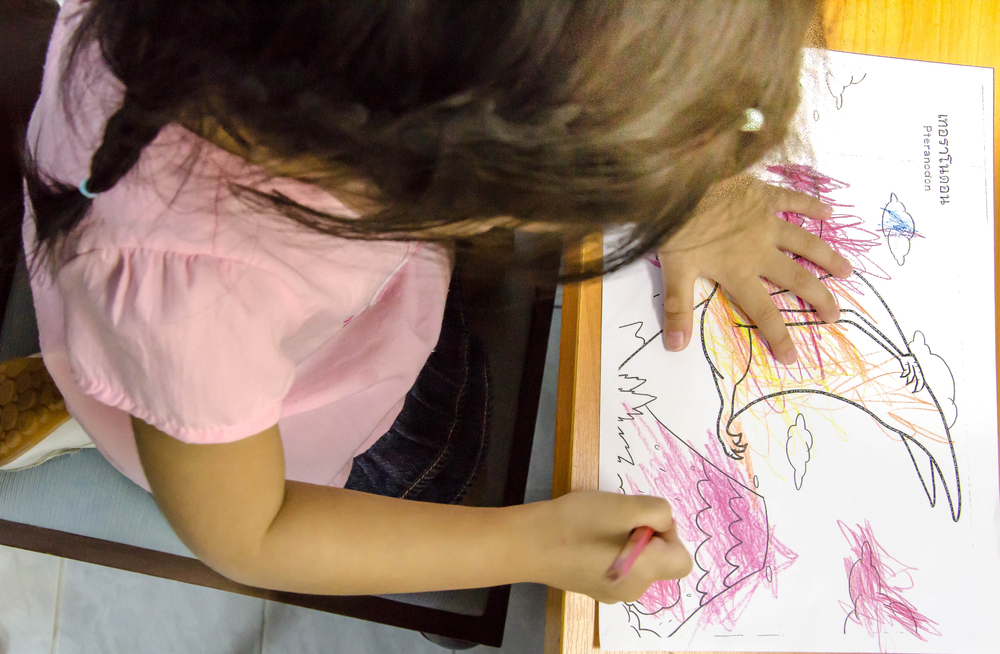
Parents and teachers should care about animal classification for children aged 6-9 because it plays a crucial role in their cognitive and educational development. Understanding animal classification lays a foundation for scientific thinking. By learning to distinguish between different species, children easily grasp broader scientific concepts like environmental interdependencies and evolution.
At this age, kids are naturally curious about the world around them, making it the perfect time to introduce them to biology. Animal classification teaches observational skills and critical thinking. Kids learn to pay attention to details such as physical characteristics and habitats, which helps them categorize and make sense of complex information.
Furthermore, studying animal classification encourages respect for wildlife and nature. When children learn about diverse animal species and their environments, they typically develop an appreciation for conservation and the importance of biodiversity. This can inspire lifelong environmental stewardship.
Socially, discussing and engaging in classification activities, like sorting animal cards or visiting a zoo, fosters teamwork and communication skills. Psychologically, it satisfies young learners' natural investigative and exploratory urges, making learning fun and engaging.
In essence, incorporating animal classification into early education cultivates foundational skills, scientific curiosity, and a respectful attitude toward nature, all of which are essential for holistic development.








