
Basic measurement skills Worksheets for Ages 6-9
4 filtered results
Difficulty Level
Grade
Age
-
From - To
Subject
Activity
Standards
Our "Basic Measurement Skills Worksheets for Ages 6-9" are perfect for young learners eager to master essential measurement concepts. Tailored to engage children in grades 1-3, these printable worksheets cover a variety of measurement topics, including length, weight, volume, and time. Designed to nurture critical thinking and problem-solving abilities, each worksheet features fun, colorful activities that make learning both effective and enjoyable. Ideal for both classroom and at-home practice, these resources help children build a strong foundation in basic math skills. Explore our collection to support your child's growth and confidence in measurement today!
Favorites
With answer key
Interactive
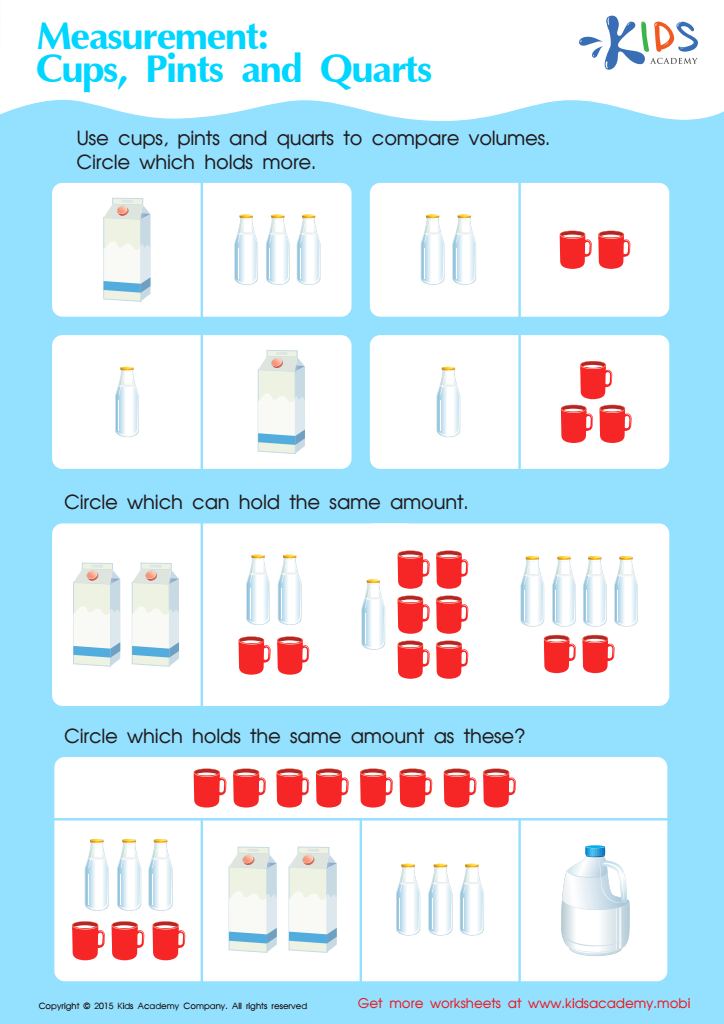
Measurement: Compare Volumes Worksheet
Compare volumes with Kids Academy and have fun! (80 words)
Practice measuring with Kids Academy and have fun! Compare volumes in pictures and circle which holds more. Keep learning with free math worksheets available on our website. Enjoy the process and have fun!
 Assign to My Students
Measurement: Compare Volumes Worksheet
Worksheet
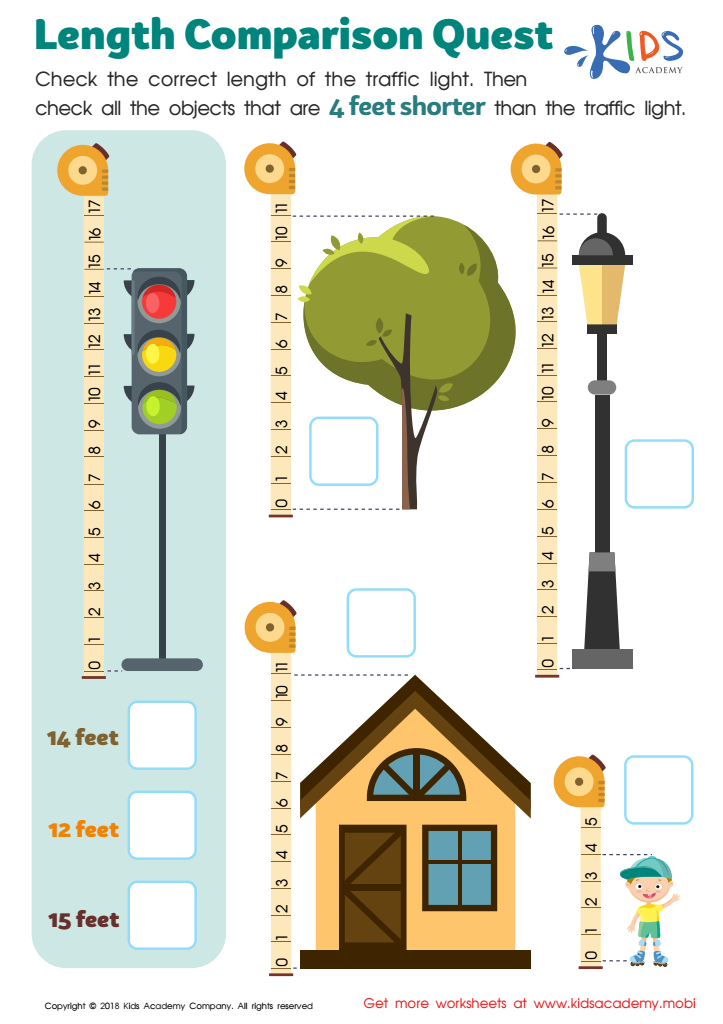
Length Comparison Quest Worksheet
Knowing measurement tools and how to use them is just the start. To be proficient, your kid must be able to accurately compare objects and their lengths. With the 'Length Comparison Quest' worksheet, they will check the correct length of the traffic light in the picture and then compare other objects to it, marking those that measure 4 feet shorter.
Length Comparison Quest Worksheet
Worksheet
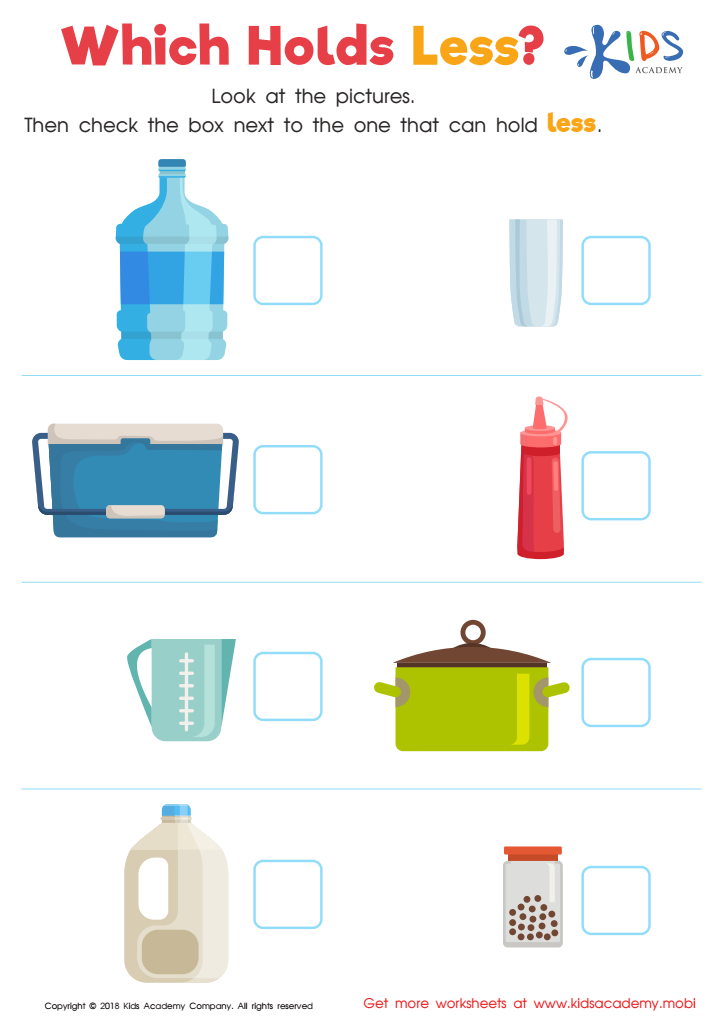
Which Holds Less? Worksheet
Students may find it hard to grasp volume without a visual aid. This free, downloadable worksheet helps with understanding by providing pictures of familiar objects. It allows students to practice comparing volumes and deciding which container holds less. It's a great introduction before they move onto using greater than and less than symbols.
Which Holds Less? Worksheet
Worksheet
Join Kids Academy for Free
Who is primarily going to use this learning content?


.jpg)




Parents and teachers should prioritize basic measurement skills for children ages 6-9 because these skills are foundational for numerous real-life applications and academic subjects. Firstly, understanding measurement helps children grasp essential concepts in math and science, such as length, volume, weight, and time, which are integral parts of the elementary curriculum. For example, measuring objects, comparing sizes, and using tools like rulers and measuring cups bridge the gap between theoretical mathematics and practical usage.
Moreover, measurement skills foster critical thinking and problem-solving abilities. When children learn to measure and compare, they also develop logical reasoning about spatial relationships, quantities, and dimensions. This real-world relevance enhances their ability to make connections beyond the classroom, such as adapting recipes, organizing spaces, or counting time intervals, thus, becoming more resourceful and independent.
Emotionally, mastering measurement can boost a child's confidence and sense of accomplishment, setting a positive tone for lifelong learning. Socially, these skills prepare children to participate in cooperative group projects where measuring, estimating, and collaborating are crucial, cultivating teamwork and communication abilities.
Altogether, emphasizing measurement skills equips children ages 6-9 with the tools they need for both academic success and everyday tasks, laying a solid foundation for future learning and personal development.








